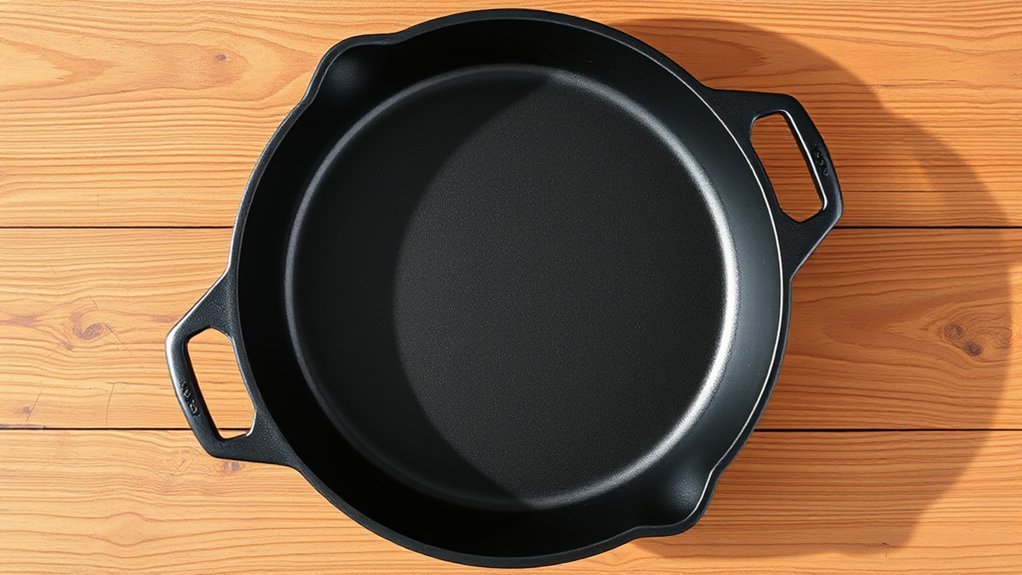

Imagine a 10 inch skillet as the reliable friend in your kitchen, perfectly sized to juggle everyday tasks without feeling bulky. A 10 inch skillet typically measures about 10 inches across the cooking surface, deep enough to hold a few eggs or a small stir-fry.
Its design balances capacity with ease of use, but the details in material, depth, and handle can change how it performs. Understanding these nuances can help you spot the skillet that fits your needs best.
Key Takeaways
- A 10 inch skillet measures about 10 inches across its cooking surface, offering an ideal medium size for various cooking tasks.
- It typically fits 2-3 eggs comfortably on the cooking area, providing a useful visual size reference.
- The handle length usually ranges between 5 to 7 inches, balancing ease of handling with overall skillet size.
- The skillet’s depth is generally around 1.5 to 2 inches, suitable for frying and sautéing without spillage.
- Common materials include cast iron, nonstick, and stainless steel, each influencing the skillet’s weight and appearance.
Why Choose a 10 Inch Skillet?
Why should you choose a 10 inch skillet for your kitchen? This size strikes the perfect balance between versatility and convenience. It’s large enough to cook meals for two to four people but compact enough for easy handling and storage.
When considering two word discussion ideas like “portion control” and “heat distribution,” the 10 inch skillet excels by providing even cooking without overcrowding your ingredients. Its subtopic relevance is clear: it fits most stovetops and ovens, making it a practical choice for everyday use.
You won’t waste energy heating a pan that’s too big, nor struggle with a pan that’s too small. Choosing a 10 inch skillet means you get a reliable, efficient tool ideal for a wide range of cooking tasks.
What a 10 Inch Skillet Looks Like
How can you easily recognize a 10 inch skillet? You’ll notice its diameter measures about 10 inches across the cooking surface, making it ideal for a variety of cooking tasks. It’s not too big or small, striking a balance that fits many kitchen needs.
Unlike idea topics or unrelated concepts that might confuse you, the skillet’s size is straightforward and practical.
Here’s a quick comparison to help you visualize:
| Feature | Description | Visual Cue |
|---|---|---|
| Diameter | 10 inches (25.4 cm) | Fits about 2-3 eggs |
| Handle Length | Usually 5-7 inches | Easy to grip |
| Depth | Around 1.5-2 inches | Holds sauces or food |
| Shape | Circular, slightly sloped | Classic skillet look |
This simple look helps you identify a 10 inch skillet quickly.
Common Materials for 10 Inch Skillets
What materials should you look for when choosing a 10 inch skillet? Two popular options stand out: cast iron and nonstick. Cast iron offers excellent heat retention, distributing heat evenly and keeping your food warm longer. It’s incredibly durable and can last generations if cared for properly.
However, it requires seasoning and occasional maintenance to prevent rust. On the other hand, nonstick skillets provide easy food release and simple cleanup. Their nonstick durability has improved significantly, making them resistant to scratches and peeling under normal use.
These skillets are ideal if you want hassle-free cooking and less oil usage. Ultimately, your choice depends on your cooking style and maintenance preference, but both materials deliver solid performance in a 10 inch skillet.
Typical Weight and Thickness: What It Means
A typical 10-inch skillet usually weighs between 2.5 to 5 pounds, depending on the material. Its thickness often ranges from 3 to 5 millimeters, which affects heat retention and cooking performance.
Understanding these measurements helps you choose a skillet that fits your cooking style and durability needs.
Average Weight Range
When considering a 10-inch skillet, you might wonder about its typical weight and thickness and why they matter. The average weight of these skillets usually falls between 2.5 to 4.5 pounds, depending on the material and design.
Cast iron skillets tend to be on the heavier side, while aluminum or stainless steel versions are lighter. This two word discussion ideas weight and durability are essential because a heavier skillet often means better heat retention and even cooking.
However, if you prefer ease of handling, a lighter skillet might suit you better. Understanding the average weight helps you balance cooking performance with comfort.
Keep in mind, the skillet’s thickness also influences weight but is a separate topic, so focusing on average weight gives you a clearer picture of what to expect.
Standard Thickness Measurements
How thick should a 10-inch skillet be to deliver optimal cooking results? Typically, a skillet’s thickness ranges between 3/16 to 1/4 inch. This measurement balances heat retention and weight, ensuring your pan heats evenly without being too cumbersome.
Thinner skillets heat quickly but can develop hot spots, while thicker ones provide steady, uniform cooking. When choosing, consider that thickness directly impacts durability and cooking performance.
In this two word discussion ideas scenario, understanding skillet thickness isn’t an unrelated topic—it’s essential for selecting the right pan. Thickness affects how you cook and how your skillet performs over time.
10 Inch Skillet Compatibility With Stovetops
Wondering if a 10 inch skillet will work with your stovetop? It’s a versatile size that fits most cooking surfaces, but compatibility depends on your stove type and skillet material. Here’s what to consider:
Induction compatibility: Check if the skillet’s base is magnetic for use on induction cooktops.
Gas stove practicality: 10 inch skillets distribute heat evenly and fit well on standard gas burners.
Electric coil stovetops: Ensure the skillet’s flat bottom makes full contact for efficient heating.
Glass-top stoves: Avoid heavy cast iron without smooth bottoms to prevent scratches.
Size and burner match: Match skillet size to burner size to avoid uneven cooking or instability.
Choosing the right skillet ensures efficient, safe cooking across all stovetop types.
10 Inch Skillet Handle Designs and Their Impact
Selecting the right 10 inch skillet isn’t just about size and stovetop compatibility; the handle design plays a significant role in your cooking experience. Inch skillet handles come in various shapes and materials, each affecting grip, heat transfer, and control.
Good design ergonomics ensure the handle fits comfortably in your hand, reducing strain during prolonged use. Look for handles with a slight curve or textured surface to prevent slipping, especially when your hands are wet or greasy.
Material matters too. Wood and silicone handles stay cooler, while metal handles may require pot holders. Also, consider the handle’s length; it should provide balance without being cumbersome.
Paying attention to these details helps you cook safely and efficiently with your 10 inch skillet.
Nonstick vs. Cast Iron 10 Inch Skillets Compared
When choosing between a nonstick and cast iron 10 inch skillet, you’ll want to weigh their distinct advantages and drawbacks. Nonstick skillets offer easy food release and simple cleanup, but their nonstick durability can diminish over time, especially with metal utensils.
Cast iron skillets, on the other hand, require regular cast iron seasoning to maintain their surface, but they last for decades and improve with use.
Consider these points:
- Nonstick skillets heat up quickly and evenly
- Cast iron provides superior heat retention
- Nonstick durability declines with abrasive cleaning
- Cast iron seasoning enhances natural nonstick properties
- Cast iron is heavier and may need more maintenance
Choosing depends on your cooking style and willingness to maintain your skillet regularly.
Best Cooking Uses for a 10 Inch Skillet
How can you make the most of a 10 inch skillet in your kitchen? This versatile size perfectly fits small to medium meals, from sautéing vegetables to frying eggs or searing chicken breasts. Its compact surface allows for even heat distribution, making it ideal for recipes requiring quick, consistent cooking.
Look for a skillet with the best handle: ergonomic, sturdy, and heat-resistant for safe, comfortable handling during cooking. A skillet featuring a mid century design not only offers timeless style but often includes practical features like a solid grip and balanced weight.
Whether you’re whipping up a frittata or stir-frying, this skillet size handles it all efficiently, becoming your go-to tool for everyday meals without overcrowding your stovetop space.
Cleaning and Choosing the Right 10 Inch Skillet
After enjoying the versatility of a 10 inch skillet in your daily cooking, keeping it clean and choosing the right one will guarantee it performs well for years. Use these cleaning tips to maintain your skillet’s surface and avoid rust or residue buildup.
Keeping your 10-inch skillet clean and well-chosen ensures lasting performance and prevents rust or residue buildup.
When selecting a skillet, consider brand comparisons to find one that fits your cooking style and budget.
- Hand wash with mild soap and avoid abrasive scrubbers
- Season cast iron skillets regularly to maintain non-stick quality
- Compare brands for durability, heat distribution, and warranty
- Opt for stainless steel if you want low-maintenance cleaning
- Check customer reviews for long-term performance insights
Following these steps will help you keep your skillet in top shape and choose the best option for your kitchen.
Frequently Asked Questions
Can I Use a 10 Inch Skillet in an Oven?
You can use a 10 inch skillet in an oven if it’s oven safe. Check material compatibility. Cast iron and stainless steel usually work, but avoid non-stick or plastic handles to guarantee oven safety and prevent damage.
How Do I Season a Cast Iron 10 Inch Skillet?
You’ll think you’re seasoning a skillet for a king. Coat it thinly with seasoning oil, then heat it in the oven at 450°F for an hour. This locks in flavor and guarantees even heat distribution.
Are 10 Inch Skillets Dishwasher Safe?
You shouldn’t put a 10 inch skillet in the dishwasher; most aren’t dishwasher compatible. Instead, stick to hand washing and drying immediately to preserve seasoning and prevent rust.
Proper cleaning methods keep it in great shape.
What Accessories Fit a 10 Inch Skillet?
You can fit silicone handle covers, lids, splatter screens, and pan scrapers on your 10-inch skillet. Use seasoning techniques and maintenance hacks to keep it nonstick and rust-free, ensuring long-lasting, effective cooking accessories.
Can I Use a 10 Inch Skillet for Baking?
Yes, you can use a 10 inch skillet for baking if it has good bake compatibility and is oven safe. Just check the manufacturer’s guidelines to ensure it withstands your oven’s temperature for safe usage.
Conclusion
So, you’ve learned what a 10-inch skillet looks like and why it’s a kitchen must-have—yet you might still be wondering if it’s big enough for your culinary ambitions. Ironically, this modest pan often outperforms its larger counterparts by balancing size, heat, and convenience.
Whether you’re flipping eggs or searing steak, the 10-inch skillet proves that sometimes, less really is more in the kitchen. Choose wisely, and it won’t let you down.
In the end, understanding what a 10-inch skillet looks like helps you appreciate its versatility and makes it easier to decide if it fits your cooking needs.