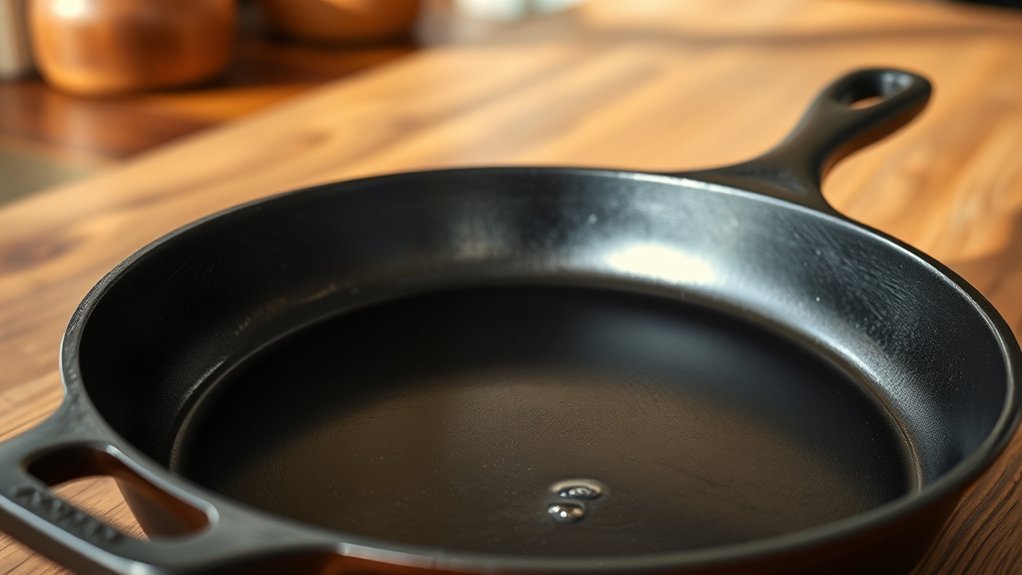

When you unwrap a pre-seasoned cast iron skillet, you might expect it to be ready for immediate use. However, a pre-seasoned cast iron skillet is not always fully prepared for cooking right out of the box.
While factory seasoning provides a basic protective layer, its quality can vary markedly.
Understanding whether your skillet truly meets your cooking needs—and when it might require extra seasoning—can make a big difference. Proper seasoning affects how well the skillet performs and how long it lasts. Taking a moment to assess your skillet before the first use ensures optimal results in your cooking.
Key Takeaways
- Pre-seasoned skillets have a basic factory oil layer that provides initial rust protection and minimal non-stick properties.
- Factory seasoning is usually thin, uneven, and not fully durable for optimal cooking performance.
- It is recommended to gently wash without soap and apply additional oil before first use to reinforce seasoning.
- Reseasoning by baking with oil enhances durability, consistency, and non-stick quality before regular cooking.
- Avoid relying solely on factory seasoning; proper maintenance and periodic reseasoning improve skillet lifespan and usability.
What “Pre-Seasoned” Means for Your Cast Iron Skillet
What does it mean when your cast iron skillet is labeled “pre-seasoned”? It indicates the manufacturer has applied a layer of oil and baked it onto the skillet’s surface, creating a basic non-stick coating. This process saves you time, letting you skip the initial seasoning step.
Pre-seasoned skillets support recycling cookware practices by extending the lifecycle of cast iron, reducing waste. They also enhance kitchen aesthetics, offering a smooth, dark finish right out of the box.
However, this coating is usually minimal; you’ll want to build it up with regular use and proper care. Understanding this ensures you appreciate the balance between convenience and the skillet’s long-term seasoning needs, helping you maintain its performance and appearance effectively.
Is Your Pre-Seasoned Cast Iron Skillet Ready to Use?
You’ll want to assess the quality of the factory seasoning before using your pre-seasoned cast iron skillet. While many come ready for immediate use, some benefit from an initial cleaning and additional seasoning to build a stronger non-stick surface.
Taking these steps ensures your skillet performs optimally from the start.
Factory Seasoning Quality
A factory-seasoned cast iron skillet often comes with a protective coating designed to prevent rust during shipping and initial use. However, the seasoning quality applied at the factory varies considerably.
While manufacturers claim their factory standard ensures a ready-to-use surface, this layer is typically thin and uneven. You should know that factory seasoning aims to provide a basic, temporary non-stick effect but rarely matches the durability of a home-seasoned skillet.
This means you might encounter uneven cooking surfaces or some sticking during initial use. Understanding the factory standard helps set realistic expectations; the skillet is usable but may require additional seasoning to achieve peak performance and longevity.
Always assess the skillet’s coating before relying solely on factory seasoning.
Initial Skillet Preparation
While factory seasoning provides a basic layer of protection, it often falls short of the durability and performance you’ll want for regular cooking. Before you start using your pre-seasoned cast iron skillet, take time for initial skillet preparation.
Despite marketing claims that suggest immediate readiness, many manufacturers rely on factory jargon that can overstate the seasoning’s quality. To ensure optimal results, wash the skillet gently with warm water and a mild brush. Avoid soap, which can strip the seasoning.
Then, apply a thin, even layer of cooking oil and bake it at a high temperature for about an hour. This process reinforces the seasoning, filling microscopic pores and creating a more resilient non-stick surface. Proper initial prep bridges the gap between factory claims and real-world performance.
Why You Might Want to Reseason Your Skillet Before Cooking
How often do you check the condition of your pre-seasoned cast iron skillet before cooking? Many assume factory pre seasoning eliminates the need for additional preparation, but pre seasoning myths can mislead you.
Factory imperfections often leave uneven or thin seasoning layers, which may not protect the skillet or enhance performance fully. Reseasoning your skillet ensures a consistent, durable coating, addressing these imperfections and reinforcing the surface.
This step helps you avoid issues like sticking or uneven heating from the start. By taking control of your skillet’s seasoning, you guarantee a more reliable cooking tool.
Don’t rely solely on factory seasoning; assess your skillet honestly and reseason as needed to maximize its potential right away.
How Seasoning Improves Non-Stick Performance and Prevents Rust
You’ll notice that proper seasoning creates a smooth, non-stick surface that improves cooking performance. It also forms a protective barrier that prevents rust from developing on your skillet.
To maintain these benefits, you need to follow simple seasoning and care routines consistently.
Enhancing Non-Stick Surface
Why does seasoning make such a difference for your cast iron skillet? Seasoning creates a polymerized oil layer that bonds to the skillet’s surface, providing a natural, durable non-stick coating. This layer improves cooking performance far beyond any factory coating applied during pre seasoning.
Many pre seasoning myths suggest the skillet is fully ready out of the box, but factory coatings are often thin and uneven, requiring you to build up seasoning yourself for optimal non-stick results. When you season your skillet properly, you enhance its ability to release food effortlessly, reducing sticking and improving flavor development.
This polymerized layer also protects the iron beneath from moisture, but the true non-stick benefits come from consistent seasoning maintenance rather than relying solely on the factory-applied coating.
Rust Prevention Benefits
Ever wondered what truly keeps your cast iron skillet from rusting? The secret lies in the seasoning chemistry, a layer of polymerized oil that bonds tightly to the skillet’s surface. This layer acts as a protective barrier, preventing moisture and oxygen from reaching the raw iron, which causes rust.
By creating a hydrophobic surface, seasoning dramatically boosts rust prevention, ensuring your skillet stays durable and corrosion-free. Additionally, this layer enhances the skillet’s natural non-stick properties, reducing food residue that can trap moisture and accelerate rust formation.
When you rely on proper seasoning, you’re not just improving cooking performance; you’re actively shielding your cast iron from rust, extending its lifespan and maintaining its quality for years to come.
Seasoning Maintenance Tips
How often you maintain your cast iron seasoning directly impacts both its non-stick performance and rust resistance. While many believe factory coatings on pre-seasoned skillets are sufficient, this is a common pre seasoning myth.
These initial layers offer a basic barrier but require regular upkeep to reach optimal performance. After each use, clean your skillet gently without soap, dry it thoroughly, and apply a thin layer of oil.
This practice reinforces the polymerized fat layer, enhancing the skillet’s non-stick surface and preventing moisture-induced rust. Periodically, re-season your pan by heating it with oil to rebuild any worn spots.
How to Add Extra Seasoning to Your Cast Iron Skillet
Wondering how to enhance the durability and non-stick qualities of your cast iron skillet? Adding extra seasoning is key. First, clean your skillet thoroughly without harsh detergents, then apply a thin, even layer of oil. Flaxseed or vegetable oil works best. Bake it upside down at 450°F for an hour to build a robust seasoning layer.
This method also complements your silverware care by preventing rust and maintaining smooth surfaces. Proper storage hacks, like keeping the skillet dry and separated from other cookware, preserve seasoning longevity.
| Step | Action | Tip |
|---|---|---|
| 1 | Clean skillet | Avoid soap |
| 2 | Apply thin oil layer | Use flaxseed or veg oil |
| 3 | Bake at 450°F | Oven rack upside down |
| 4 | Cool naturally | Prevent moisture buildup |
| 5 | Store properly | Use storage hacks |
Tips for Maintaining Your Pre-Seasoned Cast Iron Skillet
Once you’ve added extra seasoning to your cast iron skillet, maintaining that hard-won layer becomes your top priority. To preserve the preseasoned quality, avoid soaking your skillet in water, which can degrade the seasoning and promote rust.
After each use, clean your skillet with a soft brush or non-abrasive sponge and warm water. Skip soap to protect the seasoning. Dry it immediately and thoroughly to prevent rust.
Apply a thin layer of oil while the skillet is still warm. This replenishes the protective coating and supports rust prevention. Store your skillet in a dry place with good air circulation.
Common Mistakes That Can Damage Your Skillet’s Seasoning
Why do some cast iron skillets lose their seasoning quickly? Often, it’s due to avoidable mistakes that strip away the protective layer. To keep your skillet’s seasoning intact, watch out for these common errors:
- Preheating mistakes: Heating your skillet too rapidly or placing it on high heat empty can cause uneven seasoning breakdown.
- Using metal utensils: Scraping or stirring with metal tools scratches the seasoning, exposing raw iron that rusts easily.
- Improper cleaning: Harsh detergents or soaking in water for long periods can break down the seasoning layer.
Avoid these pitfalls to preserve the non-stick surface and durability of your pre-seasoned cast iron skillet. By handling it carefully, you extend its lifespan and maintain optimal cooking performance.
When and How to Reapply Seasoning After Heavy Use
How do you know when your cast iron skillet needs a fresh layer of seasoning after heavy use? Look for signs like uneven seasoning consistency, rust spots, or food sticking persistently despite proper care.
Sometimes, factory flaws in pre-seasoned skillets cause weak spots in the initial coating, making reapplication necessary sooner. To reapply seasoning, clean the skillet thoroughly, avoid harsh detergents, and dry it completely.
Apply a thin, even layer of high-smoke-point oil, such as flaxseed or grapeseed oil, across all surfaces. Then, bake the skillet upside down at 450°F (232°C) for an hour, placing foil below to catch drips. Let it cool inside the oven.
This process restores the protective, non-stick layer and corrects inconsistencies caused by both heavy use and factory flaws, ensuring your skillet performs optimally.
Best Foods and Cooking Techniques for Pre-Seasoned Cast Iron Skillets
Which dishes benefit most from a pre-seasoned cast iron skillet? Despite pre seasoned myths, these skillets are ideal for foods that thrive on even heat and a natural non-stick surface, enhanced by the factory gloss finish.
- Searing meats Achieve a perfect crust on steaks, chicken, or pork chops without sticking.
- Frying vegetables or eggs The skillet’s heat retention ensures quick, even cooking.
- Baking cornbread or frittatas Use it as an oven-safe pan for consistent browning.
These techniques maximize the skillet’s seasoning layer. Avoid acidic foods initially, as they can degrade the factory gloss. Once broken in, your skillet supports diverse cooking styles, proving that a pre-seasoned cast iron skillet is truly ready to use right away.
Frequently Asked Questions
Can I Use Metal Utensils on a Pre-Seasoned Cast Iron Skillet?
You can use metal utensils on a pre-seasoned cast iron skillet, but be gentle to protect the seasoning.
It won’t rust easily if maintained well, and its excellent heat distribution stays intact with proper care.
How Do I Clean a Pre-Seasoned Cast Iron Skillet Without Damaging It?
Swiftly scrub your skillet with warm water, skipping soap to sustain seasoning. Dry diligently, then drizzle oil before storing.
Stick to reseasoning routines and smart storage tips to safeguard your skillet’s surface and strength.
Is It Safe to Cook Acidic Foods in a Pre-Seasoned Cast Iron Skillet?
You can cook acidic foods briefly in your pre-seasoned cast iron skillet, but prolonged exposure may harm seasoning protection and reduce seasoning longevity.
To preserve it, avoid long simmering of acidic ingredients and re-season as needed.
Can I Use Dishwasher to Clean My Pre-Seasoned Cast Iron Skillet?
You shouldn’t use a dishwasher to clean your pre-seasoned cast iron skillet. Dishwasher risks include stripping seasoning and causing rust.
Maintenance myths suggest it’s safe, but hand washing and drying immediately preserves your skillet’s quality and longevity.
How Long Does the Seasoning on a Pre-Seasoned Skillet Typically Last?
The pre seasoning longevity on your skillet typically lasts months but depends on maintenance practices. Avoid harsh soaps, dry thoroughly, and regularly oil it to preserve the seasoning, ensuring consistent non-stick performance and rust protection.
Conclusion
You might be surprised to learn that nearly 70% of pre-seasoned cast iron skillets benefit from an extra seasoning layer before first use to boost durability and non-stick performance. Don’t rely solely on factory seasoning—it’s often thin and uneven.
By taking a few simple steps to reseason and maintain your skillet, you’ll enjoy better cooking results and longer-lasting rust protection. Treat your pan well, and it’ll become your kitchen’s most reliable tool.
In conclusion, while a pre-seasoned cast iron skillet is convenient, adding an extra seasoning layer ensures it is truly ready to use and performs at its best.