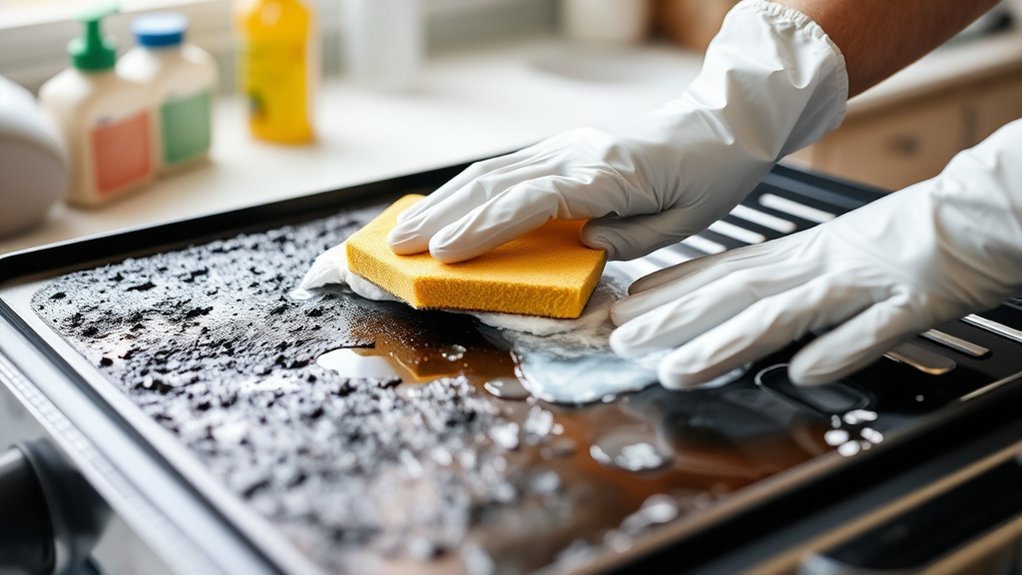

You might think that simply wiping your electric griddle right after use is enough to prevent burnt residue, but that’s rarely the case. Proper cleaning of a burnt electric griddle requires more than a quick swipe; it involves a careful process of cooling, inspecting, and treating stubborn burnt spots without damaging the surface.
Understanding these steps ensures your griddle stays in good condition and performs well over time. Let’s explore what you need to do first.
Key Takeaways
- Always unplug and let the griddle cool completely before cleaning to avoid electric shock and burns.
- Use a plastic scraper and non-abrasive sponge with mild dish soap and warm water to remove burnt residue.
- Soak the griddle surface in warm soapy water for 15–20 minutes to loosen tough burnt spots before scrubbing.
- Apply baking soda and white vinegar to burnt areas, let fizz, then scrub gently to lift stubborn grime.
- Thoroughly rinse and dry all parts before reassembling to prevent corrosion and maintain griddle longevity.
Unplugging and Getting Your Griddle Ready
Before you begin cleaning, how do you guarantee your electric griddle is safe to handle? First, prioritize unplugging safety by disconnecting the griddle from the power source. Never attempt to clean while it’s still plugged in, as this risks electric shock.
After unplugging, heed the heat warning: allow the griddle to cool completely, typically 30 to 60 minutes, depending on model and recent use. Touching a hot surface can cause burns or damage cleaning materials. Confirm the surface temperature is room temperature before proceeding.
Avoid rushing this step; safety comes first. Once cool, you can safely prepare your workspace and gather cleaning materials. This initial preparation minimizes hazards and ensures effective cleaning without injury or equipment damage.
Tools and Supplies Needed for Cleaning Your Electric Griddle
What tools and supplies do you need to clean your electric griddle effectively? Focus on items designed specifically for the task to avoid unused topic ideas or unrelated cleanup. Equip yourself with essentials that tackle burnt residue without damaging the surface.
Gather these key tools:
- Non-abrasive scrubber or sponge: prevents scratches while removing stuck-on food.
- Plastic scraper: safely loosens burnt bits without harming the griddle.
- Mild dish soap and warm water: breaks down grease and simplifies cleaning.
Avoid harsh chemicals or steel wool pads, which can cause permanent damage. Having the right supplies ready ensures efficient, targeted cleaning, minimizing effort and protecting your appliance. Preparing properly now saves time and frustration later.
Figuring Out How Bad the Burn Is
How severely your electric griddle is burnt will determine the cleaning method you should use. Begin by inspecting the cooking surface under good lighting. Light discoloration or minor residue indicates surface-level burns, treatable with gentle scrubbing.
If you notice thick, charred layers, the burn is severe and may require stronger cleaning agents or specialized tools. Assess the griddle’s material durability before proceeding; non-stick coatings demand gentler care to avoid damage, while cast iron can tolerate more abrasive methods.
Always consider burner safety. Ensure the unit is unplugged and completely cooled to prevent electrical hazards. Avoid immersing electrical components in water.
Accurately gauging the burn severity helps you select an effective, safe cleaning approach without compromising the griddle’s longevity or functionality.
Removing Loose Food Debris From Your Electric Griddle
Where should you begin when tackling residue on your electric griddle? Start by removing loose food debris to ensure effective burner maintenance and preserve your searing techniques.
First, unplug the griddle and allow it to cool completely. Then, use a plastic or wooden scraper to gently lift off flakes and crumbs without damaging the surface.
Next, wipe the surface with a dry paper towel or cloth to collect the loosened particles. Finally, vacuum or brush away debris around the burner area to prevent clogging and uneven heating.
Follow these steps:
- Scrape off charred bits carefully
- Wipe with a dry cloth to pick up residue
- Clear debris near burners to maintain optimal heat
This initial cleanup prevents buildup that interferes with precise searing and prolongs your griddle’s lifespan.
Using Warm Soapy Water to Loosen Burnt Residue
Why does warm soapy water work effectively on burnt residue? The heat softens the hardened particles, while the soap’s surfactants break down grease and oils binding the burnt residue to the griddle surface.
Warm soapy water softens burnt particles and breaks down grease, making residue easier to remove from griddles.
To maximize cleaning efficiency, fill the griddle with warm water and add a few drops of mild dish soap. Let it soak for 15-20 minutes, allowing the solution to penetrate and loosen the burnt material.
After soaking, use a non-abrasive sponge or cloth to gently scrub the surface, focusing on stubborn spots. Avoid harsh scrubbing that can damage the non-stick coating.
Rinse thoroughly with warm water to remove all soap traces. This method improves cleaning efficiency by softening and emulsifying burnt residue, making subsequent cleaning steps easier and more effective.
Applying Baking Soda and Vinegar for Tough Stains
Although warm soapy water helps loosen burnt residue, some tough stains require a stronger approach. Applying baking soda and vinegar leverages baking science to break down stubborn burnt particles and neutralize the burnt aroma.
Start by sprinkling a generous layer of baking soda over the affected area. Next, pour white vinegar slowly, allowing the mixture to fizz and lift grime. Let it sit for 10–15 minutes to maximize reaction time. Finally, wipe the surface with a damp cloth.
This method effectively:
- Penetrates burnt-on food through chemical reactions
- Softens hardened residue without harsh chemicals
- Neutralizes unpleasant burnt aroma for a fresher griddle
This precise application ensures thorough cleaning while preserving your griddle’s surface integrity.
Scrubbing Techniques That Protect Your Nonstick Surface
Once you’ve loosened burnt residue with baking soda and vinegar, the next step is scrubbing without damaging your nonstick surface. Use a soft sponge or nylon scrubber to avoid scratches. Avoid steel wool or abrasive pads.
Always ensure the griddle is unplugged, prioritizing cord safety during cleaning. Perform burner maintenance by gently wiping burners after scrubbing to prevent residue buildup.
| Technique | Tip |
|---|---|
| Soft sponge | Apply gentle pressure |
| Nylon scrubber | Use circular motions |
| Avoid abrasives | No steel wool or harsh pads |
| Cord safety | Unplug before scrubbing |
| Burner maintenance | Clean burner area with damp cloth post-scrub |
Following these ensures effective cleaning while preserving your griddle’s longevity and performance.
Cleaning the Griddle’s Drip Tray and Accessories
Start by removing any debris from the drip tray to prevent buildup and odors. Soak the tray and accessories in warm, soapy water to loosen burnt residue.
Then, scrub them gently with a nonabrasive sponge to restore cleanliness without damage.
Removing Drip Tray Debris
How do you effectively remove debris from your griddle’s drip tray? Start by carefully detaching the drip tray to avoid spills. For optimal debris removal, follow these steps:
Use a plastic scraper or spatula to loosen stuck-on grease and food particles. Wipe the tray with paper towels to absorb excess oil before rinsing. Inspect corners and crevices where debris tends to accumulate and remove buildup with a soft brush.
Perform debris removal immediately after cooking to prevent hardened residue. Handle the drip tray gently to maintain its integrity. Proper debris removal ensures your griddle’s drip tray remains functional and hygienic, reducing odors and improving overall maintenance.
Avoid harsh abrasives that could damage the tray’s surface. This method sets the stage for thorough cleaning in subsequent steps.
Soaking and Scrubbing Accessories
After clearing debris from the drip tray, soaking and scrubbing your griddle’s accessories will remove stubborn grease and residue effectively. Begin by filling a sink or basin with hot water and a degreasing detergent. Use soaking techniques such as letting the accessories sit submerged for 15-30 minutes to loosen burnt-on grime.
After soaking, apply a scrubbing brush with nylon bristles to avoid scratching surfaces. Focus on crevices and corners where residue accumulates. Rinse thoroughly under running water to remove loosened debris and detergent.
For tougher spots, repeat soaking or gently use a non-abrasive pad combined with the scrubbing brush. Dry all components completely before reassembling to prevent corrosion. Proper soaking techniques and scrubbing brushes extend the lifespan of your griddle’s accessories and maintain optimal performance.
Drying and Storing Your Electric Griddle Properly
Where should you focus once your electric griddle is clean? Proper drying and storage are crucial for burn prevention and extending your griddle’s lifespan. After washing, thoroughly dry the surface and all removable parts to prevent moisture-related damage. Use a soft cloth or air-dry in a well-ventilated area.
Follow these storage tips to keep your griddle in optimal condition:
- Store in a cool, dry place away from direct sunlight to avoid warping or discoloration.
- Keep the power cord loosely coiled and separate to prevent damage.
- Cover the griddle with a breathable cloth or its original cover to block dust and debris.
Tips to Prevent Burnt Build-Up in Future Cooking
To prevent burnt build-up, you should establish a regular cleaning routine after each use. Always apply a non-stick spray before cooking to reduce residue.
Additionally, avoid overheating the griddle to maintain its surface integrity and prevent scorching.
Regular Cleaning Routine
Maintaining a regular cleaning routine is essential to prevent burnt build-up on your electric griddle. After each use, allow the surface to cool, then wipe away residues with a damp cloth. Consistently addressing spills reduces stubborn deposits that impair performance.
Consider these steps for optimal upkeep:
- Use burner alternatives like low or medium heat to avoid overheating and burning food onto the surface.
- Select cookware compatible with your griddle’s surface to minimize scratching and ensure even heat distribution.
- Clean immediately after cooking with a non-abrasive sponge and mild detergent to maintain the non-stick coating integrity.
Adhering to this routine extends your griddle’s lifespan and enhances cooking efficiency, reducing the need for intensive scrubbing later. Regular maintenance prevents burnt build-up, keeping your appliance in top condition.
Use Non-Stick Spray
Wiping your griddle after each use helps reduce residue, but preventing burnt build-up starts before cooking. Apply a thin, even layer of nonstick spray on the griddle surface before heating.
This two word idea, nonstick spray, forms a protective barrier, minimizing food adhesion and burnt residue. Use sprays designed for high-heat cooking to ensure cooking safety and avoid chemical breakdown.
Spray from a distance of about 6 to 8 inches for uniform coverage without excess buildup. Avoid overapplication, as pooling oil can cause uneven cooking and increase residue.
Incorporating nonstick spray into your preparation routine reduces the frequency of deep cleaning and extends your griddle’s lifespan. Remember, consistent use of nonstick spray alongside proper cleaning habits helps maintain optimal cooking performance and prevents burnt build-up effectively.
Avoid Overheating Griddle
How hot should your electric griddle get before it’s considered overheating? Typically, temperatures above 450°F (232°C) risk damaging the non-stick surface and causing burnt residue buildup. To ensure proper hot plate care and maintain electrical safety, monitor and control your griddle’s heat settings closely.
Follow these tips to avoid overheating:
- Use medium heat for most cooking tasks; reserve high heat for quick searing only.
- Never leave the griddle unattended while powered on to prevent accidental temperature spikes.
- Regularly check the temperature dial or digital display to confirm it stays within safe limits.
Frequently Asked Questions
Can I Use a Metal Scraper on a Nonstick Griddle?
You shouldn’t use a metal scraper on a nonstick griddle, as it risks damaging the coating. Prioritize nonstick safety by opting for plastic or silicone scrapers to clean without scratching or compromising the surface’s integrity.
How Often Should I Deep Clean My Electric Griddle?
You should adhere to a disciplined deep cleaning schedule every 4 to 6 weeks to maintain optimal performance.
How often you clean depends on usage frequency and residue buildup, ensuring your electric griddle stays efficient and hygienic.
Is It Safe to Clean the Heating Element Directly?
It’s not safe cleaning the heating element directly; doing so risks damage and electrical hazards. You should always disconnect power first and use manufacturer-approved methods to ensure cleaning safety and maintain your griddle’s proper function.
Can Lemon Juice Be Used Instead of Vinegar for Cleaning?
Just like a classic switch in a recipe, you can use lemon juice as a vinegar swap for cleaning. Its acidity breaks down grime effectively, so squeeze and scrub confidently, ensuring you rinse thoroughly to avoid residue buildup.
What Should I Do if My Griddle Still Smells Burnt After Cleaning?
If your griddle still smells burnt, check for lingering residue in crevices. Run a vinegar-water cycle, then air it out thoroughly. Repeat cleaning if needed, and ensure it’s completely dry before storage to eliminate burnt odor.
Conclusion
You might think burnt residue permanently damages your griddle, but with proper cleaning, it doesn’t have to. By unplugging, soaking, and using gentle scrubbing techniques, you can restore your griddle’s surface without harming its coating.
Regular maintenance and careful drying prevent buildup and prolong its life. Follow these steps consistently, and you’ll keep your electric griddle functioning efficiently.
Proving that even tough burns aren’t the end if you clean smart and act promptly is key to how to clean burnt electric griddle effectively.