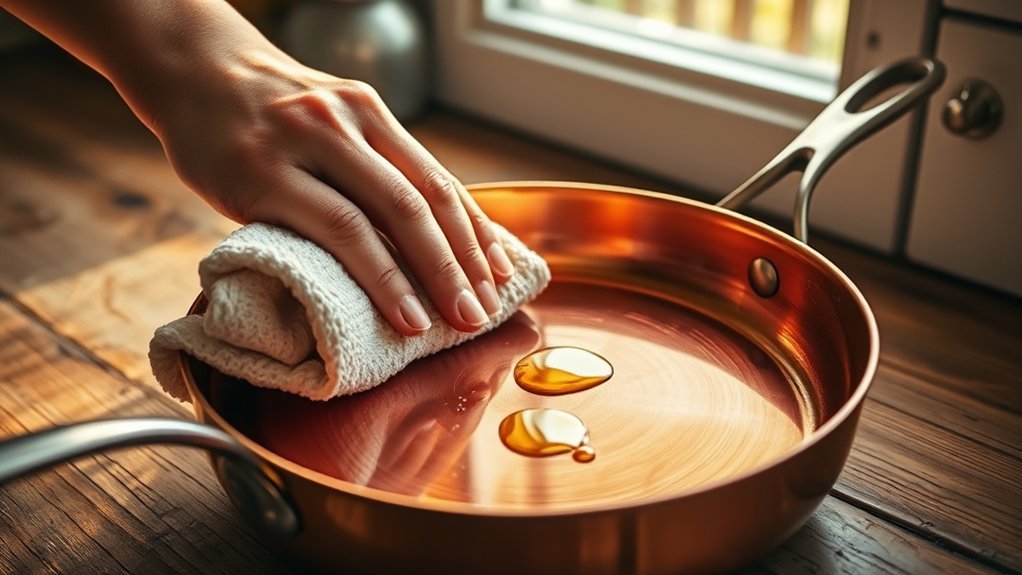

Did you know that properly seasoning your copper skillet can extend its lifespan by years while enhancing its cooking performance?
Seasoning a copper skillet is essential if you want to protect this valuable cookware and achieve a naturally non-stick surface.
There’s a specific process you’ll need to follow.
It involves more than just applying oil—you’ll need the right technique and materials to create a durable, protective layer.
Understanding these steps will ensure your skillet stays in excellent condition for every meal.
Key Takeaways
- Clean the skillet thoroughly with warm water, mild soap, and a lemon juice-salt paste to remove tarnish, then dry completely.
- Apply a thin, even layer of high-smoke-point oil like flaxseed, grapeseed, or canola oil to the dry skillet surface.
- Heat the oiled skillet on medium heat until the oil smokes and polymerizes into a protective, non-stick layer.
- Let the skillet cool naturally, then wipe off any excess oil with a clean cloth to avoid sticky residue.
- Repeat the oil application and heating process 2-3 times to build a durable, effective seasoning layer on the copper.
Why Season Your Copper Skillet?
Seasoning your copper skillet creates a protective layer that enhances its durability and cooking performance. By applying this layer, you control the skillet’s copper patina, which naturally forms through oxidation but can lead to uneven discoloration and reduced effectiveness.
Seasoning chemistry involves a controlled polymerization of oils or fats on the skillet’s surface, forming a thin, resilient barrier. This barrier not only prevents food from sticking but also shields the copper from corrosive elements, extending your skillet’s lifespan.
Without seasoning, the copper patina can degrade the skillet’s heat conductivity and alter flavor profiles. So, by seasoning, you maintain optimal cooking conditions and preserve the skillet’s aesthetic and functional qualities, ensuring consistent heat distribution and long-term reliability in your kitchen.
How to Season Your Copper Skillet
How do you create a durable, non-stick surface on your copper skillet? Mastering the seasoning fundamentals is key to enhancing your copper cookware’s performance and longevity. Start by heating the skillet gently, then apply a thin layer of high-smoke-point oil, such as flaxseed or grapeseed oil. Spread the oil evenly to avoid sticky spots.
Follow these essential steps:
- Heat the oiled skillet on medium heat until it smokes, allowing the oil to polymerize into a protective layer.
- Let the skillet cool naturally before wiping off any excess oil with a clean cloth.
- Repeat this process 2-3 times for optimal seasoning and durability.
This method seals the copper cookware, creating a smooth, resilient cooking surface that improves with use.
Cleaning Your Copper Skillet Before Seasoning
A properly cleaned copper skillet guarantees the seasoning process adheres evenly and lasts longer. Begin by rinsing your skillet with warm water to remove loose debris. Avoid harsh detergents; instead, use a mild soap and a soft sponge to prevent scratching the copper surface.
Next, gently scrub any tarnish with a paste of lemon juice and salt, a proven care technique that restores shine without damaging the metal. Rinse thoroughly and dry immediately to prevent water spots.
Before seasoning, ensure the skillet is completely dry, as moisture disrupts oil bonding. Store your copper skillet in a dry place with proper metal storage, using a soft cloth or protective sleeve to avoid scratches and oxidation.
Cleanliness and correct storage establish the foundation for a flawless seasoning layer.
Pick the Best Oil for Seasoning Your Copper Skillet
Which oil you choose plays a pivotal role in developing a durable, non-stick patina on your copper skillet. Proper oil selection ensures effective polymerization, creating a resilient layer that enhances your copper cookware’s performance and longevity.
You want oils with a high smoke point and neutral flavor to avoid unwanted residues.
Consider these top options for seasoning your skillet:
- Flaxseed oil: Highly regarded for its drying properties and strong polymerization.
- Grapeseed oil: Offers a high smoke point and neutral taste.
- Canola oil: Affordable, with a suitable smoke point for seasoning.
Avoid oils that smoke excessively or leave sticky residues. Choosing the right oil guarantees a smooth, long-lasting finish, making your copper cookware truly shine.
Common Mistakes to Avoid When Seasoning Your Copper Skillet
When seasoning your copper skillet, avoid using oils that don’t polymerize properly, as this can ruin the coating. Always clean the skillet thoroughly before seasoning to guarantee a smooth, even layer.
Also, don’t overheat the pan, since excessive heat can damage both the seasoning and the skillet itself.
Using Incorrect Oil Types
Why does the type of oil you use matter so much in seasoning your copper skillet? Choosing the incorrect oil can lead to poor seasoning results and excessive oil smoke during heating.
Oils with a low smoke point burn quickly, leaving a sticky residue instead of forming a durable, non-stick layer. To avoid these issues, select oils that withstand high temperatures and polymerize effectively.
Avoid these common pitfalls with oil selection:
- Using butter or olive oil, which have low smoke points and cause excessive oil smoke.
- Applying too much oil, resulting in uneven seasoning and sticky buildup.
- Choosing oils that don’t polymerize well, like vegetable oil, which won’t create a proper seasoning layer.
Stick to high smoke-point oils like flaxseed, grapeseed, or canola oil for optimal seasoning.
Skipping Proper Cleaning
How thoroughly you clean your copper skillet before seasoning can make or break the process. Skipping proper cleaning leads to insufficient cleaning, leaving residues that interfere with oil bonding. This results in uneven seasoning and can cause your skillet to lose its non-stick properties prematurely.
Avoid improper maintenance by following a strict cleaning routine before seasoning.
| Cleaning Step | Common Mistake | Impact on Seasoning |
|---|---|---|
| Remove food debris | Skipping this step | Residue blocks oil |
| Degrease surface | Using mild soap only | Oils remain, uneven layer |
| Dry thoroughly | Air drying | Moisture prevents bonding |
Proper cleaning ensures a durable, effective seasoning layer on your copper skillet every time.
Overheating The Skillet
Avoid overheating your copper skillet during seasoning to preserve its integrity and achieve an even, durable coating. Overheating risks include warping the metal, damaging the seasoning layer, and causing uneven oil polymerization. To prevent these issues, maintain strict temperature control throughout the process.
Keep these tips in mind:
- Use low to medium heat to avoid sudden temperature spikes.
- Preheat the skillet gradually, allowing even heat distribution.
- Monitor the skillet’s surface closely. Smoke signals excessive heat.
How Often Should You Re-Season Your Copper Skillet?
You should re-season your copper skillet whenever you notice food starting to stick or the surface looking dull and uneven.
As a general rule, re-seasoning every few months keeps the protective layer effective and maintains performance. Pay attention to these signs to know exactly when your skillet needs fresh seasoning.
Signs Your Skillet Needs
When should you re-season your copper skillet to keep it performing at its best? Recognizing the signs your copper skillet needs re-seasoning is essential for maintaining its non-stick surface and preventing rust or discoloration.
Pay close attention to these indicators:
- Food starts sticking more frequently, signaling a compromised seasoning layer.
- You notice dull spots or uneven coloration on the skillet’s surface, indicating wear.
- Rust patches or discoloration appear, especially around the edges or cooking surface.
If you observe any of these signs your copper skillet requires attention, it’s time to re-season. Regularly monitoring its condition ensures optimal cooking performance and prolongs the skillet’s lifespan. Addressing these signs promptly keeps your skillet ready for every culinary task.
Recommended Seasoning Frequency
Noticing signs that your copper skillet needs re-seasoning naturally leads to the question of how often this maintenance should occur. The seasoning frequency depends on usage and care; frequent cooks may need a tighter maintenance schedule, while occasional use requires less frequent attention.
Monitoring your skillet’s surface regularly helps you adjust accordingly.
| Usage Frequency | Recommended Seasoning Frequency |
|---|---|
| Daily Use | Every 1-2 months |
| Weekly Use | Every 3-4 months |
| Occasional Use | Twice a year |
Stick to this maintenance schedule to preserve your skillet’s non-stick qualities and prevent oxidation. Staying consistent with seasoning ensures longevity and peak cooking performance.
How to Maintain the Seasoning on Your Copper Skillet
How often should you care for the seasoning on your copper skillet to keep it performing at its best? Regular maintenance is essential to preserve the nonstick surface and prevent damage.
After each use, gently clean the skillet without harsh detergents, then lightly reapply a thin layer of oil to maintain the seasoning. Here are key care tips and storage ideas to follow:
- Clean with warm water and a soft sponge; avoid abrasive scrubbers that strip seasoning.
- Dry thoroughly and apply a light coat of cooking oil to reinforce the protective layer.
- Store your skillet in a dry place, ideally hanging or with a paper towel between pans to prevent scratches.
Consistent attention ensures your copper skillet stays nonstick and lasts for years.
Tips for Restoring a Tarnished or Damaged Copper Skillet
Why does your copper skillet lose its shine or develop spots over time? Exposure to air and moisture causes oxidation, leading to tarnish and discoloration.
To restore your skillet, start by cleaning it thoroughly with a gentle copper cleaner or a homemade paste of lemon juice and salt. Rinse and dry completely.
If you want to preserve the skillet’s historical patina, avoid abrasive scrubbing that removes this valued characteristic. Instead, apply a restoration finish designed for copper cookware to revive its luster while protecting the surface.
Finally, polish the skillet with a soft cloth to enhance its shine. Regular care and proper seasoning will maintain both the skillet’s functionality and its beautiful copper appearance for years to come.
Frequently Asked Questions
Can I Use a Copper Skillet on Induction Cooktops?
You can’t use a pure copper skillet on induction cooktops because it lacks induction compatibility. However, copper pans with a magnetic stainless steel base ensure copper safety and work efficiently on induction surfaces.
Is Copper Safe for Cooking Acidic Foods?
Certainly, copper’s chemical charm challenges you when cooking acidic foods. For copper safety, always assure a protective lining like tin or stainless steel; unlined copper reacts, risking toxicity and flavor alteration.
How Do I Remove Green Patina From Copper Cookware?
To remove patina, mix lemon juice and salt, then scrub gently with a soft cloth. For thorough copper cleaning, rinse with warm water and dry immediately to prevent new tarnish forming on your cookware’s surface.
Can Copper Skillets Go in the Dishwasher?
Imagine your copper skillet’s gleaming surface dulled by dishwasher harshness. You shouldn’t put it in the dishwasher; it risks damage. For lasting beauty, hand wash carefully.
Also, check induction compatibility before cooking.
What Are the Benefits of Copper Cookware Over Stainless Steel?
You’ll appreciate copper cookware’s superior heat conductivity and precise temperature control compared to stainless steel. Understanding seasoning fundamentals enhances its non-stick quality, making cookware comparisons clear.
Copper offers unmatched cooking performance and responsiveness for serious chefs.
Conclusion
Seasoning your copper skillet not only enhances its performance but can extend its lifespan by up to 50%, making it a smart investment in your kitchen. By following proper seasoning and maintenance steps, you’ll keep that beautiful copper surface non-stick and oxidation-free.
Remember, regular care is key—don’t skip cleaning and light oiling after each use. With just a bit of attention, your skillet will serve you beautifully for years to come.
In conclusion, mastering how to season a copper skillet ensures you protect your investment while enjoying excellent cooking results every time.