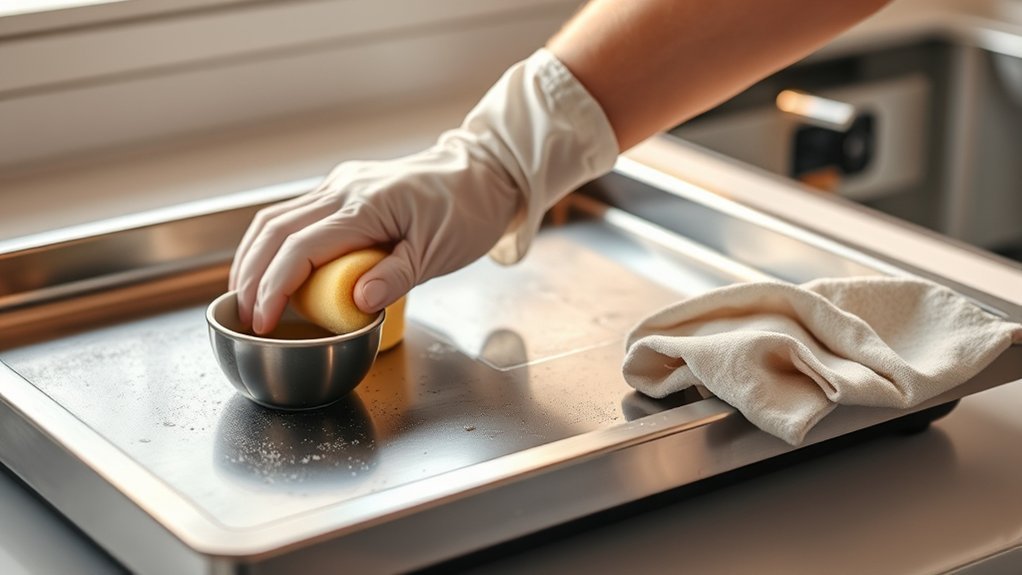

Maintaining a griddle is essential for ensuring it stays in top condition and performs well over time. Neglecting proper care can quickly turn it into a stubborn, rusted surface that’s difficult to clean.
You’ll want to clean it right after use, avoid harsh tools, and periodically re-season to keep that smooth, non-stick finish intact. Understanding the right tools and timing for deep cleans can save you frustration and extend your griddle’s life.
So let’s explore exactly how to keep yours performing at its best.
Key Takeaways
- Clean the griddle after every use by scraping debris, wiping with a damp cloth, rinsing if needed, and drying thoroughly to prevent rust.
- Season cast iron griddles monthly by applying a thin layer of high-smoke-point oil and heating gradually for a protective nonstick surface.
- Use appropriate tools like stainless steel scrapers and soft sponges to avoid damaging the surface or seasoning.
- Perform deep cleaning and re-seasoning when persistent residue, rust, or sticky buildup appears, typically every 1-6 months depending on use.
- Store the griddle in a dry, ventilated area with protective covering to prevent moisture exposure and rust formation.
Pick the Best Tools and Supplies for Your Griddle
Where should you start when selecting tools and supplies for your griddle? Focus first on essential griddle tools designed for effective cooking and upkeep. Choose sturdy spatulas and scrapers made from stainless steel or heat-resistant materials to handle food and debris without damaging the surface.
For maintenance supplies, prioritize high-quality oils and seasoning products that protect and enhance your griddle’s non-stick surface. Additionally, invest in durable cleaning brushes and pads that won’t scratch but will remove buildup efficiently.
Opt for tools with ergonomic handles to ensure safety and comfort during use. By carefully picking the right griddle tools and maintenance supplies, you’ll extend your griddle’s lifespan and keep it performing at its best, making daily cooking and regular care easier and more effective.
How to Clean Your Griddle After Every Use
How often you clean your griddle directly affects its performance and longevity. After every use, prioritize griddle safety and cleaning ethics by promptly removing food residue and grease to prevent buildup and contamination.
Begin by scraping the surface with a griddle scraper while it’s still warm, avoiding harsh tools that damage the seasoning. Next, wipe down with a damp cloth or sponge, followed by a quick rinse if needed. Finally, dry the griddle thoroughly to prevent rust.
Focus on these steps:
- Scrape off food particles and grease carefully
- Use warm water and a mild detergent sparingly
- Avoid abrasive pads that strip seasoning
- Dry completely to maintain surface integrity
Consistent cleaning keeps your griddle safe, efficient, and ready for your next cook.
When to Deep Clean and Re-Season Your Griddle
You should deep clean your griddle when you notice buildup that regular cleaning can’t remove or when food starts sticking more than usual.
Re-seasoning is essential every few months to maintain a strong non-stick surface and protect against rust. Staying on top of this routine keeps your griddle performing at its best and extends its lifespan.
Signs You Should Deep Clean
When should you deep clean and re-season your griddle to keep it performing at its best? You’ll want to act when signs of wear threaten your griddle materials and rust prevention efforts. Ignoring these signs can degrade your cooking surface and shorten your griddle’s lifespan.
Look for these indicators:
- Persistent food residue that won’t scrape off easily
- Dull or uneven cooking surface discoloration
- Visible rust spots developing despite regular cleaning
- Sticky or gummy buildup from oil and seasoning layers
These signs mean your griddle needs a thorough deep clean and re-seasoning. Addressing them promptly protects the integrity of your griddle materials, restores a smooth cooking surface, and reinforces rust prevention, ensuring optimal performance every time you cook.
Frequency Of Re-Seasoning
Noticing signs that your griddle needs a deep clean means it’s time to contemplate how often you should re-season it to maintain peak performance. The frequency of use and heat cycling directly affect when you should re-season.
Heavy use and frequent heating break down the seasoning faster, requiring more frequent maintenance.
| Frequency of Use | Recommended Re-Seasoning Interval |
|---|---|
| Daily (commercial) | Every 1-2 weeks |
| Weekly (home use) | Monthly |
| Occasional (rare use) | Every 3-6 months |
Benefits Of Regular Maintenance
How often should you deep clean and re-season your griddle to keep it performing at its best? Regular maintenance is key to ensuring consistent cooking results and prolonging your griddle’s lifespan.
By deep cleaning and re-seasoning every few weeks or after heavy use, you prevent buildup that can affect flavor and heat distribution. Plus, it saves you money in the long run. Budgeting tips like scheduling maintenance into your routine avoid costly repairs.
Consider these challenge ideas to keep your griddle in prime condition:
- Scrape off residue immediately after cooking
- Use hot water and a scraper for deep cleaning
- Apply a thin layer of oil when re-seasoning
- Store the griddle in a dry, ventilated place
Stay proactive, and your griddle will serve you well for years.
How to Season Your Griddle for Long-Lasting Protection
Because seasoning creates a protective layer on your griddle’s surface, it prevents rust and enhances non-stick performance. To start, clean your griddle thoroughly and dry it completely. Apply a thin, even coat of high-smoke-point oil, like flaxseed or canola, using a cloth or paper towel.
Preheat your griddle gradually to ensure proper heat distribution, allowing the oil to polymerize and bond to the metal. This process, rooted in seasoning science, forms a durable, smooth surface that improves with repeated applications.
After heating for about an hour, let the griddle cool naturally. Regular seasoning maintains this protective layer, preserving your griddle’s functionality and extending its lifespan.
Removing Rust and Tough Residue From Your Griddle
Why does rust form on your griddle despite regular seasoning? Moisture exposure, improper drying, or food acids can cause rust spots and tough residue buildup. To tackle this, focus on effective residue removal and rust prevention techniques.
Start by scrubbing the griddle with a non-metallic brush or steel wool to break down rust flakes. Next, apply a paste of baking soda and water to neutralize acids and lift stubborn stains. Rinse with warm water and dry thoroughly to prevent moisture lingering.
Finally, reseason the surface to restore its protective layer.
Visualize this process:
- Scrubbing rust flakes with steel wool
- Applying baking soda paste evenly
- Rinsing under warm water carefully
- Drying with a clean cloth promptly
These steps ensure your griddle stays rust-free and ready for cooking.
Store Your Griddle to Prevent Rust and Damage
Before storing your griddle, make sure you clean it thoroughly to remove all food particles and moisture. Use a protective covering, such as a fitted grill cover or cloth, to shield it from dust and humidity.
Proper storage prevents rust and extends the life of your griddle.
Clean Thoroughly Before Storage
How do you ensure your griddle stays in top condition during storage? The key is to clean thoroughly before putting it away. Proper cleaning distinguishes seasoning from cleaning. Seasoning builds a protective layer, but cleaning removes food residue and moisture that lead to rust.
To prevent rust effectively, follow these steps:
- Scrape off all food particles with a metal spatula while the griddle is still warm.
- Use a non-abrasive scrubber and mild soap to remove grease and buildup.
- Dry the surface completely with a clean cloth, leaving no moisture behind.
- Apply a thin layer of cooking oil to maintain seasoning and create a rust-preventive barrier.
Use Protective Coverings
Where you store your griddle plays a critical role in preventing rust and damage. To ensure optimal griddle storage, always use protective coverings designed to shield the surface from moisture, dust, and debris.
After cleaning and thoroughly drying your griddle, cover it with a fitted cover made from breathable, water-resistant material. Avoid plastic wraps that trap condensation, which can accelerate rust formation.
Store your griddle in a dry, well-ventilated area to minimize exposure to humidity. If you keep it outdoors or in a garage, consider using heavy-duty covers specifically made for outdoor appliances.
Protective coverings not only prevent physical damage but also extend your griddle’s lifespan by maintaining its seasoning and surface integrity. Consistently applying these steps ensures your griddle remains in top condition between uses.
How to Care for Different Griddle Materials (Cast Iron, Steel, Nonstick)
Although griddles come in various materials, each type demands specific care to maintain its performance and longevity. Understanding cast iron quirks is essential. You must season it regularly to build a protective, nonstick surface and prevent rust, which ensures material longevity.
Steel griddles require thorough drying after cleaning to avoid corrosion, and occasional oiling to preserve their finish. Nonstick griddles need gentle cleaning with non-abrasive tools and should never be overheated to protect their coating.
- Season your cast iron griddle monthly for optimal performance
- Wipe down steel griddles after each use to prevent rust
- Use soft sponges and mild soap on nonstick surfaces
- Store all griddles in a dry place, ideally covered to avoid dust buildup
Troubleshooting Common Griddle Maintenance Problems
Even with proper care tailored to your griddle’s material, maintenance issues can still arise. If you notice uneven heating, check for buildup beneath the cooking surface. Regularly clean to prevent residue that disrupts heat distribution.
For rust on cast iron griddles, apply a thorough seasoning after scrubbing with a stiff brush. Nonstick surfaces losing their coating require gentle cleaning and avoiding metal utensils.
When grease fires occur, reduce oil use and clean grease traps frequently. Stubborn stains or burnt-on food can be removed with a mixture of baking soda and water, applied and scrubbed gently.
These troubleshooting tips align with essential griddle maintenance practices, ensuring your griddle stays efficient and safe. Address problems early to extend your griddle’s lifespan and maintain optimal performance.
Frequently Asked Questions
Can I Use My Griddle on an Induction Cooktop?
You can use your griddle on an induction cooktop only if it has induction compatibility, meaning a magnetic base.
Make certain it offers even heat distribution to cook efficiently and avoid hot spots during use.
How Do I Fix Uneven Heating on My Griddle?
To fix uneven heat, first feel for fluctuating temperatures and recalibrate your burner settings. Conduct careful cleaning and seasoning to stabilize surfaces.
For stubborn spots, seek professional griddle repair to restore reliable, radiant, and robust results.
What Should I Do if My Griddle Warps?
If your griddle warps, it’s usually from rapid temperature changes causing hot spots. You’ll want to let it cool gradually and avoid overheating. Consider replacing it if warping severely affects cooking performance.
Is It Safe to Use Metal Utensils on My Griddle?
Think of your griddle like a delicate canvas. Using metal utensils can scratch that surface, reducing induction compatibility and lifespan.
Instead, opt for silicone or wooden tools to protect its integrity and ensure consistent cooking performance.
Can I Cook Acidic Foods on a Seasoned Griddle?
You can cook acidic foods on a well-seasoned griddle, but limit exposure time to protect the seasoned surface. Quick cooking prevents damage, preserving your seasoning and ensuring balanced surface care for long-lasting performance.
Conclusion
Think of your griddle as a trusted steed—treat it with care, and it’ll carry you through countless culinary adventures. Clean it gently after each ride, nourish it with seasoning, and banish rust like a vigilant guardian. Store it dry and protected, ready for the next journey.
By respecting these rituals, you ensure your griddle remains a dependable partner, delivering flawless performance and delicious results every time you saddle up to cook. Proper maintenance is key to keeping your griddle in top shape for years of use.