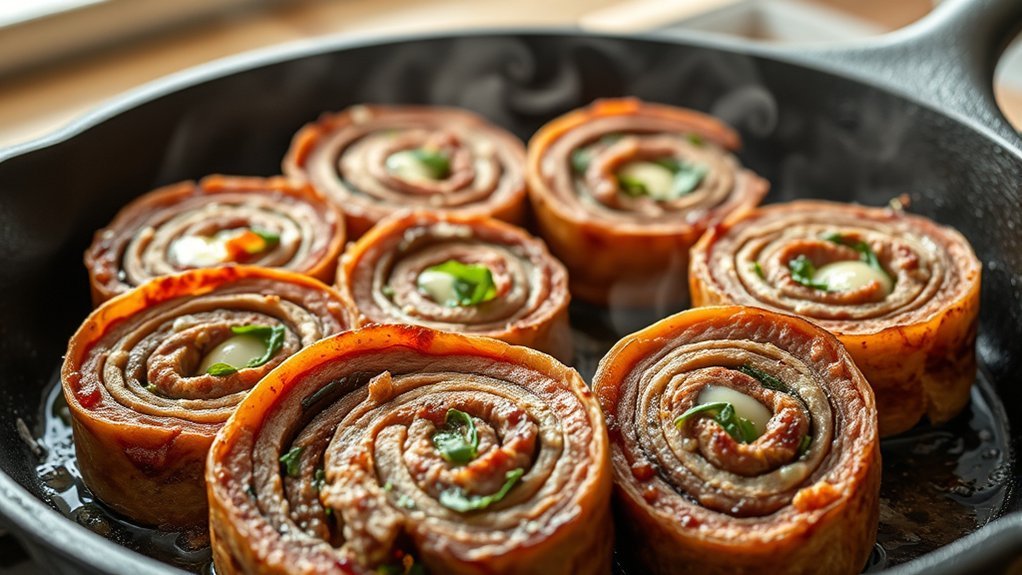

Cooking premade steak pinwheels in a cast iron skillet offers a straightforward way to achieve a flavorful, restaurant-quality result at home.
Using a cast iron skillet ensures an even sear and helps lock in the juices for a tender interior.
You’ll want to start by properly preparing the pinwheels and your skillet before cooking.
Mastering the right temperature and timing is key to avoid common pitfalls that can compromise texture and taste.
These details are essential if you’re aiming for perfection with your premade steak pinwheels.
Following the right steps will elevate your meal and make every bite delicious.
Key Takeaways
- Thaw premade steak pinwheels in the refrigerator and let sit at room temperature for 15-20 minutes before cooking.
- Preheat a clean, well-seasoned cast iron skillet until smoking hot and add high smoke point oil.
- Sear pinwheels undisturbed for 3-4 minutes per side to form a golden crust, using tongs to flip gently.
- Use a meat thermometer to check for 135°F (medium-rare) or 145°F (medium) internal temperature.
- Rest cooked pinwheels for 5–7 minutes tented with foil to redistribute juices before serving.
What You Need to Cook Steak Pinwheels
To cook steak pinwheels in a cast iron skillet, you’ll need a few essential items to ensure success. Start with properly thawed premade steak pinwheels, paying close attention to refrigeration timing. Allow them to sit at room temperature for 15-20 minutes before cooking to ensure even heat distribution.
Have a reliable cast iron skillet, cooking oil with a high smoke point, and tongs ready. For seasoning, keep it simple with salt and pepper unless your pinwheels are pre-seasoned. Don’t forget a meat thermometer to check doneness accurately.
Lastly, consider your sauce pairing carefully. Choose sauces that complement the steak’s flavor without overpowering it, such as chimichurri, garlic butter, or a light balsamic glaze. These essentials will set you up for perfectly cooked steak pinwheels every time.
Preparing Your Cast Iron Skillet for Cooking
How should you prepare your cast iron skillet to achieve the best sear on your steak pinwheels? Start by ensuring your skillet is clean and well-seasoned. Proper cast iron maintenance means wiping it with a thin layer of seasoning oils before heating.
Preheat the skillet over medium-high heat until it’s smoking slightly, which guarantees a perfect sear.
| Step | Reason |
|---|---|
| Clean & dry skillet | Prevents sticking and rust |
| Apply thin seasoning oil | Enhances non-stick surface |
| Preheat until smoking | Maximizes heat retention & sear |
Following these steps will help you cook evenly browned, flavorful steak pinwheels without sticking or burning.
Should You Thaw Premade Steak Pinwheels Before Cooking?
You can cook premade steak pinwheels either thawed or frozen, but each method affects cooking time and texture. Thawing helps the pinwheels cook evenly and develop a better sear in your cast iron skillet.
Cooking from frozen is possible, but you’ll need to adjust your heat and timing to ensure they cook through without burning.
Benefits Of Thawing
Why should you consider thawing premade steak pinwheels before cooking them in a cast iron skillet? Thawing ensures even cooking and better texture, addressing common thawing misconceptions. It’s not just about convenience but optimizing flavor.
Proper thawing timing prevents the outside from overcooking while the inside remains cold.
| Benefit | Explanation |
|---|---|
| Even Cooking | Thawed pinwheels cook uniformly |
| Improved Texture | Avoids rubbery or unevenly cooked meat |
| Better Flavor Absorption | Seasonings penetrate more effectively |
Cooking From Frozen
While thawing offers clear advantages, cooking premade steak pinwheels directly from frozen can save time and still yield satisfying results when done correctly. You’ll want to preheat your cast iron skillet over medium heat and add a bit of oil to prevent sticking.
Place the frozen pinwheels in the skillet, cooking them low and slow to ensure the center heats through without burning the exterior. Avoid the irrelevant topic of rushing the cooking process, as this often leads to uneven doneness.
Don’t confuse this with the unrelated concept that frozen meat requires drastically different techniques; the key is patience and consistent heat. By managing temperature and cooking time carefully, you can enjoy delicious steak pinwheels without the extra step of thawing.
How to Sear and Cook Steak Pinwheels Perfectly
Start by heating your cast iron skillet over medium-high heat until it’s smoking hot; this guarantees a perfect sear that locks in the steak pinwheels’ juices. Place the pinwheels carefully, giving each enough space to avoid steaming. Let them sear undisturbed for a few minutes until a golden crust forms.
Flip gently to sear the other side. Use tongs to maintain their shape and avoid piercing the meat, which would release juices.
Once seared, reduce heat to finish cooking evenly. When done, rest the pinwheels briefly to redistribute juices. For how to plate, arrange them neatly with complementary sides that balance flavors and textures.
To enhance your meal, consider how to pair these with robust red wines or fresh, zesty salads for a complete experience.
How Long to Cook Steak Pinwheels and Heat Settings
How long you cook steak pinwheels and the heat settings you use are essential for achieving tender, juicy results without overcooking. Start by preheating your cast iron skillet over medium-high heat to ensure a perfect sear.
Cook the pinwheels for about 3 to 4 minutes per side, depending on thickness. Adjust the heat if you notice excessive smoke or burning, lowering it slightly to maintain control.
Following proper stovetop etiquette means never overcrowding the pan, which allows even cooking and prevents steaming. After cooking, let the skillet cool slightly before cleaning to avoid damage.
For efficient pan cleanup, soak the skillet in warm water briefly, then scrub gently with a non-abrasive pad to maintain seasoning and avoid rust.
How to Check When Steak Pinwheels Are Done
You’ll know your steak pinwheels are done by checking for a browned, caramelized exterior and clear juices. Use a meat thermometer to ensure the internal temperature reaches 135°F for medium-rare or 145°F for medium.
Also, press the pinwheels gently to feel for a firm, springy texture indicating they’re cooked through.
Visual Doneness Indicators
Wondering when your steak pinwheels are perfectly cooked without cutting into them? Visual doneness indicators give you reliable clues, so you avoid the unrelated topic of guessing by feel alone. A quick random aside: focusing on color and texture is your best bet.
| Doneness Level | Color on Surface | Texture & Juices |
|---|---|---|
| Rare | Deep red with seared edges | Soft, juices run bright red |
| Medium | Brown with slight pink center | Firm, pinkish juices |
| Well Done | Uniform dark brown | Very firm, minimal juices |
Watch for a consistent sear and juices pooling on top. These signs signal your pinwheels are cooked to perfection without cutting or poking, preserving flavor and presentation.
Internal Temperature Guide
When should you check the internal temperature of your steak pinwheels to guarantee perfect doneness? You should use a reliable meat thermometer once the pinwheels have seared evenly on both sides. Insert it into the center without touching the skillet.
For medium-rare, aim for 130-135°F; medium is 140-145°F. Checking at this stage ensures your steak pinwheels are cooked safely and to your liking.
Using a budget friendly instant-read thermometer is a smart investment for kitchen safety and accuracy. This prevents overcooking and reduces the risk of foodborne illness.
Avoid guessing doneness solely by appearance. Temperature reading is the most precise method. With this approach, you’ll confidently serve juicy, perfectly cooked steak pinwheels every time.
Texture and Firmness Check
How can you tell if your steak pinwheels are perfectly cooked beyond just checking the temperature? Focus on texture and firmness. Press the center gently with your finger or tongs; it should offer slight resistance but not feel tough.
This balance ensures the meat is tender yet holds its shape, delivering the ideal texture contrast between the seared exterior and juicy interior. If your pinwheels were marinated, consider the marinade’s compatibility. Some tenderizers soften the meat more, altering firmness.
Overcooking can negate this effect, resulting in a dry, overly firm bite. Use this tactile method alongside temperature checks to confirm doneness. Mastering this will help you serve steak pinwheels with consistent, pleasing texture and optimum flavor every time.
How to Avoid Common Cooking Mistakes With Steak Pinwheels
Why do some steak pinwheels turn out tough or unevenly cooked? Often, it’s because of common mistakes that could be avoided with clear discussion ideas, steering clear of irrelevant topics like overcomplicating the process. To ensure perfect results:
- Preheat your cast iron skillet thoroughly to get an even sear.
- Avoid overcrowding the pan; cook in batches if needed for consistent heat distribution.
- Don’t flip too often. Let each side develop a good crust before turning.
- Use a meat thermometer to avoid overcooking; aim for medium-rare to medium doneness.
How to Rest Steak Pinwheels for Juicy, Tender Bites
After cooking, let your steak pinwheels rest for about 5 to 7 minutes to allow juices to redistribute evenly. Keep them loosely tented with foil to maintain warmth without trapping steam. This step ensures each bite stays juicy and tender.
Ideal Resting Time
A pivotal step in preparing steak pinwheels is allowing them to rest properly once they’re out of the skillet. Resting lets the juices redistribute, ensuring every bite is juicy and tender. Unlike an unrelated topic such as kitchen safety, this step directly affects your final dish’s quality.
To rest your steak pinwheels ideally, follow these steps:
- Remove pinwheels from heat and place them on a warm plate.
- Tent loosely with aluminum foil to retain warmth without trapping steam.
- Let them rest for 5 to 7 minutes; this timing balances temperature and moisture.
- Avoid cutting immediately, as juices will escape, drying the meat.
Following this precise resting time will enhance flavor and texture, making your cast iron skillet steak pinwheels a delicious success.
Temperature Maintenance Tips
Although resting your steak pinwheels is essential, maintaining the right temperature during this phase assures they stay juicy and tender. After cooking, tent the pinwheels loosely with foil to retain warmth without causing steaming, which can affect texture.
Keep them in a warm spot, ideally around 120°F (49°C), by placing them near the stove or in a turned-off oven with the light on. Avoid stacking pinwheels, as this traps heat unevenly and risks overcooking.
Use a food thermometer to monitor temperature and ensure kitchen safety, preventing bacterial growth. These tips help the juices redistribute evenly, enhancing flavor and tenderness.
What to Serve With Steak Pinwheels for a Complete Meal
What side dishes pair best with steak pinwheels to create a well-rounded meal? Focus on flavor pairings that complement the rich, savory profile of your steak pinwheels while enhancing plating presentation for visual appeal. Here are four excellent options:
- Garlic Mashed Potatoes Creamy texture balances the meat’s robustness.
- Roasted Asparagus Adds a crisp, fresh contrast and vibrant color.
- Caesar Salad Provides a refreshing, tangy note and leafy greens.
- Caramelized Onions Intensifies savory depth and adds sweet complexity.
How to Store and Reheat Leftover Steak Pinwheels
Wondering how to keep your steak pinwheels fresh and tasty after cooking? For proper leftover storage, allow the pinwheels to cool completely, then place them in an airtight container. Store them in the refrigerator and consume within 3-4 days to maintain optimal flavor and texture.
When it’s time to reheat, choose reheating methods that preserve juiciness. Use a cast iron skillet over medium-low heat, covering it to retain moisture, and warm the pinwheels evenly. Alternatively, reheat in a preheated oven at 350°F (175°C) for 10-15 minutes wrapped in foil.
Avoid microwaving, as it can dry out the meat and alter the texture. Following these guidelines ensures your leftover steak pinwheels remain delicious and satisfying.
Frequently Asked Questions
Can I Use Other Types of Skillets Besides Cast Iron?
Yes, cast iron can be replaced with alternative cookware like stainless steel or non-stick skillets. Just ensure even heat distribution and proper preheating to achieve a similar sear and avoid sticking when cooking your steak pinwheels.
Are Premade Steak Pinwheels Gluten-Free?
You can’t assume premade steak pinwheels are gluten-free since pinwheel fillings often contain breadcrumbs or sauces with gluten. Always check labels to confirm if your premade gluten-free pinwheels meet your dietary needs before cooking.
What Wine Pairs Best With Steak Pinwheels?
Oh, because steak pinwheels are so delicate, you’d want a bold wine, right? For perfect pairing wine, choose a full-bodied Cabernet Sauvignon or Malbec to complement the rich flavors of steak pinwheels and elevate your meal experience.
Can I Freeze Cooked Steak Pinwheels?
Yes, you can freeze cooked steak pinwheels. For best freeze options, wrap them tightly in foil or plastic wrap, then store in airtight containers.
Label with the date, and consume within 2-3 months for optimal flavor and texture.
How to Make Homemade Steak Pinwheels From Scratch?
Making homemade steak pinwheels from scratch is like painting a masterpiece. Layer thinly sliced steak, cheese, and herbs, roll tightly, slice, then sear in a skillet. These scratch made pinwheels deliver rich, savory flavor every time.
Conclusion
Now that you know the secrets to perfectly searing steak pinwheels in your cast iron skillet, you’re just one step away from a mouthwatering meal. But don’t rush—those golden crusts and juicy centers take patience and care.
Ready to impress with every bite? Follow these tips closely, rest them well, and watch your pinwheels transform from simple to spectacular.
Your cast iron skillet holds the key—will you unleash it tonight to cook premade steak pinwheels to perfection?