
Cleaning your cast iron skillet is like tuning a finely crafted instrument—neglect it, and its performance suffers.
Proper cast iron skillet cleaning is essential to preserve its seasoning and ensure it lasts for years.
When you finish cooking, acting quickly helps maintain the pan’s non-stick surface and durability.
But knowing exactly when to skip soap or how to tackle stubborn residue without causing damage can be tricky.
Understanding these nuances will help you keep a reliable, well-seasoned skillet.
With the right care, your cast iron skillet will remain a kitchen favorite for a lifetime.
Key Takeaways
- Clean the skillet while warm using a paper towel or soft cloth to remove excess food without soaking it in water.
- Rinse with hot water and scrub gently with a non-abrasive brush or coarse salt for stubborn residue.
- Thoroughly dry the skillet immediately after washing by towel drying and heating it on the stove for 5-10 minutes.
- Apply a thin layer of oil after drying to maintain seasoning, prevent rust, and protect the surface.
- Use mild soap only occasionally on cooled skillets when heavily soiled, then rinse thoroughly and re-oil immediately.
How To Clean Your Cast Iron Skillet Right After Cooking
Right after cooking, you should clean your cast iron skillet while it’s still warm but cool enough to handle safely. Begin your cleaning routine by wiping out excess food with a paper towel or soft cloth. Avoid soaking it in water to prevent rust.
Clean your cast iron skillet while warm, wiping out excess food without soaking to prevent rust.
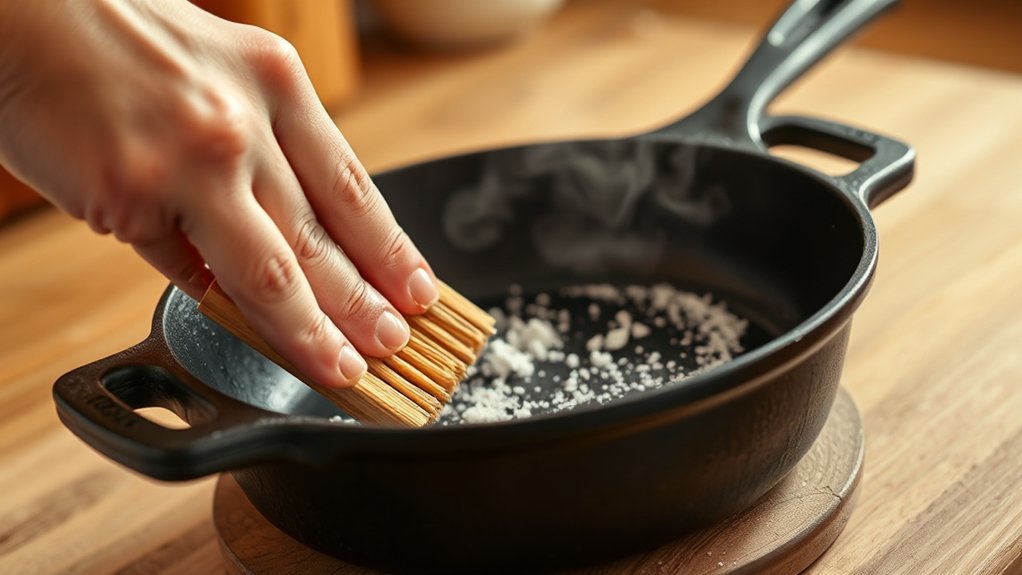
Next, rinse the skillet under hot water, using a non-abrasive brush or sponge to remove stuck-on bits. If necessary, use coarse salt as a gentle scrub.
Thoroughly dry the skillet immediately with a towel or by heating it briefly on the stove. Finally, apply a light layer of oil to the surface as a seasoning touch up, restoring the skillet’s protective coating and preventing rust.
Following this routine after every use ensures your cast iron stays in excellent condition.
When And How To Use Soap On Your Cast Iron Skillet
You should only use soap on your cast iron skillet when it’s heavily soiled or has tough residue that water alone can’t remove. When you do, apply a small amount of mild soap with a soft brush or sponge, then rinse thoroughly with hot water.
Afterward, dry the skillet completely and reapply a thin layer of oil to maintain its seasoning.
Soap Usage Timing
When should you use soap on your cast iron skillet to maintain its seasoning without causing damage? The key is understanding soap timing to balance seasoning vs residue. Use soap only when you need to remove stubborn residue that water alone can’t handle.
Avoid soap immediately after cooking if the skillet isn’t greasy or burnt; wiping it clean preserves the seasoned layer. Soap is best applied after the skillet has cooled slightly but before food particles harden.
This timing prevents stripping the protective seasoning while effectively removing stuck-on residue. Using soap too often or at the wrong time can degrade your skillet’s seasoning, so reserve it for occasional deep cleans. Proper soap timing ensures your cast iron stays non-stick and durable for years.
Proper Soap Cleaning
How often should soap be used on your cast iron skillet to keep it clean without damaging the seasoning? The soap debate has long confused cooks, but seasoning science shows that occasional soap use won’t harm a well-established seasoning layer.
Use mild dish soap sparingly, only when your skillet has stubborn residues. Avoid harsh detergents or scrubbing pads that strip the seasoning. Rinse thoroughly with warm water immediately after applying soap to prevent residue buildup.
After washing, dry your skillet completely and lightly oil it to maintain its nonstick surface. Proper soap cleaning balances hygiene and seasoning preservation, letting you enjoy your cast iron’s performance without risking damage.
Stick to gentle, infrequent soap use to keep your skillet in prime condition.
How To Remove Stubborn Food Residue Without Damaging Seasoning
Stubborn food residue can cling to your cast iron skillet despite regular cleaning, but removing it doesn’t mean stripping away the valuable seasoning layer. To tackle stubborn residue while ensuring seasoning protection, follow these steps:
Removing stubborn residue from cast iron doesn’t mean sacrificing its valuable seasoning layer.
- Use coarse salt and a soft brush: Sprinkle coarse kosher salt on the skillet and scrub gently with a soft brush or non-abrasive sponge. The salt acts as a mild abrasive without damaging the seasoning.
- Boil water in the pan: Pour water into the skillet and bring it to a boil. This loosens stuck-on bits so you can scrape them away easily with a wooden spatula.
- Repeat if necessary: For particularly stubborn residue, don’t hesitate to repeat these steps. Avoid harsh scrubbing tools or soap, which can harm the seasoning.
These methods ensure effective cleaning while preserving your skillet’s seasoned surface.
Why You Need To Be Careful When Cleaning Cast Iron
Removing tough food residue without damaging your skillet’s seasoning requires careful technique, but it’s equally important to understand why cleaning cast iron demands caution overall.
When you clean your skillet, you must protect the seasoning safety, that thin, baked-on layer that gives your pan nonstick properties and flavor. Harsh soaps or abrasive scrubbing can strip this layer, forcing you to reseason more often.
Additionally, cast iron is highly prone to rust if moisture lingers after washing. Any leftover water or improper handling can cause oxidation, diminishing your skillet’s lifespan and performance.
How To Dry Your Cast Iron Skillet To Prevent Rust
Because cast iron is highly susceptible to rust, you need to dry your skillet thoroughly and immediately after washing. Proper drying is crucial in seasoning science and rust prevention, as lingering moisture can break down the skillet’s protective layer.
Follow these steps to dry your cast iron skillet effectively:
- Wipe with a clean cloth or paper towel right after rinsing to remove excess water.
- Heat the skillet on the stove over low heat for 3-5 minutes. This evaporates any residual moisture and helps maintain the seasoning layer.
- Apply a thin layer of oil while the skillet is still warm to reinforce the seasoning and create a moisture barrier.
How To Deep Clean And Restore A Neglected Cast Iron Skillet
A thorough deep-clean process is essential when your cast iron skillet has built-up grime, rust, or old seasoning layers that compromise its performance. Start by scrubbing the skillet with coarse salt and a stiff brush to remove surface debris.
For stubborn mineral buildup or rust, use fine steel wool or a non-metallic scouring pad with a little water and mild dish soap. Rinse thoroughly and dry immediately to prevent further rust.
If rust persists, soak the skillet in a mixture of equal parts white vinegar and water for up to an hour, but no longer to avoid metal damage. These restoration techniques effectively strip away contaminants and prepare your skillet for proper seasoning, ensuring it regains its durability and cooking efficiency.
How To Re-Season Your Cast Iron Skillet For A Non-Stick Surface
Once your cast iron skillet is thoroughly cleaned and free of rust or residue, restoring its seasoning becomes the next priority to achieve a reliable non-stick surface. Seasoning science tells us that polymerized oils form a durable, slick coating that boosts skillet longevity.
To re-season effectively:
- Apply a thin, even layer of high-smoke-point oil (like flaxseed or grapeseed) all over the skillet, inside and out.
- Preheat your oven to 450°F (232°C), place the skillet upside down on the middle rack, and bake for 1 hour. Put foil on the lower rack to catch drips.
- Turn off the oven and let the skillet cool inside to create a strong, bonded seasoning layer.
Repeat this process periodically to maintain a smooth, non-stick surface and extend your skillet’s lifespan.
Essential Tools And Supplies For Cleaning Cast Iron Skillets
What tools do you need to keep your cast iron skillet in top condition? Having the right essential tools and cleaning supplies ensures efficient care without damaging the skillet’s seasoning.
You’ll need scrubbers that remove residue without stripping oil, and oils for re-seasoning after cleaning. Here’s a practical guide:
| Tool/Supply | Purpose | Tips |
|---|---|---|
| Stiff brush | Removes stuck-on food | Avoid metal bristles |
| Chainmail scrubber | Deep cleaning | Use with warm water |
| Mild soap | Occasional cleaning | Use sparingly, rinse well |
| Cooking oil | Re-seasoning | Use flaxseed or vegetable oil |
| Paper towels | Drying and oil application | Prevent rust |
Using these essential tools and cleaning supplies keeps your skillet functional and rust-free.
How To Store Your Cast Iron Skillet To Keep It In Top Shape
After cleaning your cast iron skillet, make sure you dry it thoroughly to prevent rust. Then, apply a light coating of oil to protect the surface.
Finally, store it in a dry place where moisture won’t cause damage.
Dry Thoroughly After Cleaning
Although cast iron is durable, you must dry your skillet thoroughly right after cleaning to prevent rust and preserve its seasoning. Moisture left on the surface invites rust, undermining your skillet’s longevity and performance.
Here’s how to dry thoroughly for effective rust prevention:
- Wipe with a clean, dry cloth or paper towel immediately after rinsing to remove most moisture.
- Heat the skillet on low to medium heat on the stove for 5-10 minutes. This evaporates any remaining water trapped in crevices.
- Let it cool completely in a dry environment before storing to avoid condensation buildup.
Following these steps ensures your cast iron stays rust-free and ready for your next cooking session.
Apply Light Oil Coating
Once your cast iron skillet is completely dry, applying a light coating of oil helps maintain its seasoning and prevents rust during storage. Use a small amount of seasoned oiling, such as vegetable oil, flaxseed oil, or a specialized cast iron oil.
Apply the oil sparingly with a clean cloth or paper towel, rubbing it evenly over the entire surface, inside and out. Avoid excess oil that can become sticky or attract dust.
This thin, even layer acts as a protective barrier, preserving the skillet’s non-stick surface and preventing oxidation. Resist using metal polish or harsh cleaners now, as they can strip the seasoned layer you’ve carefully developed.
Instead, focus on gentle maintenance with seasoned oiling to keep your skillet in prime condition between uses.
Store In A Dry Place
Proper storage is essential to keep your cast iron skillet in top shape and prevent rust or damage. Following these storage tips ensures moisture prevention and extends your skillet’s lifespan.
- Choose a Dry Location: Store your skillet in a cool, dry place away from humidity. Avoid damp cabinets or under-sink areas where moisture accumulates.
- Use a Paper Towel Liner: Place a paper towel or cloth between stacked skillets or lids. This absorbs residual moisture and prevents scratching.
- Avoid Sealed Containers: Never store your cast iron in airtight containers, as trapped moisture promotes rust. Allow air circulation to keep the skillet dry.
Frequently Asked Questions
Can I Clean a Cast Iron Skillet in the Dishwasher?
You shouldn’t clean a cast iron skillet in the dishwasher because it damages seasoning and causes rust. For dishwasher safety and rust prevention, wash by hand with mild soap, dry thoroughly, and apply oil after cleaning.
How Often Should I Re-Season My Cast Iron Skillet?
If you cook acidic foods weekly, you’ll want to re-season your skillet every 3-4 months.
Adjust your re-season frequency based on wear to ensure long term maintenance and keep the surface non-stick and rust-free.
Is It Safe to Use Metal Scrubbers on Cast Iron?
You can use metal scrubbers cautiously on cast iron, but avoid harsh scrubbing that strips seasoning and causes rust issues.
Opt for gentle scrubbing, then re-season promptly to maintain your skillet’s protective layer and prevent rust.
Can I Use Vinegar to Clean My Cast Iron Skillet?
When it comes to cleaning, don’t throw the baby out with the bathwater. Vinegar caution is key. You can use vinegar briefly, but avoid soaking to prevent rust.
Rinse well and dry immediately for rust prevention.
What Should I Do if My Skillet Develops Rust Spots?
If your skillet develops rust spots, scrub them with steel wool, rinse, dry thoroughly, then re-season it. Increase seasoning frequency and keep it dry to guarantee rust prevention, maintaining your cast iron’s durability and non-stick surface.
Conclusion
Now that you know how to gently care for your cast iron skillet, you’re well-equipped to keep it in prime condition without losing its cherished character. By treating it thoughtfully—cleaning promptly, drying thoroughly, and seasoning regularly—you’ll avoid unwanted surprises like rust or sticky buildup.
With the right touch and routine, your skillet will remain a reliable kitchen companion, ready to deliver perfect meals for years to come. Keep it respected, and it’ll return the favor.
Follow these tips to ensure your cast iron skillet stays in excellent shape, making every cooking experience enjoyable and successful.