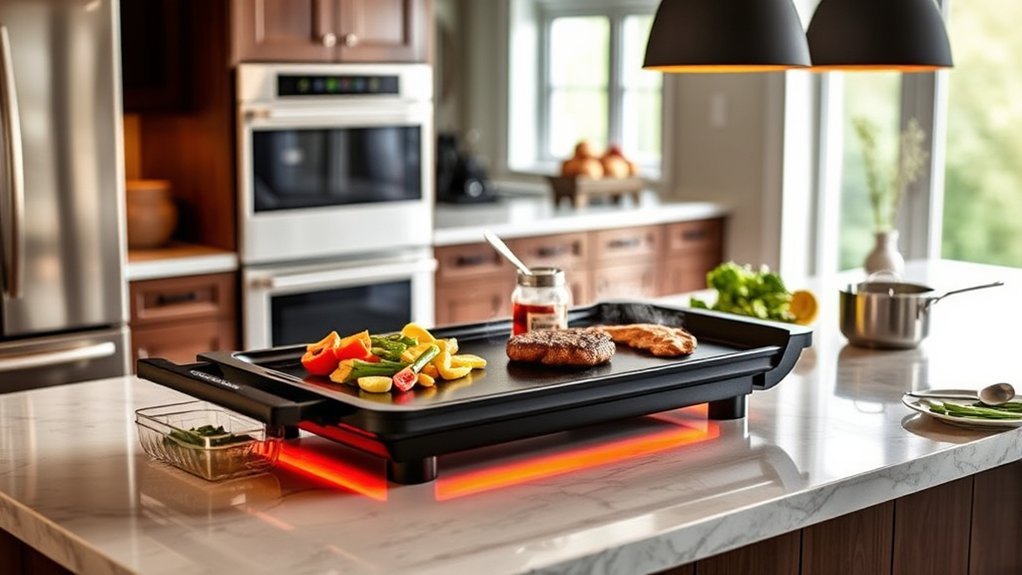

Using a Blackstone tabletop griddle inside isn’t exactly a walk in the park when it comes to safety. If you’re relying on propane, you’ll need to be extremely cautious about ventilation to avoid harmful carbon monoxide buildup.
While electric models offer a safer alternative indoors, not all Blackstone griddles are designed for indoor use. Before you fire it up, there are essential precautions and options you should consider.
Key Takeaways
- Using a Blackstone tabletop griddle indoors requires proper ventilation to prevent dangerous carbon monoxide buildup.
- Propane-fueled griddles must have leak-free connections and be operated near open windows or ventilation hoods.
- Short, poorly ventilated indoor use of propane griddles poses serious fire and CO poisoning risks.
- Electric or indoor-rated griddles are safer alternatives for indoor cooking than propane models.
- Always prioritize safety: never leave the griddle unattended, keep fire extinguishers nearby, and avoid flammable surfaces.
Is It Safe to Use a Blackstone Tabletop Griddle Indoors?
When considering whether you can use a Blackstone tabletop griddle indoors, safety should be your top priority. These griddles typically run on propane, so fuel safety is critical. You must ensure the propane tank and connections are leak-free to avoid fire hazards.
Also, while this subtopic avoids detailed ventilation requirements, you should recognize that indoor ventilation plays a key role in safe operation. Using a Blackstone griddle indoors without adequate ventilation risks carbon monoxide buildup, which is dangerous and potentially fatal.
Even brief use in a poorly ventilated space can lead to harmful gas accumulation. So, unless you have a proper setup designed for indoor use, it’s generally safest to avoid operating your Blackstone griddle inside. Always prioritize safety over convenience when handling any fuel-powered appliance indoors.
Ventilation Requirements for Using a Blackstone Griddle Indoors
Proper ventilation is the key factor that determines whether you can safely operate a Blackstone griddle indoors. Without adequate indoor ventilation, harmful carbon monoxide (CO) can accumulate, posing serious health risks.
To ensure CO safety, you must use exhaust fans, open windows, or install ventilation hoods that direct fumes outside. Here’s a quick reference for ventilation needs:
| Ventilation Method | Effectiveness | CO Safety Level |
|---|---|---|
| Exhaust Fan | High | Essential |
| Open Windows | Moderate | Recommended |
| No Ventilation | None | Unsafe |
Always prioritize ventilation to reduce CO buildup and maintain fresh airflow. Never use a griddle in enclosed spaces without proper ventilation, as this endangers your health and safety.
Choosing Fuels and Blackstone Models Safe for Indoor Use
You need to choose fuels that burn cleanly and models designed with indoor safety features to use a Blackstone griddle inside. Propane is common, but some electric or indoor-rated options reduce risks considerably.
Picking the right fuel and griddle ensures you cook safely without compromising air quality.
Indoor-Friendly Fuel Options
How can you safely use a Blackstone tabletop griddle indoors without risking harmful fumes or fire hazards? The key lies in choosing the right fuel and ensuring proper indoor ventilation. Propane tanks are common but can emit dangerous carbon monoxide if used inside without adequate airflow.
For better fuel safety, consider electric griddles designed for indoor use. They produce no combustion fumes and eliminate gas risks. If you must use propane, always operate near an open window or vent to maintain fresh air circulation.
Avoid fuels like charcoal or wood indoors, as they generate smoke and toxic gases. Prioritize models compatible with clean fuel sources and never compromise on ventilation, as it’s essential for safe indoor cooking with any fuel type.
Safe Blackstone Models
Selecting the right Blackstone model can make all the difference when cooking indoors safely. For indoor grilling, you’ll want a model designed for controlled fuel use, like electric or small propane tabletop griddles with adequate ventilation. Avoid large outdoor-only models that produce excessive fumes.
Blackstone’s electric griddles are ideal since they eliminate combustion risks, simplifying griddle maintenance and enhancing safety. If you choose a propane model, ensure it’s compatible with indoor use, has a built-in regulator, and always operate near a vent or open window.
Regular griddle maintenance, including cleaning grease traps and checking for leaks, further reduces hazards. By prioritizing models suited for indoor environments, you’ll enjoy efficient cooking while keeping your space safe and well-ventilated.
Reducing Fire and Carbon Monoxide Risks With Blackstone Griddles
To keep your cooking safe, always clear the area around your Blackstone griddle of flammable materials and never leave it unattended while in use.
Make sure you use the griddle in a well-ventilated space to prevent dangerous carbon monoxide buildup. Taking these precautions helps you enjoy your cooking without risking fire or toxic exposure.
Fire Prevention Tips
Where should you place your Blackstone tabletop griddle to minimize fire and carbon monoxide risks? Always use it in a well-ventilated, open area away from flammable materials and structures. Avoid indoor use to prevent dangerous gas buildup and uncontrolled fires.
When seasoning your griddle, opt for outdoor seasoning sessions to keep smoke and fumes outside. Monitor the indoor temperature if you must use the griddle near enclosed spaces; excessive heat near walls or ceilings can increase fire risk.
Keep a fire extinguisher nearby and never leave the griddle unattended while in use. Regularly clean grease buildup, which can ignite unexpectedly. Following these steps helps you safely enjoy your Blackstone griddle without compromising safety or comfort.
Carbon Monoxide Safety
How can you protect yourself and your loved ones from the invisible dangers of carbon monoxide when using your Blackstone griddle? First, never use your griddle indoors or in any enclosed space.
Blackstone griddles produce carbon monoxide (CO), a colorless, odorless gas that can quickly build up, contaminating indoor air and posing serious CO risks. Even brief exposure to high levels of CO can cause headaches, dizziness, or worse.
To reduce fire and carbon monoxide risks, always operate your griddle outside, in a well-ventilated area where fresh air circulates freely. Additionally, keep a working CO detector nearby to monitor indoor air quality if you’re near the cooking area.
How to Use a Blackstone Griddle Safely Indoors
Why should you be cautious when using a Blackstone griddle indoors? Indoor grilling poses risks like carbon monoxide buildup and fire hazards, so practicing griddle safety is essential. To use your Blackstone griddle safely inside, follow these vital steps:
Ensure proper ventilation by opening windows or using exhaust fans to prevent harmful gas accumulation. Place the griddle on a stable, heat-resistant surface, away from flammable materials.
Keep a fire extinguisher nearby and never leave the griddle unattended while it’s on. Regularly check gas connections for leaks before each use to avoid dangerous gas leaks.
Alternatives to Using a Blackstone Griddle Indoors
Even with proper precautions, using a Blackstone griddle indoors carries inherent risks that might make you reconsider. Instead, explore safer alternatives that still deliver great results without indoor hazards. Outdoor cooking remains the safest choice, debunking common safety myths about griddles needing to be used inside.
You can also try electric griddles or stovetop grill pans designed specifically for indoor use. These options reduce fire and ventilation risks while offering convenience.
| Alternative | Benefits |
|---|---|
| Outdoor Griddle | Best ventilation, fire safety |
| Electric Griddle | No open flame, good indoors |
| Stovetop Grill Pan | Compact, easy cleanup |
| Air Fryer | Minimal smoke, versatile cooking |
Choosing the right method helps you enjoy cooking safely and effectively without compromising safety.
Frequently Asked Questions
How Do You Clean a Blackstone Tabletop Griddle After Use?
You clean your Blackstone tabletop griddle by scraping off food debris, wiping with a damp cloth, and applying oil to prevent rust.
Follow this cleaning routine regularly, and use maintenance tips to ensure safety and prolong its lifespan.
Can You Cook Different Types of Food Simultaneously on the Griddle?
Yes, you can cook different foods simultaneously on your Blackstone griddle by managing heat zones carefully. Keep raw and cooked items separate to avoid cross-contamination, and adjust temperatures to guarantee everything cooks safely and evenly.
What Accessories Are Recommended for a Blackstone Tabletop Griddle?
You’ll want accessory recommendations like a scraper, spatula, and griddle cover. For cleaning tips, use a griddle stone or brush after cooking.
These help maintain your Blackstone safely and keep it performing at its best.
How Long Does It Take to Preheat a Blackstone Griddle?
You’ll need about 10-15 minutes for preheat timing to reach optimal cooking temperature on your Blackstone griddle. This ensures temperature consistency across the surface, helping you cook safely and evenly every time you use it.
Is It Possible to Season the Griddle Surface Before First Use?
You can season your griddle before first use, boosting longevity by up to 50%. Follow seasoning steps carefully, applying oil and heating evenly.
Remember first use precautions: ventilate well and avoid indoor use to ensure safety.
Conclusion
You might be tempted to use your Blackstone tabletop griddle indoors, but remember: safety should never take a backseat. Without proper ventilation, propane griddles can turn your kitchen into a carbon monoxide trap.
If you want to cook inside, choose electric or indoor-rated models instead. So, don’t gamble with your health—ventilate well, check for leaks, and keep flames away from combustibles.
After all, a safe cook is a happy cook, and when it comes to using a Blackstone tabletop griddle inside, safety should always come first.