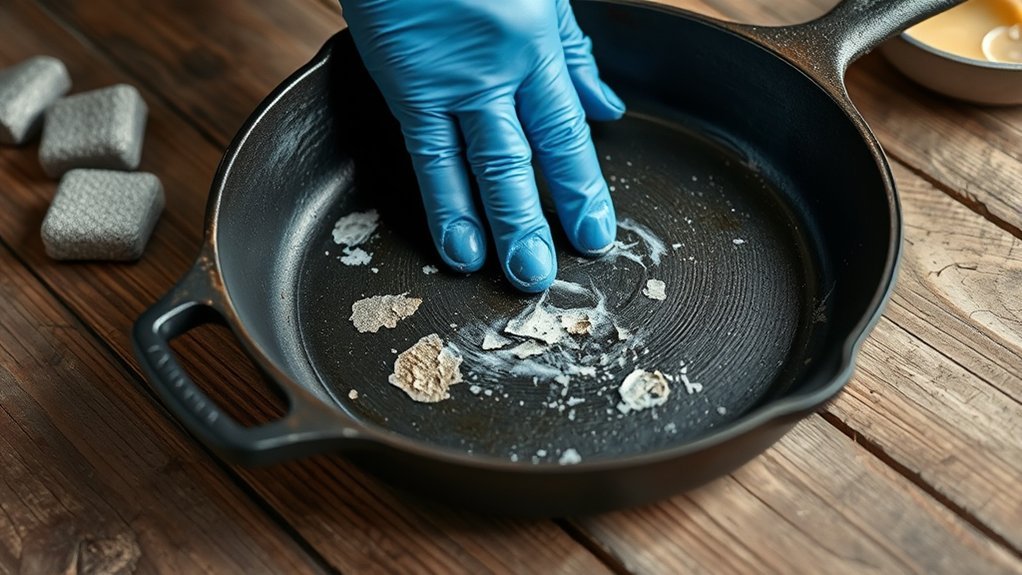

Imagine you inherited a cast iron skillet with old, peeling paint that’s both unsightly and potentially toxic when heated. Removing paint from cast iron requires more than just scrubbing—it demands careful techniques to protect the seasoning and metal underneath. Knowing how to get paint off a cast iron skillet is essential to restore its cooking surface safely.
You’ll need to identify the paint type, use heat or non-toxic strippers wisely, and restore the skillet’s surface afterward. The right approach can save your skillet and keep it safe for cooking. With patience and care, you can bring your cast iron skillet back to life without damaging its valuable seasoning.
Key Takeaways
- Loosen paint using moderate heat (around 300°F) with an oven or heat gun to soften without damaging the cast iron.
- Identify paint type by texture and rubbing alcohol test to choose safe removal methods.
- Apply non-toxic chemical strippers if needed, then scrub softened paint gently with nylon brushes or non-abrasive pads.
- Sand stubborn paint using progressively finer grit sandpaper (start 60-80 grit, finish 220+) with careful, consistent motions.
- Rinse thoroughly, dry immediately to prevent rust, and reseason skillet by baking with oil at 450°F for an hour.
Why You Should Remove Paint From Your Cast Iron Skillet
Why should you remove paint from your cast iron skillet? Paint can compromise paint safety, especially if it chips or flakes into your food. Using a painted skillet for cooking risks ingesting harmful chemicals.
You should prioritize removing paint to restore your skillet’s natural, food-safe surface. Rely on proper brush techniques during removal to avoid damaging the cast iron itself. Applying gentle, controlled strokes helps lift paint without scratching the metal, preserving its integrity.
Removing paint also allows you to properly season the skillet, ensuring better non-stick performance and longevity. Ultimately, taking the time to eliminate paint protects your health and enhances cooking results, making paint removal essential for safe, effective use of your cast iron skillet.
How to Identify the Paint Type on Your Cast Iron Skillet
Before you start removing paint from your cast iron skillet, it’s important to determine the type of paint used. Start by examining the paint’s texture and sheen. Oil-based paints tend to be glossy and thicker, while water-based paints feel smoother and dry faster.
Identify the paint type first by checking texture and sheen—oil-based is glossy and thick, water-based is smooth and quick-drying.
You can also test a small hidden area with rubbing alcohol; if the paint softens, it’s likely water-based. Identifying coatings helps you choose the right removal method and avoid damage.
Check for any manufacturer labels or documentation if available, as they might specify the paint type. Keep safety considerations in mind by avoiding harsh chemicals on unknown paints, especially if the skillet has lead-based or old industrial coatings.
Correct identification ensures an effective, safe removal process tailored to your skillet’s condition.
Stay Safe While Removing Paint From Cast Iron
Before you start removing paint from your cast iron skillet, make sure you wear protective gear like gloves and a mask. Always work in a well-ventilated area to avoid inhaling harmful fumes.
Choose non-toxic paint removers to keep the process safe for you and the environment.
Wear Protective Gear
Although removing paint from cast iron might seem straightforward, wearing protective gear is essential to keep yourself safe from harmful chemicals and debris. Start with chemical-resistant gloves to protect your skin from solvents and paint removers, which can cause irritation or burns.
Safety goggles shield your eyes from splashes and flying particles during scraping or sanding. A long-sleeved shirt and pants help prevent skin contact with residue.
Use a dust mask or respirator to avoid inhaling harmful dust or fumes, especially if you’re sanding. These safety precautions aren’t optional; they’re necessary to prevent injury and exposure.
Work in Ventilated Areas
Where you remove paint from your cast iron skillet matters just as much as how you do it. Proper ventilation is essential for ventilation safety during paint removal. Paint fumes and dust can be harmful when inhaled, so always work in a well-ventilated area, preferably outdoors or near open windows and doors.
Use fans to increase airflow and disperse fumes effectively. Following paint removal basics means minimizing your exposure to toxic substances and ensuring fresh air circulation. Avoid confined spaces where fumes can accumulate, increasing health risks.
Prioritize your safety by setting up your workspace to maximize ventilation before starting. This simple step prevents respiratory irritation and keeps the paint removal process safer and more efficient.
Use Non-Toxic Removers
Why risk your health with harsh chemicals when safer alternatives exist? Start by doing paint identification to determine the type of paint on your cast iron skillet. This step guides you in choosing the right non toxic removers that effectively break down paint without exposing you to harmful fumes or residues.
Non toxic removers, like citrus-based gels or biodegradable solvents, work well on many paint types and protect both your health and the skillet’s seasoning. Apply the remover as directed, allow it to sit, then gently scrape off the softened paint.
Always wear gloves and work in a ventilated area to maximize safety. By opting for non toxic removers, you clean your skillet responsibly, maintaining its integrity while minimizing environmental and personal risks.
Loosen Paint With Heat on Your Skillet
How can you effectively loosen stubborn paint from your cast iron skillet? Applying controlled heat softens the paint, making removal easier. Heat loosens paint by breaking its bond with the skillet’s surface, but you must prioritize heat safety to avoid burns or damage.
Use an oven or heat gun set to moderate temperatures (around 300°F). Avoid overheating, which can warp your skillet or release toxic fumes.
| Step | Tool Needed | Heat Safety Tip |
|---|---|---|
| Preheat oven | Oven | Use oven mitts |
| Apply heat | Heat gun | Keep heat gun moving evenly |
| Monitor paint | Visual check | Avoid overheating skillet |
| Remove softened paint | Scraper | Use gloves for protection |
Follow these steps carefully to loosen paint effectively without risking injury or damage.
Apply Chemical Paint Strippers Safely
Although chemical paint strippers can quickly remove stubborn paint from your cast iron skillet, you need to handle them with care to ensure your safety and protect the cookware. Following paint removal ethics and chemical safety guidelines is essential.
Chemical paint strippers work fast but require careful handling to protect both you and your cast iron skillet.
Here’s how to apply strippers safely:
- Work in a well-ventilated area to avoid inhaling toxic fumes.
- Wear protective gloves, goggles, and a mask to shield your skin and eyes.
- Choose a chemical stripper formulated for metal to prevent damaging your skillet’s surface.
- Apply the stripper sparingly and follow the manufacturer’s instructions precisely, avoiding prolonged exposure.
Scrub Paint Off Your Cast Iron Skillet Without Damage
Once the chemical stripper has softened the paint, you can begin scrubbing your cast iron skillet carefully to avoid damaging its surface. Use a non-abrasive scrubber or nylon brush to gently remove the paint without stripping the skillet’s seasoning.
Avoid steel wool or harsh scrubbing pads that can harm the skillet’s finish. Rinse with warm water and dry immediately to prevent rust. Proper paint removal preserves your skillet’s integrity and supports skillet maintenance.
| Tool Type | Use Case | Damage Risk |
|---|---|---|
| Nylon Brush | Effective paint removal | Low |
| Non-Abrasive Pad | Gentle scrubbing | Minimal |
| Steel Wool | Not recommended | High |
| Soft Cloth | Final cleaning | None |
| Plastic Scraper | Loose paint removal | Low |
Sand and Scrub Your Skillet to Remove Stubborn Paint
To tackle stubborn paint, start by choosing the right sandpaper grit. Medium to fine works best to avoid damaging your skillet. Use firm, consistent scrubbing motions to lift the paint without scratching the surface.
Always protect your cast iron by reseasoning it after sanding to maintain its non-stick finish.
Choosing the Right Sandpaper
Anyone tackling stubborn paint on a cast iron skillet needs the right sandpaper to get the job done efficiently. Choosing the proper grit and type minimizes damage and speeds up removal while considering recycling considerations and environmental impact.
Here’s what to keep in mind:
- Start with coarse grit (60-80) to break through thick paint layers quickly.
- Move to medium grit (120-150) for smoothing rough surfaces without excessive abrasion.
- Use fine grit (220+) only if minor paint spots remain or for final polishing.
- Opt for sandpaper that can be recycled or disposed of responsibly to reduce environmental impact.
Effective Scrubbing Techniques
Effective scrubbing is essential for removing stubborn paint from your cast iron skillet without damaging its surface. Begin by applying a small amount of dish soap and warm water to the painted area. Use a stiff nylon brush or a non-metallic scrubbing pad to work the paint gently but firmly.
Avoid steel wool or harsh abrasives that can scratch the cast iron. For particularly tough spots, dampen fine-grit sandpaper and scrub in circular motions to lift the paint effectively. Always keep the skillet wet during scrubbing to prevent dust and debris from embedding into the surface.
Rinse thoroughly with warm water and dry immediately to avoid rust. These effective paint removal techniques will help restore your cast iron skillet’s smooth, clean finish efficiently.
Protecting Your Skillet Surface
How can you protect your cast iron skillet while removing stubborn paint? Focus on gentle sanding and scrubbing to avoid damaging the surface. Use these steps to maintain your skillet’s integrity:
- Choose fine-grit sandpaper to carefully sand away paint without scratching the iron.
- Use a stiff nylon brush with mild detergent to scrub remaining paint residue.
- Rinse thoroughly and dry immediately to prevent rust.
- Apply an alternative seasoning method, like flaxseed oil, and bake your skillet at 450°F for one hour to restore its non-stick coating.
Always prioritize bake safety by handling the skillet with heat-resistant gloves and ensuring proper ventilation. This approach preserves your skillet’s cooking surface while effectively removing paint.
Clean and Reseason Your Cast Iron After Paint Removal
Why is it essential to clean and reseason your cast iron immediately after removing paint? Paint removal can expose raw metal, risking rust and compromising skillet safety.
Thorough cleaning removes residual paint particles and chemicals, while reseasoning restores the protective, non-stick layer. This two-step process ensures durability and food safety.
| Step | Benefit | Feeling |
|---|---|---|
| Clean Thoroughly | Removes paint residues | Confident |
| Dry Completely | Prevents rust | Assured |
| Apply Oil | Builds seasoning | Empowered |
| Bake Skillet | Seals protective layer | Accomplished |
| Cool Down | Ready for use | Satisfied |
Prioritize paint identification before removal to ensure proper cleaning. Your skillet’s longevity depends on these careful steps.
How to Prevent Paint Damage on Your Cast Iron Skillet
Once you’ve removed paint and restored your skillet, protecting it from future paint damage becomes a priority. To maintain your cast iron’s integrity, follow these steps:
- Store your skillet separately from painting supplies to avoid accidental paint splatters.
- Always practice paint safety by keeping paints sealed and away from kitchen areas.
- Clean any paint spills immediately using appropriate solvents, ensuring you don’t damage the skillet’s seasoning.
- Dispose of leftover paint responsibly, following local guidelines for paint disposal to prevent contamination around your cookware.
Troubleshooting Common Paint Removal Problems
When paint won’t come off your cast iron skillet as expected, it can feel frustrating and discouraging. You need to address common issues efficiently while prioritizing paint safety and proper disposal concerns. Use the right solvents and techniques to avoid damaging your skillet.
| Problem | Cause | Solution |
|---|---|---|
| Paint residue remains | Paint too thick or old | Apply stronger remover, repeat |
| Skillet rusts after removal | Moisture left on surface | Dry thoroughly, re-season skillet |
| Disposal issues | Leftover paint or solvent waste | Follow local hazardous waste rules |
If you encounter stubborn paint, avoid harsh scraping that risks injury or skillet damage. Always use gloves and dispose of materials safely to protect yourself and the environment.
Frequently Asked Questions
Can I Use a Power Washer to Remove Paint From Cast Iron?
You shouldn’t use a power washer on cast iron due to safety considerations and potential damage. Instead, focus on ethical paint removal methods that preserve the skillet’s integrity. Avoid harsh techniques that could harm the surface.
Is It Safe to Cook Food Immediately After Paint Removal?
Would you eat off metal that’s still dirty? You shouldn’t cook immediately; ensure safe metalwork by thoroughly cleaning and seasoning your skillet to avoid chemical safety risks from paint residue. Only then is it truly safe.
Will Paint Removal Affect the Skillet’s Heat Retention?
Paint removal won’t affect your skillet heat retention if you properly re-season it afterward. The seasoning layer restores the skillet’s surface, maintaining its excellent heat distribution and retention for cooking.
Can I Use Household Vinegar to Strip Paint?
Yes, you can use household vinegar for paint removal, but be cautious. Vinegar’s acidity helps strip paint, yet prolonged exposure can damage the cast iron.
Always prioritize safety concerns by wearing gloves and ensuring proper ventilation.
How Long Does the Paint Removal Process Usually Take?
How long paint removal takes depends on the method and paint thickness, but usually, you’ll spend a few hours up to a day.
Don’t expect an overnight fix; patience is key to getting it spotless.
Conclusion
So, you’ve spent time and effort stripping paint off your cast iron skillet—because who doesn’t want their cookware to double as modern art? But seriously, avoiding harsh chemicals and using gentle heat keeps your skillet safe and ready to cook.
With proper cleaning and reseasoning, your cast iron will be back to its non-painted, perfectly seasoned self—just in time for your next meal, not a gallery exhibit.
When done right, getting paint off cast iron skillet ensures your cookware is both safe to use and looks great.