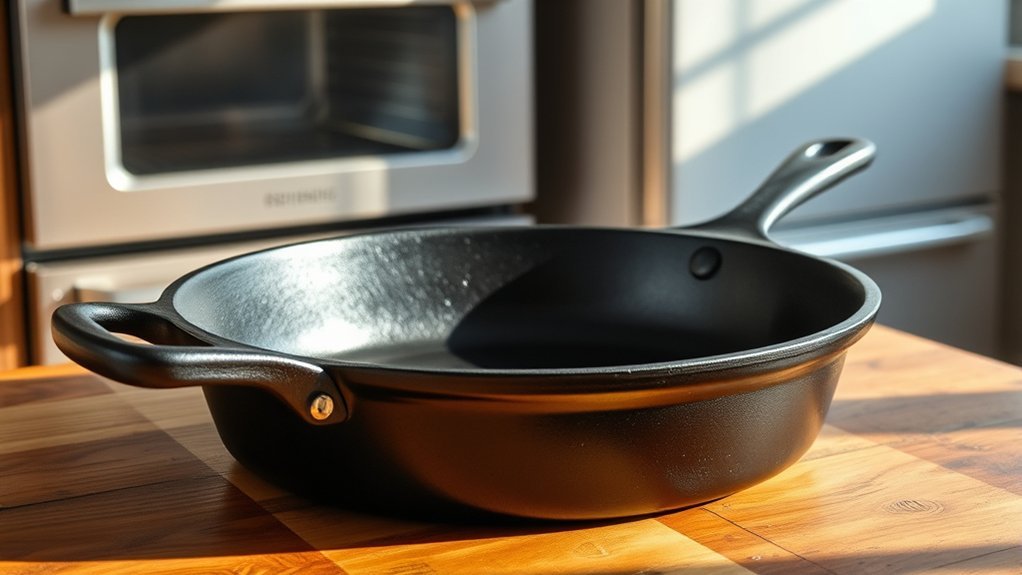

Imagine trying to finish a stovetop sear by sliding your oven safe skillet straight into a hot oven—only to hear a worrying crack or see your handle melt. An oven safe skillet is designed to handle exactly that stress, made from materials and construction that endure high heat without damage.
Understanding what makes a skillet truly oven safe can transform your cooking, but it requires knowing more than just the brand or price.
Key Takeaways
- An oven-safe skillet is made from materials like cast iron, stainless steel, or carbon steel that withstand high oven temperatures without damage.
- Oven-safe skillets have handles made of metal or heat-resistant silicone, avoiding plastic or wood that can melt or warp in the oven.
- These skillets can endure oven temperatures typically ranging from 350°F to 500°F depending on the material and coating type.
- Oven-safe skillets enable seamless stovetop-to-oven cooking, providing even heat distribution and durability for tasks like braising or finishing sauces.
- Identification involves checking manufacturer markings, product documentation, and handle materials to confirm the skillet’s oven safety rating.
What Is an Oven Safe Skillet?
What makes a skillet oven safe? It’s primarily about the skillet materials and their ability to withstand high temperatures without damage. When you choose an oven-safe skillet, you ensure it can endure the heat inside your oven, protecting both the pan and your food.
Oven safety depends on factors like the skillet’s handle composition and coating. For example, materials such as cast iron and stainless steel typically handle oven heat well, while some nonstick coatings may have temperature limits.
Avoiding plastic or wooden handles is crucial since they can melt or catch fire. Understanding these details helps you select cookware that performs reliably in both stovetop and oven settings, enhancing your cooking flexibility without compromising safety or durability.
Materials That Make a Skillet Oven Safe
You’ll want to choose a skillet made from materials like cast iron, stainless steel, or hard-anodized aluminum to ensure it can handle oven temperatures safely. Avoid skillets with plastic or wooden handles, as these can warp or melt in the oven.
Understanding these material differences helps you pick the right skillet for seamless stovetop-to-oven cooking.
Common Oven Safe Materials
How can you determine if a skillet will safely withstand oven temperatures? Focus on the materials used in its construction. Knowing this helps you confidently prepare a side dish without worrying about damage or kitchen organization issues.
Here are four common oven safe materials:
- Cast Iron Known for excellent heat retention and durability, perfect for searing then transferring to the oven.
- Stainless Steel Resists warping and handles high heat well, ideal for versatile cooking.
- Carbon Steel Lightweight yet strong, it heats evenly and tolerates oven use.
- Anodized Aluminum Offers non-stick properties and can generally withstand moderate oven temperatures.
Selecting skillets with these materials ensures safe, efficient oven use and keeps your kitchen organized and functional.
Avoiding Non-Oven Safe Materials
Why should you steer clear of certain materials when choosing an oven-safe skillet? Understanding the oven safe vs non oven safe distinction hinges on material properties. Non-oven safe components like plastic handles or non-stick coatings that degrade under high heat limit your skillet’s versatility and safety.
Pay close attention to substrate alloy differences. Cast iron, stainless steel, and carbon steel tolerate oven temperatures well, while aluminum alloys with plastic or rubber parts do not. These substrate alloy differences affect thermal stability and durability.
If your skillet contains composite materials or coatings that can emit toxins or melt, it’s non oven safe. Choosing the right skillet means ensuring every part withstands oven heat, so you avoid damage and health risks. Always verify manufacturer guidelines to confirm true oven safety.
How to Identify Oven Safe Skillets and Handles
Where can you find clear indicators that a skillet and its handle are oven safe? Start by examining the skillet materials and manufacturer guidelines. Here’s how to identify oven safety effectively:
- Material Check: Cast iron, stainless steel, and carbon steel skillets usually offer excellent oven safety due to their heat-resistant properties.
- Handle Material: Oven-safe handles are typically metal or silicone; avoid plastic or wooden handles that can melt or burn.
- Manufacturer’s Markings: Look for stamps or labels on the skillet or packaging specifying oven safety.
- Product Documentation: Consult the user manual or online product details where oven safety is explicitly mentioned.
Oven Safe Skillet Temperature Limits
After confirming that your skillet and its handle are oven safe, the next step is understanding the temperature limits they can withstand. Most oven safe skillets tolerate temperatures between 350°F and 500°F, but this varies by material and manufacturer.
Cast iron skillets often handle up to 500°F or more, while nonstick skillets typically have lower skillet temperature limits, around 350°F to 400°F, to prevent coating damage. Handles made from silicone or metal usually endure higher temperatures, unlike plastic ones which may limit oven use.
Always check the specific temperature guidelines to avoid warping or coating breakdown. Knowing your skillet temperature limits ensures safe, effective cooking, letting you use your skillet confidently without damaging it or your oven.
Risks of Using Non-Oven Safe Skillets
If you use a skillet that isn’t oven safe, you risk damaging the handle, especially if it’s made of plastic or wood. Overheating these materials can also release toxic fumes that compromise your kitchen’s air quality.
Additionally, non-oven safe skillets often cook unevenly in the oven, affecting your dish’s texture and doneness.
Handle Damage Risks
How can using a skillet with a non-oven safe handle cause damage? When you expose handles not designed for oven use to high temperatures, you risk serious damage. Here’s what happens:
- Plastic or rubber handles can melt or warp, compromising your skillet’s safety.
- Wooden handles may crack, dry out, or even catch fire.
- Metal handles with coatings not designed for heat may blister or peel.
- Repeated exposure weakens the handle’s attachment, increasing the chance it detaches during use.
Unlike the extreme cast iron durability, many nonstick skillets struggle with oven safe vs. nonstick handle material differences. To protect your cookware and ensure safety, always verify handle material and manufacturer guidelines before using your skillet in the oven.
Toxic Fumes Hazard
When non-oven safe skillets are heated beyond their design limits, they can release toxic fumes that pose serious health risks. These skillets often have coatings or handle materials that lack sufficient heat resistance.
Once exposed to excessive oven temperatures, the breakdown of synthetic coatings or adhesives emits harmful gases. Breathing in these toxic fumes can cause respiratory irritation, headaches, or worse, especially in poorly ventilated spaces.
To protect your health, you need to verify the skillet’s heat resistance specifications before using it in the oven. Oven-safe skillets are engineered to withstand high temperatures without off-gassing or degrading.
Ignoring this essential factor not only damages your cookware but also exposes you and your household to avoidable chemical hazards. Always prioritize cookware labeled for oven use to ensure safety.
Uneven Cooking Issues
Why does uneven cooking often occur with non-oven safe skillets? When you use these pans, you face inconsistent heat distribution that leads to uneven browning and poorly cooked food. Here’s why:
- Non-oven safe handles can warp or detach, causing unstable heat flow.
- Materials not designed for oven use expand unevenly, disrupting temperature uniformity.
- Coatings may degrade, altering heat transfer and causing hot spots.
- Skillets without proper heat retention fail to maintain steady temperatures, resulting in inconsistent heat.
You’ll notice these factors combine to create uneven cooking results. Avoiding non-oven safe skillets in the oven ensures your food browns evenly and cooks thoroughly, preventing frustrating inconsistencies that ruin your dishes.
Best Cooking Techniques for Oven Safe Skillets
Where can you get the most out of your oven safe skillet? Start by mastering the balance between stovetop searing and oven roasting. Use high heat initially to develop a crust, then transfer the skillet to the oven for even cooking.
Understanding oven chemistry helps you predict how heat interacts with your skillet’s material chemistry, ensuring optimal results. Prioritize cookware safety by checking that your skillet’s handle and construction endure high oven temperatures.
Pay attention to heat distribution. Cast iron excels here, providing consistent cooking without hotspots. You can also experiment with braising or finishing sauces right in the skillet, taking advantage of its oven-safe design.
How to Care for and Maintain Your Oven Safe Skillet
How often should you clean and season your oven safe skillet to keep it performing at its best? Proper care depends on the skillet type. Cast iron vs nonstick requires different approaches. Unlike nonstick, cast iron benefits from regular seasoning to maintain its surface and prevent rust. Follow these steps:
- Clean your skillet immediately after use with warm water and a soft brush; avoid soap on cast iron to preserve seasoning.
- Dry thoroughly to prevent rust, especially for cast iron.
- Season cast iron monthly or after deep cleaning by applying a thin layer of oil and heating it.
- For oven safe vs nonstick pans, avoid high heat in nonstick to preserve coating and never season them.
Adhering to these ensures longevity and optimal performance.
Top Oven Safe Skillet Brands to Consider
Which skillet brand should you trust for reliable oven performance? When considering oven safety, top skillet brands like Lodge, All-Clad, and Le Creuset stand out for durability and heat resistance. These brands ensure your skillet handles high temperatures without damage, crucial for oven-safe cookware.
Here’s a quick comparison:
| Brand | Oven Safety Temp | Material |
|---|---|---|
| Lodge | Up to 500°F | Cast Iron |
| All-Clad | Up to 600°F | Stainless Steel |
| Le Creuset | Up to 500°F | Enameled Cast Iron |
| Calphalon | Up to 450°F | Hard-Anodized Aluminum |
| Staub | Up to 500°F | Enameled Cast Iron |
Choose skillet brands with proven oven safety ratings to ensure consistent performance and longevity in your cookware.
When to Choose an Oven Safe Skillet Over Other Cookware
Why opt for an oven safe skillet instead of other cookware? Choosing one depends on your cooking needs and skillet materials. You want cookware that transitions seamlessly from stovetop to oven without damage or flavor loss. Consider these scenarios:
- High-heat finishes: When recipes require searing then baking, oven safe skillets, especially cast iron, handle extreme temperatures effortlessly.
- One-pan meals: If you prefer minimizing cleanup, using an oven safe skillet lets you cook entire dishes without switching pans.
- Broiling or roasting: Skillet materials like stainless steel and cast iron withstand broiler heat better than non-oven safe counterparts.
- Durability and longevity: Oven safe skillets resist warping and maintain seasoning over time, unlike some non-oven safe cookware.
Selecting the right oven safe skillet ensures versatility, durability, and efficient cooking.
Frequently Asked Questions
Can I Use an Oven Safe Skillet on an Induction Cooktop?
Yes, you can use an oven safe skillet on an induction cooktop if it has induction compatibility. Check the skillet’s base; if it’s magnetic, it’ll work perfectly with induction technology.
Are Oven Safe Skillets Dishwasher Safe?
You shouldn’t assume all oven safe skillets are dishwasher safe; harsh detergents can damage coatings, affecting flavor impact and heat retention.
Always check induction compatibility and broiling suitability before cleaning to maintain your skillet’s performance and longevity.
How Do Oven Safe Skillets Compare to Cast Iron in Heat Retention?
In heat retention discussions, cast iron outperforms most oven safe skillets due to its dense material. You’ll notice cast iron holds heat longer, offering more even cooking.
Other materials cool faster during material comparison.
Can I Use Oven Safe Skillets for Broiling?
You can use oven safe skillets for broiling, but consider their broiling practicality and heat distribution. Some materials handle intense heat better, ensuring even cooking without warping or damage under direct broiler exposure.
Do Oven Safe Skillets Affect the Flavor of Food?
You won’t notice oven safe flavor changes if your skillet’s metal composition is high-quality stainless steel or cast iron. These materials preserve taste well, ensuring your food stays flavorful without metallic or off-putting notes.
Conclusion
You might worry that an oven-safe skillet is too specialized or costly, but it’s a versatile investment that elevates your cooking. By choosing the right materials and handles, you’ll enjoy seamless stovetop-to-oven meals without damage or safety concerns.
Plus, proper care guarantees durability and peak performance. Once you understand temperature limits and maintenance, using an oven-safe skillet becomes second nature. This opens new culinary possibilities with confidence and precision, making the oven-safe skillet an essential tool in your kitchen.