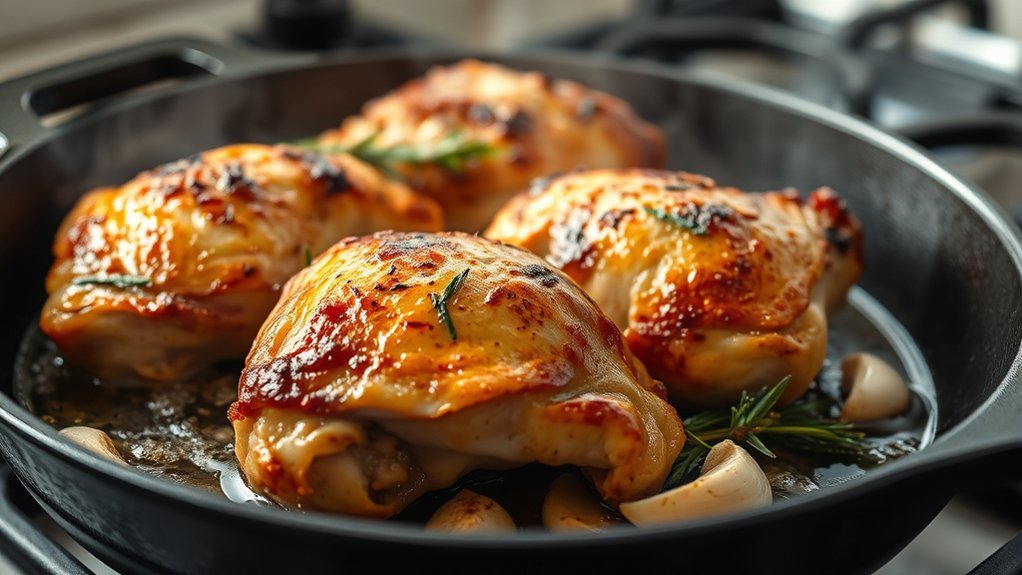

You know the feeling when a perfectly cooked chicken thigh on skillet can make or break a meal. Getting the timing right on a skillet is essential—too short, and it’s undercooked; too long, and it dries out.
Understanding the differences between bone-in and boneless, thickness, and heat management can change your results. Let’s explore how to master these variables to consistently achieve juicy, flavorful chicken thighs with just the right crisp.
Key Takeaways
- Sear chicken thighs skin-side down for 6-7 minutes over medium-high heat to achieve crispy skin.
- Flip and cook the other side for 6-8 minutes, aiming for an internal temperature of 165°F (74°C).
- Bone-in thighs require about 8-10 minutes per side; boneless thighs cook faster, around 6-7 minutes per side.
- Adjust cooking time based on thigh thickness and size, using a meat thermometer to ensure doneness.
- Rest cooked thighs before serving to redistribute juices and maintain moisture and tenderness.
Skillet Cooking Times for Chicken Thighs: A Quick Overview
How long should you cook chicken thighs on a skillet to get perfect results? Typically, you’ll sear them skin-side down for about 6-7 minutes over medium-high heat until the skin crisps up. Then, flip and cook for another 6-8 minutes, ensuring an internal temperature of 165°F.
This timing balances a juicy interior with a crispy exterior. When planning your meal, consider topping options like fresh herbs, garlic butter, or a squeeze of lemon to enhance flavor without overpowering the chicken.
Also, think about sauce compatibility; creamy sauces like mushroom or mustard pair well, while tangy barbecue or spicy sriracha add a bold contrast. Mastering these basics lets you customize dishes confidently while maintaining perfect skillet-cooked chicken thighs.
Adjusting Cooking Time for Thickness, Size, and Type
When should you adjust your skillet cooking time for chicken thighs? You’ll need to make a thickness adjustment anytime the thighs vary significantly in size or thickness. Thicker pieces require longer cooking to reach a safe internal temperature without burning the exterior.
Conversely, thinner or smaller thighs cook faster, so reduce your time accordingly to prevent drying out. Size variation also plays a crucial role; larger thighs hold more moisture and heat, needing extra minutes on the skillet.
To ensure even cooking, consider pounding thicker thighs to uniform thickness or separating larger pieces. Use a meat thermometer to check that the internal temperature hits 165°F (74°C). This method guarantees perfectly cooked chicken thighs every time, regardless of their thickness or size variation.
Cooking Times for Bone-In vs. Boneless Chicken Thighs
Why does the presence of bone affect cooking times for chicken thighs? Bone in chicken thighs take longer to cook because the bone retains heat and slows the cooking process. When you cook bone in thighs on a skillet, expect about 8-10 minutes per side over medium heat.
Boneless thighs cook faster since there’s no bone to transfer heat slowly; they usually need about 6-7 minutes per side. To ensure even cooking, flatten boneless thighs slightly if thick. The key is managing heat so the outside doesn’t burn before the inside cooks through.
How to Tell When Chicken Thighs Are Perfectly Cooked
Mastering the signs of perfectly cooked chicken thighs guarantees juicy, safe-to-eat results every time. To know how to tell when they’re done, start by checking the internal temperature with a meat thermometer—it should read 165°F (74°C). Avoid guesswork; this is the most reliable method.
Next, observe juiciness indicators: the meat should feel firm but springy when pressed, and clear juices should run out when pierced. If juices are still pink or red, cook longer. Additionally, the meat near the bone should no longer be pink.
Cutting into the thickest part to check color and texture also helps. By combining these cues, you ensure your chicken thighs are perfectly cooked—moist, tender, and safe to enjoy.
Skin-On vs. Skinless Chicken Thighs: Which Is Better?
Choosing between skin-on and skinless chicken thighs can considerably impact your dish’s flavor, texture, and cooking method. The skin difference is crucial: skin-on thighs retain more moisture, resulting in juicier meat and richer flavor balance thanks to the rendered fat during cooking.
If you want deeper taste and a more satisfying mouthfeel, opt for skin-on. Conversely, skinless thighs cook faster and absorb marinades more readily, offering a leaner option with a lighter flavor profile.
When deciding, consider your recipe’s goal. Skin-on suits dishes where fat and richness complement the flavors, while skinless fits well in lighter, quicker meals. Understanding this skin difference helps you control texture and flavor balance, ensuring your skillet-cooked chicken thighs turn out exactly how you want.
Tips for Getting Crispy Skin on Chicken Thighs
Since skin-on chicken thighs offer richer flavor and juicier meat, achieving crispy skin can elevate your dish even further. To perfect crispy skin, follow these crispy skin tips:
- Pat the skin dry with paper towels before cooking to remove moisture.
- Preheat your skillet to medium-high, then adjust heat as needed to avoid burning while maintaining a steady sizzle.
- Place thighs skin-side down without overcrowding, allowing even crisping.
- Press down gently with a spatula to ensure full skin contact with the skillet.
Making skillet heat adjustments as the chicken cooks helps render fat gradually, resulting in golden, crunchy skin. By mastering these techniques, you’ll consistently get that desirable crispy texture and rich flavor in every bite.
Common Mistakes to Avoid When Cooking Chicken Thighs
How do you avoid common pitfalls that can ruin perfectly cooked chicken thighs? First, don’t overcrowd the skillet; this traps steam, preventing crisp skin. Use moderate heat to ensure even cooking. Too high and the outside burns before the inside cooks through.
A frequent mistake is neglecting temperature guidance: always cook until the internal temperature hits 165°F (74°C). Using a reliable meat thermometer is crucial. Avoid flipping the thighs too often; let them sear properly on each side for a golden crust.
Finally, don’t skip resting the meat after cooking. It allows juices to redistribute, keeping thighs moist. By steering clear of these common mistakes, you’ll consistently cook juicy, flavorful chicken thighs right on your skillet.
Finishing Techniques to Boost Flavor and Juiciness
Mastering the cooking process sets a solid foundation, but finishing techniques can elevate your chicken thighs to the next level of flavor and juiciness. To maximize flavor boosting, try these finishing techniques:
- Deglaze the pan with wine, broth, or citrus juice to capture flavorful browned bits and create a rich sauce.
- Add fresh herbs like thyme or rosemary in the last minute of cooking for an aromatic lift.
- Baste with butter during the final minute to enhance moisture and develop a glossy finish.
- Rest the chicken for 5 minutes after cooking to allow juices to redistribute, ensuring tender, juicy bites.
Applying these finishing techniques will boost flavor and juiciness, transforming your skillet chicken thighs into a truly satisfying meal.
Frequently Asked Questions
What Marinades Work Best for Chicken Thighs Before Skillet Cooking?
You’ll love marinade options like soy sauce with garlic, lemon juice with herbs, or yogurt with spices. These provide excellent flavor enhancements, tenderizing chicken thighs and boosting their taste before you cook them on the skillet.
Can I Cook Frozen Chicken Thighs Directly in the Skillet?
You can’t just throw frozen thighs into skillet pans; they’ll steam, not sear. Instead, thaw first for even cooking, then cook on medium-high heat.
This guarantees juicy, crispy skin without risking undercooked centers.
What Side Dishes Pair Well With Skillet-Cooked Chicken Thighs?
You’ll want side dishes like roasted vegetables, garlic mashed potatoes, or a fresh salad to complement skillet-cooked chicken thighs. These flavor pairings balance richness with brightness, enhancing your meal’s overall taste and texture perfectly.
How Do I Store Leftover Cooked Chicken Thighs Safely?
Better safe than sorry: store leftover cooked chicken thighs in airtight containers within two hours. Refrigerate promptly at 40°F or below to guarantee food safety, and consume within 3-4 days for best quality and health.
Are Chicken Thighs Healthier Than Chicken Breasts?
Chicken thighs aren’t necessarily healthier, but they offer more iron and zinc than chicken breasts.
When comparing chicken breasts vs thighs, thighs have higher fat and calories, so choose based on your nutritional needs and cooking preferences.
Conclusion
Cooking chicken thighs on a skillet is like nurturing a small flame—patience and attention turn raw potential into golden perfection. By adjusting time for thickness and bone, you unveil juicy tenderness beneath crispy skin.
Use your thermometer as a compass, and let the meat rest to seal in flavor. These careful steps ensure that every bite is both safe and delicious.
With these techniques, each skillet session becomes a ritual, transforming simple thighs into a satisfying, flavorful masterpiece you’ll want to savor every time. Mastering how long to cook chicken thighs on skillet is the key to consistent, mouthwatering results.