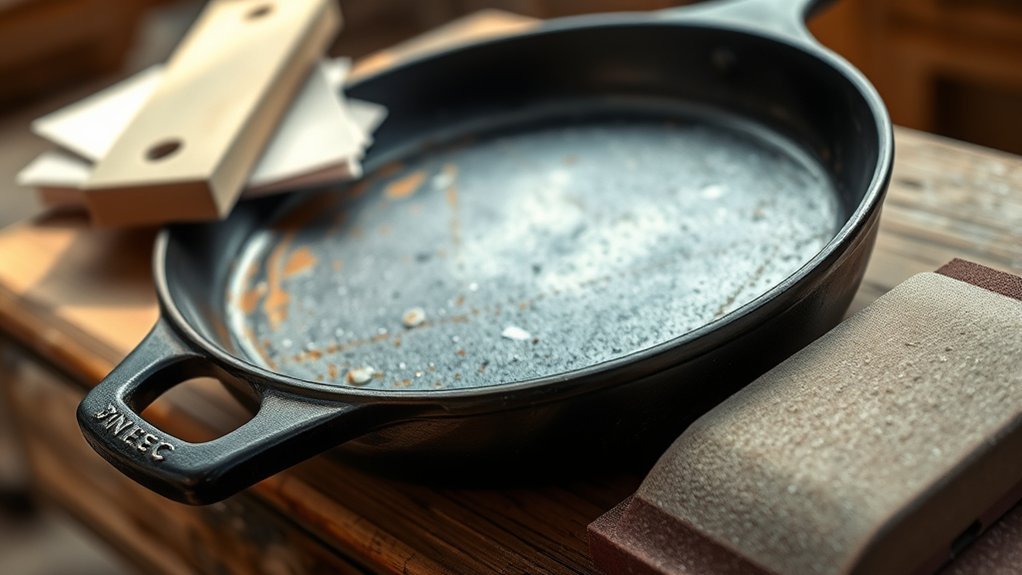

Just like restoring an old wooden table, sanding a cast iron skillet can seem like a straightforward way to bring it back to life. Can you sand a cast iron skillet? Yes, but you’ll want to approach this task carefully to avoid thinning the metal or stripping away valuable seasoning.
Knowing when and how to sand, and which grits to use, makes all the difference in preserving your skillet’s performance and longevity. Let’s explore what you need to consider before you start sanding.
Key Takeaways
- Yes, sanding a cast iron skillet is possible to remove rust and rough patches, but it must be done carefully to avoid damage.
- Use coarse grit sandpaper (80-120) for rust removal, then finer grits (220-400) to smooth the surface before seasoning.
- Avoid over-sanding to preserve the skillet’s metal thickness and existing seasoning integrity.
- After sanding, thoroughly clean and reseason by applying oil layers and baking at 450°F multiple times.
- Alternatives to sanding rust include steel wool with salt or vinegar soaks, which preserve more of the seasoning.
Can You Safely Sand Your Cast Iron Skillet?
When considering whether you can safely sand your cast iron skillet, it’s important to understand the risks and benefits involved. Sanding can remove rusting and old seasoning failures, restoring a clean surface for proper reseasoning.
However, you must sand carefully to avoid removing too much metal or creating uneven surfaces, which can worsen rusting over time. Using fine-grit sandpaper and light pressure helps preserve the skillet’s integrity while eliminating stubborn rust.
Keep in mind that improper sanding may strip away the protective seasoning layers, requiring you to reseason your skillet thoroughly. If you’re prepared to reseason and maintain your skillet after sanding, it can be a practical way to address rusting and seasoning failures safely.
When and Why to Sand Your Cast Iron Skillet
You should sand your cast iron skillet when rust has built up or the surface feels rough to the touch. Sanding removes rust effectively and smooths out imperfections, making it easier to restore the pan.
It also preps the surface for a proper seasoning that will protect and enhance your skillet’s performance.
Removing Rust Effectively
How do you tackle stubborn rust on your cast iron skillet without damaging its surface? Effective rust removal begins by sanding only the rusted areas with fine-grit sandpaper or a steel wool pad. This method strips rust without removing the skillet’s seasoning layer.
After sanding, thoroughly clean and dry the skillet to prevent further rusting. Proper rust prevention includes keeping your skillet dry and lightly oiled after each use.
| Step | Purpose |
|---|---|
| Identify rust spots | Target specific areas |
| Sand gently | Remove rust without damage |
| Clean thoroughly | Eliminate debris and moisture |
| Oil and store dry | Prevent rust from returning |
This approach balances rust removal with preserving your skillet’s cooking surface.
Smoothing Rough Surfaces
Why might your cast iron skillet develop a rough surface that needs sanding? Over time, repeated use, improper cleaning, or rust removal can leave your skillet with an uneven or rough texture.
Sanding helps you smooth out these imperfections, ensuring a more even cooking surface and improving rust reduction by eliminating flaky areas where moisture can settle. When you sand, focus on gently abrading the rough texture with fine-grit sandpaper. This won’t damage the skillet but will create a smoother base for seasoning.
This step is especially useful if rust removal has left pitting or rough patches behind. By smoothing your skillet’s surface, you prevent future rust buildup and promote a more durable, non-stick finish after seasoning.
Preparing For Seasoning
Sanding sets the stage for a successful seasoning by creating a clean, smooth surface that allows the oil to bond effectively with the cast iron. You should sand your skillet when rust causes pitting or when previous seasoning flakes off, exposing bare metal. This process removes rust and old seasoning layers, preventing further corrosion and promoting a lack of rust after seasoning.
| Condition | Action Needed |
|---|---|
| Light rust spots | Gentle sanding |
| Heavy rust/pitting | Aggressive sanding |
| Flaking seasoning | Complete sanding |
Which Sandpaper Grits and Tools Work Best for Cast Iron Skillets?
Which sandpaper grits and tools you choose make a significant difference when working on a cast iron skillet. Start with a coarse grit like 80 or 120 to tackle heavy rust removal and surface imperfections effectively.
After removing rust, transition to finer grits 220 to 400 to smooth the surface and prepare it for seasoning, which aids in rust prevention. Avoid overly fine grits above 600, as they can polish the skillet too much, compromising seasoning adherence.
For tools, use a sanding block or an orbital sander for consistent pressure and control, especially on flat areas. Hand sanding works well for curved or detailed sections.
Selecting the right grit progression and tools ensures you remove rust efficiently without damaging the skillet, setting the stage for long-lasting rust prevention through proper seasoning.
How to Sand Your Cast Iron Skillet Without Causing Damage
How can you sand your cast iron skillet effectively without causing damage? First, choose fine-grit sandpaper (220-320 grit) to avoid deep scratches that compromise the skillet’s surface. Always sand gently in a circular motion, focusing on rust spots or rough patches.
Avoid aggressive sanding; this preserves the metal integrity and helps with rust prevention. After sanding, thoroughly clean the skillet to remove all debris and dust, as leftover particles can interfere with seasoning maintenance.
Use minimal water and dry immediately to prevent flash rust. Remember, sanding is a surface-level process. Taking care not to remove too much material ensures your skillet stays durable.
How to Re-Season Your Cast Iron Skillet After Sanding
Before you start seasoning, make sure your skillet is thoroughly cleaned to remove any sanding residue.
Next, apply a thin, even layer of oil all over the surface to ensure proper bonding. Repeat this process in multiple layers to build a durable, non-stick coating.
Cleaning Before Seasoning
Why is thorough cleaning essential once you’ve sanded your cast iron skillet? After sanding, the surface holds fine metal particles and residual dust that can interfere with seasoning. You need to remove these contaminants to ensure the new seasoning bonds properly.
Start by rinsing the skillet with warm water and a gentle brush or sponge. Avoid harsh detergents that can strip the metal’s natural oils. Dry the skillet completely to prevent rust, a key part of sanding safety and rust prevention.
If any rust remains, use a fine steel wool pad to scrub it off, then rinse and dry again. Proper cleaning after sanding sets the foundation for a durable, smooth seasoning layer, enhancing your skillet’s longevity and cooking performance.
Applying Oil Layers
Once your skillet is thoroughly cleaned and dried, you can begin applying oil layers to build up a strong, protective seasoning. Use a high-smoke point oil and apply a thin, even coat to avoid sticky residue.
Proper oil layer buildup is essential for durability and non-stick performance. Remember to avoid excessive sanding that may compromise your skillet’s surface or introduce sandpaper health concerns from residual particles.
After each oil application, bake the skillet upside down at 450°F for an hour, then let it cool. Repeat this process 3-5 times for ideal results.
| Step | Action |
|---|---|
| 1 | Apply thin oil layer |
| 2 | Wipe off excess oil |
| 3 | Bake at 450°F for 1 hour |
| 4 | Cool skillet |
| 5 | Repeat 3-5 times |
Alternative Ways to Remove Rust From Your Cast Iron Skillet Without Sanding
How can you effectively remove rust from your cast iron skillet without resorting to sanding? Start by scrubbing the rust with steel wool or a stiff brush combined with a mixture of coarse salt and water. This abrasive method targets rust removal efficiently without damaging the skillet’s surface.
Alternatively, soak your skillet in white vinegar diluted with water for up to an hour; the acetic acid dissolves rust but avoid over-soaking to prevent metal damage. After rust removal, rinse thoroughly and dry immediately to prevent moisture buildup.
For rust prevention, apply a thin layer of cooking oil and heat the skillet to reinforce its seasoning. These practical methods preserve your skillet’s integrity while maintaining a rust-free, well-seasoned surface without the need for sanding.
Common Mistakes When Sanding and Seasoning Cast Iron Skillets
When sanding and seasoning your cast iron skillet, what common pitfalls should you avoid to ensure optimal results? Avoid these frequent mistakes to maintain your skillet’s integrity and enhance rust prevention:
- Over-sanding: Don’t remove too much metal; preserve the skillet’s thickness and shape.
- Skipping thorough cleaning: Always remove sanding dust completely to prevent uneven seasoning.
- Applying too much or too little oil: Proper oil application is crucial. Too much causes sticky layers, too little leads to uneven seasoning.
- Rushing the seasoning process: Let each oil layer polymerize fully at the right temperature for durable rust prevention.
How to Keep Your Cast Iron Skillet Smooth and Non-Stick
Why does your cast iron skillet sometimes stick despite careful seasoning? The answer often lies in common polishing myths. Many believe that sanding or aggressive polishing creates a perfectly smooth surface. In reality, a slightly textured surface helps oil bond better, enhancing non-stick properties.
Avoid over-sanding; it removes seasoning layers instead of improving them. Also, don’t fall for rust myths suggesting rust must be completely eradicated by harsh abrasion every time. Minor rust spots can be managed without damaging the skillet’s surface.
To keep your skillet smooth and non-stick, maintain a consistent seasoning routine using oil and moderate heat. Clean gently with warm water and a brush, then dry promptly. This balance preserves the skillet’s texture and seasoning, ensuring long-lasting performance without unnecessary sanding or polishing.
What Causes Rust and Residue on Cast Iron Skillets?
What leads to rust and residue buildup on your cast iron skillet? Understanding the causes helps you address rust formation effectively. Here are the main factors:
- Moisture exposure: Leaving your skillet wet or storing it in a damp environment promotes rust formation by breaking down the protective seasoning layer.
- Improper cleaning: Using harsh detergents or soaking the skillet can strip seasoning, exposing the iron to moisture and air.
- Food residue: Failing to thoroughly clean after cooking allows residues to accumulate, which can become sticky or rancid.
- Inadequate drying and moisture control: Not fully drying your skillet before storage increases surface moisture, accelerating rust.
Tips for Preventing Rust and Damage on Cast Iron Skillets
To keep your cast iron skillet rust-free and in top shape, focus on proper cleaning techniques that avoid harsh detergents. You’ll also want to maintain a regular seasoning routine to build a strong, protective layer.
Finally, store your skillet in a dry, well-ventilated spot to prevent moisture buildup and damage.
Proper Cleaning Techniques
How you clean your cast iron skillet directly affects its longevity and performance. To maintain your skillet and enhance rust prevention, follow these proper cleaning techniques:
- Use warm water and a stiff brush to apply gentle cleaning friction; avoid harsh scrubbing that strips seasoning.
- Skip soap or use minimal, mild soap only if necessary, as strong detergents break down the protective layer.
- Dry the skillet thoroughly with a towel immediately after washing to prevent moisture-induced rust.
- Apply a thin layer of cooking oil right after drying to reinforce the skillet’s rust-resistant surface.
Regular Seasoning Routine
Although regular cleaning is essential, maintaining your cast iron skillet’s seasoning through a consistent routine is just as important to prevent rust and damage. After each use, wipe the skillet with a paper towel to remove any food residue and moisture, which aids in dust removal and rust prevention.
Apply a thin layer of cooking oil, such as flaxseed, vegetable, or canola oil, while the skillet is still warm. This seals the surface, reinforcing the seasoning and protecting the iron from oxidation. Avoid harsh soaps that strip away the seasoning.
If you notice any rust spots, address them promptly by scrubbing gently with a non-abrasive pad and reapplying oil. Following this routine consistently keeps your skillet durable and ready for use.
Optimal Storage Conditions
Maintaining your cast iron skillet’s seasoning after cleaning and oiling also means storing it properly to prevent rust and damage. When considering storage conditions, keep these two word discussion ideas in mind: moisture control and air circulation.
- Store your skillet in a dry place to avoid moisture buildup that leads to rust.
- Use a paper towel or cloth between stacked pans to prevent scratching and promote airflow.
- Avoid airtight containers that trap humidity; instead, opt for open shelving or racks.
- If you live in a humid climate, consider placing a moisture absorber nearby to protect your skillet.
Frequently Asked Questions
Can I Use a Wire Brush Instead of Sandpaper on Cast Iron?
You can use a wire brush as a sandpaper alternative for cast iron, but it’s rougher and may damage the surface. Use a wire brush carefully for rust removal.
Then smooth the surface with fine sandpaper for best results.
How Long Does It Take to Season a Cast Iron Skillet Properly?
Wondering about the seasoning duration? Proper cast iron care usually takes about an hour per layer, repeated 2-3 times. This builds a durable, non-stick surface, so don’t rush it. Patience pays off beautifully.
Is It Safe to Put a Cast Iron Skillet in the Dishwasher?
You shouldn’t put your cast iron skillet in the dishwasher. This two-word discussion, “dishwasher damage,” is an unrelated topic to seasoning but important.
Dishwashers strip seasoning and cause rust, so hand wash and dry immediately to protect your skillet.
Can I Use Vegetable Oil to Season My Cast Iron Skillet?
Just like choosing the right fuel for a car, you can use vegetable oil for seasoning oils on your cast iron skillet. It creates a decent non-stick layer, but remember, proper heat distribution depends on oil quality and seasoning technique.
How Do I Store My Cast Iron Skillet to Prevent Rust?
You should store your cast iron skillet in a dry place, coating it lightly with oil to prevent rust. Avoid moisture buildup, which causes staining patterns and rust.
Use a paper towel between pans for added rust prevention.
Conclusion
So, yes—you can sand your cast iron skillet, but don’t turn it into a shiny, fragile relic. Think of it as giving your skillet a gentle facial, not a full makeover. Too much sanding, and you’ll strip away its seasoned charm, leaving it vulnerable and sad.
Keep it rough enough to hold that non-stick magic, and remember: a little rust isn’t an enemy, just a reminder your skillet’s lived a flavorful life.
In conclusion, sanding a cast iron skillet is possible, but it should be done carefully to preserve its seasoning and functionality.