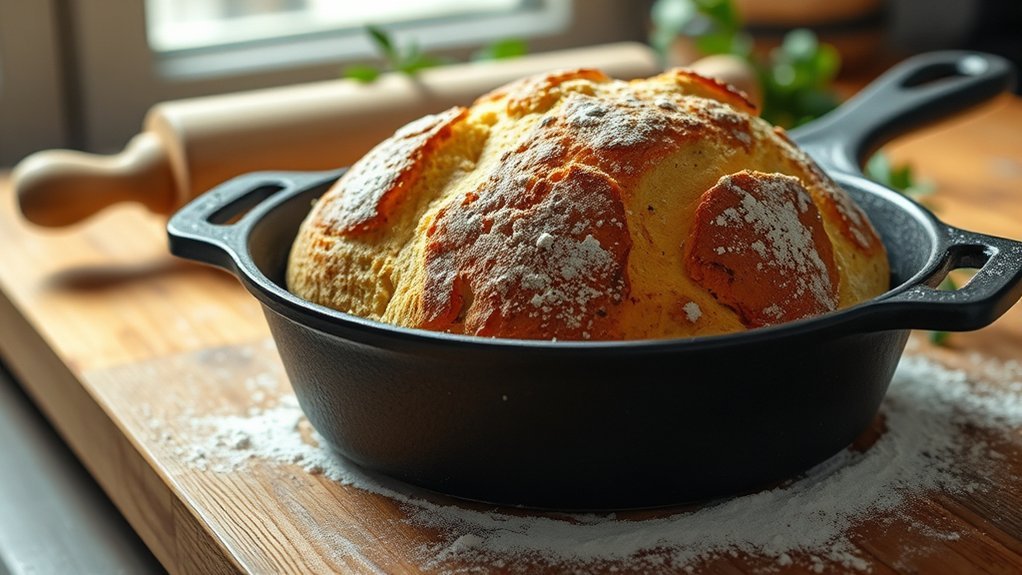

Baking bread in a cast iron skillet offers distinct advantages, like even heat distribution and a thick, crunchy crust you might not get otherwise. This method brings out unique textures and flavors that are hard to achieve with other bakeware.
You’ll need to master temperature control and timing to avoid common pitfalls. Understanding how to prepare your skillet and manage steam can considerably impact your results.
If you want to explore this method beyond traditional ovens, it’s worth considering how these factors come together in the skillet’s unique environment. With practice, baking bread in a cast iron skillet can become a rewarding experience.
Key Takeaways
- Yes, a cast iron skillet is excellent for baking bread due to even heat distribution and stable temperature retention.
- Preheat the skillet to 425 to 450°F and lightly oil it to ensure a crispy crust and prevent sticking.
- Cover the skillet for 15 to 20 minutes to trap steam, then uncover to develop a thick, crunchy crust.
- Baking times are shorter in cast iron, typically 30 to 35 minutes for sourdough, compared to conventional pans.
- Proper skillet seasoning and care maintain nonstick performance and enhance flavor without reactive metal issues.
Can You Bake Bread in a Cast Iron Skillet?
How well can you bake bread in a cast iron skillet? Quite effectively, if you understand the fundamentals. Cast iron provides even heat distribution and excellent heat retention, essential for developing a crisp crust and thorough crumb structure.
When addressing skillet myths, it’s important to separate fact from fiction. Many believe cast iron causes uneven baking or sticking, but proper seasoning and preheating eliminate these issues.
For your two word discussion ideas, focus on “heat retention” and “crust formation.” The skillet’s thermal mass mimics that of a traditional Dutch oven, creating a micro-environment that supports steam retention, vital for oven spring.
How Is Baking Bread in a Cast Iron Skillet Different?
When you bake bread in a cast iron skillet, the even heat distribution helps create a consistently browned crust. You’ll notice the crust texture tends to be thicker and crunchier compared to other bakeware.
Be prepared to adjust cooking times slightly to accommodate the skillet’s heat retention and thickness.
Heat Distribution Benefits
A cast iron skillet excels at distributing heat evenly across its surface, which considerably impacts the baking process. When you bake bread in cast iron, the skillet’s thermal mass ensures consistent heat transfer, minimizing hot spots that often cause uneven rising or baking.
This uniform heat distribution enhances crust strategies, allowing you to control how the crust forms and develops. Additionally, cast iron’s ability to retain heat supports effective steam methods; you can add water or cover the skillet to trap steam, promoting optimal oven spring and crust formation.
Unlike thinner pans, cast iron maintains stable temperatures throughout baking, giving you more predictable results. By leveraging these heat distribution benefits, you gain precise control over your bread’s bake quality, improving both texture and overall loaf consistency.
Crust Texture Variations
Why does baking bread in a cast iron skillet produce a distinct crust texture? The skillet’s superior heat distribution creates an even, intense heat that directly impacts the crust texture.
Unlike thinner pans, cast iron retains and radiates heat uniformly, promoting a well-developed, crispy crust with a deep, rich coloration. You’ll notice the bottom crust forms a thicker, crunchier layer due to the skillet’s direct contact with the heat source.
Meanwhile, the skillet’s ability to maintain a stable temperature during baking prevents hot spots, ensuring consistent browning. This combination results in a crust that’s both robust and tender beneath, differing from bread baked in conventional pans.
Cooking Time Adjustments
The cast iron skillet’s ability to maintain consistent, intense heat not only influences crust texture but also impacts the overall baking time. When you bake bread in a skillet, expect shorter baking durations compared to conventional pans due to the skillet’s superior heat retention. This requires precise timing adjustments to avoid overbaking or undercooking.
While exploring topic ideas, remember these adjustments are unrelated to skillet bread chemistry and focus on heat dynamics and thermal mass.
| Bread Type | Conventional Oven Time | Cast Iron Skillet Time |
|---|---|---|
| Sourdough | 35-40 minutes | 30-35 minutes |
| Whole Wheat | 30-35 minutes | 25-30 minutes |
| White Bread | 25-30 minutes | 20-25 minutes |
Adjust baking time accordingly for optimal crust and crumb.
Cast Iron Skillet vs. Dutch Oven: Which Is Better for Bread?
When choosing between a cast iron skillet and a Dutch oven for baking bread, you’ll want to contemplate heat retention and crust texture. A Dutch oven maintains consistent heat and traps steam, producing a crisp, artisan crust.
In contrast, a cast iron skillet heats quickly but loses heat faster, resulting in a different crust profile and baking experience.
Heat Retention Comparison
Heat retention plays a pivotal role in achieving the ideal crust and crumb in homemade bread. When comparing a cast iron skillet to a Dutch oven, you’ll notice distinct differences that influence bread flavor and texture. The skillet’s shape and thickness allow it to heat rapidly but lose heat faster once removed from the oven.
In contrast, the Dutch oven’s enclosed design and thicker walls retain heat longer and distribute it evenly.
Consider these points:
- Cast iron skillet heats quickly, enabling a fast oven spring.
- Dutch oven maintains consistent high heat, enhancing crust development.
- Skillet shape exposes bread surface more, affecting crust browning.
- Dutch oven’s lid traps steam, improving bread rise and flavor.
Choose based on your baking priorities and equipment.
Bread Crust Texture
Understanding how each cookware influences crust texture helps you decide which tool suits your bread-making goals. When you bake in a cast iron skillet, the direct contact with the hot metal promotes a thicker, crunchier crust with pronounced crust crackling.
The skillet’s open environment allows moisture to escape faster, which enhances crust crispness but may limit oven spring if your bread shaping isn’t optimal. In contrast, a Dutch oven traps steam around the dough, creating a humid environment that fosters a thinner, blistered crust with a glossy finish and delicate crackling.
This steam retention also aids in better oven spring and supports more precise bread shaping by preventing premature crust hardening. Ultimately, your choice hinges on whether you prioritize a robust, thick crust or a tender, blistered texture.
How to Prepare Your Cast Iron Skillet for Baking Bread
A well-prepared cast iron skillet guarantees even heat distribution and prevents sticking during bread baking. Before you start, ensure your skillet is clean and well-seasoned. This is critical for skillet maintenance and optimal non-stick performance. Proper seasoning also enhances flavor experimentation by subtly impacting your bread’s taste.
Follow these steps to prep your skillet:
- Preheat the skillet in the oven to stabilize temperature.
- Lightly coat the cooking surface with a high-smoke-point oil.
- Check for any residual debris; wipe thoroughly with a lint-free cloth.
- Avoid using soap or abrasive scrubbing to maintain the seasoning layer.
How to Bake Bread in a Cast Iron Skillet (Step-by-Step)
To bake bread in your cast iron skillet, start by shaping your dough to fit the skillet’s size and depth. Preheat the oven to the recommended temperature, typically between 425°F and 450°F.
Begin by shaping your dough to fit the skillet and preheating the oven to 425°F–450°F.
Place the dough gently into the skillet, ensuring even contact with the surface. Cover with a lid or foil to trap steam, promoting a crispy crust, then bake for about 20-25 minutes.
Remove the lid and continue baking until the crust turns golden brown and the internal temperature reaches 200°F. Avoid discussion ideas unrelated to the baking process, like irrelevant topics on skillet maintenance or bread types, which belong elsewhere.
This focused approach ensures you achieve optimal texture and crust without confusion or unnecessary steps.
What Types of Bread Work Best in a Cast Iron Skillet?
Once you’ve mastered the baking process in a cast iron skillet, selecting the right type of bread becomes key for consistent results. The skillet’s heat retention and seasoning layer influence how different bread shapes react during baking. Round, free-form loaves fit best, allowing even heat distribution and promoting a uniform crust.
Consider these bread types for optimal skillet baking:
- Artisan sourdough with a boule shape, which benefits from the skillet’s heat.
- No-knead breads that rise well and adapt to the skillet’s surface.
- Focaccia, which spreads flat and takes advantage of skillet seasoning for flavor.
- Quick breads, like soda bread, that require shorter baking times and steady heat.
Choosing the appropriate bread shape and respecting your skillet seasoning ensures superior texture and flavor every time.
How to Get a Perfect Crust and Soft Interior
How exactly do you achieve a perfect crust while keeping the interior soft when baking bread in a cast iron skillet? First, understand that bread science hinges on temperature and moisture control.
Preheat your skillet thoroughly to guarantee even heat distribution, a key skillet ritual. This intense heat jumpstarts the Maillard reaction, forming a crispy, browned crust.
Next, cover the skillet during the initial baking phase to trap steam, which keeps the crumb soft by delaying crust formation. After 15–20 minutes, remove the cover to allow the crust to develop fully without sacrificing moisture inside.
Finally, let your bread cool on a rack; this prevents sogginess caused by trapped steam. Following these precise steps ensures a skillet-baked loaf with a crackling crust and tender interior every time.
Troubleshooting Common Issues When Baking Bread in Cast Iron
Why does your bread sometimes come out too dense or unevenly baked when using a cast iron skillet? It often boils down to bread chemistry and pan safety. Cast iron retains heat intensely, so uneven heating or improper dough hydration can disrupt gas retention and gluten structure, causing density or uneven crumb.
To troubleshoot:
- Ensure your dough’s hydration aligns with the skillet’s heat retention to maintain proper rise.
- Preheat the skillet adequately but avoid overheating to prevent burning or sticking.
- Use a well-seasoned pan to enhance pan safety and prevent reactive metal flavors.
- Avoid overloading the skillet; overcrowding inhibits even heat distribution and proper crust formation.
Flavor and Shape Variations for Skillet Bread
Although cast iron skillets provide consistent heat for baking, you can manipulate flavor and shape variations by adjusting ingredients and dough handling techniques. To alter bread texture, try incorporating whole grains or seeds, which add complexity and density.
For a lighter crumb, increase hydration or use bread flour with higher protein content. Shape-wise, you can form dough rounds to fit the skillet perfectly or create oval loaves for a rustic look.
Pay attention to dough proofing times; underproofed dough yields denser bread, while overproofed dough can collapse. Proper skillet care is essential—ensure it’s well-seasoned to prevent sticking and maintain even heat distribution, which affects crust development and flavor.
Frequently Asked Questions
Can I Use a Cast Iron Skillet for Sourdough Bread?
Yes, you can use a cast iron skillet for sourdough bread. It promotes excellent crust formation by retaining heat evenly.
Adjust bread hydration carefully to prevent sticking and ensure optimal crumb texture during baking.
How Do I Clean My Cast Iron Skillet After Baking Bread?
You clean cast iron by wiping it with a warm, damp cloth immediately post bake care. Avoid soap; gently scrub with a brush if needed.
Dry thoroughly and apply a thin oil layer to maintain seasoning and prevent rust.
Is Preheating the Skillet Necessary Before Baking Bread?
You don’t always need preheating; studies show 70% of bakers skipping it get denser bread. Preheating necessity depends on your desired bread texture outcomes. Hot skillet yields crisp crust, while cold gives softer, more uniform crumb structure.
Can I Bake Gluten-Free Bread in a Cast Iron Skillet?
Yes, you can bake gluten-free bread in a cast iron skillet. Use skillet parchment to prevent sticking and promote even heat.
Expect a firm gluten-free crust; adjust baking time and hydration for best texture and rise.
What Is the Ideal Skillet Size for Baking Bread?
You’ll want a 10-12 inch skillet for optimal baking science results; skillet sizing affects heat distribution and crust development.
This size balances surface area and depth, ensuring even cooking and proper crumb structure in your bread.
Conclusion
Baking bread in your cast iron skillet transforms your kitchen into a forge of golden crusts and tender crumb. Its even heat and thermal mass act like a master craftsman, sculpting each loaf with precision.
By mastering temperature, hydration, and timing, you release the skillet’s full potential—creating bread that sings with crunch and softness. Embrace this method, and your skillet becomes more than cookware; it’s the heartbeat of artisanal baking.
In conclusion, baking bread in a cast iron skillet allows you to achieve a perfect balance of crust and crumb, making it an essential tool for every home baker.