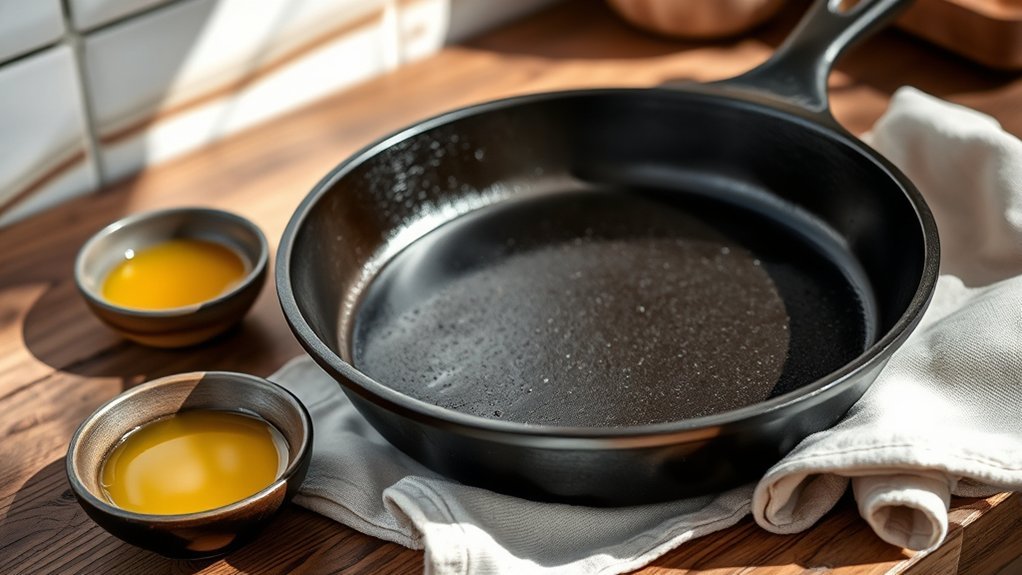

You might wonder how often you should season your cast iron skillet to keep it performing at its best. Knowing how often do you season a cast iron skillet is key to maintaining its quality and durability. The truth is, there’s no one-size-fits-all answer—it depends on how you use and care for it.
Skipping or overdoing seasoning can both cause issues. Understanding the signs that signal when your skillet needs attention will help you maintain its nonstick surface and longevity more effectively. Regular care tailored to your cooking habits is essential for the best results.
Key Takeaways
- Seasoning frequency depends on skillet use and care, not fixed intervals; regular maintenance sustains the non-stick surface and prevents rust.
- Clean with hot water and a stiff brush, dry thoroughly with heat, then apply a thin oil layer after each use to maintain seasoning.
- Reseason when you notice dull spots, flaking, rust, increased sticking, or uneven coloration indicating seasoning wear or damage.
- Cooking acidic foods or boiling can wear seasoning faster, requiring more frequent reseasoning compared to frying or baking.
- Full reseasoning involves applying oil and baking multiple times, but excessive seasoning is unnecessary with proper routine care.
How Often Should You Season a Cast Iron Skillet?
You should season your cast iron skillet regularly to maintain its non-stick surface and prevent rust. However, the exact frequency depends on your usage and care routine rather than fixed intervals. Seasoning involves applying a thin layer of oil and polymerizing it onto the skillet’s surface through heat.
This process builds a durable, protective coating that improves with use. While some topic ideas might suggest daily or weekly seasoning, these recommendations are often unrelated to seasoning frequency and more about maintenance habits.
Instead, focus on the skillet’s performance and condition to determine when to season. Frequent cooking with oil naturally sustains the seasoning, making excessive seasoning unnecessary. Proper cleaning and drying after each use play a critical role in preserving the skillet’s seasoning layer.
How to Know When Your Skillet Needs Reseasoning
You’ll know your skillet needs reseasoning when you see visible signs of wear like dull spots or flaking. If food starts sticking more than usual, the nonstick layer has degraded.
Rust or discoloration are clear indicators that it’s time to restore the seasoning.
Visual Signs Of Wear
How can you tell when a cast iron skillet needs reseasoning? Visual signs of wear reveal when the protective layer has degraded and proper dusting technique and metal surface preparation are required again. Look for these indicators:
- Dull, grayish patches where seasoning has worn off
- Rust spots forming on the metal surface
- Food sticking persistently despite proper cooking methods
- Flaking or chipping of the existing seasoning layer
- Uneven coloration or blotchy appearance on the skillet’s surface
These signs mean the skillet’s non-reactive coating is compromised. Addressing them promptly with thorough dusting technique and metal surface preparation ensures the skillet’s durability and performance. Don’t wait for sticky food or rust to worsen; reseason as soon as you spot these visual cues.
Changes In Nonstick Quality
Visual signs of wear often coincide with noticeable changes in your skillet’s nonstick performance. When food begins sticking more frequently or unevenly, it signals nonstick aging, indicating your seasoning layer has degraded.
This decline is a direct result of seasoning frequency and cooking habits that wear down the polymerized oil layer protecting the surface. To maintain optimal nonstick properties, monitor these changes closely.
If you notice increased sticking or dullness, it’s time to reseason. Regular reseasoning restores the protective layer, enhancing durability and cooking efficiency.
Adjust your seasoning frequency based on use intensity. Heavy daily use demands more frequent reseasoning, while occasional use allows longer intervals.
Proactive maintenance prevents deterioration, ensuring your skillet retains its performance and longevity.
Rust And Discoloration
When does rust or discoloration indicate your cast iron skillet needs reseasoning? Rust or color changes signal that the protective seasoning layer has been compromised. You should reseason your skillet if you notice:
- Surface rust spots that won’t wash away with gentle scrubbing
- A dull, grayish appearance replacing the usual black sheen
- Flaking or peeling seasoning indicating uneven coating
- Sticky or tacky texture after cooking or cleaning
- Persistent discoloration despite thorough drying and oiling
Address rust removal promptly by scrubbing with steel wool or a rust eraser, then reseason to restore the protective polymerized oil layer. Consistent rust prevention requires drying your skillet immediately and applying a thin oil layer after each use. Recognizing these signs ensures your skillet remains durable, nonstick, and corrosion-resistant.
How Daily Use Changes How Often You Should Season Cast Iron
Regularly using your cast iron skillet influences how often you need to season it. The seasoning frequency depends largely on how you use the pan daily.
If you cook frequently with oils or fats that polymerize well, your skillet builds and maintains a strong seasoning layer, reducing the need for frequent re-seasoning. Conversely, if you often cook acidic foods or clean the skillet aggressively, the seasoning wears down faster, increasing seasoning frequency.
Your cooking style impacts this process directly: high-heat searing or frying can strengthen the seasoning; boiling or steaming may degrade it. By monitoring the skillet’s surface—looking for dull spots, rust, or sticking, you can adjust your seasoning schedule effectively, ensuring optimal performance without unnecessary maintenance.
How Cooking Styles Affect Cast Iron Seasoning Frequency
How exactly do different cooking styles impact how often you need to season your cast iron skillet? Seasoning frequency depends largely on what and how you cook. Certain methods wear down the protective layer faster, requiring more frequent maintenance.
Consider these cooking style impacts:
- High-acid foods (tomato, citrus): Accelerate seasoning wear, increasing seasoning frequency.
- Frying with oils: Builds seasoning layers, potentially reducing seasoning frequency.
- Cooking fatty meats: Enhances seasoning through natural oils, lowering seasoning needs.
- Boiling or steaming: Can degrade seasoning faster, raising seasoning frequency.
- Baking (cornbread, pizza): Generally maintains seasoning well, requiring less frequent seasoning.
Adjust your seasoning routine based on these factors. Tailor seasoning frequency to your cooking style to preserve your skillet’s non-stick surface and durability effectively.
How to Season Your Cast Iron Skillet Without Overdoing It
Understanding how your cooking habits influence seasoning needs highlights the importance of applying the right amount of seasoning at the right time. To avoid overdoing it, adjust your seasoning frequency based on wear and cooking style rather than a fixed schedule.
Excessive layers can become sticky or uneven, impairing performance. Focus on seasoning maintenance by cleaning the skillet properly after each use and applying a thin, even coat of oil before heating.
Heat it just enough to polymerize the oil without burning, ensuring a durable, smooth surface. Monitor your skillet for dull spots or rust, signaling when to re-season.
The Best Oils for Seasoning Cast Iron Skillets
You want to choose oils with high smoke points to create a durable, even layer of seasoning on your cast iron skillet. Flavor-neutral oils prevent unwanted tastes from transferring to your food.
Understanding these factors helps you maintain a reliable, long-lasting seasoning.
Smoke Points Matter
Why does the smoke point of an oil matter when seasoning your cast iron skillet? The smoke point defines the temperature at which oil breaks down, producing smoke and harmful compounds. Choosing an oil with a suitable smoke point ensures a durable, non-stick seasoning layer.
Incorrect oil selection can lead to uneven seasoning and frequent reseasoning, affecting seasoning frequency.
Consider these factors when selecting oil based on smoke points:
- Use oils with smoke points above 400°F for effective polymerization.
- Avoid low smoke point oils that degrade quickly under heat.
- Higher smoke points reduce sticky residue formation.
- Stable oils create a harder, more resilient seasoning layer.
- Consistent seasoning frequency depends on proper oil choice and application.
Mastering smoke points optimizes your cast iron’s longevity and performance.
Flavor-Neutral Options
Often overlooked, selecting a flavor-neutral oil is essential for seasoning cast iron skillets effectively. Oils like grapeseed, canola, and refined sunflower provide a clean base without imparting unwanted tastes.
Because seasoning frequency depends on maintaining a consistent, stable layer, using a flavor-neutral oil ensures your skillet’s surface won’t develop off-flavors over time. These oils also tend to have higher smoke points, which supports polymerization, the chemical reaction that builds the non-stick coating.
Avoid unrefined oils with strong flavors, as they can alter your food’s taste and complicate seasoning maintenance. By choosing a flavor-neutral option, you optimize your skillet’s performance and longevity, allowing you to season as often as needed without compromising flavor.
This approach keeps your cast iron skillet reliable and ready for any cooking task.
How to Maintain Your Cast Iron Seasoning Between Full Recoats
How frequently should you tend to your cast iron seasoning to keep it in ideal condition? Seasoning maintenance between full recoat intervals is essential for preserving the skillet’s non-stick surface and preventing rust.
You don’t need to fully re-season after every use, but consistent care is critical. Follow these steps to maintain your seasoning effectively:
- Clean with hot water and a stiff brush; avoid soap.
- Dry thoroughly using heat to eliminate moisture.
- Apply a thin layer of oil while the skillet is warm.
- Store in a dry place to prevent oxidation.
- Use the skillet regularly to build and reinforce seasoning layers.
Fixing Common Cast Iron Seasoning Problems
You’ll need to recognize common seasoning issues like uneven coating or flaking to keep your skillet performing well. When you spot a flaky layer, it’s essential to strip the damaged seasoning and rebuild it properly.
Addressing these problems promptly guarantees a durable, nonstick surface.
Identifying Seasoning Issues
Why does your cast iron skillet sometimes develop sticky spots, rust, or uneven seasoning? These issues usually signal problems with seasoning frequency, rust prevention, or cleaning methods.
To identify seasoning issues, watch for:
- Sticky or tacky surfaces indicating excess oil or incomplete polymerization
- Rust spots showing moisture exposure or inadequate drying
- Uneven black patina revealing inconsistent seasoning application
- Flaking or chipping from overheating or poor buildup
- Food sticking excessively due to worn seasoning layers
Regularly adjusting your seasoning frequency and ensuring thorough drying after washing helps maintain a robust, rust-resistant coating. Spotting these signs early lets you fine-tune your maintenance routine, preventing long-term damage and preserving your skillet’s performance.
Repairing Flaky Coating
Flaking or chipping seasoning signals a breakdown in the protective layer, often caused by overheating or improper buildup. To repair coating effectively, begin by scrubbing the skillet with a stiff brush and mild detergent to remove loose flakes and contaminants. Dry the skillet thoroughly to prevent rust.
Next, apply a thin layer of high-smoke-point oil evenly across the surface. Bake the skillet upside down at 450°F (232°C) for one hour to polymerize the oil, restoring a durable, non-stick layer.
Adjust your seasoning frequency based on skillet use and condition; frequent light seasoning prevents buildup issues that cause flaking. Regular maintenance ensures the coating remains intact, extending the skillet’s lifespan and preserving cooking performance.
Avoid overheating to minimize future damage and maintain a stable seasoning.
When and How to Rebuild Your Cast Iron Seasoning From Scratch
When should you rebuild your cast iron seasoning from scratch? Rebuild when the surface is heavily rusted, uneven, or your usual reseasoning frequency no longer restores non-stick performance. Proper oil selection is critical for durability. Choose oils with high smoke points like flaxseed or grapeseed.
Follow these steps to rebuild seasoning effectively:
- Strip old seasoning with oven cleaner or a self-cleaning cycle
- Thoroughly dry the skillet to prevent rust
- Apply a thin, even layer of your chosen oil, wiping off excess
- Bake upside down at 450–500°F for 1 hour, placing foil below to catch drips
- Repeat oil application and baking 3–6 times for a robust, smooth coating
This precise approach ensures your skillet regains optimal non-stick properties and longevity.
Why You Still Need to Season Cast Iron Even If You Clean Well
Even with meticulous cleaning, your cast iron skillet still requires regular seasoning to maintain its performance. Cleaning removes food particles and surface debris but doesn’t fully restore the protective polymerized oil layer. This layer prevents rust and creates a natural non-stick surface.
Without consistent seasoning, microscopic damage accumulates, leading to uneven cooking and corrosion. Think of it as a maintenance cycle: cleaning prepares the skillet, but seasoning rejuvenates the surface’s integrity.
Two word discussion ideas like “oil polymerization” and “surface protection” highlight why seasoning is essential, unrelated to other topics like cookware storage. You can’t rely solely on cleaning to preserve your skillet’s quality.
Regular seasoning ensures durability and optimal thermal conductivity, keeping your cast iron skillet performing at its best.
Frequently Asked Questions
Can I Use My Cast Iron Skillet on Induction Cooktops?
Yes, your cast iron skillet offers excellent induction compatibility due to its magnetic properties. Just be mindful of induction heat limits to avoid overheating, which can damage seasoning or warp the skillet over time.
Is It Safe to Wash Cast Iron With Soap?
You can safely wash your seasoned cast iron skillet with a bit of soap. No need to fear the “medieval” myth.
Proper soap use won’t harm seasoning or soap safety when you dry and re-oil it promptly.
How Do I Store My Cast Iron Skillet Properly?
You should store your cast iron skillet in a dry place after proper seasoning. Avoid stacking with other cookware unless separated by a cloth to prevent moisture buildup.
Applying a light oil coat and gentle heat preserves seasoning and prevents rust.
Can I Put a Cast Iron Skillet in the Dishwasher?
Treat your cast iron skillet like a fragile relic. Never put it in the dishwasher. Dishwasher safety concerns and soap controversy can strip its seasoning, causing rust.
Always hand wash with minimal soap and dry thoroughly to preserve its surface.
What Are the Differences Between Cast Iron and Enameled Cast Iron?
You’ll find key differences between cast iron and enameled cast iron in seasoning techniques and care: cast iron needs regular seasoning for nonstick properties, while enameled cast iron requires gentle cleaning without seasoning, protecting its coating from damage.
Conclusion
How often should you season your cast iron skillet? It depends on how you use and care for it. Notice dull spots, sticky residue, or discoloration? That’s your cue to reseason.
With daily use, expect more frequent maintenance; occasional cooking means longer intervals. Keep it dry, scrubbed, and lightly oiled after each use to preserve seasoning.
Ready to keep your skillet performing like new? Consistent care and knowing how often do you season a cast iron skillet is the key to lasting nonstick perfection.