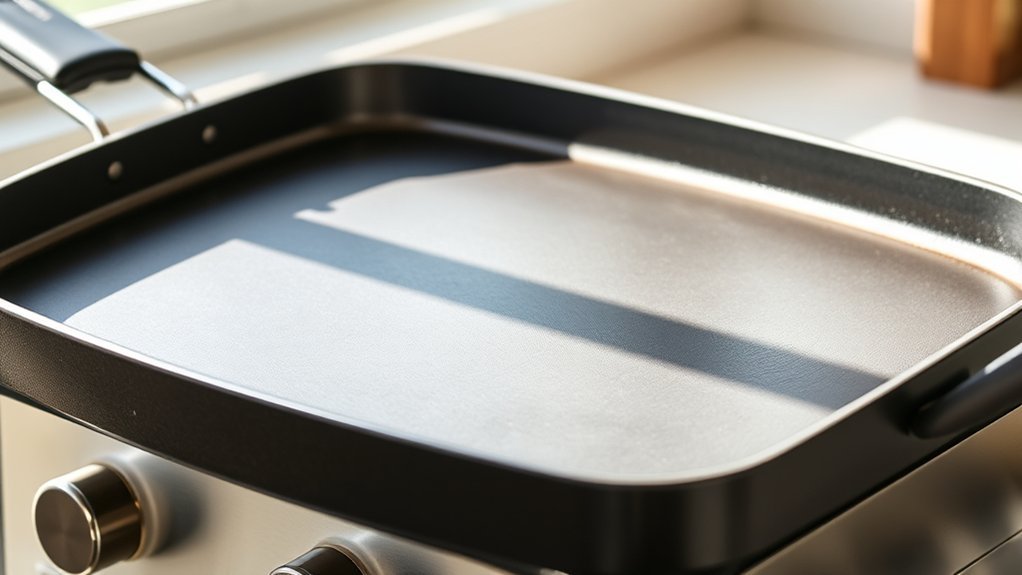

When you look at your Blackstone griddle, you want to see a smooth, dark matte surface with an even patina that shows it’s properly seasoned. The color should be uniform, without shiny or patchy spots, and the texture slightly grainy from the steel itself.
If you notice sticky residue, rust, or uneven wear, these are signs something’s off. But how do you distinguish between a well-maintained griddle and one that needs attention?
Understanding what a Blackstone griddle should look like is key to keeping it in top shape and ensuring great cooking results every time.
Key Takeaways
- A well-maintained Blackstone griddle has a smooth, dark matte finish with uniform coloration indicating consistent seasoning and heat management.
- The ideal surface color is a deep, rich black or dark brown patina, signaling proper seasoning and consistent heat distribution.
- The surface should feel slick but not greasy, with slight resistance, and be free of patchy spots, rust, or flaky residues.
- Properly seasoned griddles release food easily, show no shiny or blotchy areas, and maintain even temperature during cooking.
- When hot, water droplets should sizzle and evaporate immediately, and the surface should exhibit a uniform dark sheen without dry or rusty patches.
What a Well-Seasoned Blackstone Griddle Looks Like
What does a well-seasoned Blackstone griddle look like? You’ll notice a smooth, dark, and almost matte finish that’s free of rust or patchy spots. This appearance results from the seasoning science, where layers of polymerized oil bond to the metal surface, creating a natural non-stick coating.
Unlike a freshly unseasoned griddle, which looks shiny and raw, a seasoned one shows even coloration, indicating consistent heat management during cooking sessions. Proper heat distribution prevents uneven seasoning, so you won’t see blotchy or sticky areas.
When you touch it, the surface feels slick but not greasy, signaling a well-maintained seasoning layer. In comparison to a poorly seasoned griddle, yours resists food sticking and withstands high temperatures without peeling or flaking, demonstrating optimal seasoning science and heat management.
Identifying the Perfect Blackstone Cooking Surface Color
You’ll want your Blackstone cooking surface to have a rich, dark brown or black patina, which signals proper seasoning and readiness for cooking. Lighter or uneven colors often indicate incomplete seasoning or surface inconsistencies.
Comparing these variations helps you identify whether your griddle is perfectly seasoned or needs more care.
Ideal Surface Color
How can you tell if your Blackstone griddle has reached the ideal surface color for optimal cooking? The perfect color is a deep, matte black, not shiny or patchy. This uniform color indicates proper seasoning consistency across the surface, essential for non-stick performance and rust resistance.
If you notice uneven discoloration or glossy spots, your seasoning might be inconsistent, affecting surface texture and cooking results. The surface should feel smooth but not slick, offering slight resistance when you run your fingers over it.
Compared to a freshly oiled but unseasoned griddle, this seasoned matte black finish shows that the polymerized oils have bonded well. Achieving this color means your griddle is ready to deliver even heat distribution and reliable browning, essential for great cooking outcomes.
Signs of Proper Seasoning
Recognizing signs of proper seasoning on your Blackstone griddle ensures you’re cooking on a surface primed for performance. Proper seasoning creates a dark, almost black patina that protects the griddle and enhances non-stick properties.
You’ll notice subtle temperature indicators during cooking, like even heat distribution and quick browning without sticking. Seasoning maintenance becomes easier once the surface reaches this ideal state.
Look for these signs to confirm proper seasoning:
- A smooth, matte black finish without patchy spots
- Consistent heat response, visible through stable temperature indicators
- Food releases cleanly, requiring minimal oil or fat
If your griddle shows these characteristics, you’re maintaining the seasoning correctly and optimizing cooking efficiency.
Common Color Variations
Once your Blackstone griddle develops a well-seasoned surface, you might notice various color changes that indicate different stages or conditions of the cooking surface. Initially, a dark bluish-black tone signals proper seasoning and effective seasoning upkeep.
If you see uneven patches of brown or rust, it suggests inconsistent seasoning or moisture exposure, requiring immediate maintenance. Some areas might appear shiny or silver, indicating spots where seasoning has worn off and metal is exposed, impacting color consistency.
A uniform, deep black coating is ideal, reflecting balanced oil polymerization and consistent heat application. Monitoring these variations helps you maintain optimal performance and longevity.
Understanding these subtle color shifts ensures you can address issues promptly, keeping your Blackstone griddle functioning at its best.
What Texture Should Your Blackstone Griddle’s Surface Have Before Cooking
What kind of texture should you expect on your Blackstone griddle’s surface before you start cooking? Ideally, the surface feels smooth with a slight natural grain from the steel, reflecting proper maintenance and seasoning. Texture plays a crucial role in cooking performance and is influenced by seasoning restrictions and cleaning routines.
Expect a smooth surface with a natural steel grain, indicating proper seasoning and care.
Overly rough or pitted surfaces may indicate excessive wear or improper care, while overly slick surfaces might suggest excess oil buildup.
Look for these texture characteristics:
- Slightly matte finish with minimal unevenness
- Smooth but not polished to a mirror shine
- Absence of sticky residue or flaky patches
Maintaining this texture balance ensures even heat distribution and prevents food from sticking, making your Blackstone griddle both functional and long-lasting.
How to Tell When Your Blackstone Griddle Is Hot and Ready
Anyone cooking on a Blackstone griddle knows that knowing when it’s properly heated makes all the difference in cooking results. To test readiness, sprinkle a few drops of water on the surface. If they sizzle and evaporate immediately, the griddle is hot.
Unlike cleaning, which removes residue, seasoning builds a natural non-stick layer, essential for consistent heat transfer. A properly heated griddle has a uniform dark sheen, indicating effective seasoning versus cleaning balance.
If the surface is dull or uneven, it may not be hot enough, risking food sticking or uneven cooking. Regularly heating the griddle also aids rust prevention by burning off moisture after cleaning.
Mastering heat cues ensures you cook efficiently and maintain your griddle’s longevity.
How to Spot Dry or Rusty Surfaces on Your Blackstone
You can spot rust on your Blackstone by looking for reddish-brown patches that feel rough to the touch, contrasting sharply with the smooth, seasoned surface.
Dry areas, on the other hand, appear dull and may lack the usual oily sheen, indicating a loss of protective seasoning. Recognizing these differences helps you maintain your griddle’s performance and prevent further damage.
Identifying Rust Spots
How can you tell if your Blackstone griddle is developing rust spots? Rust spots often appear as reddish-brown patches contrasting against the darker, seasoned surface. Unlike the smooth, oily sheen of proper season build up, rust feels rough and may flake off when touched.
To identify rust spots, look for:
- Discolored patches with a reddish or orange tint disrupting the uniform black or dark brown surface
- Texture differences where rusted areas feel coarse compared to the smoothness of well-seasoned steel
- Areas that resist oil absorption, indicating the protective seasoning layer has been compromised
Spotting rust early helps you restore your griddle’s surface before damage worsens. Rust spots indicate moisture exposure or neglected maintenance, differentiating them clearly from the ideal, well-maintained season build up.
Recognizing Dry Patches
When can you tell if your Blackstone griddle has developed dry patches? Look closely at the surface for areas where the seasoning consistency appears uneven or flaky. Dry patches often look lighter or duller compared to the smooth, dark, and glossy finish of a well-seasoned griddle.
Unlike rust spots, which show a reddish-brown color, dry patches lack moisture and can feel rough or brittle to the touch. These areas indicate that the protective oil layer has worn off, exposing the bare metal beneath.
Regularly checking for dry patches helps you maintain an even seasoning consistency, preventing rust and ensuring optimal cooking performance. If you spot dry patches, apply oil and re-season promptly to restore the griddle’s surface integrity and prevent further damage.
Recognizing Normal Residue and Build-Up on Your Blackstone Griddle
What signs indicate normal residue versus problematic build-up on your Blackstone griddle? You’ll notice normal residue as a thin, slightly oily layer that helps seasoning, while problematic build-up appears as thick, sticky residues or excessive grease buildup that impede cooking. Here’s how to differentiate:
Normal Residue: Light, even coating that enhances non-stick surface without visible clumps.
Sticky Residues: Often result from burnt food particles or improper cleaning, causing uneven patches.
Grease Buildup: Accumulates in corners or edges, appearing as thick, shiny deposits that attract dirt.
How to Spot Uneven Wear and Hot Spots on Your Blackstone Plate
You’ll notice uneven cooking areas when some parts of your Blackstone plate heat faster or cook food differently than others. Visual signs like discoloration, warping, or persistent hot spots can indicate trouble with surface consistency.
Paying close attention to these details helps you maintain an even cooking surface and extend your griddle’s lifespan.
Identifying Uneven Cooking Areas
How can you tell if your Blackstone griddle is cooking unevenly? Uneven cooking areas often result from inconsistent heat distribution or surface wear, which can affect your cooking results.
To identify these areas, observe your griddle during use and inspect its surface regularly. Pay close attention to:
- Differences in how food cooks across the plate, such as uneven browning or inconsistent sizzle.
- Variations in the surface texture or color, indicating uneven seasoning maintenance or wear.
- Localized spots where oil pools or burns, suggesting heat inconsistencies.
Visual Signs Of Hot Spots
Where exactly do hot spots develop on your Blackstone griddle, and how can you identify them visually? Hot spots often form near the burners’ center or edges, causing uneven heating. You’ll notice cooking surface discoloration, with darker or lighter patches where metal heats differently.
Comparing these areas helps you spot uneven wear.
| Visual Sign | Description |
|---|---|
| Darker patches | Indicate high heat concentration |
| Lighter patches | Suggest cooler spots |
| Shiny or polished areas | Result from repeated cooking |
| Rust spots | Appear if seasoning degrades |
| Uneven color gradients | Show gradual heat discrepancies |
Recognizing these signs lets you address hot spots before they affect cooking consistency.
Maintaining Plate Surface Consistency
Why does maintaining plate surface consistency matter for your Blackstone griddle? Uneven wear and hot spots can cause inconsistent cooking and accelerate rust formation. By focusing on seasoning maintenance and rust prevention, you ensure a smooth, durable cooking surface.
To spot uneven wear and hot spots, watch for:
- Color variations: Darker or lighter patches indicate uneven seasoning or heat distribution.
- Texture differences: Rough or pitted areas suggest wear or rust beginning.
- Cooking performance: Food cooking faster in some spots signals hot spots.
Comparatively, a well-maintained plate shows uniform color and texture, with even heat. Regular seasoning maintenance prevents rust and surface degradation, preserving your griddle’s consistency and extending its lifespan. Keep an eye on these signs to maintain optimal performance.
When to Re-Season or Deep Clean Your Blackstone Griddle
When should you re-season or deep clean your Blackstone griddle to maintain peak performance? Follow a consistent seasoning schedule based on usage frequency and cooking style. If you cook daily or prepare greasy foods, you might need to re-season every few weeks to prevent rust and maintain a non-stick surface.
A less frequent cooking cadence allows for monthly or even bi-monthly seasoning. Deep cleaning becomes necessary when you notice stubborn residue, rust spots, or uneven cooking surfaces despite regular wiping. Unlike routine cleaning after each use, deep cleaning strips old seasoning and grime, requiring you to reapply oil thoroughly afterward.
How to Maintain Your Blackstone’s Seasoning and Appearance After Use
How often you clean and oil your Blackstone griddle after each use directly impacts its seasoning and overall appearance. Proper seasoning maintenance preserves the non-stick surface and prevents rust, while consistent surface cleaning removes food residue that can degrade the seasoning layer.
To maintain your griddle effectively:
- Clean the surface with a scraper or spatula immediately after cooking to remove debris.
- Wipe down the griddle with a damp cloth or paper towel; avoid harsh detergents that strip seasoning.
- Apply a thin layer of high-smoke point oil to the surface, heating it briefly to lock in the seasoning.
Compared to infrequent cleaning, this routine prolongs the griddle’s lifespan and keeps its dark, smooth finish intact, ensuring optimal cooking performance and an attractive appearance every time you use it.
Checking Your Blackstone’s Frame and Edges for Rust or Damage
Although the griddle’s surface often gets the most attention, you shouldn’t overlook the frame and edges when inspecting your Blackstone. Conduct a thorough rust inspection on the metal frame, focusing on corners and welds where moisture can accumulate.
Surface rust can often be removed with light sanding, but deeper corrosion may compromise structural integrity and require professional repair or replacement. Check for edge damage such as bending, cracks, or warping, which could affect stability and safety during use.
Compared to the cooking surface, frame issues are less visible but equally important for long-term durability. Regularly assessing both rust and edge damage ensures your Blackstone remains safe and functional, maintaining its overall appearance and performance over time.
Frequently Asked Questions
How Do I Assemble My Blackstone Griddle Properly?
You’ll start by following the manual’s assembly tips closely, ensuring all bolts fit snugly. Compare parts carefully and tighten evenly.
After assembly, maintain your griddle well to ensure longevity and optimal cooking performance.
What Types of Cooking Oils Are Best for Seasoning?
You’ll want to use high heat oils like flaxseed, grapeseed, or avocado oil for seasoning oil since they withstand heat without smoking. These oils create a durable, non-stick surface, unlike lower smoke point oils that can burn.
Can I Use My Blackstone Griddle Indoors Safely?
You can’t use your Blackstone griddle indoors safely without proper ventilation. Unlike stovetops, it produces smoke and fumes, so good griddle ventilation is essential.
This helps maintain indoor safety and prevents hazardous air buildup.
How Long Does It Take to Preheat the Griddle?
It takes about 10-15 minutes to preheat your Blackstone griddle to ideal temperature targets, usually between 350°F and 400°F.
You’ll notice the surface changes color slightly as it reaches the right heat.
What Accessories Are Recommended for Blackstone Griddles?
You’ll want griddle accessories like a scraper, spatulas, and a splash guard for easy cooking. Don’t forget seasoning oils to maintain the surface, ensuring durability and non-stick performance compared to neglecting these essentials.
Conclusion
Your Blackstone griddle should look like a well-oiled machine—smooth, dark, and ready to perform. If you spot shiny patches or rust spots, it’s a sign to reseason or clean deeply. A uniform matte surface with a slight grain means even heat and perfect seasoning.
Like a canvas prepped for art, your griddle’s surface sets the stage for great cooking. Keep it maintained, and it’ll serve you like a trusty partner every time.
In conclusion, a properly cared-for Blackstone griddle will always look inviting and reliable, ensuring the best cooking experience.