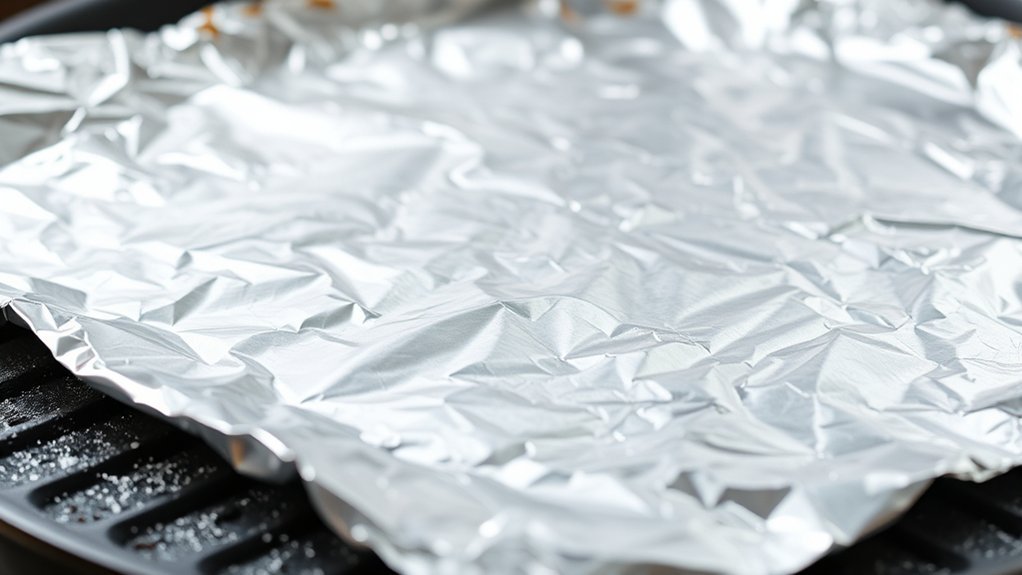

You might not realize that using aluminum foil on a griddle is safe, but only under specific conditions. Aluminum foil works well as a liner beneath food to prevent sticking and simplify cleanup. However, improper use—like covering the entire surface or contacting open flames—can cause overheating or damage.
Understanding the correct application and precautions can notably enhance your cooking experience while protecting your equipment. Here’s what you need to know before placing foil on your griddle.
Key Takeaways
- Aluminum foil can be used on a griddle as a liner beneath food to reduce sticking and simplify cleanup.
- Use heavy-duty foil flat on the surface to ensure even heat distribution and prevent tearing.
- Avoid direct contact between foil and heating elements to prevent fire hazards and foil degradation.
- Do not cover the entire griddle with foil to maintain airflow and prevent flare-ups.
- Avoid cooking acidic or salty foods directly on foil to prevent chemical reactions affecting safety and flavor.
Is It Safe to Use Aluminum Foil on a Griddle?
When considering whether you can safely use aluminum foil on a griddle, it’s important to understand how foil interacts with heat and food surfaces. Aluminum foil conducts heat efficiently, which can alter cooking dynamics and potentially cause uneven heating.
You must avoid direct contact between foil and the griddle’s heating element to prevent foil degradation or fire hazards. While two word ideas like “heat transfer” and “surface protection” relate to this topic, unrelated topics such as “battery chemistry” or “software algorithms” do not inform your decision.
Additionally, acidic or salty foods can react with aluminum, influencing safety and taste. By grasping these technical factors, you can evaluate if foil use aligns with your cooking goals and safety standards without compromising griddle integrity.
How Do You Properly Use Aluminum Foil on a Griddle?
Although aluminum foil can enhance your griddle cooking experience, you need to apply it correctly to avoid heat damage and ensure even cooking. Start by using heavy-duty foil to withstand high temperatures without tearing. Lay the foil flat, avoiding wrinkles that create hot spots and uneven heat distribution.
Ensure foil safety by not covering air vents or trapping grease, which can cause flare-ups. Use foil as a liner beneath food for easy cleanup, but avoid direct contact with heating elements.
After cooking, allow the griddle to cool before removing foil to prevent burns and damage. For cleanup tips, discard used foil carefully and wipe the griddle surface with a damp cloth to remove residue, maintaining your griddle’s longevity and performance.
When Does Aluminum Foil Prevent Food From Sticking on a Griddle?
How effectively aluminum foil prevents food from sticking on a griddle depends on its application and the type of food you’re cooking. When you use foil as a barrier, ensure it’s smooth and tightly secured to maintain consistent heat distribution, which reduces hotspots that cause sticking.
Foil safety is critical; avoid using thin or torn sheets, as they can degrade and allow food contact with the griddle surface, increasing sticking risks. Foil works best with moist or delicate foods like fish or vegetables, which benefit from the even heat transfer and moisture retention foil provides.
For items requiring high direct heat or searing, foil may hinder proper crust formation and increase sticking. Proper foil placement and understanding its thermal properties optimize non-stick performance on your griddle.
How Can Aluminum Foil Make Griddle Cleanup Easier?
Using aluminum foil on your griddle not only helps manage food sticking but also considerably simplifies cleanup. By lining your griddle surface with foil, you create a protective barrier that catches drips, grease, and burnt residue, preventing buildup on the griddle itself.
This approach reduces the need for aggressive scrubbing or chemical cleaners, preserving your griddle’s finish and performance. When implementing this cleanup hack, ensure proper foil safety by avoiding direct contact with heating elements and checking that the foil is securely fastened to prevent shifting during cooking.
After use, simply remove and discard the foil, instantly eliminating most cleaning tasks. Incorporating aluminum foil as a cleanup aid optimizes your cooking setup, saving time while maintaining hygiene and equipment longevity.
What Are the Risks of Overheating Aluminum Foil on Your Griddle?
Excessive heat exposure on aluminum foil can compromise both your griddle’s safety and cooking quality. When you ignore overheating risks, the foil may degrade, releasing harmful fumes or melting onto the griddle surface. This not only damages the cooking appliance but also contaminates your food. Maintaining foil safety means monitoring temperature and avoiding direct contact with heating elements.
| Overheating Risks | Effects |
|---|---|
| Foil Melting | Adheres to griddle surface |
| Toxic Fume Release | Health hazard |
| Surface Damage | Permanent griddle impairment |
| Food Contamination | Compromised meal safety |
Stay vigilant to prevent these risks and ensure optimal cooking performance and longevity of your griddle when using aluminum foil.
Which Aluminum Foil Types Work Best on Griddles?
You’ll want to choose heavy-duty aluminum foil for griddling to prevent tearing and guarantee even heat distribution. Non-stick foil options can reduce food adhesion, making cleanup easier and preserving your griddle’s surface.
Always select food-safe foil that meets safety standards to avoid contamination during cooking.
Heavy-Duty Foil Benefits
Several types of aluminum foil exist, but heavy-duty foil stands out as the best choice for griddle use. Its thicker gauge enhances durability, preventing tears and punctures during cooking, which directly improves griddle performance by maintaining consistent heat distribution.
The heavy-duty foil benefits extend to safety considerations; it resists warping under high temperatures, reducing risks of foil degradation and potential contamination. Additionally, its robust structure provides a reliable barrier against grease and food particles, simplifying cleanup and protecting your griddle surface.
When you choose heavy-duty foil, you guarantee a safer cooking environment and more efficient heat retention, which maximizes your griddle’s functionality. Overall, heavy-duty aluminum foil offers superior strength, reliability, and thermal stability, making it the most effective foil type for your griddle tasks.
Non-Stick Foil Options
Two primary types of non-stick aluminum foil are ideal for griddle cooking: standard non-stick foil and heavy-duty non-stick foil. Both reduce food adhesion, simplifying cleanup and enhancing foil safety by minimizing direct contact between food and metal.
When selecting non-stick options, consider these factors:
- Durability: Heavy-duty non-stick foil withstands higher temperatures and resists tearing.
- Heat distribution: Standard non-stick foil offers even heat conduction but may be less robust.
- Non stick alternatives: Silicone baking mats or reusable grill liners can complement foil use for added non-stick performance.
Choosing the right non-stick foil balances practicality with foil safety, ensuring your griddle surfaces stay protected while preventing food from sticking.
Food-Safe Foil Features
What makes aluminum foil food-safe for griddle use? It must exhibit high heat tolerance and resist chemical leaching when exposed to cooking temperatures.
Look for heavy-duty foil variants designed to withstand griddle heat without tearing or melting. These foils maintain structural integrity, ensuring safe food contact.
Additionally, certain foils feature nonstick alternatives, often coated with food-grade silicone or other safe substances, preventing food from sticking and simplifying cleanup.
Avoid standard thin foil, which lacks durability and may compromise safety under intense heat. When selecting foil, verify it’s labeled food-safe and suitable for high-temperature applications.
When Should You Avoid Using Aluminum Foil on Your Griddle?
Why should you avoid using aluminum foil on your griddle in certain situations? It’s crucial to recognize when foil use is inappropriate to prevent damage or unsafe cooking conditions. Avoiding foil in these scenarios ensures optimal performance and safety, steering clear of irrelevant topic or off-topic discussion that detracts from careful griddle maintenance.
Knowing when to avoid aluminum foil on your griddle prevents damage and ensures safe, effective cooking.
You should not use aluminum foil on your griddle when:
- The griddle surface is non-stick and prone to scratching. Foil can cause permanent damage.
- You need to regulate precise heat control. Foil may disrupt heat distribution, leading to uneven cooking.
- Cooking acidic foods like tomatoes or citrus. Foil can react chemically, affecting flavor and safety.
Being mindful of these conditions preserves your griddle’s integrity and ensures safe, efficient cooking every time.
What Are Alternatives to Aluminum Foil for Non-Stick Griddle Cooking?
When cooking on a non-stick griddle, selecting the right material to protect the surface is essential. Instead of aluminum foil, which raises foil safety concerns like potential scratching or chemical interaction, consider silicone baking mats or reusable nonstick liners.
These nonstick options provide a durable, heat-resistant barrier that preserves your griddle’s coating without compromising cooking quality. You can also use parchment paper designed for high heat, but ensure it remains flat to avoid airflow disruption.
Additionally, investing in a quality nonstick griddle spray or oil can reduce sticking without resorting to foil. These alternatives maintain the integrity of your griddle while offering reliable food release and easy cleanup, aligning with best practices for foil safety and optimizing your griddle’s lifespan.
How Does Aluminum Foil Affect Cooking Performance on a Griddle?
Choosing alternatives to aluminum foil can protect your griddle’s surface, but understanding how foil itself influences cooking performance helps clarify those choices. Aluminum foil provides an effective barrier that improves cleanup benefits by preventing direct food contact and reducing residue buildup.
Exploring foil alternatives protects your griddle while understanding foil’s impact on cooking enhances your choices.
However, foil affects heat distribution by reflecting some thermal energy, which can cause uneven cooking if not managed properly. Regarding foil safety, using it correctly ensures no harmful reactions with acidic foods or overheating issues.
When using aluminum foil on a griddle, you may experience:
- Faster cleanup that saves time and effort
- Potential hotspots causing unevenly cooked dishes
- Increased control over moisture retention and flavor preservation
Balancing these factors will help you optimize cooking results while maintaining your griddle’s condition.
What Expert Tips Help You Use Aluminum Foil Safely and Effectively?
How can you maximize the benefits of aluminum foil on your griddle while minimizing risks? Prioritize foil safety by avoiding direct contact with open flames or extreme heat, which can cause tearing or combustion. Use heavy-duty foil to enhance durability and prevent punctures.
Ensure the foil lies flat to maintain consistent heat conduction; wrinkles disrupt even cooking and can create hot spots. Avoid covering the entire griddle surface to allow proper airflow, preventing overheating and warping.
When wrapping food, seal edges tightly to retain moisture and heat without risking leaks that could ignite. After cooking, let the foil cool before removal to avoid burns or damage to the griddle surface. Following these expert tips ensures efficient heat conduction and maximizes foil safety during griddle use.
Frequently Asked Questions
Can Aluminum Foil Be Recycled After Griddle Use?
You can recycle aluminum foil after griddle use only if it’s clean and free from food residue. Check your local recycling rules to avoid foil waste contamination, ensuring proper sorting and effective recycling processing.
Does Aluminum Foil Affect the Taste of Food Cooked on a Griddle?
You probably won’t notice foil taste impact unless surface residue effects accumulate from repeated use. Aluminum foil’s inert nature prevents flavor transfer, so when clean, it won’t alter your food’s taste during griddle cooking.
How Long Can Aluminum Foil Be Safely Left on a Hot Griddle?
You shouldn’t leave foil on a hot griddle for more than 30 minutes to ensure foil safety. Prolonged exposure impairs heat transfer, risks melting, and can release harmful fumes.
Always monitor temperature closely.
Can Using Aluminum Foil on a Griddle Damage the Griddle Surface?
Yes, using aluminum foil can damage your griddle surface by disrupting heat transfer and causing uneven heating.
For foil safety, avoid prolonged use to prevent scratching or degrading non-stick coatings, preserving your griddle’s performance and lifespan.
Is It Safe to Use Aluminum Foil on an Electric vs. Gas Griddle?
You can safely use aluminum foil on both electric and gas griddles, but foil safety depends on proper heat transfer. Avoid covering heating elements directly on electric models to prevent overheating and damage, ensuring efficient, even cooking.
Conclusion
You can safely use aluminum foil on your griddle if you treat it like a trusty shield—never let it touch flames or cover the entire surface. Like a well-oiled steam engine, maintain airflow and avoid overheating to prevent damage.
Use heavy-duty foil, keep it flat, and leave vent gaps for even cooking. With careful handling, aluminum foil can simplify cleanup and enhance your griddle experience.
By following these tips, you can enjoy the benefits of using aluminum foil on a griddle without sacrificing performance or safety.