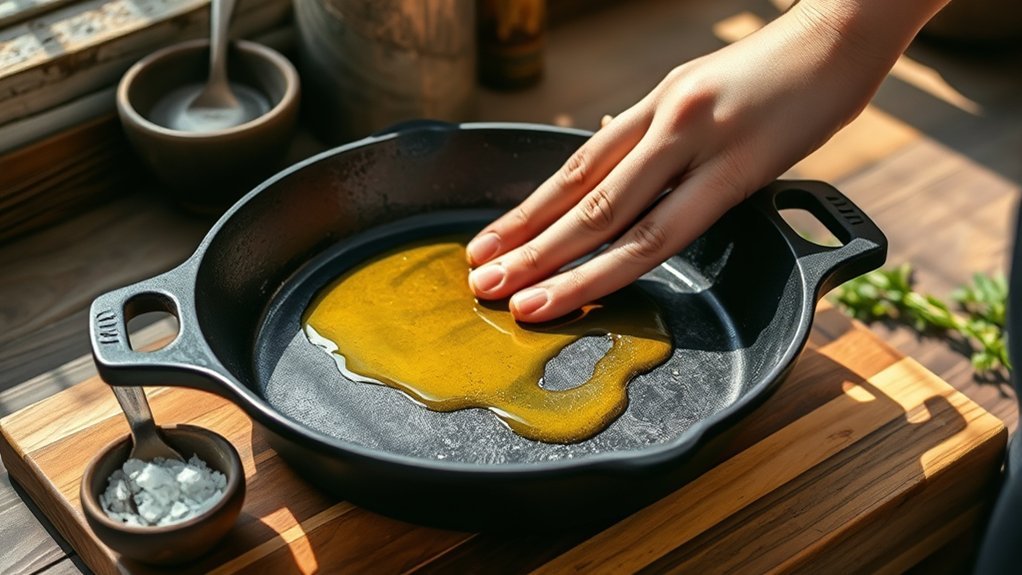

You might think seasoning a cast iron skillet without an oven is difficult, but it’s entirely possible to achieve a durable, non-stick surface on the stovetop. By carefully cleaning, drying, and applying the right oil with controlled heat, you can build a strong seasoning layer.
The process takes attention to detail and patience, but mastering it opens up reliable maintenance methods. Before you know it, your skillet will perform like new without ever hitting the oven.
Key Takeaways
- Clean the skillet thoroughly, removing food residue or rust, and dry completely to ensure proper oil bonding.
- Apply a thin, even layer of high-smoke point oil like flaxseed or grapeseed to avoid residue and promote polymerization.
- Heat the oiled skillet on the stovetop over low to medium heat for 10-15 minutes to polymerize the oil into a protective coating.
- Allow the skillet to cool gradually to prevent thermal shock and support a durable, non-stick seasoning layer.
- Maintain seasoning by washing with hot water and a brush, drying thoroughly, and applying a thin oil layer after each use.
Why You Need to Season Cast Iron Without an Oven
Why might you need to season your cast iron skillet without using an oven? Perhaps you don’t have access to an oven, or you want a quicker, more controlled method.
Seasoning science shows that applying a thin layer of oil and heating it creates a polymerized, protective coating. This process enhances your skillet’s non-stick surface and prevents rust.
Using eco friendly oils, such as flaxseed or grapeseed oil, not only supports sustainable practices but also improves seasoning durability due to their high smoke points and polymerization properties.
How to Clean Your Cast Iron Skillet Before Seasoning
Before you start seasoning, you need to remove any food residue by scrubbing your cast iron skillet with warm water and a stiff brush.
If you notice rust spots, gently scrub them away with steel wool to restore the surface. Make sure to dry the skillet thoroughly to prevent moisture from interfering with the seasoning process.
Removing Food Residue
How do you effectively remove food residue from your cast iron skillet to guarantee a clean surface for seasoning? Start by rinsing the skillet with warm water and using a stiff brush or non-abrasive scrubber to dislodge stuck-on bits.
Avoid soap as it can strip away seasoning unless the skillet is heavily soiled; in that case, use a mild detergent sparingly. For stubborn residue, add coarse kosher salt as a gentle abrasive, scrubbing in circular motions before rinsing thoroughly.
Dry the skillet completely with a towel or by heating it on the stovetop. Removing residue properly ensures the oil you apply during seasoning bonds well, enhancing durability. Choose oils with high smoke points, like flaxseed or grapeseed, to create a strong, even coating for your cast iron.
Handling Rust Spots
When you spot rust on your cast iron skillet, addressing it promptly is essential to restore a clean surface for seasoning. Begin by scrubbing the rusted areas with a non-metallic scrubber or steel wool, applying moderate pressure to remove all rust without damaging the skillet’s surface.
Rinse thoroughly with warm water and dry immediately to prevent further oxidation. Understanding seasoning science helps here: rust forms when iron is exposed to moisture and oxygen, so removing rust ensures your oil-based seasoning bonds effectively.
After cleaning, apply a thin layer of cooking oil to the skillet to protect it from moisture and promote rust prevention. Regular maintenance and timely rust treatment preserve your skillet’s performance and longevity, ensuring optimal seasoning results every time.
Drying Thoroughly Before Seasoning
A completely dry cast iron skillet is essential to assure proper seasoning adhesion and prevent rust. After cleaning, focus on drying thoroughly by wiping the skillet with a clean cloth and then heating it on the stovetop over low heat for several minutes. This process evaporates any residual moisture that could interfere with the seasoning chemistry.
Water left on the surface can cause uneven polymerization of the oil, leading to poor seasoning layers or rust formation. Ensuring your skillet is bone dry allows the oil to bond effectively during the seasoning process, creating a durable, non-stick coating.
Best Oils and Fats for Seasoning Cast Iron Skillets
Which oils and fats work best for seasoning your cast iron skillet? Choosing the right seasoning oils and fat types is essential for building a durable, non-stick surface. You want oils that polymerize well under heat, creating a strong, protective layer.
Here are five excellent options:
- Flaxseed oil: Dries to a hard, durable coating
- Grapeseed oil: High smoke point and neutral flavor
- Canola oil: Affordable and readily available
- Avocado oil: Very high smoke point, ideal for seasoning
- Bacon fat: Adds flavor and forms a solid layer
These fats each offer unique benefits, but avoid low smoke point oils or butter, which can leave sticky residues. Selecting the right seasoning oils ensures your skillet’s longevity and cooking performance.
How to Season Your Cast Iron Skillet on the Stovetop
Wondering how to season your cast iron skillet without an oven? The stovetop method offers a quick, effective alternative rooted in seasoning science. Start by cleaning your skillet thoroughly and drying it completely.
Apply a thin, even layer of your chosen oil. Remember, less is more to prevent sticky buildup. Heat the skillet over medium heat; this encourages the oil to polymerize, forming a durable, non-stick coating.
Maintain the temperature for about 10-15 minutes, then let it cool naturally. Practicing proper skillet etiquette means avoiding overheating and ensuring your pan is not left oily, which can attract residue.
Repeat this process regularly to build up a resilient seasoning layer, enhancing your skillet’s performance and longevity without needing an oven.
How to Season Your Cast Iron Skillet on a Grill
To season your cast iron skillet on a grill, start by thoroughly cleaning and drying the skillet to remove any residue. Next, apply a thin layer of oil evenly over the entire surface.
Finally, heat the skillet on the grill at medium-high heat to allow the oil to polymerize and create a durable seasoning layer.
Preparing The Skillet
Seasoning your cast iron skillet on a grill requires proper preparation to ensure an even, durable coating. To optimize the seasoning science and oil chemistry, start by thoroughly cleaning the skillet to remove any rust or residues that can interfere with oil bonding.
Dry it completely to prevent moisture from disrupting the polymerization process during seasoning. Visualize these steps:
- Scrubbing with a stiff brush and mild soap
- Rinsing under hot water
- Drying with a clean cloth and heat
- Inspecting for any remaining rust spots
- Wiping the surface with a thin layer of neutral oil before seasoning
These actions set the stage for the oil to chemically bond with the iron surface, creating the skillet’s protective, non-stick layer.
Heating And Oiling
A properly heated cast iron skillet guarantees the oil bonds evenly to its surface, forming a durable, non-stick layer. Start by preheating your grill to medium-high heat. Place the skillet directly on the grill grates and allow it to heat for about 10 minutes.
This heating process opens the skillet’s pores, making it ready to absorb the oil efficiently. Once hot, carefully remove the skillet using heat-resistant gloves. Apply a thin, even coat of a high-smoke-point oil, like flaxseed or grapeseed, using a cloth or paper towel.
Return the skillet to the grill and continue heating for 30-60 minutes, allowing the oil to polymerize and bond. Repeat this heating and oiling cycle 2-3 times for optimal seasoning skillet results.
How to Tell When Your Cast Iron Skillet Is Properly Seasoned
How can you tell when your cast iron skillet is properly seasoned? Proper seasoning means a smooth, non-stick surface created by polymerized oil layers, not just a dark color or excessive smoking, which are common seasoning misconceptions.
Remember, seasoning develops best below the oil’s smoke point to avoid burnt residue. Look for these signs:
- A consistent, glossy black finish without sticky patches
- Food releases easily without sticking or tearing
- Minimal smoke during cooking, indicating stable seasoning
- A slightly slick feel, not greasy or rough
- Resistance to rust and water beading on the surface
Common Cast Iron Seasoning Mistakes to Avoid
Why do some cast iron skillets fail to develop a proper seasoning despite repeated attempts? Often, it’s because you’re applying excessive heat too quickly, causing cracking heat that damages the seasoning layer. Avoid overheating your skillet; instead, use moderate heat to allow the oil to polymerize evenly.
Another common mistake is using too much oil, which leads to sticky residue and heavy oil smoke during seasoning. Apply a thin, even coat of oil to prevent this. Additionally, skipping the cleaning step before seasoning traps food particles, hindering proper bonding of the seasoning.
Lastly, don’t rush the process. Allow the skillet to cool gradually after seasoning to avoid thermal shock. By avoiding these mistakes, you’ll build a durable, smooth seasoning layer without flaws.
Tips for Maintaining Your Cast Iron Seasoning Over Time
When should you perform maintenance to keep your cast iron skillet’s seasoning intact? Regular upkeep is essential to ensure seasoning longevity and prevent rust or sticky buildup. Focus on proper cleaning, drying, and oil selection for best results.
After each use, clean your skillet with hot water and a stiff brush. Avoid soap to preserve the seasoning. Dry thoroughly to prevent moisture damage. Apply a thin layer of a high-smoke point oil like flaxseed or grapeseed to maintain the protective coating.
- Wipe excess moisture immediately
- Reapply oil after every cleaning
- Avoid soaking the skillet in water
- Use gentle scrubbing tools only
- Store in a dry, ventilated place
These habits prolong seasoning longevity, keeping your skillet non-stick and rust-free.
Frequently Asked Questions
Can I Use Flaxseed Oil for Seasoning Cast Iron?
Yes, you can use flaxseed oil for seasoning cast iron. Its compatibility makes it a popular seasoning oil type due to its high polymerization point. This creates a durable, non-stick layer when properly applied and heated.
How Often Should I Reseason My Cast Iron Skillet?
You should reseason your cast iron skillet depending on how often you use it; a reseason frequency of every few months maintains seasoning longevity.
Adjust your maintenance schedule if food starts sticking or the surface looks dull.
Is It Safe to Use Soap on a Seasoned Cast Iron?
Is it safe using soap on a seasoned cast iron? Yes, occasional gentle soap won’t harm the seasoning, like a quick shower revitalizing skin. Just avoid harsh detergents or scrubbing, preserving that protective, non-stick layer you’ve built.
Can I Season a Cast Iron Pan With Food Residue?
You shouldn’t season a cast iron pan with food residue; clean it first. Instead, try seasoning with breadcrumbs or using citrus zest to create a natural, effective coating that enhances your pan’s surface and prevents sticking.
Does Seasoning Affect the Flavor of My Food?
Think of seasoning as a protective shield; it doesn’t change your food’s flavor but enhances it by preventing sticking and rust. Proper seasoning ensures your skillet’s food impact stays consistent and delicious over time.
Conclusion
Seasoning your cast iron skillet without an oven transforms your stovetop into a forge, where thin layers of oil shimmer and bond, creating a sleek, resilient surface. With each careful wipe and gentle heat, you build a protective armor that promises even cooking and effortless release.
Keep this ritual alive—clean gently, oil lightly—and watch your skillet develop a rich, glossy patina. This surface will be ready to serve countless meals with unmatched reliability and charm.
By mastering how to season a cast iron skillet without an oven, you ensure your cookware stays in top condition, delivering excellent performance every time you cook.