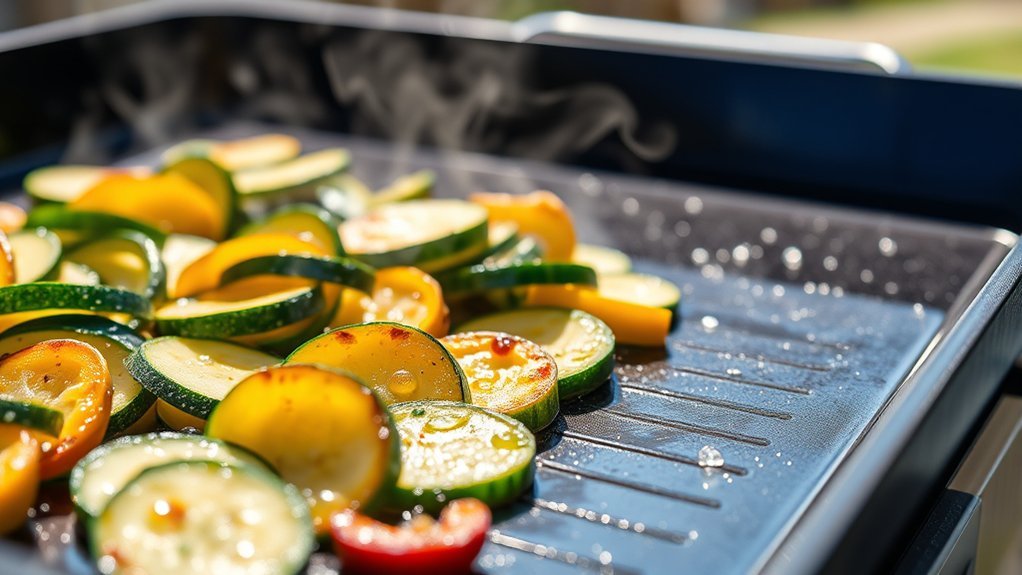

You might not realize that the key to perfectly cooked zucchini and squash on a Blackstone griddle lies in managing temperature and moisture carefully. Cooking zucchini and squash on a Blackstone griddle requires attention to heat and moisture to avoid sogginess or burning.
Preheating to the right temperature and using the proper oil prevents sticking and uneven cooking, which can ruin these delicate veggies. Once you master the slicing and seasoning techniques, you’ll unlock a simple way to achieve a crisp, flavorful sear that elevates your dish every time.
Here’s how to get started.
Key Takeaways
- Preheat the Blackstone griddle to 375°F to 400°F and clean the surface for even heat distribution.
- Slice zucchini and squash evenly (¼ inch thick) and avoid overcrowding by cooking in a single layer.
- Use high-smoke-point oils like avocado or grapeseed to prevent sticking and promote a good sear.
- Cook vegetables on medium-high heat, flipping once, and move them to cooler spots if needed to avoid burning.
- Season after cooking with salt, pepper, fresh herbs, lemon juice, or grated cheese for enhanced flavor.
Choosing the Best Zucchini and Squash for Your Blackstone
How do you select the best zucchini and squash for cooking on your Blackstone griddle? Choosing produce starts with inspecting firmness and skin quality. Pick zucchini and squash that feel firm, with smooth, unblemished skin free from soft spots or discoloration.
Smaller to medium-sized vegetables tend to have better flavor and texture, ideal for griddle cooking. Focus on selecting produce with vibrant color and a fresh, mild scent.
Once you have the right vegetables, your knife skills become crucial for preparation. Precision cutting ensures even cooking and optimal texture on the griddle. Use sharp knives to create uniform slices or dices, which cook consistently and enhance presentation.
Mastering both choosing produce and knife skills sets the foundation for delicious zucchini and squash dishes on your Blackstone.
How to Wash, Slice, and Season Zucchini and Squash for the Griddle
Start by picking firm, brightly colored zucchini and squash for the best flavor and texture. Rinse them thoroughly under cold water to remove dirt and pesticides before slicing.
Then, season with salt, pepper, and your favorite herbs to enhance their natural taste on the griddle.
Selecting Fresh Zucchini Squash
Where do you find the freshest zucchini and squash for your Blackstone griddle? Look for firm, glossy skin with no soft spots or blemishes. This assures quality fresh prep. Choose smaller squash; they have better texture and flavor, which supports optimal spice balance when seasoning. Avoid overly large or dull vegetables, as they tend to be bitter and watery.
| Feature | What to Look For | Emotional Effect |
|---|---|---|
| Color | Vibrant green or yellow | Invigorates appetite |
| Firmness | Solid, no soft spots | Confidence in quality |
| Size | Small to medium | Satisfaction |
| Skin | Smooth, shiny | Trust in freshness |
| Smell | Mild, fresh | Anticipation |
Selecting the right zucchini ensures your dish is flavorful and balanced.
Proper Washing Techniques
Why does proper washing matter before cooking zucchini and squash on your Blackstone griddle? Washing techniques ensure you remove dirt, pesticides, and bacteria that could affect flavor and safety.
Start by rinsing the vegetables under cold running water, scrubbing gently with a vegetable brush if needed. Avoid soaking, as it can degrade texture. After washing, pat them dry with a clean towel to prevent excess moisture, which can cause uneven cooking.
When slicing, maintain knife safety by using a sharp chef’s knife and a stable cutting board. Cut off the ends, then slice evenly to promote uniform cooking on the griddle.
Proper washing techniques combined with cautious slicing set the foundation for delicious, safe griddle-cooked zucchini and squash.
Seasoning Tips And Tricks
How can you elevate the natural flavors of zucchini and squash when cooking on your Blackstone griddle? Start with proper seasoning chemistry. Use oils with high smoke points like avocado or grapeseed to avoid burning and off-flavors.
Slice the vegetables evenly to ensure consistent cooking. Season simply with salt, pepper, and herbs to enhance rather than mask their taste.
| Step | Ingredient | Tip |
|---|---|---|
| Wash | Cold water | Remove dirt, avoid soaking |
| Slice | ¼ inch thick | Ensures even cooking |
| Oil | Avocado or grapeseed | High smoke points prevent burning |
| Season | Salt, pepper, herbs | Balance to highlight natural flavors |
Mastering these tips guarantees flavorful, perfectly cooked zucchini and squash every time.
Setting Up Your Blackstone Griddle for Perfect Veggie Searing
When should you start heating your Blackstone griddle to achieve the ideal temperature for searing zucchini and squash? Begin preheating at least 10 minutes before cooking. Aim for a steady medium-high heat around 375°F to 400°F to ensure a perfect sear without burning.
Clean the surface thoroughly, removing residue that could interfere with even cooking. Use a scraper or a creative foil wolate to polish the griddle’s surface, enhancing heat distribution.
While heating, prepare your zucchini and squash by zesting citrus over them; the citrus zesting adds a bright aroma that complements searing. Avoid overcrowding the griddle, as this drops temperature and causes steaming instead of searing.
Proper setup guarantees crisp, flavorful veggies with appealing grill marks every time.
Which Oils and Seasonings Work Best on the Blackstone?
You’ll want to choose oils with high smoke points like avocado or grapeseed oil to prevent burning and guarantee even cooking on your Blackstone. For seasoning, a simple blend of salt, black pepper, and garlic powder enhances the natural flavors of zucchini and squash without overpowering them.
Combining these oils and seasonings creates the perfect balance for a tasty, well-seared result every time.
Best Oils for Griddling
Choosing the right oil is essential for achieving the perfect sear and flavor when cooking zucchini and squash on a Blackstone griddle. You want oils that withstand high heat without smoking, complement the vegetables’ natural taste, and align with dietary preferences like gluten free and dairy free.
Here are the best oils for griddling:
- Avocado oil: High smoke point, neutral flavor, and naturally gluten free and dairy free.
- Grapeseed oil: Light taste, excellent heat tolerance, and ideal for clean cooking.
- Refined coconut oil: Adds subtle richness, stable at high temperatures, and is dairy free.
Using these oils ensures your zucchini and squash cook evenly, develop a beautiful crust, and remain healthy for diverse diets. Avoid low smoke point oils to prevent bitterness and flare-ups.
Ideal Seasoning Combinations
How do you elevate the natural flavors of zucchini and squash on your Blackstone griddle? Start by understanding seasoning science. Balancing salt, herbs, and spices enhances flavor without overpowering the veggies.
Use oils with high smoke points like avocado or grapeseed oil to maintain crisp veggie texture and prevent burning. For seasoning, a simple blend of garlic powder, smoked paprika, and black pepper works wonders, complementing the mild squash taste.
Add fresh herbs like thyme or rosemary after cooking to preserve their aroma and brightness. Avoid heavy sauces that can weigh down the veggies and disrupt their natural moisture.
How to Cook Zucchini and Squash on Your Blackstone
Wondering what makes zucchini and squash ideal for cooking on your Blackstone griddle? Their high water content and tender flesh cook evenly and quickly, giving you a perfect canvas for creative plating and dietary substitutions.
Start by preheating the griddle to medium-high heat. Slice your vegetables evenly to guarantee consistent cooking. Use a light coating of oil to prevent sticking.
Remember these key points:
- Cook in a single layer for even browning
- Flip only once to develop a nice sear
- Season after cooking to retain freshness and flavor
This method maximizes texture and taste while allowing you to adapt recipes for various dietary needs. Mastering this technique on your Blackstone elevates simple vegetables into a versatile, healthy main or side dish.
How to Avoid Common Mistakes When Griddling Vegetables
You’ll want to avoid overcrowding the griddle to guarantee even cooking and proper caramelization.
Managing heat levels carefully prevents burning or undercooking your vegetables. Also, choose oils with high smoke points to maintain flavor and avoid harmful fumes.
Prevent Overcrowding The Griddle
Why does overcrowding your Blackstone griddle lead to unevenly cooked zucchini and squash? When you pile too many pieces, the vegetables steam instead of sear, resulting in soggy texture and inconsistent doneness. To prevent this, cook in batches, ensuring each piece has direct contact with the griddle surface.
Keep these tips in mind:
- Space zucchini and squash evenly to promote even heat exposure.
- Use alternative recipes that require smaller portions or different cooking methods if you’re short on time.
- Save excess vegetables using proper storage tips to maintain freshness for later cooking.
Manage Heat Levels Properly
How do you guarantee your zucchini and squash cook evenly without burning or undercooking? Mastering heat control and pan management is essential.
Start by preheating the Blackstone griddle on medium heat; too high, and vegetables scorch, too low, and they turn soggy. Adjust the heat as you cook, moving veggies to cooler spots if needed.
Use the table below to visualize heat zones and cooking times:
| Heat Level | Cooking Time |
|---|---|
| High (450°F) | 1-2 minutes |
| Medium-High | 3-4 minutes |
| Medium (350°F) | 5-6 minutes |
| Low (250°F) | 7-8 minutes |
| Off/Rest Zone | Hold & Finish |
Use Appropriate Oil Types
Which oils work best for cooking zucchini and squash on your Blackstone griddle? Choosing the right oil impacts flavor, texture, and cooking efficiency. Avoid unrelated topics like oil marketing trends; focus on two word ideas such as smoke point and flavor profile.
Use oils with high smoke points to prevent burning and off-flavors.
Avocado oil: Neutral taste, smoke point around 520°F, ideal for high heat.
Grapeseed oil: Light flavor, smoke point near 420°F, great for quick searing.
Refined olive oil: Balanced flavor, smoke point approximately 465°F, versatile for griddling.
These oils ensure even cooking and help you avoid common mistakes when griddling vegetables on your Blackstone griddle. Stay precise with your oil choices to enhance your zucchini and squash results.
Tips for Crispy, Charred Zucchini and Squash Without Overcooking
Achieving crispy, charred zucchini and squash on your Blackstone griddle requires careful temperature control and timing. Start by preheating the griddle to medium-high heat, ensuring the surface is hot enough to sear without burning.
Slice vegetables evenly for uniform cooking and avoid overcrowding to maintain crispness. If you want to explore alternative grilling methods, consider indirect heat or using a grill basket.
For longer preservation, learning how to pickle zucchini can complement your cooking routine.
| Step | Temperature | Time per Side |
|---|---|---|
| Preheat griddle | 375°F (190°C) | – |
| Sear zucchini | Medium-high | 2-3 minutes |
| Flip and char | Medium-high | 2 minutes |
| Rest before serving | Off heat | 1-2 minutes |
Monitor closely to prevent overcooking and retain texture.
Flavor Boosters and Add-Ins to Elevate Your Griddled Veggies
Why settle for plain grilled zucchini and squash when you can easily enhance their flavor with simple add-ins? Using flavor boosters not only transforms your veggies but also highlights their natural sweetness and texture on the Blackstone griddle.
To elevate your griddled veggies, consider these key add ins:
To elevate your griddled veggies, try fresh herbs, a splash of citrus or vinegar, and savory cheeses.
- Fresh herbs like thyme, rosemary, or basil, added mid-cook, infuse a vibrant aroma and depth.
- A squeeze of lemon juice or a splash of balsamic vinegar right after cooking brightens and balances the flavors.
- Grated Parmesan or crumbled feta cheese adds a savory, salty richness that complements the charred notes.
Incorporate these flavor boosters strategically, and your zucchini and squash will become a standout dish every time you cook on your griddle.
What to Make With Your Griddled Zucchini and Squash
Once you’ve enhanced your zucchini and squash with flavorful add-ins, it’s time to think about how to use them in your meals. Griddled veggies make a versatile base for salads, sandwiches, or pasta dishes. Toss them with fresh herbs and a light vinaigrette for a vibrant salad or layer them in a grilled veggie panini.
You can also incorporate them into grain bowls or serve as a side alongside proteins.
When planning your cooking session, remember grill etiquette: avoid overcrowding the griddle to ensure even cooking and prevent steaming. Afterward, practice proper veggie storage by cooling your griddled produce before refrigerating in airtight containers.
This preserves texture and flavor for your next meal, letting you enjoy your expertly cooked zucchini and squash with ease.
Cleaning and Maintaining Your Blackstone After Cooking Veggies
A thorough cleaning after each use keeps your Blackstone griddle in peak condition and extends its lifespan. Proper cleaning routines ensure griddle hygiene, preventing residue buildup and maintaining optimal cooking performance.
After cooking zucchini and squash, start by scraping off food debris with a metal spatula while the surface is still warm. Then, pour a small amount of water on the griddle to loosen stuck bits, followed by wiping with a clean cloth or paper towel.
Finally, apply a thin layer of cooking oil to the surface to protect the seasoning and prevent rust.
Key steps for effective cleaning routines include:
- Scraping and wiping immediately after cooking
- Avoiding harsh detergents that strip seasoning
- Regularly oiling the griddle surface to maintain seasoning integrity
Stick to these practices for lasting griddle hygiene.
Frequently Asked Questions
Can I Cook Other Vegetables Alongside Zucchini and Squash on the Griddle?
Yes, you can cook other vegetables alongside zucchini and squash. Just manage griddle heat guidelines carefully, keeping temperature medium-high, and stagger cooking times for even doneness.
This guarantees each vegetable cooks perfectly without burning or undercooking.
How Long Can I Store Leftover Griddled Zucchini and Squash?
You can store leftover grilled zucchini and squash in an airtight container for up to 3-4 days.
Ensure griddle oil safety by letting the veggies cool before refrigerating to prevent bacterial growth and maintain freshness.
Is It Safe to Use Non-Stick Spray on a Blackstone Griddle?
It’s not safe to use non-stick spray on a Blackstone griddle, as it can cause buildup and damage. Instead, you should use high-smoke-point oils like avocado or canola for effective, safe cooking.
Can I Cook Zucchini and Squash on a Blackstone Without Oil?
Yes, you can cook zucchini and squash on a griddle without oil, but note 90% of moisture must evaporate first. Without oil, they might stick or dry out, so use careful heat control and frequent turning.
What Temperature Should I Avoid to Prevent Burning Vegetables?
You should avoid temperatures above 400°F to prevent burning. Idea one: cook at medium heat for even cooking.
Idea two: use lower heat if you notice charring, ensuring your vegetables stay tender and flavorful.
Conclusion
Now that you’ve mastered cooking zucchini and squash on your Blackstone, picture those golden, crisp edges sizzling under the warm griddle heat. With each flip, you’re locking in vibrant flavors and that perfect sear.
Remember to keep your slices even, oil light, and heat steady for the best results. Finish with fresh herbs and a splash of lemon to brighten every bite.
Your griddle veggies will turn out irresistibly tender, flavorful, and ready to impress. Enjoy the delicious satisfaction that comes from cooking zucchini and squash on a Blackstone griddle.