
It’s a curious coincidence that many people overlook the electric skillet as a viable tool for baking pies. You might assume it’s only suited for frying or sautéing, but with proper technique, an electric skillet can produce surprisingly good pie results. Understanding how to control heat and select the right crust and filling is essential.
If you want to explore this unconventional method, there are important factors to contemplate before you start. Mastering these details will help you bake a delicious pie using your electric skillet.
Key Takeaways
- Yes, an electric skillet can bake a pie by providing direct, consistent heat primarily from the bottom.
- Preheat the skillet to around 350°F and use a lid to ensure even cooking and moisture retention.
- Choose sturdy pie crusts and thicker fillings like apple or cherry for best results in a skillet.
- Monitor and adjust temperature carefully to prevent bottom crust burning and ensure thorough baking.
- Rotate the pie halfway through baking to avoid uneven browning caused by hot spots in the skillet.
How an Electric Skillet Bakes a Pie
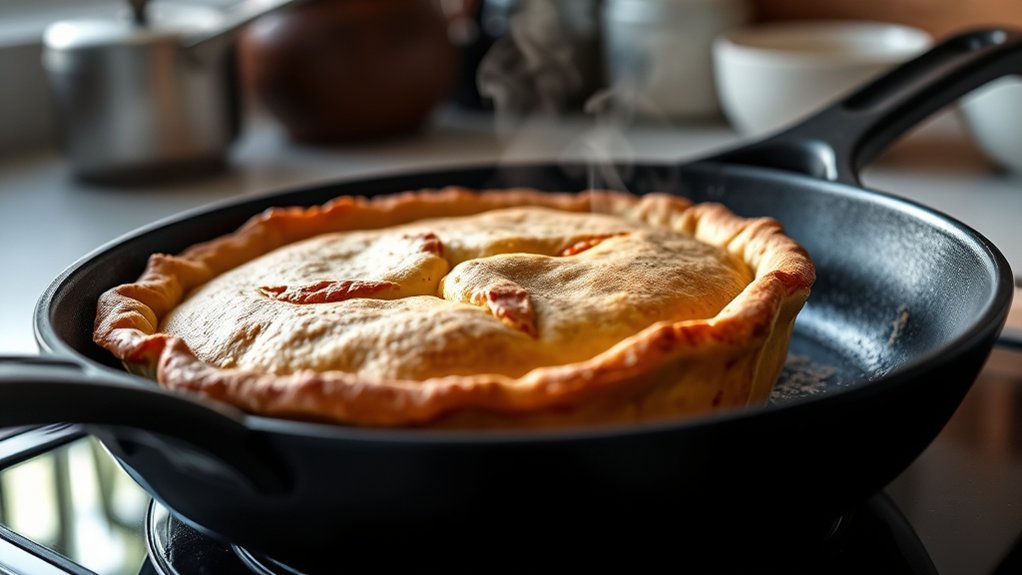
How does an electric skillet bake a pie differently than a traditional oven? Unlike the even, dry heat of an oven, an electric skillet provides direct, consistent heat from the bottom, which can affect the pie’s cooking dynamics.
When you use an electric skillet, you’ll notice the bottom crust browns faster, requiring careful temperature control to prevent burning. This method demands more attention to pie crust troubleshooting, especially to avoid sogginess or uneven baking.
Electric skillet alternatives, like toaster ovens or slow cookers, also rely on different heat distribution, but none replicate an oven’s airflow. Understanding these differences helps you adjust baking times and temperatures effectively, ensuring the pie cooks thoroughly without compromising crust texture or filling consistency.
Best Pie Recipes for Baking in an Electric Skillet
Adjusting your baking approach to accommodate the unique heat distribution of an electric skillet means selecting pie recipes that perform well under these conditions. You’ll want to focus on pies with sturdy pie crusts that can withstand direct, consistent heat without becoming soggy or burning.
Fruit pies with thicker fillings, like apple or cherry, hold up well, but you should also consider pies with lemon filling, as their firm custard texture bakes evenly in a skillet. Avoid delicate fillings that require precise oven temperatures.
Opt for recipes that balance moisture and firmness, ensuring the crust stays crisp while the filling sets properly. By choosing pies with these characteristics, you’ll maximize your electric skillet’s baking efficiency and achieve consistent, well-cooked results.
Step-by-Step Guide to Baking a Pie in an Electric Skillet
To bake a pie successfully in your electric skillet, start by properly preparing the skillet to ensure even heat distribution and prevent sticking. You’ll need to monitor temperature settings closely and adjust baking times compared to a conventional oven.
Following these precise steps will help you achieve a well-cooked, evenly browned pie.
Preparing Your Skillet
Preparing your electric skillet properly sets the foundation for a successful pie bake. Begin by ensuring preheating safety: plug in the skillet, set a moderate temperature (around 350°F), and avoid overheating to prevent damage or fire hazards.
Next, choose the right oil; a high smoke point oil like vegetable or canola ensures even heating and prevents sticking.
Use this checklist to prepare effectively:
| Step | Action | Purpose |
|---|---|---|
| Preheat Skillet | Set to 350°F | Even heat distribution |
| Oil Selection | Apply vegetable oil | Prevent pie sticking |
| Surface Check | Ensure clean surface | Avoid burning or uneven bake |
| Heat Stability | Stabilize temp | Consistent baking results |
Following these precise steps optimizes your skillet for baking a perfect pie crust.
Baking Process Tips
Once your skillet reaches a stable 350°F and is properly oiled, you can focus on the baking stages that ensure even cooking and a well-formed crust. Start by placing the pie in the skillet, covering it with a lid to trap heat and moisture, which helps develop balanced crust textures: crispy on the edges and tender inside.
Monitor the temperature frequently; fluctuations can affect how seasonal flavors meld and the crust browns. Rotate the skillet gently halfway through baking to promote uniform heat distribution. Avoid lifting the lid too often, as this releases heat and interferes with cooking consistency.
Tips for a Perfect Pie Crust and Even Bake
Although baking a pie in an electric skillet requires some adjustments, achieving a perfect crust and even bake is possible with careful attention to temperature control and dough preparation. You must focus on maintaining optimal skillet temperature and ensuring proper crust consistency.
Baking a pie in an electric skillet demands precise temperature and dough care for perfect results.
- Preheat the skillet gradually to avoid temperature spikes that could burn the crust.
- Use a dough with balanced moisture; overly dry or wet dough compromises crust texture.
- Adjust skillet heat settings to medium-low, promoting even heat distribution.
- Rotate the pie halfway through baking to counteract hot spots and ensure uniform browning.
Common Pie Baking Problems and How to Fix Them
Many bakers encounter issues such as soggy crusts, uneven browning, or undercooked fillings when using an electric skillet for pie baking. Addressing these common problems requires focused pie crust troubleshooting and moisture control.
| Problem | Cause | Solution |
|---|---|---|
| Soggy Crust | Excess moisture from filling | Pre-cook filling; use thickener |
| Uneven Browning | Inconsistent heat distribution | Rotate skillet; adjust temperature |
| Undercooked Filling | Too low temperature or time | Increase cooking time; check filling |
To prevent soggy crusts, reduce moisture by pre-cooking fruit fillings and incorporating thickeners. Rotate the skillet periodically for even browning, and maintain consistent heat to ensure the filling fully cooks. These precise adjustments optimize pie quality in your electric skillet.
Cleaning and Maintaining Your Electric Skillet
You should clean your electric skillet carefully to preserve its nonstick surface and guarantee safe operation. Regular maintenance, like checking the heating element and cord, helps prevent malfunctions.
Following proper cleaning and upkeep routines will extend your skillet’s lifespan and performance.
Proper Cleaning Techniques
How should you approach cleaning your electric skillet to guarantee its longevity and performance? Proper cleaning techniques are essential to preserve its nonstick surface and electrical components.
Start by unplugging and allowing the skillet to cool completely before cleaning. Follow these steps:
- Remove the temperature probe and wash it separately with a damp cloth.
- Use a soft sponge and mild dish soap to clean the skillet’s interior, avoiding abrasive tools that could damage the surface.
- Rinse thoroughly with warm water, ensuring no soap residue remains.
- Dry the skillet completely with a soft towel to prevent moisture buildup that can cause corrosion.
Incorporating these cleaning techniques into your maintenance routines ensures your electric skillet remains efficient and extends its useful life.
Routine Maintenance Tips
Routine maintenance plays a vital role in preserving the functionality and lifespan of your electric skillet. To enjoy consistent pie flavors and perfect crust textures, clean the skillet thoroughly after each use. Avoid abrasive materials that could damage the non-stick surface.
Regularly inspect the heating element and cord for wear to prevent malfunctions.
| Task | Emotional Benefit |
|---|---|
| Clean after use | Confidence in flavor |
| Check for damage | Peace of mind |
| Store properly | Pride in care |
Frequently Asked Questions
Can I Use Frozen Pie Dough in an Electric Skillet?
Yes, you can use frozen dough in an electric skillet, but you’ll need to thaw it properly first. Frozen pie crusts require even heating to avoid sogginess and ensure a crisp, well-cooked texture throughout the pie.
Is an Electric Skillet Safer Than a Traditional Oven?
Yes, an electric skillet offers safe alternatives with precise temperature control, reducing fire risks compared to traditional ovens. You can monitor heat closely, making it safer for cooking tasks that require consistent, controlled temperatures.
How Much Electricity Does Baking a Pie in a Skillet Use?
You’ll use roughly 0.5 to 1 kWh of electricity, depending on skillet wattage and baking time.
Electric skillets offer good energy efficiency by heating quickly and retaining heat, reducing electricity usage compared to traditional ovens.
Can I Bake Gluten-Free Pies in an Electric Skillet?
You can bake gluten-free pies in an electric skillet, using gluten-free pie dough or frozen dough. Skillet feasibility depends on temperature control and even heat distribution, ensuring consistent baking and avoiding soggy or undercooked crusts.
Do Electric Skillets Affect the Taste of Baked Pies?
You won’t notice significant taste comparisons between electric skillets and ovens, but texture effects can vary.
Electric skillets may produce a slightly different crust texture due to uneven heat distribution, subtly influencing overall pie quality.
Conclusion
Baking a pie in your electric skillet isn’t just possible—it’s a game-changer that turns your kitchen into a mini bakery. By controlling temperature and using sturdy crusts, you’ll avoid soggy disasters and achieve even baking every time.
Remember, mastering this method takes patience and precision, but the results are worth their weight in gold. With careful monitoring and proper maintenance, your electric skillet will deliver consistently flawless pies.
No oven required when you know how to bake a pie in an electric skillet.