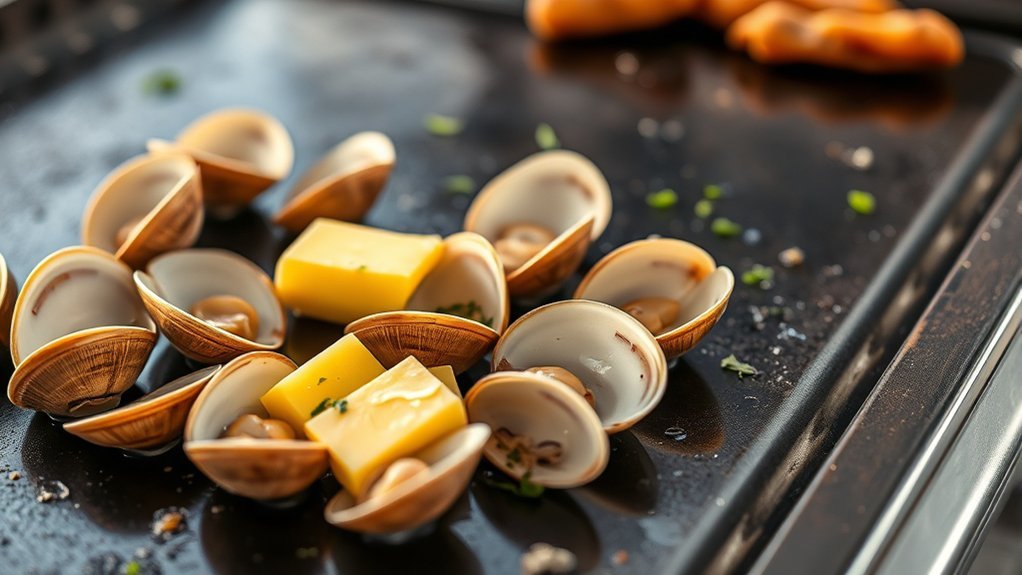

You might wonder if you can cook clams on a Blackstone griddle as effectively as with traditional methods. It turns out, with the right prep and temperature, you can achieve perfectly steamed, flavorful clams right on your griddle’s flat surface.
The key is in how you clean, arrange, and season them—plus maintaining steady heat to avoid overcooking. But how exactly do you get this balance just right for delicious results?
Key Takeaways
- Clams cook well on a Blackstone griddle with even, high heat sealing in juices for tender, flavorful results.
- Preheat the griddle to medium-high (350°F–375°F) for consistent cooking and steam clams hinge-side down.
- Rinse, soak, and discard cracked or open clams before griddling to ensure safety and freshness.
- Cook clams for 5-7 minutes until shells open, discarding any that remain closed after cooking.
- Enhance flavor with garlic, butter, lemon, and herbs, while preventing sticking by using oil on the griddle.
Why the Blackstone Griddle Is Perfect for Cooking Clams
Why choose a Blackstone griddle for cooking clams? It offers a spacious, evenly heated surface that lets you cook multiple clams at once, ensuring each shellfish gets the perfect sear. You’ll appreciate how its high heat seals in juices, delivering tender, flavorful results.
Plus, the flat surface makes griddle maintenance straightforward. Just a quick scrape and wipe keeps it ready for your next seafood feast. When cooking shellfish, shellfish safety is key, and the Blackstone’s adjustable temperature helps you cook clams thoroughly, reducing risks of undercooked seafood.
Its versatility also means you can toss in herbs, garlic, or butter, creating delicious clam dishes that pop with flavor. Cooking clams on a Blackstone griddle is efficient, safe, and tasty.
Prepare Clams Before Cooking on Your Blackstone
How do you get clams ready for the griddle to guarantee the best flavor and safety? First, rinse your clams under cold water to remove sand and grit. Avoid the unused topic of soaking them in saltwater for hours; just a quick scrub will do.
Next, discard any clams with cracked shells or those that don’t close when tapped; these are unsafe to eat. Don’t get sidetracked by the unrelated idea of pre-cooking or steaming before the griddle; fresh, raw clams work best for that perfect sear.
Finally, pat them dry to prevent excess moisture, which can cause uneven cooking. By preparing your clams carefully, you ensure they cook evenly on your Blackstone griddle, delivering fresh ocean flavor every time.
Set the Right Temperature for Cooking Clams
You’ll want to set your Blackstone griddle to medium-high heat, around 350°F to 375°F, to cook clams evenly without overcooking. Keep a close eye on the temperature and adjust as needed to maintain a steady sizzle.
Controlling the heat ensures your clams open perfectly and stay tender.
Ideal Heat Settings
When grilling clams on a Blackstone griddle, setting the right temperature makes all the difference between tender, juicy shells and overcooked rubbery bites. Aim for medium-high heat, around 350-400°F, to ensure even cooking without burning.
This ideal heat setting allows the clams to open naturally and release their briny juices, enhancing flavor. Keep in mind timing variance; some clams open faster than others, so stay attentive.
Using too high heat can toughen the meat and cause sand residue to stick to the shells, ruining texture. To avoid this, pre-soak your clams to reduce grit.
Temperature Control Tips
Why does maintaining the right temperature matter so much when cooking clams on your Blackstone griddle? Proper temperature control ensures your clams cook evenly without becoming rubbery or underdone. The griddle’s heat distribution plays a crucial role, so you want to set it just right.
Here’s how to nail it:
- Preheat your griddle to medium-high, around 375°F, to achieve perfect heat distribution.
- Adjust the temperature to maintain a steady sizzle, avoiding flare-ups that can scorch the clams.
- Use a thermometer to monitor the surface, ensuring consistent temperature control throughout cooking.
Step-by-Step: Cooking Clams on a Blackstone
First, make sure you clean and prep your clams thoroughly to remove any grit. Then, heat your Blackstone griddle to the right temperature and use simple griddling techniques to cook the clams evenly.
Follow these steps to achieve perfectly steamed, flavorful clams every time.
Preparing Clams Properly
How do you guarantee your clams are perfectly prepped before they hit the Blackstone griddle? Proper preparation is key to enhancing flavor and ensuring shellfish safety. Follow these essential tips and storage guidelines:
- Clean Thoroughly: Scrub clams under cold running water to remove sand and debris, preventing grit in your dish.
- Purge Sand: Soak clams in salted water for 20 minutes to encourage them to expel sand, improving taste and texture.
- Check Freshness: Discard any clams with cracked shells or those that don’t close when tapped; this prevents foodborne illness.
Storing clams properly, ideally in a breathable container in the fridge, keeps them fresh and safe until cooking. With these steps, you’ll set the stage for a delicious, safe Blackstone clam feast.
Griddling Techniques and Tips
Wondering how to achieve perfectly cooked clams on your Blackstone griddle? Start by preheating the griddle to medium-high heat for even cooking. Keep it well-oiled to prevent sticking and ensure easy cleanup. Griddle maintenance is key here.
Place the clams hinge-side down so they steam open naturally. Cover them briefly to trap heat and cook evenly, but watch closely to avoid overcooking.
For shellfish safety, only eat clams that open during cooking; discard any unopened ones to prevent foodborne illness. Use a spatula to remove the clams carefully once done, and serve immediately for the best flavor.
With these griddling techniques, you’ll enjoy tender, juicy clams every time, all while keeping your Blackstone in top shape.
Enhance the Flavor of Your Griddled Clams
What transforms simple griddled clams into a memorable feast? It’s all about elevating their natural briny sweetness with clever flavor boosts. To enhance your clams on the Blackstone griddle, focus on these key elements:
- Spice pairing: Use bold spices like smoked paprika, garlic powder, and a hint of cayenne to complement the shellfish’s oceanic taste without overpowering it.
- Shellfish handling: Keep clams cold until cooking and rinse them thoroughly to remove grit, ensuring clean, fresh flavor that shines through.
- Finishing touches: Add a squeeze of fresh lemon, chopped parsley, or a drizzle of melted butter to brighten and deepen flavors right before serving.
Mastering these steps will turn your griddled clams into a flavorful, unforgettable dish everyone will crave.
Recognize When Clams Are Perfectly Cooked
When do you know your clams are perfectly cooked on the Blackstone griddle? It’s all about timing and observation. Freshness plays a key role. Clams that have been stored properly in shellfish storage retain their flavor and texture.
Watch for shells to open wide; that’s your signal they’re done. Overcooking makes them rubbery, so keep a close eye.
| Indicator | Description | Action |
|---|---|---|
| Shells Open Wide | Clams cooked through | Remove immediately |
| Slightly Firm Meat | Tender but not rubbery | Perfectly cooked |
| Aroma | Briny, fresh ocean scent | Indicates clams freshness |
| Shells Closed | Clams may be dead or raw | Discard |
| Texture | Juicy, not dry or chewy | Ideal for serving |
Trust these signs to enjoy perfectly cooked clams every time.
Avoid Common Clam-Cooking Mistakes
To get the best flavor on your Blackstone griddle, start by choosing fresh clams that are tightly closed. Make sure you clean them thoroughly to remove any grit before cooking.
And remember, overcooking will turn your clams rubbery, so keep a close eye on them as they cook.
Selecting Fresh Clams
How can you guarantee your clams are fresh and safe before they hit your Blackstone griddle? Selecting fresh clams is essential for perfect griddle timing and a delicious meal. Here are three two word ideas to guide you:
- Shell Integrity Choose clams with tightly closed shells; open shells may indicate dead or unsafe clams.
- Smell Test Fresh clams should have a clean, briny scent, not a strong fishy odor.
- Weight Check Pick clams that feel heavy for their size, signaling they’re full of seawater and alive.
Proper Cleaning Techniques
A thorough cleaning process guarantees your clams cook evenly and taste fresh on your Blackstone griddle. Start by soaking clams in cold saltwater for 20 minutes to expel sand and preserve clam freshness.
Scrub shells gently with a stiff brush under running water to remove debris, ensuring shellfish safety. Avoid detergents or soaps.
| Step | Action | Purpose |
|---|---|---|
| Soak | Cold saltwater, 20 mins | Removes sand, maintains taste |
| Scrub | Stiff brush, running water | Cleans shells, ensures safety |
| Inspect & Rinse | Discard open or cracked clams | Prevents contamination |
Following these steps keeps your clams clean and safe, enhancing flavor and preventing grit in your meal.
Avoid Overcooking Clams
Once your clams are properly cleaned and prepped, the next step is to cook them just right. Overcooking can ruin their tender texture and diminish flavor. To ensure perfect results, keep these tips in mind:
- Watch the cooking time Clams generally need just 5-7 minutes on your Blackstone griddle. Once shells open, they’re done.
- Use fresh clam selection Choose lively, tightly closed clams to ensure freshness and shellfish safety.
- Don’t leave them unattended Overcooked clams become tough and rubbery quickly, so stay attentive.
Best Sauces and Sides for Griddled Clams
Where can you find the perfect complement to griddled clams? Look for sauces and sides that enhance their briny sweetness without introducing unrelated topic flavors that confuse the palate.
A lemon-garlic butter sauce, rich yet bright, pairs beautifully, avoiding stray flavor notes that might overpower the clams. For sides, think fresh and simple: a crisp arugula salad with a light vinaigrette or grilled corn on the cob adds texture and subtle sweetness.
Avoid heavy, creamy sides that mask the clam’s natural taste. A crusty baguette helps soak up any juices and sauce, completing the meal. These thoughtful pairings spotlight your griddled clams, making every bite balanced and memorable without distraction.
Clean and Maintain Your Blackstone After Cooking
Enjoying your perfectly cooked clams is just part of the experience; keeping your Blackstone griddle in top shape guarantees many more meals like this. After cooking, adopting simple cleaning tips and maintenance rituals will extend your griddle’s life and performance.
Here’s how to care for it:
- Scrape and wipe: Use a scraper to remove food debris, then wipe the surface with a damp cloth to avoid buildup.
- Season the griddle: After cleaning, apply a thin layer of oil to protect the cooking surface and prevent rust.
- Check components: Regularly inspect burners and grease traps, cleaning them as needed to maintain efficient heat distribution.
Following these steps ensures your Blackstone stays ready for your next clam feast.
Variations for Cooking Other Shellfish on Your Blackstone
How can you expand your Blackstone cooking repertoire beyond clams? Try experimenting with different shellfish like mussels, scallops, or shrimp. Each offers unique flavors and textures that come alive on a well-seasoned griddle.
Start by ensuring your griddle seasoning is fresh to prevent sticking and enhance taste. For mussels, steam them briefly on the griddle with garlic and white wine, letting the shells open naturally. Scallops sear beautifully with a quick, high-heat cook for a caramelized crust.
Shrimp cook fast. Toss them in your favorite spices and cook until pink and firm. By adjusting cooking times and seasoning, you can master a variety of shellfish dishes right on your Blackstone, making each meal a flavorful adventure.
Frequently Asked Questions
Can You Cook Frozen Clams on a Blackstone Griddle?
Yes, you can cook frozen clams on a Blackstone griddle. Just preheat the griddle to medium-high temperature, then cook the clams until they open, ensuring they’re heated through and flavorful.
Are There Specific Clam Varieties Best Suited for Griddling?
Imagine savoring tender littleneck clams, perfect for your griddling technique. Their small size and sweet flavor make this clam variety ideal, ensuring even cooking and a delicious, juicy bite every time you fire up your Blackstone griddle.
How Long Can Cooked Clams Be Safely Stored After Griddling?
You should store cooked clams in the fridge within two hours, keeping them airtight.
For cooked clams storage, follow safety guidelines by consuming them within three to four days to avoid any health risks or spoilage.
Is It Safe to Cook Clams on a Blackstone Without Seasoning?
Yes, you can cook clams safely on a Blackstone without seasoning, but seasoning enhances flavor. Clams safety depends on proper cooking temperature and time, not seasoning requirements, so focus on heat to avoid undercooked shellfish risks.
Can You Use a Blackstone Griddle Outdoors in Rainy Weather?
You can cook frozen clams on your Blackstone griddle outdoors, but avoid rainy weather to ensure safe storage and prevent electrical hazards.
Always cover your griddle when not in use to keep it dry and functioning well.
Conclusion
So, you’ve learned you can cook clams on your Blackstone—who knew such delicate shellfish would thrive on a hefty griddle? It’s almost ironic that a tool made for pancakes and burgers can steam open the ocean’s treasures perfectly.
With just the right heat and a little butter, you’re not just cooking clams; you’re mastering a surprising culinary twist. Now, go impress your friends—because cooking clams on a Blackstone griddle isn’t just smart, it’s downright delicious.