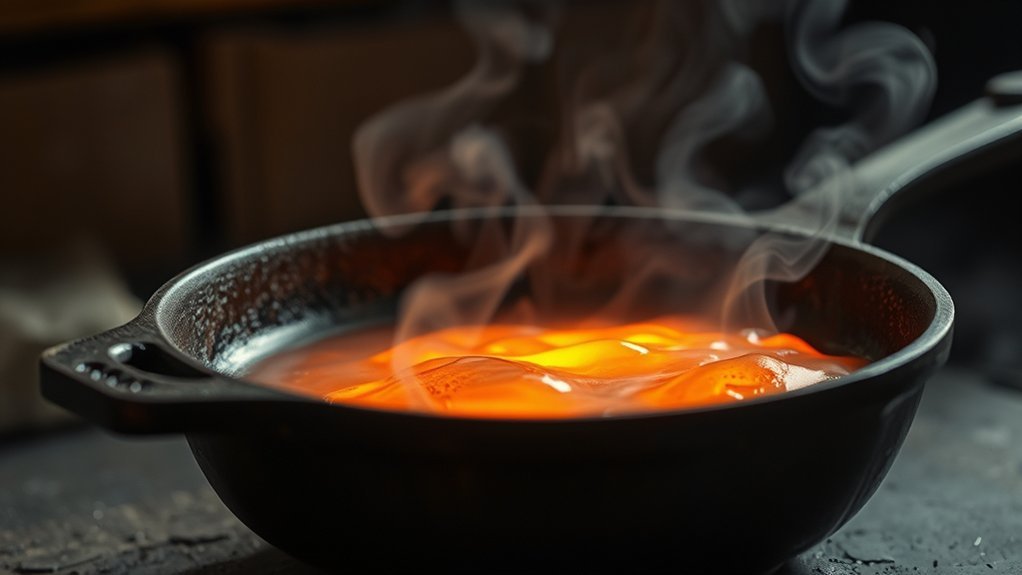

You might wonder if you can melt brass in a cast iron skillet, given its sturdy reputation in the kitchen.
Brass requires temperatures around 900–950°C (1640–1730°F) to melt, which far exceeds what typical stovetops and cast iron cookware can safely reach.
Attempting this could damage your skillet and pose serious safety risks.
Understanding these temperature limits is essential before considering any metal melting with common cookware.
Key Takeaways
- Brass melts at 900–940°C, far exceeding a cast iron skillet’s maximum safe temperature of about 370°C on stovetops.
- Cast iron skillets cannot reach or sustain the heat required to melt brass safely or effectively.
- Heating brass in a skillet risks warping, cracking, and permanent damage to the skillet due to thermal stress.
- Proper brass melting requires specialized furnaces and crucibles designed for high temperatures and molten metal handling.
- Using a skillet for brass melting poses severe safety risks, including burns, toxic fumes, and equipment failure.
How Hot Does Brass Melt And Why It Matters
How hot does brass melt, and why should you care? Brass melts at approximately 900 to 940°C (1652 to 1724°F), depending on its exact composition. Understanding this temperature range is crucial because it directly impacts the feasibility of melting brass using household tools like a cast iron skillet.
When analyzing brass properties, you’ll find that its melting point is significantly higher than what typical cookware can safely endure. Two word ideas, “thermal limits,” are key here; exceeding these can damage your skillet or pose safety risks.
Knowing the melting temperature helps you make informed decisions about heat sources and safety precautions. So, if you’re considering melting brass, you must respect its thermal properties to avoid equipment failure or personal injury.
How Hot Can Cast Iron Skillets Get Safely?
Brass requires temperatures well above 900°C to melt, which far exceed the typical heat tolerance of cast iron skillets. Understanding how hot your skillet can get safely is crucial, especially given hot topics and safety concerns around cookware use.
Typically, cast iron skillets can endure oven temperatures up to 260°C (500°F) without damage and direct stovetop heat that may reach 370°C (700°F) briefly. They also face thermal shock risks when exposed to rapid temperature changes.
Structural integrity loss occurs beyond 760°C (1400°F), leading to warping or cracking. You shouldn’t expose your skillet to temperatures near brass’s melting point since it can compromise the skillet’s lifespan and safety.
Staying within these limits ensures reliable performance and reduces risks associated with overheating or thermal stress.
Can Cast Iron Skillets Melt Brass?
Can cast iron skillets reach temperatures high enough to melt brass? Brass typically melts between 900°F and 940°F (482°C to 504°C).
Cast iron skillets, when used on conventional stovetops, rarely exceed 600°F (316°C). Even in intense cooking scenarios, reaching brass’s melting point is uncommon.
Cast iron skillets on stovetops rarely surpass 600°F, falling short of brass’s melting range.
You’d need an industrial heat source like a forge or a specialized furnace to melt brass effectively. This distinction is crucial among hot topics concerning brass safety and handling.
If you attempt to melt brass in a cast iron skillet, the skillet won’t reach the necessary temperature, and you risk uneven heating. Therefore, while cast iron skillets are robust and versatile, they simply don’t get hot enough to melt brass under normal conditions.
Why Melting Brass In Cast Iron Skillets Is Risky
You’ll face significant challenges melting brass because its melting point exceeds the typical heat tolerance of cast iron skillets. Applying such high temperatures risks warping or cracking the skillet’s surface.
Understanding these limitations is essential before attempting to melt brass in cast iron cookware.
High Melting Point Challenges
Many metals, including brass, have melting points that far exceed the heat tolerance of common kitchen cookware. When you try to melt brass in a cast iron skillet, you face critical challenges due to the disparity in melt temperature and thermal conductivity.
- Brass melts around 900-940°C, while cast iron can withstand temperatures up to approximately 700°C before degrading.
- The skillet’s limited thermal conductivity causes uneven heat distribution, risking localized overheating.
- Achieving and sustaining brass’s melt temperature requires external heat sources beyond typical stovetop capabilities.
- Prolonged exposure to extreme heat stresses cast iron structurally, which can lead to fractures or warping.
Understanding these factors clarifies why melting brass directly in cast iron cookware is impractical and hazardous.
Potential Skillet Damage
Why risk damaging your cast iron skillet by attempting to melt brass in it? Brass melts at approximately 900-940°C, far exceeding typical skillet temperature limits. Applying such intense heat can cause warping or cracking.
The presence of tiny flames during heating may lead to uneven thermal stress, compromising the skillet’s integrity. Moreover, safety protocols require specialized equipment to handle molten metal safely, which a skillet is not designed for.
| Damage Type | Cause | Effect |
|---|---|---|
| Warping | Excessive heat | Distorted cooking surface |
| Cracking | Thermal stress | Structural failure |
| Coating degradation | Chemical exposure | Loss of seasoning |
| Fire hazard | Tiny flames, spatter | Increased risk of accidents |
Avoid melting brass in cast iron to preserve your skillet’s lifespan and ensure safety.
How Melting Brass Affects Your Skillet
When you melt brass in a cast iron skillet, you compromise the skillet’s material integrity due to extreme temperatures. This process can alter heat distribution, leading to uneven cooking surfaces.
Additionally, the skillet’s surface may suffer damage, including pitting or warping, reducing its functionality.
Skillet Material Integrity
Although cast iron skillets are known for their durability and heat retention, exposing them to the extreme temperatures required to melt brass can compromise their structural integrity. Brass chemistry dictates melting temps around 900–940°C (1652–1724°F), far exceeding typical cast iron cooking conditions.
This thermal stress can degrade your skillet in several ways:
- Microfractures may develop due to rapid thermal expansion and contraction.
- The iron matrix can weaken, reducing mechanical strength.
- Surface oxidation accelerates, leading to pitting and corrosion.
- Repeated exposure to such high temps may cause warping or deformation.
You risk permanently damaging your skillet’s material properties by attempting to melt brass in it. Understanding these effects is crucial before applying such extreme heat to cast iron cookware.
Heat Distribution Changes
Exposing a cast iron skillet to the temperatures required to melt brass not only affects its structural integrity but also substantially alters how heat moves through the pan. At such elevated temperatures, the skillet’s original uniform heat distribution becomes compromised due to microstructural changes in the iron.
These changes disrupt consistent heat transfer, causing uneven hot spots that impair cooking performance. From a melting safety perspective, this uneven heat can generate thermal stress points, increasing the risk of cracking or warping.
You’ll find that the skillet no longer delivers the stable, predictable heat flow essential for both cooking and safe metalworking. Consequently, using a cast iron skillet for melting brass jeopardizes its heat transfer efficiency and undermines melting safety protocols, making it unsuitable for this purpose.
Surface Damage Risks
How does melting brass directly impact the surface of your cast iron skillet? When you attempt melting brass in a skillet, you expose the surface to extreme temperatures and chemical interactions that can compromise skillet safety and integrity.
Consider these surface damage risks:
- Thermal Shock: Rapid heating and cooling can cause micro-cracks or warping in the skillet’s surface.
- Alloy Residue: Molten brass may leave stubborn metallic deposits that alter the skillet’s seasoning and texture.
- Surface Etching: The chemical reaction between brass and cast iron can erode the skillet’s protective oxide layer.
- Structural Weakening: Repeated exposure to molten metal can degrade the skillet’s cast iron matrix, reducing durability.
Understanding these risks helps you evaluate skillet safety realistically before melting brass in it.
Better Ways To Melt Brass At Home (Not Cast Iron Skillets)
Where can you safely and efficiently melt brass at home if not in a cast iron skillet? The answer lies in using dedicated melting equipment like a propane or electric melting furnace designed for non-ferrous metals. These furnaces provide consistent, controllable heat exceeding brass’s melting point (~900°C), ensuring efficient melting without damaging your tools.
When melting brass, always prioritize safety precautions: use heat-resistant gloves, eye protection, and work in a well-ventilated area to avoid toxic fumes. Avoid makeshift containers, as uneven heating risks spills and accidents.
Additionally, ceramic or graphite crucibles withstand high temperatures and chemical reactions better than cast iron. Following these guidelines ensures you melt brass effectively while minimizing hazards and preserving your equipment’s integrity.
Must-Have Tools For Melting Brass At Home
What essential tools do you need to melt brass safely and efficiently at home? Focusing on proper tool selection is critical, alongside following tips for safety to prevent accidents and tool damage. Here’s your must-have toolkit:
- Crucible: Use a graphite or silicon carbide crucible designed for high temperatures; it withstands molten brass without degrading.
- Propane or MAPP Gas Torch: Provides consistent, controllable heat essential for reaching brass’s melting point (~930°C).
- Heat-Resistant Gloves and Face Shield: Protects you from splashes and intense heat, a non-negotiable safety measure.
- Metal Tongs: Allows safe handling of the crucible, preventing burns and spills.
Each tool must be high-quality and purpose-built to ensure efficiency and safety during the melting process.
How To Melt Brass Without Ruining Your Tools
Having the right tools sets the foundation for melting brass effectively, but protecting those tools from damage requires careful technique and attention to detail. To melt brass without ruining your tools, maintain controlled heating to avoid thermal shock, which can crack cast iron or warp crucibles.
Use a reliable heat source with adjustable temperature settings to reach brass’s melting point of approximately 1740°F (950°C) precisely. Employ two word discussion ideas like “temperature control” and “tool maintenance” to focus your approach.
Ensure brass safety by working in a well-ventilated area and wearing protective gear to prevent exposure to toxic fumes and molten metal splashes. Regularly inspect your tools for wear and clean them to prevent contamination and corrosion, extending their lifespan during repeated brass melting sessions.
Safely Handling And Cooling Melted Brass
Properly handling and cooling melted brass is pivotal to guarantee safety and maintain the metal’s quality. When conducting brass casting, you must prioritize protective measures and controlled cooling to avoid defects and injury.
Always wear safety gloves to shield against burns and molten metal splashes. Follow these steps:
- Use insulated, heat-resistant safety gloves when handling the skillet or pouring molten brass.
- Pour the molten brass slowly into preheated molds to minimize thermal shock and cracking.
- Allow the brass to cool gradually at room temperature; avoid rapid cooling with water to prevent internal stresses.
- Once solidified, carefully remove the casting using tools designed for high temperatures, maintaining safety protocols throughout.
Adhering to these protocols ensures a safe process and high-quality brass casting results.
Frequently Asked Questions
Can Brass Melting Release Harmful Fumes?
Yes, brass melting releases harmful fumes due to zinc vaporization. Since you cannot melt brass in a cast iron skillet safely, you risk exposure to toxic fumes.
Always use proper ventilation and protective equipment to minimize health hazards.
What Are the Common Uses of Melted Brass?
You’ll find melted brass uses in precision casting for plumbing fittings, musical instruments, and decorative hardware. Common applications include valves, gears, and electrical connectors, where its corrosion resistance and machinability provide reliable, durable components.
How Long Does It Take to Melt Brass?
You’ll melt brass, which has a melt temperature around 900-940°C, in minutes using proper equipment. Always follow safety precautions like heat-resistant gloves and ventilation to avoid burns and toxic fumes during the melting process.
Can You Recycle Brass Scraps at Home?
You can’t just toss brass scraps into your backyard volcano for home melting. Brass recycling requires precise temperature control and safety gear.
Without industrial tools, achieving consistent melt and purity at home is impractical and hazardous.
Does Brass Change Color After Melting?
Yes, brass color change occurs after melting due to oxidation and alloy composition shifts. You’ll want to use flux additives to minimize oxidation, ensuring a cleaner melt and preserving the brass’s original color and quality more effectively.
Conclusion
You might think your trusty cast iron skillet could double as a brass melting pot, but coincidentally, its heat limit and durability don’t match brass’s melting point. Trying this risks warping your skillet and unsafe molten metal spills.
Instead, use proper furnaces and crucibles designed for high temperatures. By respecting these material limits and equipment roles, you’ll ensure safety, preserve your tools, and achieve precise metalwork results without unexpected damage.
In conclusion, you should not melt brass in a cast iron skillet.