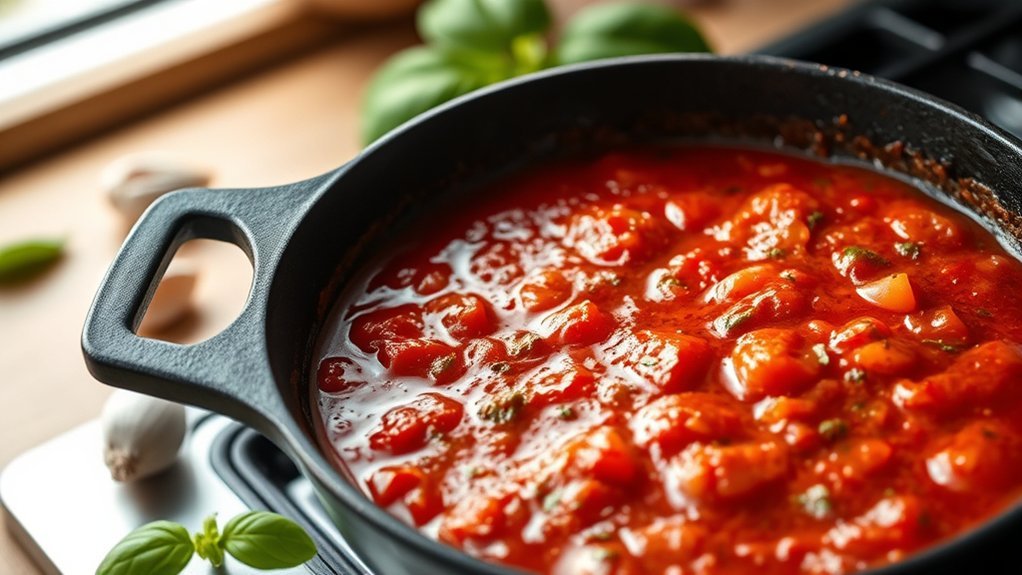

Much like a seasoned chef weighs the pros and cons of every tool, you might wonder if you can cook tomato sauce in a cast iron skillet without causing damage. The acidity in tomatoes challenges the skillet’s protective seasoning, potentially compromising its surface.
Understanding how this interaction works and how to manage it lets you decide whether to proceed or seek alternatives. There’s more to consider than just cooking time or temperature when using cast iron for tomato sauce.
Key Takeaways
- Cooking tomato sauce in cast iron is possible but requires a well-seasoned skillet to protect the surface and prevent flavor alteration.
- Use moderate heat, frequent stirring, and avoid prolonged cooking to minimize seasoning degradation from tomato acidity.
- Acidic tomato sauces can break down the skillet’s seasoning layer, exposing iron and increasing rust risk.
- After cooking, promptly rinse with hot water, dry thoroughly, and reapply oil to maintain the seasoning.
- Consider alternatives like enameled cast iron or stainless steel if frequent tomato sauce cooking is planned to avoid seasoning issues.
Can You Safely Cook Tomato Sauce in Cast Iron?
How safe is it to cook tomato sauce in a cast iron skillet? When you use proper casserole techniques, you can safely cook tomato sauce in cast iron, but with some considerations.
Cast iron offers excellent heat distribution, which helps prevent hot spots that could burn your sauce. However, the acidic nature of tomato sauce may interact with the skillet’s seasoning layer, potentially affecting flavor and the pan’s surface.
To maintain safety and performance, ensure your skillet is well-seasoned and avoid prolonged cooking times. Using moderate heat and stirring frequently enhances even heat distribution and minimizes possible adverse reactions.
Why Tomato Sauce Reacts With Cast Iron
When you cook tomato sauce in cast iron, the sauce’s acidity reacts with the iron surface, causing a chemical interaction that can alter both the flavor and the pan’s seasoning. The acid in tomatoes can break down the protective seasoning layer, exposing raw iron and leading to metallic tastes or discoloration.
Understanding this reaction helps explain why cast iron requires special care when cooking acidic foods like tomato sauce.
Acidic Nature Effects
Why does tomato sauce react with cast iron cookware? The acidic nature of tomato sauce, primarily due to citric and malic acids, interacts with the iron surface. This acidity challenges rust prevention by breaking down the skillet’s seasoning layer, which normally acts as a protective barrier.
When this protective coating degrades, the underlying cast iron becomes exposed to moisture and oxygen, accelerating rust formation. Moreover, acidic exposure compromises coating durability, weakening the skillet’s non-stick properties and leading to uneven cooking surfaces.
You’ll notice that repeated cooking of acidic foods like tomato sauce without proper maintenance speeds up this deterioration process. To maintain your skillet’s integrity, understanding how acidity impacts rust prevention and coating durability is crucial for effective care and longevity.
Iron Interaction Chemistry
What happens at the molecular level when tomato sauce meets cast iron involves a chemical exchange between the acids in the sauce and the iron surface. The citric and malic acids in tomato sauce increase iron reactivity, causing the iron to leach into the sauce and subtly alter its flavor.
This reaction also compromises seasoning durability by breaking down the polymerized oil layer that protects the skillet. As the acidic molecules interact with exposed iron atoms, they accelerate oxidation and can degrade the skillet’s seasoning, exposing raw iron to moisture and oxygen.
You need to understand this dynamic because prolonged cooking of acidic foods may erode your cast iron’s non-stick properties, requiring more frequent maintenance to preserve seasoning durability and prevent rust formation.
How Acidic Tomato Sauce Affects Cast Iron Seasoning
How does the acidity of tomato sauce interact with the seasoning layer on your cast iron skillet? The acidic reactivity of tomatoes, primarily due to citric and malic acids, can chemically break down the polymerized oils that form the skillet’s seasoning.
This degradation compromises the seasoning longevity, making it more prone to flaking and rust. Studies show that prolonged exposure to acidic foods accelerates the breakdown of the seasoning’s hydrophobic surface, reducing its non-stick properties.
However, short cooking durations minimize this effect, preserving seasoning integrity. Understanding this interaction helps you anticipate maintenance needs after cooking tomato-based dishes.
How to Prepare Your Cast Iron Skillet for Tomato Sauce
Preparing your cast iron skillet properly before cooking tomato sauce is essential to protect its seasoning and guarantee even heat distribution. Start by ensuring your skillet is clean and dry; any residual moisture can cause uneven cooking and damage the seasoning layer.
Next, apply a thin, even coat of high-smoke-point oil, such as grapeseed or avocado oil, to reinforce the skillet’s protective surface. Preheat the skillet gradually over medium heat to stabilize temperature and avoid thermal shock, which can warp the pan.
When following recipe ratios, especially for a side dish, maintain proper liquid-to-skillet volume to prevent scorching or excessive acidity exposure. This preparation minimizes seasoning degradation, allowing you to cook tomato sauce without compromising your cast iron’s longevity or performance.
Essential Tips for Cooking Tomato Sauce in Cast Iron
When cooking tomato sauce in your cast iron skillet, you need to minimize acidic damage by limiting cooking time and avoiding prolonged simmering.
Maintaining your skillet’s seasoning is essential, so regularly apply a thin layer of oil after cleaning to reinforce its protective barrier. These practices help preserve the skillet’s integrity and guarantee consistent cooking performance.
Preventing Acidic Damage
Why does acidic damage occur when you cook tomato sauce in cast iron? Tomato’s high acidity reacts with the iron, breaking down the skillet’s seasoning layer and causing metallic flavors to leach into your sauce.
To prevent this, you can use a foil pan inside the skillet, which offers foil pan safety by creating a non-reactive barrier. Alternatively, consider using nonstick coatings designed to withstand acidic ingredients; these coatings reduce direct contact and minimize seasoning erosion. However, nonstick surfaces may degrade over time with high heat.
Avoid prolonged simmering to limit acid exposure, and always clean promptly to reduce acid’s corrosive effects. Understanding these factors helps you cook tomato sauce without compromising your cast iron’s integrity or flavor quality.
Seasoning Maintenance Tips
Maintaining the seasoning on your cast iron skillet is essential for preserving its nonstick properties and preventing damage from acidic tomato sauce. After cooking, clean your skillet promptly with hot water and a soft brush. Avoid soap, which can strip seasoning.
Dry it thoroughly to prevent rusting. Reapply a thin layer of oil and heat the skillet to polymerize the oil, reinforcing the seasoning. Avoid soaking or using harsh detergents.
While this may seem unrelated to your kitchen layout, storing your skillet in a dry, accessible spot minimizes moisture exposure and accidental damage. Regular maintenance counters the acidic effect of tomato sauce, ensuring the skillet’s longevity.
How Long Can You Cook Tomato Sauce in Cast Iron?
How long you can cook tomato sauce in a cast iron skillet depends largely on the skillet’s seasoning and acidity exposure. Tomato acidity can gradually erode the protective seasoning layer, increasing the risk of iron leaching and compromising cast iron safety.
Cooking tomato sauce in cast iron depends on seasoning quality and acidity exposure to prevent damage.
Short cooking durations, typically under 30 minutes, minimize this risk and preserve the skillet’s integrity. Extended simmering, especially beyond 1 hour, intensifies acid exposure, which may degrade seasoning and impart metallic flavors to your sauce.
Well-seasoned skillets with multiple robust layers tolerate acidity better, allowing slightly longer cook times without damage. To balance flavor development and skillet preservation, keep tomato sauce cooking times moderate, reheating gently rather than prolonged simmering.
This approach maintains cast iron safety while delivering optimal sauce quality without seasoning deterioration.
How to Clean and Maintain Cast Iron After Tomato Sauce
After cooking tomato sauce in your cast iron skillet, addressing the acidic residue promptly helps preserve the seasoning and prevents iron from leaching into future dishes. Start by rinsing the pan with warm water. Avoid soap to maintain seasoning. Use a non-abrasive scrubber to remove food particles, focusing on avoiding acidity that can degrade the seasoning layer.
Dry thoroughly to prevent rust, then apply a light coat of oil to reinforce seasoning maintenance.
| Step | Purpose |
|---|---|
| Rinse with water | Remove acidic tomato residues |
| Scrub gently | Avoid stripping seasoning |
| Dry completely | Prevent rust formation |
| Oil lightly | Maintain and protect seasoning |
Following these steps ensures your cast iron skillet remains durable and safe for subsequent uses.
Signs Your Cast Iron Needs Reseasoning After Cooking Tomato Sauce
You’ll know your cast iron needs reseasoning if you notice flaking or rust forming after cooking tomato sauce. A sticky or dull surface also indicates the protective layer has degraded.
Additionally, a persistent metallic taste in your food signals the seasoning isn’t intact.
Flaking Or Rust Formation
Why does flaking or rust formation occur on your cast iron skillet after cooking tomato sauce? Acidic ingredients like tomatoes can break down the seasoning layer, compromising the protective polymerized oil that ensures nonstick safety.
When this layer deteriorates, moisture exposure leads to oxidation, causing rust, and the seasoning may start to flake off. Such damage means your skillet’s oven compatibility diminishes because the protective coating is essential for withstanding high heat without degradation.
To maintain optimal performance, you must recognize these signs early. Flaking indicates the seasoning has lost its adhesion, while rust signals unprotected metal exposure.
Both require immediate reseasoning to restore the skillet’s durability, nonstick properties, and oven-safe surface. Ignoring these issues risks further damage and diminished cooking quality.
Sticky Or Dull Surface
How can you tell if your cast iron skillet needs reseasoning after cooking tomato sauce? One clear sign is a sticky surface. If your skillet feels tacky or gummy rather than smooth and slick, the seasoning layer has likely broken down.
This happens because acidic tomato sauce can degrade the polymerized oils that form the skillet’s protective coating. Another indicator is a dull surface. Instead of a shiny, black patina, a matte, lifeless finish suggests that the skillet’s seasoning is compromised.
Both sticky and dull surfaces reduce non-stick performance and increase the risk of food sticking or flavor alteration. To restore your cast iron, thoroughly clean it and apply a fresh layer of oil before heating to rebuild the durable, non-reactive seasoning necessary for optimal cooking.
Persistent Metallic Taste
When does your tomato sauce develop an unusual metallic flavor after cooking? This persistent metallic taste often signals that your cast iron skillet’s seasoning has deteriorated. The seasoned layer normally provides a protective barrier, preventing iron from leaching into acidic foods like tomato sauce.
When this layer breaks down, the sauce absorbs a distinct flavor reminiscent of metal. Additionally, poor aroma retention after cooking can indicate compromised seasoning. A well-seasoned skillet should maintain both flavor integrity and aroma without imparting unwanted notes.
If you notice these signs consistently, it’s time to reseason your cast iron. Restoring the seasoning rebuilds the non-reactive surface, eliminating metallic flavors and enhancing your skillet’s ability to preserve the sauce’s natural aroma and taste.
Alternatives to Cast Iron for Cooking Tomato Sauce
Which cookware options provide the best results when cooking tomato sauce without using cast iron? Stainless steel and enameled cast iron emerge as top contenders in this two word discussion idea. Stainless steel resists acidic corrosion, preserving the tomato sauce flavor without imparting metallic notes, addressing a common cast iron FAQ concern.
Enameled cast iron offers a protective layer that prevents direct contact between the acid in tomatoes and the iron, maintaining flavor integrity and avoiding the persistent metallic taste. Additionally, nonstick aluminum pans heat evenly and reduce sticking, though they may lack the searing qualities of cast iron.
Tips for Getting the Best Flavor When Cooking Tomato Sauce in Cast Iron
While stainless steel and enameled cast iron offer effective alternatives for cooking tomato sauce, cast iron remains a popular choice for its heat retention and flavor development. To get the best flavor, manage acidity handling carefully.
Cast iron’s natural reactivity can intensify acidity, so seasoning your pan well beforehand reduces metallic taste. Consider balancing flavor tradeoffs by adding a pinch of sugar or using low-acid tomatoes to soften sharpness without compromising sauce complexity.
Avoid prolonged cooking at very high temperatures to prevent over-extraction of iron flavor. Stir frequently to ensure even heat distribution and prevent scorching.
Finally, re-season your skillet after cooking tomato-based sauces to maintain its non-stick surface and minimize future acidity interactions, preserving the integrity of your cast iron and the flavor quality of your sauce.
Frequently Asked Questions
Can Tomato Sauce Cause Rust if Left in Cast Iron Overnight?
Yes, tomato sauce’s acidity and salty seasoning can promote rust if left in cast iron overnight.
To ensure rust prevention, clean and dry your skillet promptly, then apply a thin oil layer to protect the seasoning.
Does Cooking Tomato Sauce in Cast Iron Affect Its Nutritional Value?
Imagine a chef monitoring nutrient preservation; cooking tomato sauce in cast iron slightly boosts iron content but acidity impact may degrade vitamin C.
You’ll retain most nutrients, but acidity can mildly reduce some heat-sensitive vitamins.
Can I Store Tomato Sauce in a Cast Iron Skillet?
You shouldn’t store tomato sauce in a cast iron skillet. Acidic sauce reacts with iron, causing off-flavors and damage.
For two word ideas, use glass containers. Unrelated topics like storage methods matter here.
Will Tomato Sauce Stain the Cast Iron Skillet Permanently?
You won’t unleash a tomato apocalypse staining your cast iron permanently, but there’s a staining risk and rust concerns.
Acidic tomato can break seasoning, so re-season promptly to maintain your skillet’s protective layer and prevent rust.
Is Cast Iron Safe for Cooking Tomato Sauce for People With Iron Allergies?
You shouldn’t rely on cast iron safety if you have iron allergies; tomato acidity increases iron leaching, potentially triggering reactions.
It’s best to use non-reactive cookware to avoid elevated iron exposure and ensure safe cooking.
Conclusion
You can cook tomato sauce in cast iron if you prepare your pan properly, monitor acidity carefully, and stir frequently. Protect your seasoning by using moderate heat, drying the skillet thoroughly, and re-oiling afterward. Watch for dullness or stickiness as signs to reseason.
When in doubt, choose enameled or stainless options. By balancing care with technique, you preserve your skillet’s integrity, enhance flavor, and extend its lifespan. This makes cast iron a reliable choice for tomato sauce.