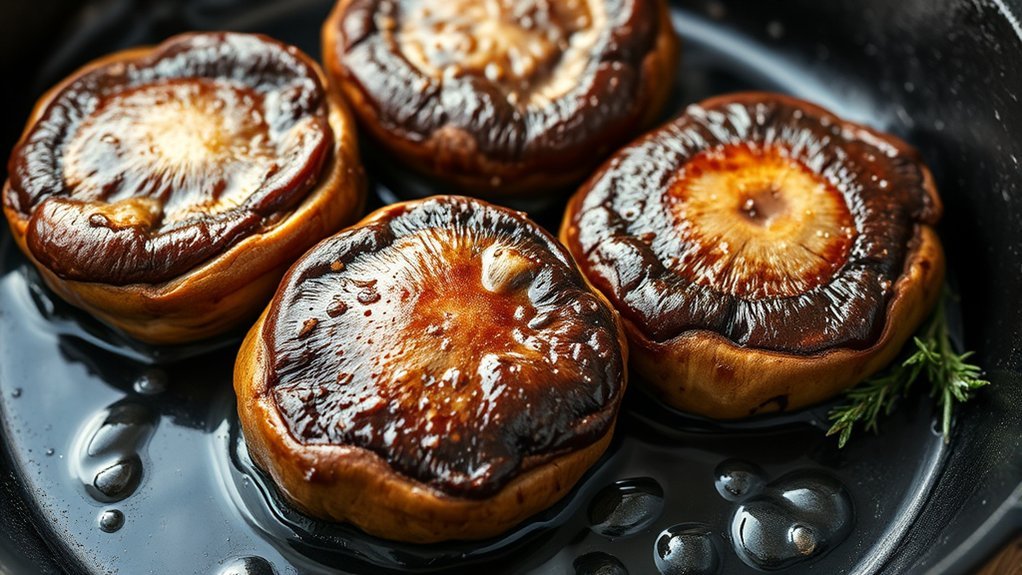

By chance, you might have portobello mushrooms and a cast iron skillet ready at the same time—an ideal setup for a simple, effective cooking method. Cooking portobello mushrooms in a cast iron skillet brings out their rich, meaty flavor and creates a beautiful sear.
You’ll want to start with clean, dry mushrooms and a properly heated pan to achieve the perfect sear. Understanding the right oil and timing is essential for developing flavor and texture.
Before you begin, consider how these small details can transform your mushrooms beyond basic sautéing. This approach ensures a delicious result every time.
Key Takeaways
- Choose large, firm portobello mushrooms with smooth caps and no blemishes for the best texture and flavor.
- Clean mushrooms by wiping with a damp paper towel or soft brush; avoid soaking to prevent sogginess.
- Preheat a clean, dry cast iron skillet over medium heat and lightly oil with a high smoke point oil.
- Sear mushrooms cap side down without overcrowding, cooking 4–5 minutes until golden crust forms, then flip and cook gently.
- Season mushrooms with salt near the end, add garlic or thyme mid-cook, and rest briefly off heat before serving.
Choose and Prep Portobello Mushrooms
How do you select the best portobello mushrooms for cooking? Start by choosing mushrooms that are large, firm, and free of blemishes or dark spots. Look for caps with a smooth surface and intact edges, which indicate freshness.
Avoid mushrooms with excessive moisture or sliminess, as this signals spoilage. When cleaning mushrooms, avoid soaking them in water, which can cause sogginess. Instead, use a damp paper towel or a soft brush to gently remove dirt and debris.
Trim the stems if they’re dry or tough, as they can affect texture during cooking. By carefully choosing mushrooms and cleaning mushrooms properly, you ensure optimal texture and flavor in your dish, setting the foundation for a successful cast iron skillet cooking process.
Prepare and Season Your Cast Iron Skillet
After selecting and prepping your portobello mushrooms, turn your attention to the cast iron skillet. Start with a clean, dry skillet to ensure even heating and prevent sticking.
Begin with a clean, dry cast iron skillet to ensure even heat and prevent sticking.
For optimal skillet prep, heat the skillet over medium heat for a few minutes until it’s warm but not smoking. Apply a thin layer of oil with a high smoke point, like avocado or grapeseed oil, to maintain the seasoning cast iron requires.
Use a paper towel to spread the oil evenly and wipe away any excess; too much oil can cause sticky residue. Proper seasoning cast iron enhances its natural non-stick surface and protects against rust.
This careful skillet prep sets the foundation for perfectly cooked portobello mushrooms in the next steps.
Sear and Cook Portobello Mushrooms Perfectly
When should you add the portobello mushrooms to the skillet for the best sear? Add them only once the cast iron is thoroughly preheated and lightly oiled. This ensures immediate contact heat, essential for an effective searing technique.
Place mushrooms cap-side down first to maximize surface caramelization. To optimize mushroom moisture management, avoid overcrowding; too many mushrooms trap steam, hindering browning.
Let them cook undisturbed for 4-5 minutes until a deep golden crust forms. Flip carefully and repeat on the other side, adjusting heat to prevent burning while maintaining a steady sizzle.
This controlled moisture release and high heat application lock in flavor and texture without sogginess. Mastering this balance is key to perfectly seared portobellos in your cast iron skillet.
Flavor and Texture Tips for Portobello Mushrooms
Although portobello mushrooms sear beautifully on their own, enhancing their flavor and texture requires intentional seasoning and timing. Start by patting them dry to prevent steaming, which preserves a firm texture.
Lightly brush with oil to promote Maillard browning, unlocking a rich, ripe aroma. Season with salt towards the end of cooking to avoid drawing out excess moisture prematurely, which can compromise texture.
Incorporate garlic or thyme midway to build umami depth without overpowering the mushroom’s natural earthiness. Cook over medium-high heat just until tender but not mushy, preserving a meaty bite.
Finally, rest briefly off heat; this allows residual heat to intensify flavors and stabilize texture. By controlling these variables, you maximize both the ripe aroma and umami depth that define perfect skillet-cooked portobellos.
Creative Serving Ideas for Skillet-Cooked Portobello Mushrooms
Mastering flavor and texture sets the stage for showcasing skillet-cooked portobello mushrooms in diverse dishes. To bridge creativity gaps, start by using these mushrooms as a meat substitute in burgers, layering them with fresh arugula and tangy aioli for a presentation twist.
Alternatively, slice them thin and serve over creamy polenta or risotto, enhancing mouthfeel and elevating visual appeal. You can also stuff the mushrooms with herbed goat cheese and bake briefly to introduce contrasting textures.
For a lighter option, toss sliced portobellos into salads with citrus vinaigrette, adding umami depth and color contrast. Finally, consider serving them atop toasted baguette slices with a drizzle of balsamic glaze to create elegant, bite-sized appetizers.
These strategies maximize the mushrooms’ versatility while closing creativity gaps in your meals.
Frequently Asked Questions
Can I Cook Portobello Mushrooms in a Non-Stick Pan Instead?
Yes, you can use a nonstick pan to cook portobello mushrooms. Nonstick vs cast iron differs in heat retention and searing ability, but nonstick prevents sticking and requires less oil, offering easier cleanup and gentle cooking.
How Do I Store Leftover Cooked Portobello Mushrooms?
Why waste good food? For storing leftovers, place mushrooms in an airtight container. Refrigerate within two hours and consume within 3-4 days. When reheating, use low heat to maintain texture and avoid sogginess.
Are Portobello Mushrooms Safe to Eat Raw?
Are raw portobellos safe to eat? Generally, no. They contain hydrazines, which can cause digestive issues.
Avoid cooking safety pitfalls by thoroughly cooking them to break down toxins and improve digestibility before consumption.
Can I Freeze Cooked Portobello Mushrooms for Later Use?
Yes, you can freeze cooked portobello mushrooms, but be aware freezing often causes texture issues, making them softer and slightly rubbery. To minimize this, cool thoroughly and freeze in airtight containers or vacuum-seal for best results.
What Are the Nutritional Benefits of Portobello Mushrooms?
You won’t just bare bones nutritional myths with portobellos. They offer fiber, antioxidants, and vitamin D precursors.
They excel in flavor pairing, enhancing dishes while supporting immune function and reducing inflammation efficiently and deliciously.
Conclusion
By mastering the art of cooking portobello mushrooms in your cast iron skillet, you unlock a gateway to earthy richness and texture—like turning raw potential into a golden masterpiece. Each sear is a brushstroke, each flip a subtle refinement, transforming humble mushrooms into a culinary canvas.
With precision and care, you craft more than a meal; you create a symbol of technique meeting flavor. This process is ready to elevate any dish with perfect, savory depth.
Ultimately, mastering portobello mushrooms in cast iron skillet brings out their fullest flavor and texture, making every bite a delightful experience.