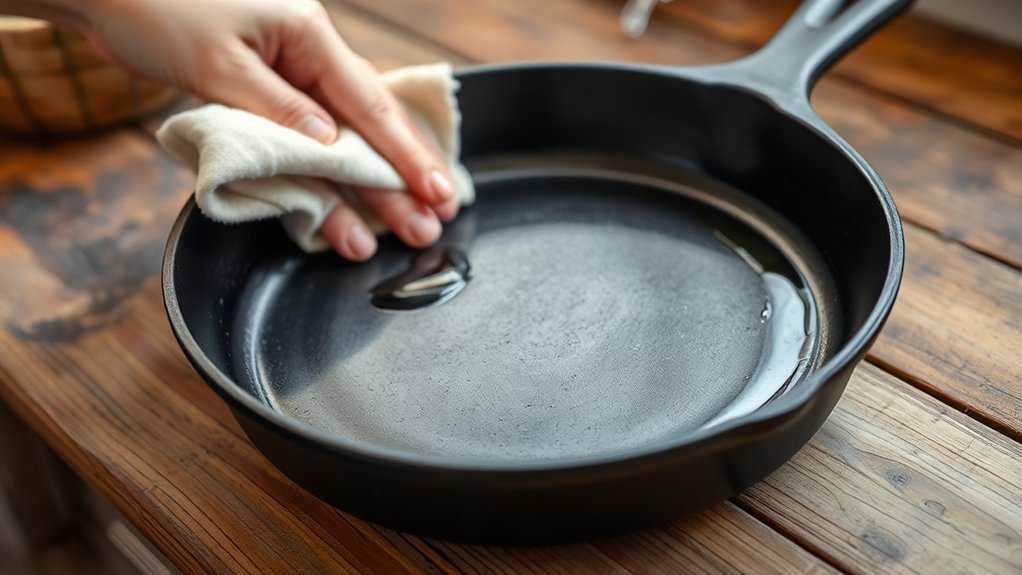

You might think wiping out your cast iron skillet is too simple to keep it clean, but done right, it actually protects the seasoning. Just wiping away excess oil and food can be enough for routine use, as long as you avoid harsh scrubbing or soap that can damage the surface.
However, there are times when wiping won’t cut it, and knowing when to take extra care is key to maintaining your skillet’s performance. Understanding when to go beyond wiping helps ensure your cast iron stays in great shape for years to come.
Key Takeaways
- Light wiping with a soft cloth or paper towel can maintain seasoning between uses without damaging the skillet.
- Avoid harsh detergents and abrasive scrubbers when wiping to protect the delicate seasoning layer.
- Slightly dampening a cloth with warm water is acceptable for wiping but never soak the skillet.
- Wiping alone may not remove stubborn residue or grease; gentle scrubbing may be needed occasionally.
- Always dry thoroughly and apply a thin oil layer after wiping to prevent rust and maintain seasoning.
Can You Just Wipe Out Your Cast Iron Skillet?
How should you clean your cast iron skillet after cooking? Many discussion ideas around this topic involve cast iron myths, such as the belief that you should never use water or soap. In reality, light rinsing with warm water and a gentle scrub is often enough.
Just wiping out your skillet isn’t always sufficient, especially if food residue remains. While wiping can help maintain seasoning between uses, it won’t fully clean stuck-on bits or grease.
Avoid harsh detergents or soaking, which can damage seasoning. Instead, focus on practical cleaning: use a brush or non-abrasive scrubber, rinse quickly, dry thoroughly, and apply a thin layer of oil. This approach dispels common cast iron myths and ensures your skillet stays in great shape.
How to Wipe Your Cast Iron Skillet Without Hurting Its Seasoning
Wiping your cast iron skillet can be a helpful way to maintain its seasoning between uses, but doing it incorrectly risks stripping away the protective layer you’ve built. To preserve seasoning chemistry, avoid harsh detergents and abrasive scrubbers; instead, use a soft cloth or paper towel to gently remove residue.
If needed, dampen the cloth slightly with warm water. Never soak your skillet. This approach debunks common cast iron myths about needing heavy cleaning after every use.
Remember, seasoning is a polymerized oil layer, delicate yet essential. Two word discussion ideas like “gentle wiping” and “seasoning preservation” highlight best practices.
When You Need More Than Just Wiping: Signs to Deep Clean
When should you move beyond gentle wiping and give your cast iron skillet a deep clean? If you notice stubborn food residue, rust spots, or a sticky surface, it’s time. These signs indicate your skillet needs more than basic care tips.
Particularly if you use your skillet for outdoor maintenance like camping, debris and moisture can build up, compromising the seasoning.
| Stubborn Residue | Rust Spots | Sticky Surface |
|---|---|---|
| Food won’t lift | Orange-brown patches | Oil feels tacky |
| Wiping fails | Flaky texture | Food sticks easily |
| Seasoning dulls | Rough areas | Loss of non-stick |
Addressing these issues promptly preserves your skillet’s performance and longevity.
Safe Cleaning Methods for Your Cast Iron Skillet
Although cast iron skillets are durable, you’ll want to clean them carefully to maintain their seasoning and prevent damage. After cooking, wipe out excess food with a paper towel or cloth.
For stuck-on bits, use a soft brush or non-abrasive scrub pad with warm water. Avoid soap, as it can degrade seasoning. If needed, coarse kosher salt acts as a gentle scrub to lift residue without harming the surface.
This method supports seasoning upkeep and aids rust prevention by minimizing harsh cleaning. Always clean promptly to avoid buildup. Avoid soaking your skillet in water, which risks rust.
How to Dry and Store Cast Iron to Stop Rust
After cleaning your cast iron skillet, make sure you dry it thoroughly to prevent rust from forming. Avoid leaving any moisture on the surface by using heat or a towel.
Always store your skillet in a dry, well-ventilated place. These steps will keep your cast iron in prime condition for years to come.
Proper Drying Techniques
How do you ensure your cast iron skillet stays rust-free after cleaning? Proper drying is key. Avoid common cast iron myths like air drying, which invites rust. Instead, use heat to evaporate moisture quickly, a seasoning hack that preserves your pan’s surface.
| Method | Benefit |
|---|---|
| Towel Dry | Removes excess water |
| Oven Warm-up | Evaporates hidden moisture |
| Stovetop Heat | Prepares skillet for oil |
After drying, apply a thin layer of oil to seal the surface. This two word discussion ideas “dry fast” summarize the approach: remove water promptly, then protect the skillet. Master these steps, and you’ll maintain your cast iron’s durability and non-stick quality effortlessly.
Preventing Moisture Exposure
Where you store your cast iron skillet matters just as much as how you dry it. After drying your skillet thoroughly, you want to prevent moisture from lingering, which can cause rust and damage your seasoning maintenance efforts.
Always ensure your skillet is completely dry. Use a towel and finish with low heat on the stove to evaporate any remaining moisture. Then, store your skillet in a dry, well-ventilated area to avoid humidity buildup.
Avoid sealing it in airtight containers or stacking it with damp items. If you’re concerned about moisture, placing a paper towel inside the skillet can absorb residual dampness.
Best Storage Practices
Keeping moisture at bay is just the start; proper drying and storage techniques play a major role in stopping rust on your cast iron skillet. After washing, dry your skillet thoroughly. Use a towel and then heat it on the stove to evaporate any lingering moisture.
Avoid airtight containers or plastic wrap, which trap humidity. Instead, store your skillet in a dry place with good airflow. Remember, some seasoning myths suggest constant re-seasoning, but consistent care and proper storage will maintain the surface better.
| Storage Tip | Why It Matters | Common Mistake |
|---|---|---|
| Dry Completely | Prevents rust formation | Storing damp |
| Store Airy | Avoids trapped moisture | Using plastic covers |
| Lightly Oiled | Maintains seasoning barrier | Over-oiling |
| Avoid Stacking | Prevents scratches & rust spots | Piling cookware |
Easy Tips to Maintain and Restore Your Cast Iron Seasoning
Why does your cast iron skillet sometimes lose its non-stick magic? Often, it’s due to seasoning wear or cast iron rust developing from moisture exposure. For effective seasoning restoration, start by scrubbing off rust with steel wool, then rinse and dry thoroughly.
Cast iron skillets lose their non-stick power mainly from seasoning wear or rust caused by moisture.
Next, apply a thin layer of cooking oil, focusing on even coverage. Heat your skillet upside down in the oven at 450°F for an hour to polymerize the oil, rebuilding that essential non-stick layer.
To maintain seasoning, avoid soap and excessive water; wipe out residue and reapply a light oil coat after each use. These two word discussion ideas, “rust removal” and “oil polymerization,” capture the core steps you need.
Following this simple routine keeps your skillet performing perfectly and extends its lifespan.
Frequently Asked Questions
Can I Use Soap on My Cast Iron Skillet?
Yes, you can use soap on your cast iron skillet occasionally without harming the seasoning. Just avoid harsh detergents, rinse thoroughly, and dry immediately.
Usually, wiping out a cast iron skillet with hot water suffices for cleaning.
How Often Should I Reseason My Cast Iron Skillet?
Imagine you cook daily and notice food sticking; you should reseason your cast iron skillet every 3-6 months. Avoid irrelevant topic distractions. Focus on seasoning frequency for durable, non-stick cookware.
Two word discussion ideas: maintenance routine.
Is It Safe to Cook Acidic Foods in Cast Iron?
You can cook acidic foods in cast iron, but only if your seasoning techniques are solid. Acid can break down the seasoning, so avoid long cooking times with acidic ingredients to protect your skillet’s surface and flavor.
Can Cast Iron Skillets Go in the Dishwasher?
You shouldn’t put cast iron skillets in the dishwasher; it damages seasoning and causes rust.
For proper maintenance, hand wash with hot water, dry thoroughly, and reapply oil to preserve your skillet’s non-stick surface.
What’s the Best Oil for Seasoning Cast Iron?
The best oil for seasoning cast iron is flaxseed oil due to its high polymerization. You’ll maintain cast iron cleanliness by applying thin layers and baking between coats, ensuring a durable, non-stick surface that lasts through regular use.
Conclusion
You can wipe out your cast iron skillet like brushing crumbs off a table—quick and gentle. Just avoid soap and harsh scrubbers to keep its seasoning intact. When stuck-on bits appear, use warm water and a soft brush.
Always dry thoroughly and apply a light oil coat to prevent rust. With these simple steps, your skillet will stay ready for every meal, maintaining its nonstick surface and flavor-enhancing qualities over time.
So yes, you can just wipe out cast iron skillet to keep it in great shape, but remember to care for it properly to preserve its seasoning and durability.