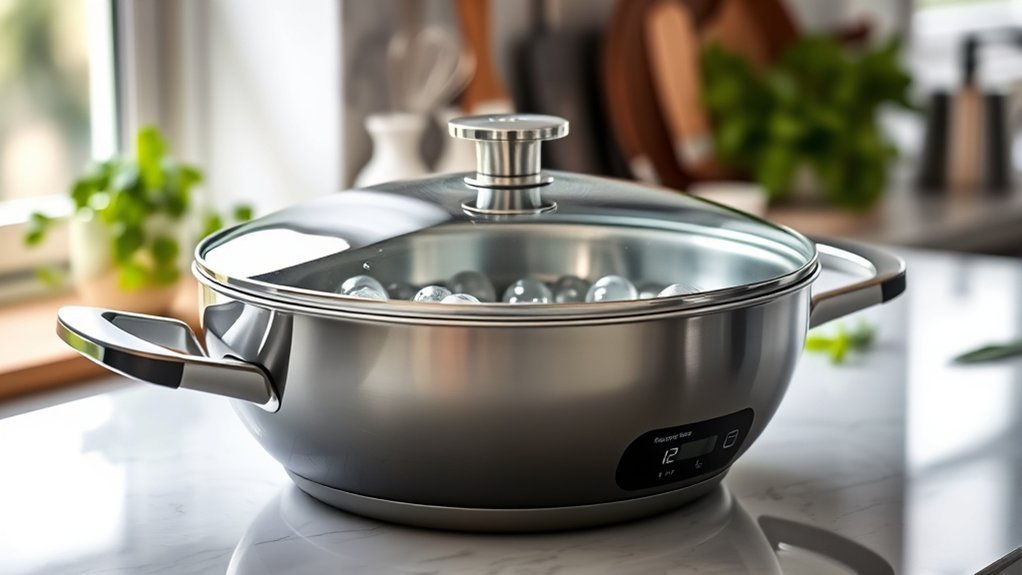

You might think an electric skillet could boil water as quickly as a professional-grade kettle, but the reality is more nuanced.
Can you boil water in an electric skillet? The answer depends on several factors.
Wattage, water volume, and whether you use a lid all considerably affect the skillet’s performance.
Additionally, not all electric skillets are designed to handle boiling water efficiently.
Understanding these technical details can help you determine if your electric skillet is up to the job.
It also guides you on how to use it safely and efficiently.
Key Takeaways
- Yes, electric skillets can reliably bring water to a full boil since they reach temperatures around 400°F, well above water’s boiling point.
- Boiling time depends on skillet wattage, water volume, lid use, and ambient temperature, typically taking 8 to 12 minutes.
- Use a lid to retain heat and speed up boiling while following manufacturer safety guidelines to avoid overheating and electrical hazards.
- Ensure the skillet and water vessel are clean to prevent contamination, and never leave the appliance unattended during boiling.
- Water boiled in an electric skillet is as safe as traditionally boiled water when proper safety and cleanliness practices are followed.
Can an Electric Skillet Bring Water to a Full Boil?
How effectively can an electric skillet bring water to a full boil? Electric skillets typically reach temperatures around 400°F, well above water’s boiling point of 212°F, so they can bring water to a full boil reliably.
When you use an electric skillet, maintaining water safety is crucial; ensure the skillet has adequate water volume to prevent overheating or damage to the heating element. Energy efficiency is another consideration. Electric skillets consume moderate power, but their flat surface and enclosed design minimize heat loss, making the boiling process fairly efficient compared to open flame stovetops.
However, the time to reach a boil may vary based on water volume and skillet wattage. Overall, an electric skillet can safely and efficiently boil water if used according to manufacturer guidelines.
How Electric Skillets Heat Water Differently
You’ll notice electric skillets use a built-in heating element that directly transfers heat to the cooking surface, unlike stovetops that heat indirectly. Their temperature controls regulate heat more precisely but often cap at lower maximum temperatures. This design impacts how quickly and efficiently water reaches boiling point inside the skillet.
Heating Element Mechanics
Electric skillets heat water by directly transferring energy from their embedded heating element to the cooking surface, which then evenly distributes the heat to the water. You’ll notice that unlike stovetops, the heating element is integrated beneath the skillet’s base, ensuring consistent contact and reducing heat loss.
This design contrasts with two word discussion ideas like “indirect heating,” which apply to other appliances but are unrelated topics here. The embedded element converts electrical energy into thermal energy through resistive heating, providing rapid and uniform warmth.
When water contacts the hot surface, heat transfers via conduction, raising its temperature efficiently. Understanding this heating element mechanics clarifies why electric skillets can boil water effectively, albeit with differences in energy distribution compared to traditional pots on external heat sources.
Temperature Control Differences
The way an electric skillet regulates temperature differs considerably from conventional stovetops or pots. Instead of fluctuating heat based on flame or coil adjustments, electric skillets use built-in thermostats that sense the skillet’s surface temperature, maintaining a steady heat level.
This precise control affects how water heats, as the skillet’s even temperature distribution minimizes localized overheating, influencing water chemistry by reducing mineral scale buildup. You’ll notice that electric skillets often reach boiling point more efficiently, as their design maximizes energy efficiency by directing heat directly to the cooking surface without significant losses.
However, the thermostat’s calibration can cause slight delays in response time, so you might observe a steadier boil rather than rapid temperature shifts typical with gas or electric stovetops.
What Types of Electric Skillets Work Best for Boiling Water
How does one determine which electric skillets efficiently bring water to a boil? You should focus on skillets with consistent temperature regulation and robust heating elements, ensuring rapid and uniform boiling. Prioritize models designed with electric safety features like automatic shutoff and insulated handles to prevent hazards during water purification tasks.
| Feature | Importance for Boiling Water |
|---|---|
| Temperature Control | Precise settings prevent overheating |
| Heating Element | High wattage ensures faster boiling |
| Safety Mechanisms | Critical for safe handling and use |
Selecting an electric skillet with these attributes guarantees efficient water boiling while maintaining electric safety standards, essential for effective water purification. Avoid models lacking these technical specifications to ensure both performance and safety.
How to Safely Boil Water in Your Electric Skillet
When boiling water in your electric skillet, what safety measures should you prioritize to prevent accidents and ensure efficient heating? First, always place the skillet on a stable, heat-resistant surface to avoid tipping. Fill the skillet with water only to the recommended maximum level to prevent overflow, which can cause electrical hazards.
Ensure the skillet’s power cord and plug are dry and intact; moisture near electrical components significantly increases risk. Use a lid designed for your skillet to retain heat and speed boiling, reducing energy consumption.
Monitor the water closely to avoid unattended boiling, which can lead to overheating. Finally, unplug the skillet immediately after use to minimize electrical hazards and prevent accidental burns. Following these boiling safety guidelines helps you use your electric skillet effectively and safely.
Mistakes to Avoid When Boiling Water in Your Skillet
When boiling water in your electric skillet, don’t overfill the pan to avoid spillage and uneven heating. Set the temperature correctly to reach a boil efficiently without damaging the appliance.
Also, ensure all electrical components stay dry to prevent hazards.
Avoid Overfilling The Skillet
Why does overfilling an electric skillet pose a problem when boiling water? Exceeding the recommended filling limits compromises boiling safety and can cause water to spill over, damaging the skillet’s electrical components. Overfilling also hinders efficient heat distribution, leading to uneven boiling and increased energy consumption.
To maintain boiling safety and optimal performance, avoid these pitfalls:
- Exceeding the manufacturer’s max fill line
- Ignoring the skillet’s capacity specifications
- Allowing water to splash onto heating elements
- Neglecting to leave headspace for boiling expansion
- Overloading with additional ingredients during boiling
Adhering to proper filling limits ensures consistent temperature control, prevents electrical hazards, and prolongs your skillet’s lifespan. Always measure water volume precisely before heating.
Use Proper Temperature Settings
Properly managing the water level in your electric skillet sets the stage for effective temperature control. To ensure boiling safety, you must select the correct temperature setting, usually around 212°F (100°C) for water at sea level. Using precise temperature accuracy prevents overheating, which can damage the skillet or cause water to evaporate too quickly.
Avoid setting the temperature too high, as electric skillets often lack a built-in thermostat for maintaining exact boiling points. Monitor the temperature gauge carefully and adjust as needed to maintain a gentle, rolling boil without causing rapid evaporation or splattering.
Prevent Electrical Hazards
How can you avoid electrical hazards while boiling water in your electric skillet? Prioritize electric safety by ensuring proper use and maintenance. Follow these key steps:
- Always plug the skillet into a grounded outlet to maintain effective electrical grounding.
- Inspect the power cord regularly for damage or frays before use.
- Keep the electric components dry; never immerse the skillet base in water.
- Avoid using extension cords that may compromise current flow and increase risk.
- Unplug the skillet immediately after use to prevent overheating or electrical faults.
What to Use Boiled Water From an Electric Skillet For
Although an electric skillet isn’t a conventional tool for boiling water, you can effectively use the boiled water it produces for several practical purposes. For instance, you can prepare instant foods like oatmeal or soup, sterilize utensils, or use it for hygiene tasks such as handwashing.
Addressing boiling myths, it’s important to note that water boiled in an electric skillet is as safe as water boiled using traditional methods, provided you follow proper safety tips. Avoid overheating or leaving the appliance unattended to prevent hazards.
You should also ensure the skillet is clean to avoid contamination. Using boiled water from an electric skillet can be reliable and efficient, but always apply technical caution to maintain safety and avoid any electrical or thermal risks.
How Long Does It Take to Boil Water in an Electric Skillet?
Using an electric skillet to boil water requires understanding the time involved, as it differs from traditional stovetop methods. Typically, it takes about 8 to 12 minutes to reach a rolling boil, but several factors influence this duration. Consider these technical points:
Skillet wattage affects heating speed; higher wattage boils faster. Water volume directly impacts boiling time; more water requires longer heating. Lid usage retains heat, reducing boil time significantly.
Ambient temperature and skillet material affect heat transfer efficiency. Electric skillet temperature settings vary; higher settings accelerate boiling.
Avoid irrelevant two word discussion ideas like safety myths or gadget aesthetics when focusing on timing. Understanding these variables helps you optimize your boiling process with precision and efficiency.
Alternatives for Faster Boiling Than Using an Electric Skillet
Why settle for slower boiling times when you can choose more efficient methods? Electric kettles, induction cooktops, and microwave ovens provide alternative methods to boil water faster than an electric skillet.
Electric kettles use concentrated heating elements designed specifically to heat water quickly while maintaining boiling safety through automatic shutoff features. Induction cooktops transfer energy directly to the pot via electromagnetic fields, generating heat rapidly with minimal loss.
Microwaves agitate water molecules directly, shortening the time to reach a boil. When selecting an alternative, consider the vessel’s heat conductivity and the appliance’s safety mechanisms to prevent overheating or accidents.
These alternative methods optimize energy use and time efficiency, offering practical solutions when you need boiling water promptly without compromising boiling safety.
Frequently Asked Questions
Can I Use an Electric Skillet to Boil Other Liquids Besides Water?
Yes, you can boil other liquids in an electric skillet, but you should monitor boiling liquids closely to avoid overflow or damage.
Always consider safety considerations like heat settings and liquid properties to prevent hazards or malfunction.
Does Boiling Water in an Electric Skillet Affect Its Warranty?
Coincidentally, boiling water usually won’t void your electric skillet’s warranty. Still, you should review your warranty policy carefully, as product care clauses sometimes restrict high-heat uses that could impact the skillet’s longevity or safety features.
How Energy-Efficient Is Boiling Water in an Electric Skillet?
You’ll find boiling efficiency lower in an electric skillet compared to a kettle, as heat disperses over a larger surface.
Energy comparison shows kettles use less power and time, making them more energy-efficient for boiling water.
Can Mineral Buildup Occur When Boiling Water in an Electric Skillet?
Yes, mineral buildup can occur when boiling water in your electric skillet, potentially affecting heating efficiency.
While generally not a direct safety concern, regular cleaning prevents deposits that might cause uneven heating or damage over time.
Is It Safe to Leave Water Boiling Unattended in an Electric Skillet?
Don’t put all your eggs in one basket by leaving water boiling unattended in an electric skillet. Unattended safety risks include overheating, which can damage the appliance or cause hazards.
Always monitor to prevent malfunction or fire.
Conclusion
Boiling water in your electric skillet is like charging a phone—higher wattage means faster results. With the right skillet and careful monitoring, you can achieve a full boil efficiently. For example, a 1500-watt model can bring 4 cups of water to a boil in under 10 minutes.
Keep safety in mind and avoid common mistakes when using your electric skillet. You’ll find it a reliable tool beyond frying—perfect for quick, controlled heating tasks. In conclusion, boiling water in an electric skillet is entirely possible and can be done effectively with the appropriate equipment and precautions.