
You might think frying an egg in a stainless steel skillet is tricky because eggs tend to stick, but with the right technique, you can achieve a perfectly cooked egg every time.
Frying an egg in a stainless steel skillet starts with properly heating your pan and using oil at the right moment.
Mastering this method not only prevents sticking but also gives you that desirable golden edge and ideal texture.
Let’s explore how you can get there step by step.
Key Takeaways
- Preheat a clean, dry stainless steel skillet on medium heat for 2-3 minutes until water droplets bead and dance.
- Pour a thin, even layer of high smoke point oil (canola or grapeseed) and heat until shimmering without smoking.
- Crack the egg gently into a bowl, then slide it into the skillet center to keep the yolk intact.
- Cook on medium-low heat undisturbed until the egg white sets fully, ensuring a uniform sear without sticking.
- Flip carefully with a thin spatula for over-easy eggs when whites are firm and yolks still jiggle.
Prepare Your Stainless Steel Skillet and Set the Right Heat
Before you crack the egg, make sure your stainless steel skillet is completely clean and dry to prevent sticking. Residual moisture or grease disrupts heat distribution, causing uneven cooking.
Place the skillet on medium heat and let it warm gradually for about two to three minutes. Use the water droplet test: flick a few drops of water onto the surface. If they bead and dance, your pan is ready.
Setting the correct temperature is crucial; too high, and the egg will burn, too low, and it won’t cook properly. When preparing, engage with discussion ideas1 about heat management and skillet preparation, and consider discussion ideas2 focusing on pan readiness techniques. These concepts ensure you master the skill before moving on to cooking the perfect fried egg.
Use Oil Correctly for a Golden, Non-Stick Edge
How exactly should you use oil to achieve that perfect golden edge without sticking? First, choose an oil with a high smoke point, like canola or grapeseed. Pour just enough to coat the skillet’s surface evenly.
The oil technique matters. Spread it using a heat-resistant spatula or by tilting the pan to create a thin, uniform layer. Next, focus on temperature control: heat the oil until it shimmers but doesn’t smoke. This indicates it’s hot enough to form a natural barrier between the egg and the pan, preventing sticking.
Adding the egg too early or too late compromises this barrier. Mastering this oil technique combined with precise temperature control ensures your egg fries with a crisp, golden edge and releases effortlessly.
How to Fry an Egg Step-by-Step for Perfect Texture
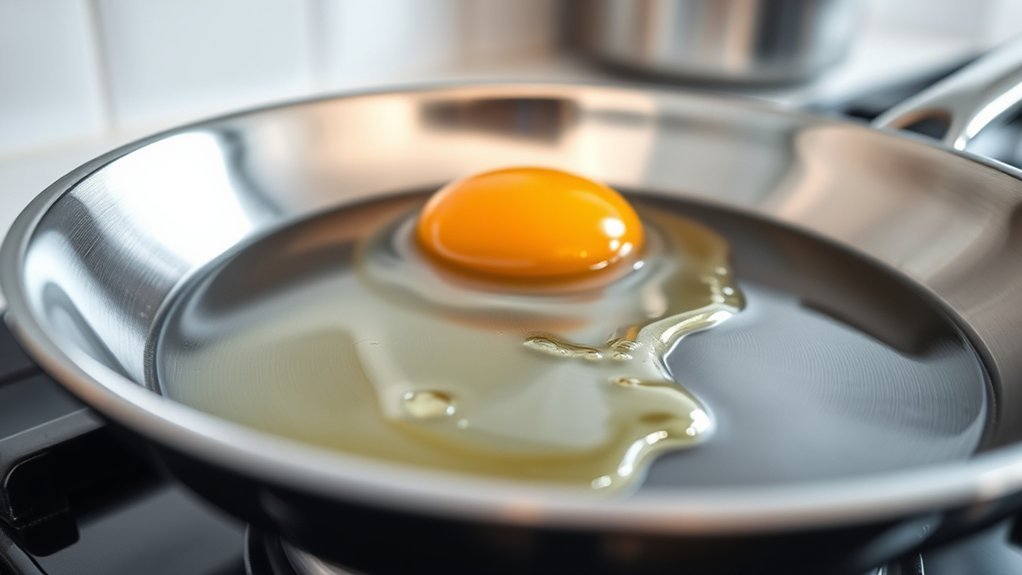
Once your skillet and oil reach the ideal temperature, crack the egg gently into a small bowl to guarantee the yolk remains intact and no shell fragments get in. Then, carefully slide the egg into the center of the skillet.
Let it cook undisturbed to achieve a uniform pan sear, which is essential for developing a golden, crispy edge while preserving the egg white’s tender firmness. To perfect the egg texture, maintain medium-low heat; high heat risks tough whites and broken yolks.
When the whites are fully set but the yolk still jiggles slightly, you’ve achieved optimal doneness. If you prefer over-easy eggs, gently flip with a thin spatula and cook briefly. This method ensures a flawless balance between a crisp sear and delicate interior texture.
Troubleshoot Common Frying Problems in Stainless Steel Pans
Why does your egg stick stubbornly to the stainless steel skillet despite careful temperature control? Often, it’s due to subtle missteps that cause frustration and imperfect results like overcooked eggs or cracked yolks. Troubleshoot with these key points:
- Insufficient preheating: Your pan must reach the right temperature before adding oil to create a natural non-stick surface.
- Inadequate oil coverage: Use enough oil to coat the pan evenly; thin oil leads to sticking and tearing of the yolk.
- Rapid temperature changes: Adding the egg to a too-hot or too-cold pan causes sticking and uneven cooking, risking overcooked edges and cracked yolks.
- Premature flipping: Wait for the egg white to set fully; flipping too early results in sticking and breakage.
Master these to avoid common pitfalls and perfect your fried egg.
Tips for Cleaning and Maintaining Your Stainless Steel Skillet
Avoiding sticking and damage during cooking is only part of maintaining your stainless steel skillet’s performance. You need a consistent cleaning schedule and proper seasoning tips to extend its lifespan.
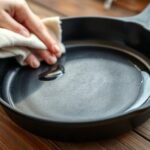
After each use, wash with warm soapy water and a soft sponge to remove residues. Avoid abrasive pads that scratch the surface. Periodically, apply a light layer of oil and heat the pan to maintain its non-stick properties.
| Task | Frequency | Recommended Method |
|---|---|---|
| Daily Cleaning | After each use | Warm water, mild soap |
| Deep Cleaning | Monthly | Baking soda paste |
| Seasoning | Every 3 months | Oil application, heated pan |
| Inspection | Quarterly | Check for warping or stains |
Stick to this routine to ensure your skillet stays reliable and efficient.
Frequently Asked Questions
Can I Fry an Egg in a Stainless Steel Skillet Without Oil?
You can fry an egg in a stainless steel skillet without oil, but it’s tricky. Without proper pan seasoning, the egg won’t sizzle evenly and will stick.
Season the pan thoroughly to prevent sticking and ensure smooth cooking.
How Do I Know When My Stainless Steel Skillet Is Preheated Enough?
You’ll know your stainless steel skillet is preheated enough when water droplets dance and sizzle evenly, indicating proper heat distribution. This simple heat distribution testing prevents cold spots, ensuring consistent cooking and optimal frying results every time.
Are There Specific Egg Types Better Suited for Stainless Steel Frying?
You don’t need special eggs for oil free fryability; fresh, high-quality eggs minimize egg binding on stainless steel. Their firmer whites help prevent sticking, so focus on freshness rather than type for best frying results.
Can I Use Butter Instead of Oil in a Stainless Steel Skillet?
You can use butter instead of oil, but remember butter vs oil affects sticking and browning. Butter offers richer flavor but less high-heat tolerance.
For oil free frying, butter’s lower smoke point requires careful temperature control.
What Is the Best Way to Store Stainless Steel Skillets?
When storing skillets, like Chef Dana who separates hers with felt liners, you should stack them carefully to avoid scratches.
Follow care tips by drying completely and storing in a dry place to prevent rust and damage.
Conclusion
Now that you know the precise steps to fry an egg perfectly in your stainless steel skillet, why settle for less? With the right heat, a touch of high-smoke-point oil, and careful timing, you’ll achieve a flawless egg every time.
Remember, patience and technique are key to avoid sticking and breakage. Master this skill, and your skillet will reward you with consistent, delicious results that make breakfast truly satisfying.
By following these tips, you can confidently fry an egg in a stainless steel skillet and enjoy a perfect start to your day every time.