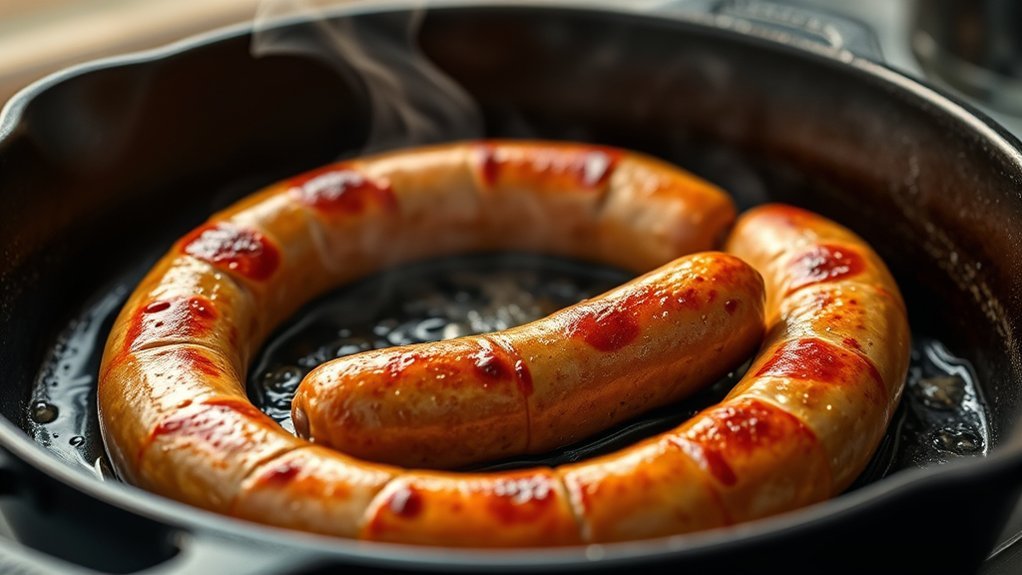

If you want perfectly cooked breakfast sausage with a crispy exterior and juicy interior, cooking breakfast sausage in a cast iron skillet is your best bet. You’ll start by properly heating the skillet and adding just the right amount of oil to prevent sticking.
Then, it’s all about timing and temperature control to develop that golden crust without burning. Understanding these key steps ensures your sausage cooks evenly and reaches the ideal doneness—here’s how to get it right.
Key Takeaways
- Preheat a clean, dry cast iron skillet over medium heat and lightly oil it to activate the seasoning layer.
- Place sausage links or patties evenly spaced in the skillet, avoiding overcrowding for proper browning.
- Cook sausages undisturbed for 4–5 minutes, then flip gently to maintain a crisp exterior and juicy interior.
- Continue cooking with occasional flips until sausages reach an internal temperature of 160°F and juices run clear.
- After cooking, let sausages rest for 3–5 minutes to redistribute juices for optimal flavor and texture.
Prep Your Cast Iron Skillet for Cooking Breakfast Sausage
A well-prepped cast iron skillet guarantees even cooking and prevents your breakfast sausage from sticking. First, ensure your pan is clean and dry before heating. Warm it over medium heat to open the pores of the cast iron.
Next, add a small amount of prep oil, such as vegetable or canola oil, to create a thin, even layer across the surface. This step enhances the pan seasoning and promotes a natural non-stick finish.
Use a paper towel to spread the oil evenly and remove excess. Allow the skillet to heat for a minute or two, which activates the seasoning layer. Proper prep oil application and maintaining pan seasoning are key to cooking breakfast sausage perfectly without sticking or uneven browning.
Cook Breakfast Sausage Perfectly: Step-by-Step Guide
How do you achieve perfectly cooked breakfast sausage every time? Start by heating your prepped cast iron skillet over medium heat. Place the sausage links or patties evenly spaced in the skillet, avoiding overcrowding.
Let them cook undisturbed for 4-5 minutes to develop a golden crust. Flip the sausages carefully, maintaining that savory pairing of crisp exterior and juicy interior.
Allow sausages to brown undisturbed, then flip gently to keep the perfect crisp and juicy balance.
Adjust the heat if needed to preserve the spice balance. Too high, and you risk burning; too low, and the sausage won’t brown properly. Continue cooking, flipping occasionally, until the sausage is cooked through.
This method locks in flavor and texture, ensuring every bite highlights the sausage’s spice balance and complements your breakfast spread perfectly.
How to Know When Your Breakfast Sausage Is Done
You’ll know your breakfast sausage is done when it reaches a consistent golden-brown color on the outside. Use a meat thermometer to check that the internal temperature hits 160°F for safety.
Also, press the sausage. When it feels firm but not hard, it’s ready to serve.
Visual Color Indicators
When can you tell that your breakfast sausage is perfectly cooked just by looking? Visual indicators provide clear color cues that guide you. Start by observing the exterior: your sausage should have a deep golden-brown crust, signaling Maillard reaction and caramelization. Avoid pale or pinkish spots, which indicate undercooked meat.
When you slice into a link, the interior should be a uniform light brown or grayish color, without any raw pink or red areas. Juices running clear, rather than pink or bloody, also serve as important color cues. These visual indicators help you determine doneness without guessing.
Rely on consistent color changes on both the outside and inside of the sausage to confidently serve safe, flavorful breakfast sausage every time.
Internal Temperature Check
Visual cues can give you a good idea of doneness, but relying solely on appearance can sometimes lead to uncertainty. To ensure safe handling, always check the internal temperature of your breakfast sausage. Use a digital meat thermometer inserted into the thickest part without touching the pan.
The USDA recommends an internal temperature of 160°F (71°C) for pork sausages to be safely cooked.
| Sausage Type | Recommended Temp | Safe Handling Tip |
|---|---|---|
| Pork | 160°F (71°C) | Insert thermometer fully |
| Chicken | 165°F (74°C) | Avoid cross-contamination |
| Turkey | 165°F (74°C) | Rest 3 minutes before serving |
Checking temperature guarantees your sausage is done without guessing.
Texture and Firmness
How can you tell if your breakfast sausage is perfectly cooked beyond just temperature? Focus on texture balance and firmness. When done, the sausage should feel firm to the touch without being hard or overly dry.
Gently press the sausage with a spatula or your finger. There’s a slight give, indicating moisture inside. The casing should offer a satisfying snap when you bite into it, signaling proper cooking and crispness on the outside.
Avoid sausages that feel mushy or too soft, as they need more cooking, while an overly tough texture means they’re overdone. Achieving this texture balance ensures juicy, flavorful sausage with a pleasing mouthfeel. Use these tactile cues alongside a thermometer for perfectly cooked breakfast sausage every time.
Tips for Crispy and Juicy Breakfast Sausage
To get crispy and juicy breakfast sausage, keep your cast iron skillet at medium heat. Too hot will burn the outside before the inside cooks. Make sure to space the sausages evenly, so they brown properly without steaming.
Timing is key; cook them just long enough to lock in juices while creating a golden crust.
Optimal Skillet Temperature
Why does the skillet temperature matter when cooking breakfast sausage? Maintaining the optimal skillet temperature ensures your sausage crisps perfectly on the outside while staying juicy inside.
If the skillet is too hot, the exterior will burn before the interior cooks through. Too low, and the sausage will steam, losing that desirable crispiness. Focus on temperature control by preheating your cast iron skillet over medium heat.
Once it’s evenly heated, add the sausage. Adjust the heat as needed to maintain a steady sizzle, not a roar. This moderate temperature allows the fat to render slowly, promoting browning without charring.
Mastering the optimal skillet temperature is key to achieving flavorful, evenly cooked breakfast sausage every time.
Proper Sausage Spacing
Proper sausage spacing often makes the difference between a crispy exterior and a soggy, steamed one. When you place sausages too close together, they release moisture that gets trapped, preventing browning. Instead, leave about an inch of space between each link or patty.
This two word idea, sausage spacing, ensures hot air circulates evenly around each piece, promoting a golden crust while locking in juices. Avoid overcrowding your skillet; if necessary, cook in batches to maintain ideal spacing.
Timing for Juiciness
Once you’ve spaced your sausages correctly, controlling the cooking time becomes the next key step to achieving that ideal crispy exterior and juicy interior. Cook your sausages over medium heat for about 12 to 15 minutes, turning them every few minutes to ensure even browning.
Avoid rushing the process; slow, consistent cooking preserves the timing juiciness balance. Use a meat thermometer to check for an internal temperature of 160°F (71°C) to guarantee doneness without drying out the meat.
After removing the sausages from the skillet, let them rest for 3 to 5 minutes. Resting after cooking allows the juices to redistribute, enhancing flavor and juiciness while maintaining that crisp crust you worked hard to achieve.
Proper timing and resting are essential for perfect breakfast sausage.
How to Pick the Best Sausage for Your Cast Iron Skillet
How do you choose the best sausage to achieve perfect results in your cast iron skillet? Focus on selection criteria like meat quality, seasoning, and casing styles. Natural casings offer a better snap and even cooking, while synthetic casings tend to be uniform but less flavorful.
Consider fat content for juiciness and avoid overly processed sausages.
| Sausage Type | Casing Style | Ideal For |
|---|---|---|
| Pork Breakfast | Natural casing | Traditional, juicy |
| Turkey Sausage | Collagen casing | Leaner, mild flavor |
| Vegetarian | No casing | Meat-free, easy to cook |
Choose sausages that match your flavor preference and cooking goals to maximize your skillet’s performance.
Clean and Care for Your Cast Iron Skillet
A well-maintained cast iron skillet can last for generations, but it requires specific cleaning and care techniques to preserve its seasoning and prevent rust. Follow this cleaning routine after each use:
- Rinse with hot water and use a non-abrasive brush or sponge to remove food residue. Avoid soap, which can strip seasoning.
- Dry thoroughly with a towel and heat on the stove briefly to evaporate moisture.
- Apply a thin layer of oil to the skillet surface following your regular seasoning schedule to maintain its non-stick coating.
Frequently Asked Questions
Can I Cook Frozen Breakfast Sausage in a Cast Iron Skillet?
You can cook frozen sausage in a cast iron skillet, but for safety thawing, it’s best to thaw them first. Cooking from frozen risks uneven cooking and potential food safety issues, so thaw properly before cooking.
What Side Dishes Pair Well With Breakfast Sausage?
You’ll want side dishes pairing with breakfast sausage flavors like scrambled eggs, crispy hash browns, or buttery biscuits.
Fresh fruit or sautéed greens also complement the savory, spicy notes perfectly, balancing your meal with texture and freshness.
Is Cast Iron Better Than Non-Stick for Cooking Sausage?
Cast iron vs nonstick? Cast iron wins for sausage due to superior heat retention benefits, giving you even cooking and a crispier texture.
Nonstick heats unevenly and won’t develop that flavorful crust as well.
How Do I Store Leftover Cooked Breakfast Sausage?
Wrap your savory breakfast sausage tightly in foil or store it in an airtight container for leftover storage. When reheating, gently warm in a skillet or microwave to keep that juicy flavor and perfect texture intact.
Can I Use the Same Skillet for Other Meats After Sausage?
You can reuse the skillet for other meats, but be mindful of cross-meat flavor transfer. To avoid unwanted tastes, clean the skillet thoroughly between uses, or cook similar-flavored meats consecutively to maintain flavor integrity.
Conclusion
You’ve prepped your skillet, cooked your sausage to a golden crust, and checked for perfect doneness. Now, you can enjoy juicy, flavorful sausage every time. You’ll savor the crispy edges and appreciate the tender interior.
Trust the technique that keeps your cast iron seasoned and ready. Keep practicing, keep refining, and keep serving up breakfast that’s both simple and satisfying.
Cooking sausage in cast iron isn’t just a skill—it’s a delicious tradition you master. Mastering how to cook breakfast sausage in a cast iron skillet ensures every meal is flavorful and memorable.