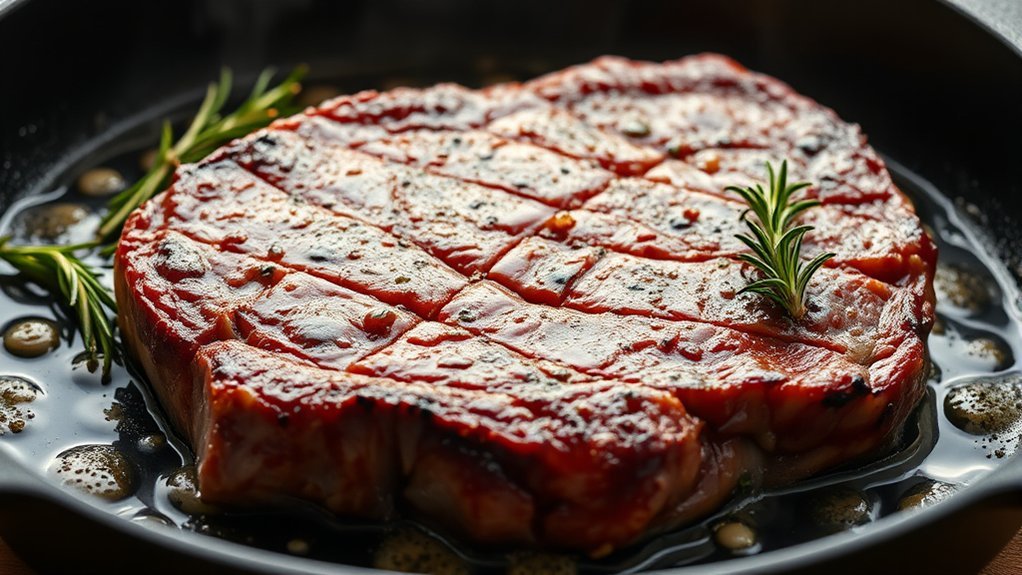

When you cook ribeye in a skillet, every step matters—from selecting the right cut to achieving the perfect sear. You’ll want to start with a well-marbled steak and prepare it carefully for even cooking. Knowing how to handle your skillet and temperature control can make all the difference in flavor and texture.
Before you begin, consider key techniques that ensure your ribeye turns out juicy and tender every time. Paying attention to these details will elevate your cooking and help you master the art of skillet-cooked ribeye.
Key Takeaways
- Select a 1 to 1.5-inch thick ribeye with good marbling and bring it to room temperature before cooking.
- Preheat a cast iron skillet until smoking hot and add high smoke point oil just before searing the steak.
- Pat the ribeye dry and season generously with salt and pepper just before placing it in the skillet.
- Sear the steak evenly on both sides, flipping occasionally, and use an instant-read thermometer to reach desired doneness.
- Rest the ribeye for 5 to 10 minutes loosely tented with foil to retain juices and maintain crust before slicing.
Choose the Best Ribeye Steak for Skillet Cooking
– How do you select the perfect ribeye steak for skillet cooking? Start by choosing ribeye cuts with a good balance of marbling, as the fat renders during cooking, adding flavor and tenderness.
Look for steaks about 1 to 1.5 inches thick; this thickness ensures even cooking without drying out. Avoid steaks that are too thin or unevenly cut since they won’t cook uniformly in the skillet.
Opt for fresh, bright red meat with firm texture and minimal discoloration. If possible, choose bone-in ribeye for added flavor, but boneless works well too.
Finally, check the grade. USDA Choice or Prime guarantees better marbling and quality, which is crucial for skillet cooking to achieve a juicy, flavorful steak.
Prepare Ribeye Steak for Even Cooking
Preparing your ribeye steak properly guarantees it cooks evenly and retains its juiciness. Before cooking, bring the steak to room temperature by letting it sit out for about 30 minutes. This step prevents uneven cooking, a common issue that ruins texture.
Bringing your ribeye to room temperature before cooking ensures even cooking and juicy texture every time.
Use these kitchen hacks to prep your ribeye perfectly:
- Pat the steak dry with paper towels to remove moisture, ensuring a good sear.
- Score the fat cap lightly to prevent curling during cooking.
- Season generously with salt and pepper just before cooking to enhance flavor without drawing out moisture.
These topic ideas help you master the prep phase, ensuring your ribeye cooks consistently and tastes delicious every time. Proper preparation is key to skillet success.
Select the Best Skillet for Ribeye Cooking
You want to choose a skillet made from a material that holds heat well, like cast iron, to achieve a perfect sear on your ribeye. Make sure the skillet is the right size and shape to fit your steak comfortably without overcrowding.
Prioritize heat retention to maintain consistent cooking temperature throughout the process.
Material Matters Most
Why does the skillet material matter when cooking a ribeye? It directly impacts heat distribution, searing quality, and your overall cooking experience. Understanding food science helps you select a skillet that achieves a perfect crust while retaining juiciness.
Kitchen ergonomics also play a role, ensuring your skillet feels comfortable and safe to handle.
Consider these key factors:
- Heat retention and distribution: Cast iron excels, providing even heat essential for a consistent sear.
- Reactivity: Stainless steel is non-reactive, preserving your ribeye’s natural flavors without metallic taste.
- Weight and handling: Lighter skillets like carbon steel offer better control and ease, important for kitchen ergonomics.
Choose a skillet that balances these elements to elevate your ribeye cooking.
Size And Shape
How do size and shape influence the skillet you choose for cooking ribeye? Selecting the right skillet size is essential; use a size guide to guarantee your pan accommodates the steak without overcrowding. A 10- to 12-inch skillet typically fits a standard ribeye, allowing enough space for proper searing and even heat distribution.
Consider the thickness tips: thicker steaks need more pan surface to brown evenly. The skillet’s shape matters too. A round pan offers uniform heat around the edges, while a slightly deeper skillet contains splatters better.
Avoid pans that are too small, as crowding traps moisture and prevents a crisp crust. Prioritize cookware that balances size and shape to give your ribeye the ideal cooking environment for a perfect sear every time.
Heat Retention Ability
A skillet’s heat retention ability plays a pivotal role in achieving the perfect sear on your ribeye. When you choose the right skillet material, you guarantee consistent heat, which locks in juices and creates a flavorful crust.
Consider these factors for optimal heat retention:
Cast Iron: Excellent heat retention, distributes heat evenly, ideal for high-heat searing.
Stainless Steel with Aluminum Core: Offers good heat retention and quick responsiveness.
Carbon Steel: Heats faster than cast iron but retains heat well, lighter and easier to handle.
Selecting a skillet with superior heat retention prevents temperature drops when you add your ribeye, ensuring a consistent sear. Prioritize skillet material that balances heat retention with your cooking style for flawless results every time.
Season Ribeye Steak for Skillet Cooking
You’ll want to season your ribeye with simple, bold flavors like salt and freshly ground black pepper to enhance its natural taste. Apply the seasoning just before cooking to ensure a perfect crust without drawing out moisture. Timing and seasoning choice are key to achieving a flavorful, juicy steak.
Choosing The Right Seasoning
Why settle for bland when seasoning your ribeye can elevate it to restaurant-quality flavor? Choosing the right seasoning is essential, especially when you’re skillet cooking. Unlike marinating, which involves soaking the meat, seasoning applies flavor directly and immediately, enhancing the ribeye’s natural taste.
Focus on the balance of salt vs pepper:
- Use coarse kosher salt to draw out moisture and intensify flavor.
- Freshly ground black pepper adds mild heat and complexity.
- Optional extras like garlic powder or smoked paprika can deepen flavor without overpowering.
Keep your seasoning simple and precise to complement the ribeye’s rich marbling. This method ensures the steak’s texture and juices remain intact while giving you that perfect crust in your skillet.
Timing For Seasoning Application
When should you season your ribeye to get the best results in a skillet? The timing strategy for seasoning is crucial. Many chefs engage in the pre seasoning debate: should you salt the steak well in advance or just before cooking?
Salting 40 minutes to an hour prior allows the salt to penetrate, enhancing flavor and tenderness. However, if you’re short on time, seasoning just before cooking still works but expect a surface seasoning effect. Avoid salting too early without resting, as it can draw out moisture.
For skillet cooking, you can also add pepper after searing to prevent burning. Overall, apply salt and preferred seasonings either right before or well ahead, depending on your schedule, to maximize flavor and texture in your ribeye steak.
Get the Perfect Sear on Your Ribeye
How do you achieve that irresistible crust on a ribeye that locks in flavor and juices? It all starts with mastering sear chemistry and maintaining the right pan temperature. A proper sear forms when the Maillard reaction occurs, creating that golden-brown crust packed with flavor.
To get the perfect sear:
To get the perfect sear, master heat control, moisture removal, and oil timing for a flawless crust.
- Preheat your skillet until it’s smoking hot to ensure even pan temperature.
- Pat the ribeye dry to eliminate moisture, which hinders crust formation.
- Add a high smoke point oil just before placing the steak to prevent burning.
Cook Ribeye to Your Preferred Doneness
After achieving the perfect sear on your ribeye, the next step is to cook it to your preferred doneness. Use doneness guidelines to monitor internal temperature: 125°F for rare, 135°F for medium-rare, 145°F for medium, 150°F for medium-well, and 160°F for well done.
Remember, the fat distribution in a ribeye melts during cooking, enhancing flavor and juiciness, so avoid overcooking to preserve this balance. Maintain medium heat, flipping the steak occasionally to cook evenly.
Use a reliable instant-read thermometer to check the center temperature accurately. By following these steps, you ensure the ribeye reaches the precise doneness you desire while maximizing the benefits of its marbled fat distribution for a tender, flavorful result.
Rest and Serve Your Ribeye Like a Pro
Why is resting your ribeye essential before serving? Resting allows the juices to redistribute, ensuring a tender, flavorful bite. Use proper resting techniques by loosely tenting your steak with foil and letting it sit for 5 to 10 minutes. This step prevents juice loss when you cut into it.
Resting your ribeye lets juices redistribute, resulting in a juicy, tender, and flavorful steak every time.
To master resting and plating presentation:
- Rest your ribeye on a warm plate to maintain temperature.
- Avoid stacking or covering tightly, which traps steam and softens the crust.
- Slice against the grain for maximum tenderness and an appealing look.
Common Ribeye Cooking Mistakes and How to Avoid Them
What common mistakes do home cooks make when preparing ribeye, and how can you avoid them to achieve the perfect steak? One frequent error is neglecting to address uneven thickness, which causes uneven cooking. To fix this, select steaks with consistent thickness or use a meat mallet to even out the surface.
Another pitfall is the overcooking risk. Ribeye cooks quickly in a skillet, so monitor the internal temperature closely and remove the steak just before it reaches your desired doneness. Avoid flipping too often; just one flip ensures a perfect sear.
Finally, don’t skip resting the steak. This redistributes juices and enhances flavor. By recognizing these mistakes and adjusting your technique, you’ll consistently cook a juicy, tender ribeye every time.
Frequently Asked Questions
Can I Use a Cast Iron Skillet for Other Types of Steak?
Yes, you can definitely use a cast iron skillet for other steaks. Its cast iron versatility guarantees even heat, perfect for searing.
You can also explore alternative steak methods like reverse searing or finishing in the oven with it.
How Do I Clean My Skillet After Cooking Ribeye?
You clean your skillet by wiping out stray grease with paper towels, then using warm water and a brush or sponge. Avoid soap to preserve seasoning.
Dry thoroughly and lightly oil for best cleaning methods and skillet care.
What Wine Pairs Best With Skillet-Cooked Ribeye?
Like a perfect duet, bold Cabernet Sauvignon complements your ribeye’s richness. For wine pairing ideas, choose full-bodied reds to match skillet steak tips, enhancing flavors and balancing the steak’s juicy, seared intensity every time you cook.
Can I Marinate Ribeye Before Skillet Cooking?
Yes, you can marinate ribeye before skillet cooking. Use flavor enhancers like garlic, herbs, and acid.
Keep marinade timing between 30 minutes to 2 hours to avoid overpowering the meat while boosting tenderness and taste.
How Long Can Cooked Ribeye Be Stored in the Fridge?
You can’t keep your cooked ribeye in the fridge forever unless you want it auditioning for a science experiment. For safe cooked ribeye storage, stick to a fridge duration of 3 to 4 days max.
Conclusion
So, you’ve mastered choosing, prepping, and searing your ribeye in a skillet—easy, right? Just remember, the real challenge isn’t cooking it; it’s resisting the urge to slice in immediately. Resting lets those juices settle, making every bite worth the wait.
Skip that, and you’ll end up with a dry steak faster than you can say “perfect crust.” Follow these steps, and you’ll nail skillet ribeye like a pro every time. Cooking the perfect ribeye in a skillet is all about patience and technique.