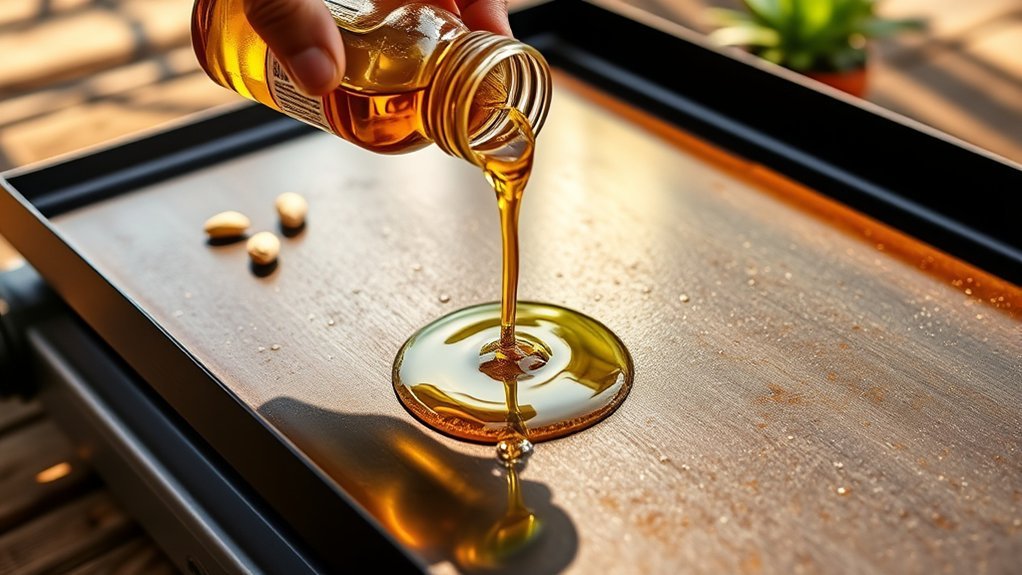

When it comes to seasoning your Blackstone griddle, choosing the right oil can make all the difference between a durable surface and a frustrating experience. Peanut oil often comes up as an option, thanks to its high smoke point and mild flavor, but is it truly the best choice for building that perfect non-stick layer?
Understanding how peanut oil performs under heat and affects your griddle’s seasoning will help you decide if it fits your needs. Its high smoke point means it can withstand the temperatures needed for seasoning without burning quickly.
However, the oil’s composition and how it polymerizes on the griddle surface are also important factors to consider. By weighing these aspects, you can choose the best oil for your Blackstone griddle seasoning.
Key Takeaways
- Peanut oil’s high smoke point (450°F) makes it suitable for seasoning Blackstone griddles without burning.
- It polymerizes well, creating a durable, non-stick, and protective coating on the griddle surface.
- Peanut oil imparts a mild, nutty flavor that is usually neutralized after seasoning polymerizes.
- Allergy risks exist, so consider alternatives if peanut allergies are a concern.
- Proper application involves thin layers, thorough heating, and multiple coats for best seasoning results.
Why Seasoning Your Blackstone Griddle Prevents Rust and Builds Non-Stick Surfaces
Why does seasoning your Blackstone griddle matter so much? Seasoning creates a protective layer that prevents rust by sealing the metal from moisture exposure. When you heat peanut oil on the griddle, it undergoes oil polymerization, a chemical reaction where the oil molecules bond and harden into a durable coating.
This process is essential because peanut oil reactions produce a stable, resilient surface that resists flaking and peeling. Over time, repeated seasoning builds a smooth, non-stick layer, enhancing cooking performance and ease of cleaning.
Without proper seasoning, your griddle’s surface remains vulnerable to corrosion and food sticking, reducing its lifespan and efficiency. Mastering this step ensures your Blackstone griddle stays rust-free and delivers consistently excellent cooking results.
Key Qualities of Good Seasoning Oils for Blackstone Griddles
When choosing an oil to season your Blackstone griddle, you’ll want one with a high smoke point to withstand the heat without burning. The oil should also polymerize well, creating a durable, non-stick surface.
Additionally, consider how the oil’s flavor might affect your cooking over time.
Smoke Point Importance
How does the smoke point of an oil affect your Blackstone griddle seasoning? The smoke point determines how high you can heat the oil without it breaking down and producing harmful smoke.
Choosing an oil with a high smoke point ensures a durable, non-sticky seasoning layer. If you or your guests have a peanut allergy or other cooking oil allergies, be extra cautious with your choice, as some oils may trigger reactions.
| Oil Type | Smoke Point (°F) | Allergy Risk |
|---|---|---|
| Peanut Oil | 450 | High (peanut allergy) |
| Canola Oil | 400 | Low |
| Avocado Oil | 520 | Very Low |
Select oils with a high smoke point and low allergy risk for safe, effective seasoning.
Oil Polymerization Ability
What makes an oil ideal for seasoning your Blackstone griddle goes beyond just its smoke point; it’s its ability to polymerize. Polymerization is the chemical process where oil molecules bond under heat, forming a hard, durable layer that protects your griddle and creates a non-stick surface.
When considering peanut oil, you need to understand its polymerization nuances. While peanut oil can polymerize, it does so less efficiently than oils rich in polyunsaturated fats, limiting the durability of the seasoning layer.
These peanut oil limitations mean your seasoning might not build up as quickly or as robustly, requiring more frequent maintenance. Choosing an oil that polymerizes well ensures a longer-lasting, resilient seasoning, minimizing wear and improving cooking performance on your Blackstone griddle.
Flavor Impact on Griddle
Although seasoning oils primarily protect your Blackstone griddle, their flavor impact plays a pivotal role in your cooking experience. When you use peanut oil, its mild, slightly nutty peanut oil flavor can subtly enhance the taste of your dishes without overpowering them. This makes peanut oil a popular choice for seasoning, especially if you want a neutral yet pleasant undertone.
Additionally, peanut oil boasts a high oil smoke point, which means it withstands the intense heat required for proper seasoning without breaking down or producing harmful compounds. This stability ensures your seasoning layer forms evenly and maintains its integrity over time.
Is Peanut Oil’s Smoke Point Good for Seasoning Your Blackstone?
You’ll want to know if peanut oil’s smoke point matches the high heat needed to season your Blackstone griddle effectively.
Peanut oil has a relatively high smoke point, typically around 450°F, which suits the seasoning process well. This means it can withstand the temperature required to create a durable, non-stick coating without burning or breaking down prematurely.
Peanut Oil Smoke Point
How well does peanut oil’s smoke point suit the seasoning process for your Blackstone griddle? Peanut oil boasts a high smoke point, typically around 450°F (232°C), which is essential for peanut oil safety and smoke point relevance during seasoning.
This heat tolerance means it can polymerize effectively without burning or producing harmful fumes, creating a durable, non-stick surface.
When seasoning, picture:
- The oil shimmering evenly across the griddle
- Gentle wisps of smoke signaling proper polymerization
- A smooth, darkened patina forming
- No acrid burnt smell indicating oil breakdown
- A resilient, protective coating enhancing cooking
Peanut oil’s smoke point aligns well with seasoning requirements, ensuring a safe, efficient process that preserves your Blackstone griddle’s performance.
Seasoning Temperature Compatibility
Why does seasoning temperature compatibility matter when choosing peanut oil for your Blackstone griddle? It’s essential because seasoning chemistry depends on heating oil past its smoke point to create a durable, polymerized layer.
Peanut oil’s high smoke point, typically around 450°F (232°C), suits the high temperatures needed for proper seasoning. When you heat the oil beyond its smoke point, it breaks down and bonds with the metal surface, forming a protective, non-stick coating.
Choosing an oil with an appropriate smoke point ensures efficient seasoning without harmful fumes or burnt residues. Since peanut oil’s smoke points align well with the Blackstone’s seasoning temperatures, it’s an excellent choice.
This compatibility optimizes seasoning chemistry, enhancing your griddle’s performance and longevity.
Will Peanut Oil’s Flavor Change Your Griddle Seasoning?
Does peanut oil affect the flavor of your Blackstone griddle’s seasoning? When you season your griddle, the peanut oil flavor undergoes seasoning polymerization, transforming into a hard, protective layer. This process minimizes any residual taste, so your food won’t absorb peanut notes.
Instead, the polymerized seasoning creates a durable, non-stick surface.
Visualize how seasoning polymerization locks in the oil’s essence:
- A smooth, darkened surface develops
- Shiny, durable coating forms over the griddle
- No oily residue remains after heating
- Neutralized flavors from polymerized oil
- Food cooks without peanut oil influence
What Are the Pros and Cons of Seasoning With Peanut Oil?
Considering seasoning your Blackstone griddle with peanut oil? Peanut oil experiments reveal clear pros: its high smoke point (around 450°F) allows you to apply a durable, heat-resistant seasoning layer. It polymerizes well, creating a smooth, non-stick surface essential for effective seasoning routines.
Plus, peanut oil’s neutral flavor won’t overpower your cooking.
However, there are cons. Peanut oil can be less accessible and more expensive than common alternatives. If you have a peanut allergy, even residual oil may pose risks.
Also, some users report it can leave a slightly sticky residue if not applied correctly, requiring careful application and thorough heating. By understanding these factors, you can decide if peanut oil fits your seasoning routine or if you need to consider other options.
Which Oils Are Better Than Peanut Oil for Blackstone Griddle Seasoning?
While peanut oil offers some advantages for seasoning your Blackstone griddle, there are oils that outperform it in terms of availability, cost, and seasoning quality. You want a two word idea1 like “flax seed” or a two word idea2 such as “grapeseed oil” that provide superior polymerization and durability.
Consider these better options for seasoning:
- Flax seed oil: creates a hard, long-lasting seasoning layer
- Grapeseed oil: affordable with a high smoke point
- Canola oil: widely available and cost-effective
- Avocado oil: excellent heat tolerance and natural flavor
- Soybean oil: good balance of price and performance
Choosing these oils ensures a more resilient, non-stick surface, making your Blackstone griddle seasoning process more effective and efficient.
How to Season Your Blackstone Griddle With Peanut Oil
How exactly do you season your Blackstone griddle with peanut oil to achieve a durable, non-stick surface? First, clean the griddle thoroughly and preheat it to about 400°F. Pour a thin layer of peanut oil, spreading evenly with a paper towel.
Let it smoke for 10-15 minutes, then cool. Repeat 2-3 times for optimal seasoning. Peanut oil’s high smoke point makes it excellent, though you can explore peanut oil alternatives like flaxseed or canola oil among other seasoning oils for variety or allergies.
| Step | Action | Tip |
|---|---|---|
| 1 | Clean & preheat | 400°F for best results |
| 2 | Apply thin peanut oil | Use a paper towel |
| 3 | Let oil smoke | 10-15 minutes |
| 4 | Cool down | Avoid wiping off oil |
| 5 | Repeat | 2-3 coats for durability |
How to Maintain Your Blackstone Griddle After Seasoning With Peanut Oil
Maintaining your Blackstone griddle after seasoning with peanut oil guarantees its non-stick surface stays effective and extends the lifespan of your cooking equipment. To ensure seasoning safety and preserve the peanut oil’s protective layer, follow a consistent maintenance routine.
After each use, clean the griddle while it’s still warm to prevent residue buildup. Avoid harsh detergents that strip the seasoning. Lightly coat the surface with peanut oil after cleaning to reinforce the protective layer and prevent rust.
Here’s how to maintain your griddle:
- Wipe off food debris with a spatula
- Use warm water and a non-abrasive scrubber
- Avoid soap to protect the seasoning
- Dry thoroughly to prevent moisture damage
- Apply a thin layer of peanut oil before storage
These steps preserve seasoning safety and keep your griddle performing consistently.
How to Fix Common Problems When Seasoning With Peanut Oil
What should you do if your Blackstone griddle’s seasoning with peanut oil doesn’t go as planned? First, identify the issue, whether it’s uneven seasoning, sticky residue, or a patchy surface.
Clean the griddle thoroughly with warm water and a scraper to remove excess oil. Avoid repeating mistakes by applying a thin, even layer of peanut oil and heating it to the proper temperature.
Clean your griddle well, then apply a thin, even layer of oil and heat properly for best results.
If peanut oil isn’t working well for you, consider peanut oil alternatives like flaxseed or grapeseed oil, which also provide good polymerization.
Don’t fall for seasoning oil myths claiming that any oil works equally; the right oil’s smoke point and composition matter. Addressing these problems promptly ensures a durable, non-stick surface that enhances your griddle’s performance.
Final Tips for Successful Blackstone Griddle Seasoning With Peanut Oil
To get the best results with peanut oil, apply a thin, even layer across the griddle surface to avoid sticky buildup. You’ll want to maintain your seasoning by regularly heating the griddle and adding light coats of oil after each use.
Consistency in these steps assures a durable, non-stick surface that enhances your cooking experience.
Optimal Oil Application
How can you ensure the best results when applying peanut oil to your Blackstone griddle? First, remember peanut oil’s high smoke point allows you to season at higher temperatures without burning the oil. Apply the oil evenly and sparingly to build a durable, non-stick layer.
Use these tips for optimal oil application:
- Pour a small amount of peanut oil onto the griddle surface.
- Spread it thinly with a paper towel or cloth for even coverage.
- Heat the griddle gradually to just below peanut oil’s smoke point.
- Allow the oil to polymerize until it forms a dry, shiny coating.
- Repeat the process in thin layers to build a robust seasoning.
Following these steps ensures your seasoning bonds well and lasts longer.
Maintaining Seasoning Layers
Although seasoning your Blackstone griddle with peanut oil builds a strong foundation, maintaining those layers requires consistent care and attention. After each use, clean the surface gently to avoid stripping seasoning layers. Use a scraper or soft cloth. Never use soap, which can break down the polymerized peanut oil coating.
Regularly apply a thin coat of peanut oil after cleaning to reinforce the seasoning and prevent rust. Pay attention to your griddle’s appearance and texture; uneven spots signal where additional seasoning might be necessary. Remember, successful seasoning depends on patience and routine.
These two word discussion ideas, “layer upkeep” and “oil application,” highlight the importance of ongoing maintenance. By prioritizing these steps, you’ll preserve your griddle’s non-stick surface and extend its lifespan effectively.
Frequently Asked Questions
Can Peanut Oil Cause Allergies When Seasoning My Griddle?
Yes, peanut oil can cause peanut oil allergy reactions, especially if you’re sensitive. For seasoning safety, avoid using it if allergies exist, and opt for neutral oils like canola or grapeseed to prevent any risks.
How Long Does Peanut Oil Seasoning Last on a Blackstone Griddle?
Your griddle’s peanut oil seasoning can dance for several months with proper care, offering solid peanut oil longevity. To extend its seasoning shelf life, avoid harsh scrubbing and reapply oil after heavy use or cleaning for lasting protection.
Is Peanut Oil Seasoning Safe for Cooking All Types of Food?
You can safely cook all foods after seasoning with peanut oil, but watch for peanut oil allergy risks. Also, consider the oil’s nutty flavor profile, which might subtly affect delicate dishes’ taste.
Can I Mix Peanut Oil With Other Oils for Seasoning?
You can mix peanut oil with other oils for seasoning, but be cautious of peanut allergy risk if others use your griddle.
Also, guarantee the combined oils have a high enough smoke point for effective seasoning.
Does Peanut Oil Seasoning Affect the Griddle’s Cleaning Routine?
Peanut oil seasoning acts like a shield, enhancing seasoning durability without complicating your cleaning routine.
Just remember, if you or guests have a peanut oil allergy, avoid using it to keep everyone safe and your griddle spotless.
Conclusion
Seasoning your Blackstone griddle with peanut oil is like giving it a strong, lasting armor—its high smoke point ensures a durable, non-stick surface without burning. You’ll enjoy subtle flavor transfer and effective rust protection, but stay mindful of allergies.
By following proper seasoning and maintenance steps, you’ll keep your griddle performing at its best.
Trust peanut oil to build a reliable, long-lasting patina that makes cooking smoother every time. When it comes to seasoning your Blackstone griddle, peanut oil is a great choice.