
You might not realize that preheating your cast iron skillet before making cornbread can dramatically change the texture and crust of your final product. Preheating your cast iron skillet ensures the batter sets quickly and browns evenly, creating that sought-after crisp exterior.
But is it always necessary? Understanding when and how to preheat can save you time and improve your results, depending on your recipe and schedule.
Key Takeaways
- Preheating a cast iron skillet ensures even heat distribution, promoting uniform cooking and preventing batter from sticking.
- A hot skillet creates a crisp, golden crust while keeping the cornbread moist inside through faster, consistent heat.
- Skipping preheating is acceptable for recipes with high fat or sugar content, producing tender crumb with gradual cooking.
- Always preheat gradually on low to medium heat to protect the skillet and use oven mitts when handling it hot.
- Some recipes adjust baking time and temperature when using a cold skillet to avoid burning and maintain texture.
Should You Preheat Your Cast Iron Skillet for Cornbread?
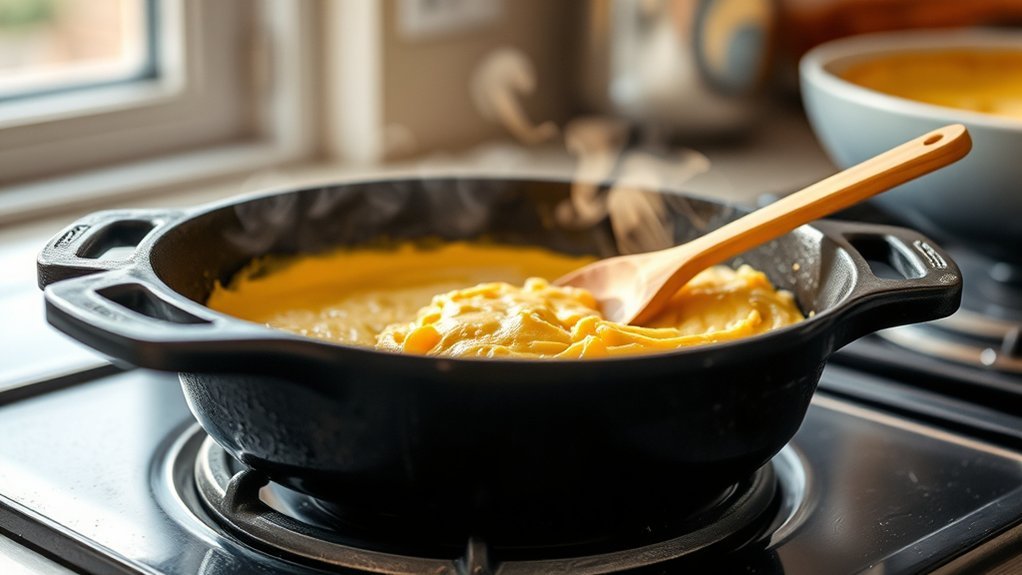
Why does preheating your cast iron skillet matter when making cornbread? Preheating offers critical benefits that directly impact your baking success. When you preheat the skillet, you ensure even temperature control from the moment the batter hits the surface.
This consistency prevents sticking and promotes a uniform golden crust. Without preheating, the batter warms unevenly, which can cause inconsistent cooking and a less desirable texture. Additionally, the skillet’s heat retention properties shine when preheated, maintaining stable heat throughout baking.
How Preheating a Cast Iron Skillet Affects Cornbread Cooking Time and Texture
A preheated cast iron skillet markedly reduces your cornbread’s cooking time by delivering consistent, intense heat from the start. This even heat accelerates cooking, ensuring your cornbread cooks through without drying out.
The skillet texture benefits too, creating a crisp, golden crust that contrasts beautifully with a moist interior. Proper preheating optimizes the cornbread timing and enhances skillet texture in these ways:
- Promotes uniform browning on the bottom and edges
- Prevents batter from sticking to the skillet surface
- Speeds up the Maillard reaction for richer flavor
- Maintains heat during baking for even rise
- Enhances crust crispness without overcooking the center
When You Can Skip Preheating Your Cast Iron Skillet
While preheating your cast iron skillet offers clear benefits for cornbread texture and cooking time, there are situations where you can skip this step without sacrificing quality. For instance, if you’re pressed for time or prefer a softer crust, placing the batter directly into a cold skillet works well.
In the preheating debate, skillet timing matters most. Starting with a cold pan allows the cornbread to cook more gradually, preventing burning and giving you a tender crumb. Additionally, if your recipe incorporates a lot of fat or sugar, the batter’s natural browning compensates for the lack of initial heat.
How to Safely Preheat and Handle Your Cast Iron Skillet
How do you preheat your cast iron skillet without risking damage or injury? Focus on preheating safety and proper skillet handling to protect both your cookware and yourself. Start by heating the skillet gradually on low to medium heat. Never use high heat right away.
Use oven mitts or thick towels when handling the skillet, as it becomes extremely hot. Avoid exposing the skillet to sudden temperature changes to prevent warping or cracking.
- Place skillet on burner before turning heat on
- Increase heat slowly to desired temperature
- Use dry oven mitts for grip and protection
- Avoid submerging hot skillet in cold water
- Set skillet on heat-resistant surface after use
These steps ensure safe, effective preheating and handling every time.
Cornbread Recipes That Work With or Without a Hot Cast Iron Skillet
Which cornbread recipes deliver great results regardless of whether your cast iron skillet is hot or cold? Recipes that adjust for temperature variations and leverage cornbread science ensure consistent texture and rise.
Discover cornbread recipes tailored for perfect texture and rise, whether your cast iron skillet is hot or cold.
For example, batters with added baking powder or baking soda accommodate slower heat absorption when you skip preheating. You can also choose skillet equivalents like oven-safe glass or ceramic pans, which distribute heat differently but still produce tender crumb.
When using a cold cast iron skillet, lower oven temperature slightly and extend baking time to avoid burning edges. Understanding the interplay of heat transfer and batter chemistry allows you to select or modify recipes that perform well without a preheated skillet.
This way, you maintain flexibility without sacrificing that classic cornbread crust and moist interior.
Frequently Asked Questions
Can I Use Other Types of Cookware for Cornbread Instead of Cast Iron?
You can use alternative pan choices like non-stick or glass bakeware for cornbread, but cast iron offers superior heat retention and crust. Consider possible discussion ideas about how non cast iron cookware affects texture and browning.
How Do I Clean and Maintain My Cast Iron Skillet After Baking Cornbread?
After baking cornbread, clean your cast iron skillet with hot water and a brush. Skip soap to protect seasoning. Myths about preheating don’t affect cleaning.
Dry thoroughly, then apply a thin oil layer to maintain seasoning routines.
What Are Common Mistakes to Avoid When Baking Cornbread in Cast Iron?
Avoid treating your skillet like a blank canvas. Skip cold pans or dull skillet seasoning. Use cornbread hacks like preheating the skillet and greasing well to ensure golden crusts and prevent sticking or uneven baking.
Does Altitude Affect Baking Cornbread in a Cast Iron Skillet?
Yes, altitude effects can impact your cornbread baking in cast iron. You’ll need temperature adjustments, typically increasing oven heat slightly and reducing baking time. This helps guarantee even cooking and avoid dryness caused by lower air pressure.
Can I Use Preheated Cast Iron Skillets for Other Types of Bread?
Before the internet, you’d already know preheating techniques help bake evenly. You can definitely use preheated cast iron skillets for alternative bread types like focaccia or soda bread, ensuring a perfect crust and consistent heat distribution every time.
Conclusion
Think of preheating your cast iron skillet as waking a sleeping dragon—ready to unleash a perfect, golden crust that crackles with every bite. While you can skip this fiery ritual, your cornbread may turn out less bold and a bit shy on texture.
So, take the extra moment to heat that skillet; it’s the secret spark that transforms simple batter into a masterpiece with a crisp, tender soul.
Your taste buds will thank you when you preheat your cast iron skillet for cornbread.