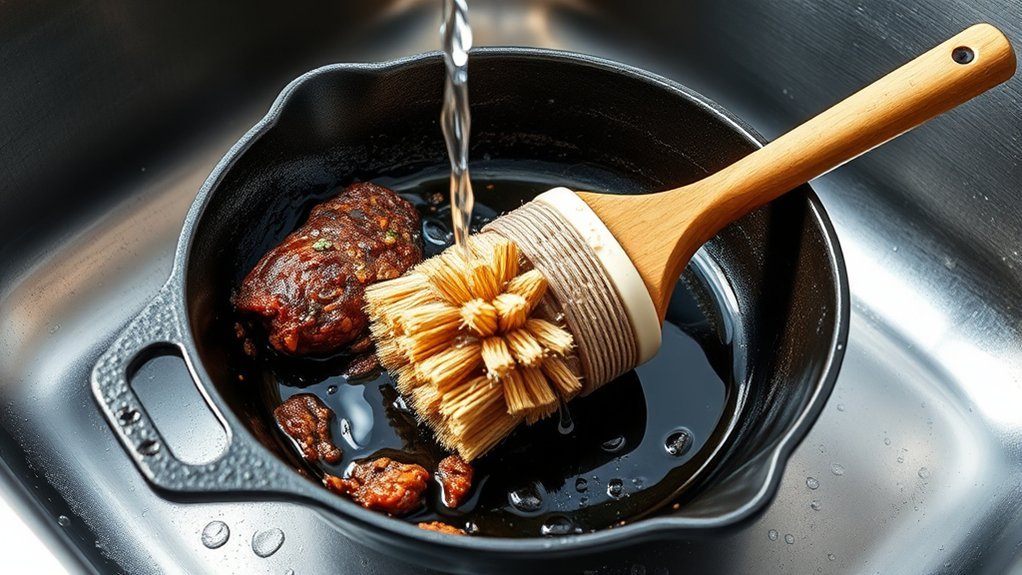

Did you know that over 70% of cast iron skillet users damage their seasoning by improper cleaning? If you want to keep your cast iron skillet’s surface smooth and non-stick after cooking steak, it’s essential to follow specific steps right away.
Skipping or rushing this process can lead to rust or stuck-on residue that’s tough to remove later. Let’s explore exactly what you should do while the pan is still warm to preserve its quality.
Key Takeaways
- Pour out excess grease while the skillet is still warm, then wipe the surface with a paper towel to remove fat and aromas.
- Rinse under hot water and scrub gently using a non-metal brush or sponge without soaking the skillet.
- Remove stuck steak bits by gently scraping with a wooden or plastic spatula and use coarse salt if needed.
- After cleaning, dry the skillet thoroughly and apply a thin layer of oil while warm to maintain seasoning.
- Store the skillet with a light oil coating to preserve its non-stick surface and prevent rust.
How to Clean Your Cast Iron Skillet Right After Cooking Steak
How should you clean your cast iron skillet immediately after cooking steak to preserve its seasoning and longevity? First, while the skillet is still warm, pour out excess grease carefully. Use a paper towel to wipe the surface, removing residual fat and cleaning aromas without using soap.
Next, rinse under hot water and scrub gently with a non-metal brush or sponge to avoid stripping the seasoning. Avoid soaking the skillet, as water exposure can damage the seasoning layer.
After rinsing, dry thoroughly with a clean cloth or heat it on the stove to evaporate moisture completely. Finally, apply a thin layer of oil to the skillet’s surface to reinforce the seasoning. This approach aligns with seasoning science, ensuring your skillet remains non-stick and rust-resistant for years.
How to Remove Stuck-On Steak Bits Without Damaging Your Skillet
You’ll want to remove stuck-on steak bits carefully to protect your skillet’s seasoning. Start by gently scraping with a plastic or wooden spatula to loosen debris without scratching.
Then, sprinkle coarse salt as a natural abrasive to scrub stubborn bits away before rinsing.
Gentle Scraping Techniques
When should you reach for a scraper to remove stuck-on steak bits without harming your cast iron skillet? Use gentle scraping only after the skillet has cooled slightly but remains warm. This allows the steak residue to loosen naturally, reducing the need for force.
Choose a plastic or wooden scraper to avoid scratching the skillet’s seasoning. Hold the scraper at a low angle and apply steady, light pressure to lift the residue carefully. Avoid metal tools, which can damage the surface.
Work methodically around the pan, focusing on areas with stubborn bits. If residue resists, add a small amount of warm water first to soften it before scraping. Gentle scraping preserves your skillet’s non-stick layer and ensures it stays ready for your next steak.
Using Salt As Abrasive
Why settle for harsh scrubbing when coarse salt offers a natural, effective way to remove stuck-on steak bits without harming your cast iron skillet? Salt abrasion is a trusted method that gently loosens residue while preserving your skillet’s seasoning. Here’s how to do it right:
- Sprinkle a generous layer of coarse salt over the skillet’s surface immediately after cooking.
- Use a damp cloth or paper towel to scrub the salt in circular motions, breaking down stuck-on bits.
- Rinse with warm water and dry thoroughly to prevent rust.
Don’t fall for seasoning myths that claim salt will strip your cookware. When used correctly, salt abrasion protects your skillet’s patina and extends its lifespan. Incorporate this simple technique into your cleaning routine for a well-maintained cast iron skillet every time.
How to Remove Grease From Your Cast Iron Skillet
You need to remove excess grease to maintain your skillet’s seasoning and prevent buildup. Start by wiping out the grease with a paper towel while the pan is still warm.
Then, use hot water and a stiff brush to clean any remaining residue without stripping the seasoning.
Effective Grease Removal
How do you tackle the stubborn grease left behind after cooking steak in your cast iron skillet? Start by heating the skillet gently on your stove top to loosen the grease. Then, follow these steps for effective removal:
- Pour a small amount of coarse salt into the warm skillet to act as an abrasive.
- Use a folded paper towel or a soft cloth to scrub the grease, focusing on greasy spots.
- Rinse with hot water, avoiding soap, and dry immediately to prevent rust.
For quick access, keep coarse salt and a scrub cloth in pantry storage near your cooking area. This method efficiently removes grease without damaging your skillet’s seasoning, ensuring it’s ready for your next steak.
Best Cleaning Techniques
When tackling grease buildup in your cast iron skillet, selecting the right cleaning technique makes all the difference. Start by wiping excess grease with a paper towel immediately after cooking. Then, rinse the skillet under hot water without soap, using a stiff brush or non-metal scrubber to loosen residue.
Avoid soaking to protect seasoning. For stubborn grease and lingering steak aromas, sprinkle coarse kosher salt and scrub with a damp cloth; the salt acts as a natural abrasive without stripping seasoning. Rinse again with hot water and dry thoroughly over low heat to prevent rust.
Finish your cleaning routine by applying a thin layer of oil while the skillet is still warm to maintain its non-stick surface. This method efficiently removes grease while preserving your skillet’s seasoning and flavor integrity.
How and When to Use Soap on Cast Iron Skillets
Why consider using soap on a cast iron skillet at all? Proper soap usage can effectively remove stubborn residue without damaging your skillet’s seasoning if you get the soap timing right. Use soap sparingly and only after cooking particularly greasy or sticky foods like steak.
Follow these guidelines for soap timing and usage:
- Apply mild dish soap immediately after the skillet cools slightly, never when it’s still scorching hot.
- Use a soft sponge or brush to gently scrub, avoiding abrasive materials that strip seasoning.
- Rinse thoroughly with warm water to ensure no soap residue remains.
How to Dry and Re-Season Your Skillet to Prevent Rust
A properly dried and re-seasoned cast iron skillet resists rust and maintains its nonstick surface. After washing, immediately dry your skillet thoroughly with a clean towel to eliminate moisture, then heat it on the stove over low heat for a few minutes to evaporate any residual water. This step is crucial within your cleaning timelines to effectively prevent rust.
Next, apply a thin, even layer of cooking oil (such as vegetable or flaxseed oil) to the skillet’s interior using a paper towel. Heat the skillet on medium heat for 5–10 minutes to bond the oil to the surface, creating a protective barrier. Completing these steps promptly after each use ensures rust prevention and preserves your skillet’s seasoning integrity for long-term performance.
Tips to Maintain Your Cast Iron’s Non-Stick Surface Over Time
How can you keep your cast iron skillet’s non-stick surface performing at its best over time? Consistent care is key. Avoid harsh cleaning agents like dish soap, which can strip seasoning if used excessively.
Instead, maintain your skillet with these tips:
- Season regularly by applying a thin coat of oil and heating it to reinforce the non-stick layer.
- Clean gently using a non-abrasive scrubber; avoid metal polish or harsh chemicals that damage the seasoning.
- Store your skillet in a dry place and lightly oil it after each use to prevent rust and maintain smoothness.
Common Mistakes to Avoid When Cleaning Cast Iron After Steak
When cleaning your cast iron skillet after cooking steak, what common mistakes should you avoid to preserve its seasoning and longevity? Avoid soaking the skillet or using harsh detergents, as these can strip seasoning and compromise skillet safety.
Don’t leave it wet, which invites rust. Skip metal scrubbers; instead, use a brush or coarse salt for rust prevention. Avoid storing it without drying and lightly oiling the surface.
| Mistake | Why to Avoid It |
|---|---|
| Soaking in water | Removes seasoning, causes rust |
| Using harsh detergents | Strips protective seasoning |
| Leaving skillet wet | Promotes rust, unsafe handling |
| Using metal scrubbers | Damages seasoned surface |
| Skipping oil after drying | Increases risk of rust |
Follow these rules for skillet safety and long-lasting performance.
Frequently Asked Questions
Can I Clean My Cast Iron Skillet in a Dishwasher?
You shouldn’t clean your cast iron skillet in a dishwasher; it risks damaging seasoning. Dishwashers use harsh soap and water, which strip seasoning layers.
Always hand wash with minimal soap to maintain seasoning and guarantee dishwasher safety.
How Often Should I Re-Season My Cast Iron Skillet?
You should adjust your re-season frequency based on use; typically, re-season every few months or when food sticks. Follow a maintenance schedule, inspecting for rust or dullness, and re-season promptly to keep your skillet non-stick and protected.
Is It Safe to Soak a Cast Iron Skillet in Water?
It’s not safe to soak your cast iron skillet in water because it promotes rust. Instead, rinse it quickly, dry thoroughly, and reapply oil. Avoid soaking water to maintain your skillet’s seasoning and durability.
Can I Use Metal Scrubbers on My Cast Iron Skillet?
You shouldn’t use metal scrubbers on your cast iron skillet, as they can strip the seasoning.
Also, avoid dishwasher safety assumptions. Never put cast iron in the dishwasher, which damages the seasoning and causes rust.
How Do I Store My Cast Iron Skillet Properly?
Of course, just toss your cast iron skillet anywhere. It’s not like storing tips matter. Actually, you should dry it thoroughly, apply a light oil coat, and place it in a dry pantry spot to prevent rust and maintain seasoning.
Conclusion
Cleaning your cast iron skillet right after cooking steak is simple but essential. Wiping out grease and gently scrubbing without soap helps maintain the skillet’s surface. Re-seasoning while the skillet is still warm keeps it in top shape.
Coincidentally, the same care that perfects your steak also preserves your skillet’s non-stick surface. Skipping these steps can lead to rust and damage, shortening the life of your cookware.
Follow this routine every time, and your cast iron skillet will reward you with flawless, flavorful meals for years to come.