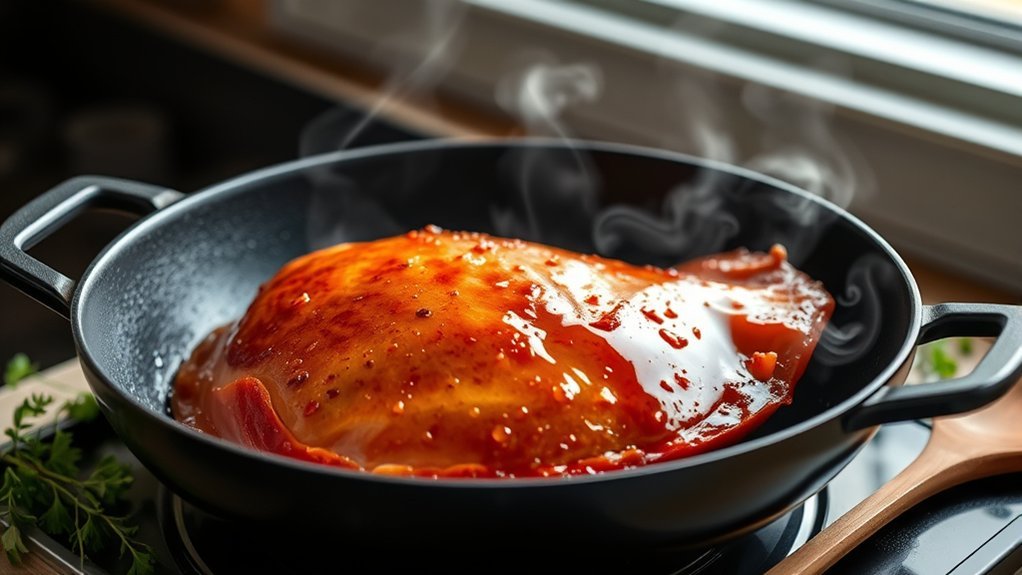

You might wonder if you can cook a ham in an electric skillet, especially since it’s usually reserved for quick meals or frying.
The truth is, with the right approach, you can achieve a tender, flavorful ham without needing a traditional oven or slow cooker.
It takes some careful preparation and attention to temperature, but once you know the steps, it’s surprisingly straightforward.
Let’s explore how you can make it work perfectly.
Key Takeaways
- Choose a ham size that fits evenly in the electric skillet for consistent cooking and trim excess fat if necessary.
- Preheat the electric skillet to medium heat and place the ham flat for even browning and moisture retention with a lid.
- Use a meat thermometer to ensure the ham reaches 140°F for pre-cooked or 160°F for raw ham for safe consumption.
- Apply glaze during the final cooking phase and baste occasionally to avoid burning and achieve a caramelized finish.
- Reduce heat as the ham nears target temperature to maintain juiciness and prevent glaze from burning.
Can You Cook Ham in an Electric Skillet?
Yes, you can cook ham in an electric skillet, and it’s a convenient way to prepare a delicious, evenly heated meal. When selecting your ham, consider ham sizing carefully; smaller hams fit better and cook more evenly in the skillet.
You’ll want to monitor the glaze timing closely. Applying the glaze too early can cause burning, while too late might leave it underwhelming. The electric skillet’s controlled heat lets you brown the ham’s surface beautifully while allowing the glaze to caramelize just right.
Preparing Your Ham for the Electric Skillet
Once you’ve chosen the right ham size for your electric skillet, it’s time to get it ready for cooking. Start by trimming excess fat if needed, then score the surface in a diamond pattern to help flavors penetrate.
As you prepare, consider assembling garnishes like cloves, pineapple rings, or fresh herbs to enhance aroma and presentation. These touches add a delightful finish once the ham’s cooked.
Don’t forget to plan your timing strategies carefully. Allow your ham to rest at room temperature before cooking to ensure even heat distribution. Also, think about how long you’ll sear and simmer, balancing tenderness with flavor absorption.
Preparing thoroughly now sets the stage for a perfectly cooked, juicy ham in your electric skillet.
Cooking Ham in an Electric Skillet: Step-by-Step
Cooking a ham in your electric skillet starts with heating the skillet to a medium temperature, ensuring an even cooking surface. Place the prepped ham flat in the skillet, allowing it to sear and lock in juices.
Use two word discussion ideas like “turn regularly” and “monitor temperature” to keep the process straightforward. Cover the skillet with a lid to maintain moisture and promote even cooking.
Check ham safety by making sure the internal temperature reaches 140°F for pre-cooked hams or 160°F for raw ones. Use a meat thermometer inserted into the thickest part without touching bone.
Remember to baste occasionally with the skillet juices or glaze to enhance flavor. This method ensures a tender, flavorful ham cooked efficiently in your electric skillet.
How to Know When Your Ham’s Done Without Drying It Out
Knowing exactly when your ham is done without drying it out can transform your meal from ordinary to exceptional. To avoid dry cooking, use a meat thermometer to check the internal temperature, aiming for 140°F in fully cooked hams or 145°F for fresh ones.
Insert the thermometer into the thickest part, avoiding bone contact. As the ham nears this temperature, reduce your skillet’s heat to maintain gentle cooking, preserving juiciness.
Watching the glaze closely during cooking helps too. Glaze techniques not only add flavor but also create a moisture barrier that keeps the ham tender. When the glaze caramelizes without burning and the thermometer reads just right, you’ll know your ham is perfectly done—juicy, flavorful, and far from dry.
Flavor Variations and Glazes for Electric Skillet Ham
Keeping your ham juicy and perfectly cooked sets the stage for experimenting with different flavors and glazes. These can elevate your electric skillet meal.
Mastering glaze techniques lets you create a caramelized finish that locks in moisture and enhances flavor pairings. Try sweet, tangy, or spicy glazes to suit your taste.
Below is a guide to inspire your next skillet ham:
| Flavor Pairing | Glaze Technique |
|---|---|
| Brown sugar & mustard | Brush on during last 20 mins |
| Pineapple & brown sugar | Baste every 10 mins |
| Maple syrup & cloves | Apply thin layers gradually |
| Honey & garlic | Drizzle before serving |
| Apple cider & cinnamon | Simmer glaze separately, then pour |
With these combinations, your ham will boast rich, layered flavors that delight every bite.
Frequently Asked Questions
Can You Cook Other Meats in an Electric Skillet?
Yes, you can cook various meats in an electric skillet. Just adjust cooking times to suit each type, and enjoy a great flavor variety by experimenting with marinades, spices, and sauces for delicious, juicy results every time.
How Do You Clean an Electric Skillet After Cooking Ham?
Don’t worry about sticky residue! Use gentle cleaning hacks like soaking the skillet in warm soapy water, then scrubbing softly.
After drying, apply seasoning tips by lightly oiling the surface to keep it nonstick and ready.
What Is the Energy Consumption of an Electric Skillet?
Your electric skillet typically uses 1000-1500 watts, balancing energy efficiency with cooking power.
For safety considerations, always avoid overloading circuits and unplug it when not in use to prevent electrical hazards.
Can You Use an Electric Skillet Outdoors or for Camping?
You can’t take an electric skillet camping like a fish out of water. It needs power, so outdoor cooking depends on electricity access. It’s great for camping use if you have a reliable power source nearby.
Are Electric Skillets Safe for Non-Stick Coatings?
Yes, electric skillets are safe for non-stick coatings if you avoid overheating. You’ll appreciate their even heat distribution, which protects non-stick durability and guarantees your food cooks evenly without damaging the surface or releasing harmful fumes.
Conclusion
Now that you know how to cook ham in your electric skillet, the real question is—are you ready to unlock a new level of flavor right at home? With simple prep, careful timing, and that perfect glaze, you’ll transform a humble ham into something unforgettable.
Just imagine the sizzle, aroma, and caramelized crust waiting to surprise you. Don’t wait—your next delicious adventure is only a skillet away.
Cooking ham in an electric skillet is not only convenient but also a fantastic way to enjoy a delicious meal with ease. Give it a try and savor every bite!