
Imagine trying to peel a sticker off a surface after it’s been left for days—without the right approach, it just won’t budge. Cleaning stuck-on food from your Blackstone griddle works the same way. You need a method that loosens debris gently but effectively, preserving your griddle’s seasoning.
If you want to avoid damage and prolong your griddle’s life, there’s a precise process you should follow.
Key Takeaways
- Heat the griddle slightly to loosen stuck food, then use a metal spatula or scraper at a shallow angle to gently lift debris.
- Apply a small amount of warm water to create steam, softening residue for easier removal without damaging the surface.
- Scrub stubborn bits with a non-abrasive scrub pad or soft nylon brush in circular motions, avoiding metal tools that can scratch.
- After cleaning, wipe the surface dry and apply a thin oil layer to maintain the non-stick seasoning and prevent rust.
- Establish a routine of cleaning while the griddle is still warm and perform deep cleans weekly to prevent buildup and preserve performance.
How to Remove Stuck-On Food From Your Blackstone Griddle
When was the last time you thoroughly cleaned your Blackstone griddle? Removing stuck-on food promptly is key to effective stain removal and rust prevention.
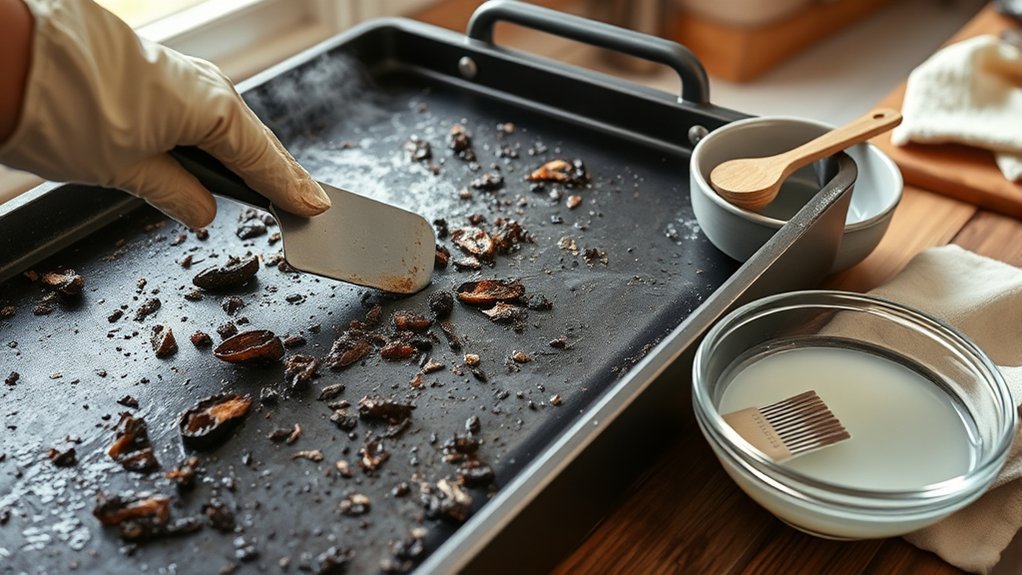
Start by heating the griddle slightly to loosen debris. Use a metal spatula or scraper at a shallow angle to gently lift stuck bits without damaging the surface. Avoid excessive force, which can compromise the seasoning.
Next, apply a small amount of warm water or a specialized griddle cleaner to the surface and continue scraping. For stubborn residue, use a non-abrasive scrub pad carefully.
Once clean, wipe the surface dry immediately to prevent moisture buildup that leads to rust. Following these steps regularly ensures your Blackstone stays clean, functional, and protected from stains and rust over time.
Getting Your Blackstone Ready for Cleaning
How do you prepare your Blackstone griddle for an effective cleaning session? First, ensure the griddle is turned off and cooled down slightly but still warm. That two word condition helps loosen stuck-on food.
Next, scrape off any loose debris using a metal spatula or scraper, focusing on the two word cooking surface. Once debris is removed, apply a small amount of warm water to the griddle to create steam, which will soften stubborn residue. Avoid pouring excessive water, as that can cause damage.
Finally, wipe the surface clean with a damp cloth to remove remaining particles before moving on to deeper cleaning. Following these steps prepares your Blackstone for the best cleaning results without risking damage or inefficient cleaning.
Best Tools for Cleaning Without Damage
Choose the right tools to clean your Blackstone griddle effectively without causing damage. Use a sturdy, non-abrasive scraper designed specifically for griddles to remove stuck-on food. Avoid metal utensils that can scratch the surface.
A griddle cleaning pad or a soft nylon brush works well for loosening residue without harming the seasoning. A damp cloth or paper towel helps wipe away loosened debris.
Stay focused on these tools, and avoid discussion ideas or unrelated topics like household cleaners or kitchen gadgets, which don’t apply here. Keeping your toolkit simple and appropriate ensures you maintain your griddle’s surface and performance.
Selecting the right cleaning tools is essential for preserving your griddle’s seasoning and extending its lifespan.
Using Heat to Loosen Burnt-On Food on Your Blackstone Griddle
Why does applying heat make it easier to remove burnt-on food from your Blackstone griddle? Heat softens the hardened food particles, loosening their grip on the surface. This process prepares the griddle for more effective heated scrubbing without causing damage.
Applying heat softens burnt food, loosening it for easier, damage-free removal from your Blackstone griddle.
To use heat effectively:
- Preheat your griddle to a medium temperature to avoid warping while softening residue.
- Apply a light layer of oil seasoning to maintain the non-stick surface and protect the metal.
- Use a scraper or spatula carefully once the food softens, making removal easier.
Step-by-Step Scrubbing to Remove Stuck-On Food
Start by ensuring your griddle surface is cool enough to handle but still warm to aid cleaning. Use a sturdy scraper or griddle brush to target stuck-on food with firm, consistent pressure.
Focus on applying effective scrubbing techniques in small sections to remove residue without damaging the surface.
Preparing The Griddle Surface
How do you effectively tackle stubborn, stuck-on food on your Blackstone griddle? Start by properly preparing the surface to ensure efficient cleaning and maintain your griddle’s longevity. Focus on seasoning tricks and heat management to loosen debris without damaging the cooking surface.
Follow these steps:
- Preheat the griddle on medium heat to soften stuck-on food, making it easier to remove.
- Use a scraper to gently lift residues, avoiding harsh pressure that can damage seasoning.
- Apply a thin layer of oil to the surface after cleaning to protect the seasoning and prevent rust.
Effective Scrubbing Techniques
A sturdy scraper and a non-abrasive scrubber are essential tools when removing stubborn food particles from your Blackstone griddle. Start by heating the griddle slightly to loosen residue, then use the scraper to gently lift stuck-on food. Avoid aggressive scraping to prevent surface damage.
Next, apply a small amount of warm water and use the non-abrasive scrubber in circular motions for deeper cleaning. Focus on problem areas without deviating into irrelevant topic tangents or two word discussion ideas unrelated to scrubbing.
Rinse with clean water and wipe dry with a soft cloth. Consistently applying these effective scrubbing techniques ensures thorough removal of stuck-on food while preserving your griddle’s surface integrity. This approach keeps your Blackstone ready for the next cooking session.
Cleaning Tough Grease on Your Blackstone Griddle
Although tough grease can be stubborn, you can remove it effectively by applying the right cleaning techniques and tools. Start by addressing grease buildup promptly to prevent it from hardening. Proper heat management is essential; heat your griddle to a medium-high temperature to soften the grease, making it easier to scrape off.
Use a metal scraper or spatula to lift the softened grease without damaging the surface. For persistent grease, apply a mixture of water and vinegar, letting it sit briefly before scrubbing.
Key steps to clean tough grease:
- Preheat griddle to soften grease buildup
- Use a metal scraper for effective removal
- Apply water-vinegar solution for stubborn residues
Following these methods ensures your Blackstone griddle stays clean and well-maintained.
Using Oil and Seasoning to Make Cleaning Easier and Protect Your Griddle
Apply a thin layer of oil to your Blackstone griddle after each cleaning session to create a protective barrier that prevents food from sticking and makes future cleaning easier. Use a high smoke point oil, such as flaxseed or canola, to ensure effective seasoning.
After cleaning, heat the griddle slightly, then spread the oil evenly using a paper towel or cloth. This oil and seasoning process enhances your griddle’s surface, reducing buildup and facilitating effortless food release.
Incorporate this step consistently into your maintenance routines to prolong your griddle’s lifespan and performance. Proper oiling not only simplifies cleaning but also protects the metal from rust and corrosion.
Common Cleaning Mistakes to Avoid
Don’t use harsh chemicals that can damage your griddle’s surface or leave harmful residues. Avoid scratching the cooking area by steering clear of abrasive tools or metal utensils.
Also, keep up with regular maintenance to prevent buildup and make cleaning easier each time.
Using Harsh Chemicals
Why should you steer clear of harsh chemicals when cleaning your Blackstone griddle? These substances can damage the seasoning and metal surface, reducing the griddle’s lifespan. Harsh chemicals also pose health risks by leaving harmful residues that contaminate your food.
Beyond your griddle, they contribute negatively to the environment, increasing pollution and waste.
Instead, focus on safer cleaning alternatives:
- Use warm water and a non-abrasive scrubber to remove stuck-on food.
- Employ natural degreasers like vinegar or lemon juice for stubborn spots.
- Apply food-grade oils after cleaning to maintain seasoning and prevent rust.
Avoiding harsh chemicals ensures a durable, safe cooking surface and minimizes your environmental impact.
Scratching The Cooking Surface
While steering clear of harsh chemicals helps preserve your Blackstone griddle’s seasoning, the tools and techniques you choose for cleaning also play a big role in maintaining the surface. Avoid scratching cleaning methods such as using metal scrapers or abrasive pads, which can damage the seasoning layer and compromise surface maintenance.
Instead, opt for non-metallic scrapers and soft-bristle brushes designed specifically for griddles. When stuck-on food resists gentle scraping, apply moderate heat and a little oil to loosen debris without aggressive force.
Consistently avoiding scratching cleaning protects the cooking surface’s integrity and extends its lifespan. Remember, careful surface maintenance not only keeps your griddle performing optimally but also prevents premature wear and rust, ensuring every meal cooks evenly and safely.
Neglecting Regular Maintenance
How often you clean your Blackstone griddle directly affects its performance and longevity. Neglecting maintenance can cause stuck-on food to build up, leading to uneven heating and potential rust. Avoid cleaning shortcuts, as they often leave residues that degrade the cooking surface over time.
To prevent these issues, establish a consistent cleaning routine that includes:
- Wiping the surface after each use to remove food particles.
- Performing a deep clean weekly to eliminate stubborn residues.
- Seasoning the griddle regularly to maintain its non-stick properties.
Maintaining Your Blackstone Griddle to Prevent Buildup
When do you know it’s time to perform routine maintenance on your Blackstone griddle? Signs include uneven cooking surfaces and persistent residue. To prevent buildup, clean immediately after each use while the griddle is still warm.
Use a scraper to remove stuck food and wipe with a damp cloth. Apply seasoning alternatives like flaxseed oil or grapeseed oil to maintain a non-stick surface.
Proper storage is crucial; always cover your griddle with a high-quality grill cover to protect it from moisture and debris. Follow tips for grill cover storage by ensuring the griddle is cool and dry before covering.
Regular maintenance not only extends your griddle’s lifespan but also ensures optimal cooking performance every time.
Frequently Asked Questions
Can I Use Soap on My Blackstone Griddle?
You shouldn’t use soap on your Blackstone griddle, as it can strip the seasoning. Instead, focus on cleaning techniques like scraping and wiping with hot water to maintain seasoning and ensure effective, long-lasting use.
How Often Should I Season My Blackstone Griddle?
You should season your Blackstone griddle after every use to maintain its non-stick surface and prevent rust.
Consistent seasoning frequency is key to effective maintenance routines, ensuring your griddle stays in top cooking condition longer.
Is It Safe to Clean My Griddle With a Pressure Washer?
You shouldn’t use a pressure washer on your griddle. The high-pressure jet can damage the surface and push stubborn residue deeper.
Use jet clean caution and opt for gentle scrubbing with a scraper and warm water instead.
Can Stuck-On Food Affect the Taste of Future Meals?
Yes, stubborn residue can cause flavor transfer, negatively impacting your meals. You should regularly remove stuck-on food to maintain a clean cooking surface, ensuring each dish tastes fresh and uncontaminated by previous flavors.
How Do I Store My Blackstone Griddle After Cleaning?
Don’t let stubborn residue rain on your parade; after cleaning, dry your Blackstone griddle thoroughly. Apply a thin oil layer, then cover it tightly for griddle storage to prevent rust and keep it battle-ready for next use.
Conclusion
By warming your Blackstone griddle and using gentle tools, you’ll effortlessly bid farewell to stubborn food remnants. This approach prevents damage and makes cleaning easier. Avoid harsh scrubbing to preserve the surface.
Remember to regularly season your griddle to keep it in prime condition. Treating your Blackstone with care ensures it stays ready for your next culinary adventure. With consistent attention, you’re not just cleaning; you’re nurturing a reliable cooking companion.
This thoughtful routine helps your griddle perform beautifully every time. Keep up these practices, and your Blackstone griddle will continue to shine and serve you well for years to come. Proper cleaning of stuck on food from Blackstone griddle is key to its longevity and performance.