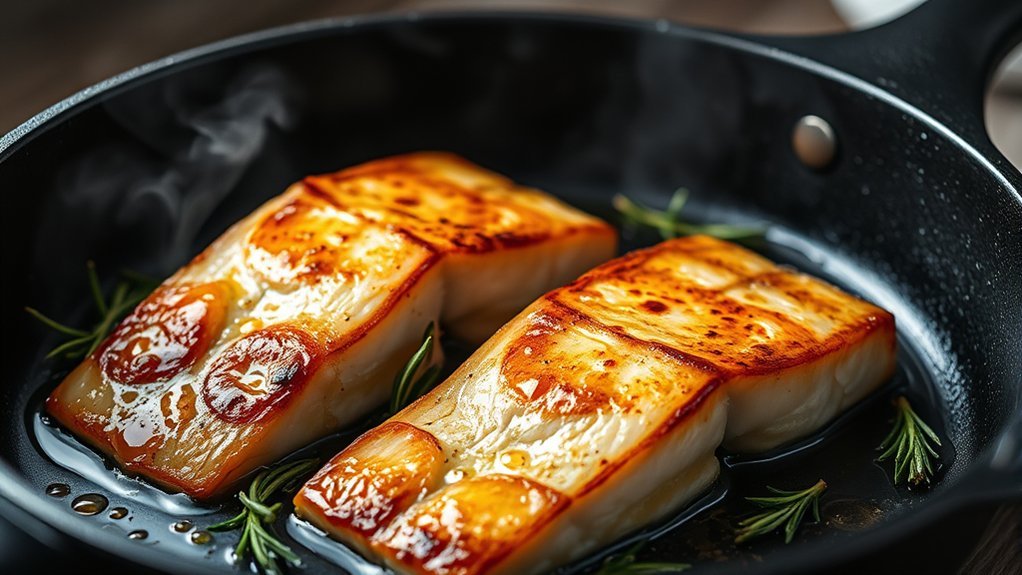

When cooking swordfish steaks in a skillet, you’ll want to focus on proper seasoning and precise heat control to achieve a perfect sear. Start by choosing fresh, thick swordfish steaks and seasoning them with salt, pepper, and a touch of citrus zest.
Preheating your pan correctly is essential to lock in flavor and texture. Mastering these steps sets the foundation for a meal that’s both flavorful and perfectly cooked.
Next, you’ll want to learn how to avoid common mistakes that can ruin your results.
Key Takeaways
- Preheat a 10 to 12 inch cast iron or stainless steel skillet over medium-high heat until water droplets sizzle.
- Pat swordfish steaks dry and season evenly with salt, freshly ground black pepper, and fresh herbs just before cooking.
- Sear each side for 3 to 4 minutes without overcrowding or flipping multiple times to achieve a good brown crust.
- Use visual cues or a thermometer to cook swordfish to just done, avoiding dryness and toughness.
- Serve immediately with grilled vegetables and a bright citrus-based sauce to complement the meatiness.
Choosing the Best Swordfish Steaks
When selecting swordfish steaks, what qualities should you prioritize to guarantee the best flavor and texture? First, look for firm, moist flesh without discoloration or drying edges. Freshness is key; fresh swordfish has a mild ocean scent rather than a strong fishy odor.
Choose swordfish steaks with firm, moist flesh and a mild ocean scent for the best flavor and texture.
Check thickness. Steaks about 1 to 1.5 inches cook evenly and retain juiciness. Additionally, consider swordfish safety by choosing steaks sourced from reputable suppliers to minimize mercury risks.
Avoid overly dark or mushy pieces, as they indicate poor quality or improper storage. For a focused selection process, use two word discussion ideas like “freshness check” and “quality inspection” to streamline your evaluation.
Prioritizing these factors ensures you cook a safe, flavorful swordfish steak with excellent texture every time.
How to Season Swordfish Steaks for Maximum Flavor
To bring out the best in your swordfish steaks, start by selecting fresh herbs like thyme or rosemary for a fragrant touch.
Season generously with the right amount of salt and pepper to enhance natural flavors without overpowering them.
Finish with a sprinkle of citrus zest to add bright, subtle acidity that complements the fish perfectly.
Choosing Fresh Herbs
How do you elevate the natural flavor of swordfish steaks without overpowering their delicate texture? Choosing fresh herbs is key. Opt for herbs like thyme, parsley, or basil that complement the fish’s subtle taste.
When selecting fresh herbs, look for vibrant leaves without discoloration or wilting. Proper herb storage ensures they stay fresh until cooking. Keep herbs wrapped in a damp paper towel inside a sealed plastic bag or in a glass of water covered loosely with a plastic bag in the refrigerator.
This maintains moisture and prolongs their shelf life. Use fresh herbs sparingly to enhance the swordfish without masking it. By prioritizing fresh herbs and proper herb storage, you guarantee a more balanced, flavorful dish that highlights the steak’s natural qualities.
Perfect Salt And Pepper
Fresh herbs add a subtle lift to swordfish steaks, but seasoning with salt and pepper unlocks their full flavor potential. To achieve the perfect salt and pepper seasoning, start with a coarse sea salt that enhances the fish’s natural taste without overpowering it.
Use freshly ground black pepper for a sharp, aromatic kick that complements the swordfish’s firm texture. Apply salt and pepper evenly on both sides, ensuring you maintain a proper flavor balance that doesn’t mask the fish’s delicate profile.
Season just before cooking to prevent drawing out moisture prematurely. By mastering this simple yet crucial step, you’ll elevate the steak’s taste, allowing its rich, meaty qualities to shine through.
This precise approach guarantees a well-seasoned, flavorful swordfish every time.
Adding Citrus Zest
Why add citrus zest to your swordfish steaks? Citrus zest brightens the rich, meaty flavor of swordfish, balancing its natural oils with a fresh, aromatic punch. When seasoning, use citrus zest applications strategically. Sprinkle finely grated lemon, lime, or orange zest directly on the fish before cooking. This adds subtle complexity without overpowering.
For enhanced flavor, incorporate zest into glazing techniques. Mix zest with olive oil, garlic, and herbs, then brush it onto the steaks during the last minute of cooking. This creates a flavorful, glossy finish that seals in moisture and elevates taste.
What Type of Skillet Works Best for Swordfish Steaks?
Which skillet you choose can make a significant difference when cooking swordfish steaks. Opt for a skillet material that offers excellent heat retention and even distribution. Cast iron and stainless steel are top choices.
Cast iron provides a consistent, high heat that sears the fish beautifully, while stainless steel allows for a cleaner surface and easier maintenance. Avoid nonstick pans, as they don’t develop the same sear.
Pay attention to pan size; select one large enough to hold your swordfish steaks without overcrowding. Overcrowding lowers the temperature, causing steaming instead of searing. A 10 to 12-inch skillet generally works well for two to three steaks.
Choosing the right skillet material and pan size ensures optimal heat control and a perfectly cooked swordfish steak every time.
How to Preheat Your Skillet for Perfect Searing
How do you ensure your skillet is hot enough to create that perfect sear on swordfish steaks? Start by placing your skillet over medium-high heat and allow it to preheat thoroughly. This step is crucial because achieving the right searing temperature locks in flavor and creates a golden crust.
To test if your skillet is ready, sprinkle a few drops of water onto the surface. If they sizzle and evaporate immediately, your pan has reached the ideal temperature. Avoid rushing this process; a properly preheated skillet ensures even cooking and prevents sticking.
Step-by-Step Guide to Cooking Swordfish Steaks in a Skillet
Start by patting your swordfish steaks dry and seasoning them evenly to enhance flavor. Heat your preheated skillet, then place the steaks carefully to achieve an ideal sear.
Follow specific cooking techniques to ensure even doneness and maintain the fish’s moisture.
Preparing Swordfish Steaks
When preparing swordfish steaks for skillet cooking, you’ll want to ensure they’re properly thawed and patted dry to achieve the best sear. Start by selecting steaks that are about 1 to 1.5 inches thick, which helps maintain the firm swordfish texture during cooking.
If you’re working with frozen steaks, thaw them overnight in the refrigerator to preserve quality. Next, gently pat the steaks dry with paper towels to remove excess moisture; this step is crucial to avoid steaming instead of searing.
Consider budget considerations when purchasing swordfish. Opt for fresh, locally sourced options when possible, as they tend to be more cost-effective and flavorful. Proper preparation sets the foundation for a perfectly cooked swordfish steak with desirable texture and taste.
Cooking Techniques and Tips
Properly prepped swordfish steaks create the ideal canvas for skillet cooking, allowing you to achieve a perfect sear and juicy interior. Start by heating your skillet over medium-high heat, ensuring it’s hot before adding oil to prevent sticking.
Use techniques like pressing the fish gently to the pan for even contact. Avoid common misconceptions, such as overcooking or flipping multiple times; cook each side for about 3-4 minutes.
Don’t poke the fish to check doneness; visual cues like opaque flesh and firm texture are more reliable. Address safety myths by handling raw fish with clean utensils and washing hands promptly.
Following these precise steps guarantees flavorful, safe to eat swordfish steaks every time you cook in a skillet.
How to Tell When Swordfish Steaks Are Perfectly Cooked
How can you be sure your swordfish steaks are cooked just right? Avoid common confusion caused by two word discussion ideas that lead to subtopic mismatch. Focus on clear signs to determine doneness precisely.
- Color Change: Look for opaque flesh that’s no longer translucent. Perfectly cooked swordfish has a consistent light pink or white tone.
- Texture: Gently press the steak with your finger or a fork; it should feel firm but springy, not mushy or overly tough.
- Juices: Clear juices indicate doneness. If you see milky or opaque liquid, the steak needs more time.
Common Swordfish Cooking Mistakes to Avoid
Knowing the signs of perfectly cooked swordfish helps you avoid common mistakes that can ruin the flavor and texture. First, don’t overcook; the meat becomes dry and tough quickly. Use a thermometer or visual cues to prevent this.
Recognizing perfectly cooked swordfish prevents dryness and toughness—use a thermometer or visual cues to cook just right.
Next, avoid improper swordfish storage. Keep it cold and airtight until cooking to maintain freshness and prevent off-flavors. Also, don’t skip seasoning; swordfish benefits from a simple salt and pepper rub.
If you lack a grill, don’t worry. Skillets serve as excellent grilling substitutes, providing even heat and a good sear. Finally, avoid overcrowding the pan; cook steaks in batches if needed to ensure proper browning.
Following these tips ensures your swordfish steaks stay juicy, tender, and flavorful every time.
How to Serve and Pair Swordfish Steaks
Where should you start when serving swordfish steaks to highlight their rich, meaty flavor? Focus on pairing charred edges with complementary sides and serving sauces that enhance without overpowering. Consider these tips:
- Serve with grilled vegetables like asparagus or bell peppers, their smoky notes echoing the steak’s charred edges.
- Add a bright, citrus-based sauce, such as lemon butter or a tangy salsa verde, to cut through the fish’s richness.
- Include a simple starch, such as roasted potatoes or a light quinoa salad, to balance texture and flavor.
Frequently Asked Questions
Can I Freeze Swordfish Steaks Before Cooking?
Yes, you can freeze swordfish steaks before cooking. For best freezing, wrap them tightly to prevent freezer burn.
When ready, thaw safely in the refrigerator overnight to maintain texture and flavor before cooking.
Is Swordfish Safe to Eat Raw or as Sashimi?
Like a tightrope walker balancing risk, you need caution with swordfish sashimi. Raw swordfish safety depends on freshness and proper freezing to kill parasites.
Always source high-quality fish to enjoy it safely raw.
How Long Can Cooked Swordfish Be Stored in the Fridge?
You should store cooked swordfish in the fridge for no more than 3 to 4 days. This storage duration guarantees freshness and safety, preventing spoilage and reducing the risk of foodborne illness effectively.
Are Swordfish Steaks Sustainable and Environmentally Friendly?
Like a knight wielding a sword, you must choose swordfish with sustainable sourcing to minimize environmental impact. Check certifications to ensure your steaks come from responsible fisheries that protect ocean ecosystems and support long-term fish populations.
Can I Use Other Cooking Methods Besides Skillet for Swordfish?
Yes, you can use pan searing alternatives like baking or broiling. Grilling methods also work well, offering a smoky flavor and crisp texture.
Just adjust cooking times to avoid overcooking your swordfish steaks.
Conclusion
Now that you know how to choose, season, and expertly sear swordfish steaks, you can confidently cook them to perfection every time. Remember, a well-preheated skillet and minimal flipping preserve the fish’s texture and flavor. Don’t overcook—aim for just opaque centers.
Pair your steaks with bright sauces and grilled veggies to enhance their natural richness. Following these steps proves that simple techniques truly bring out swordfish’s best qualities.
Enjoy your meal and master the art of how to cook swordfish steaks in skillet for delicious, restaurant-quality results every time.