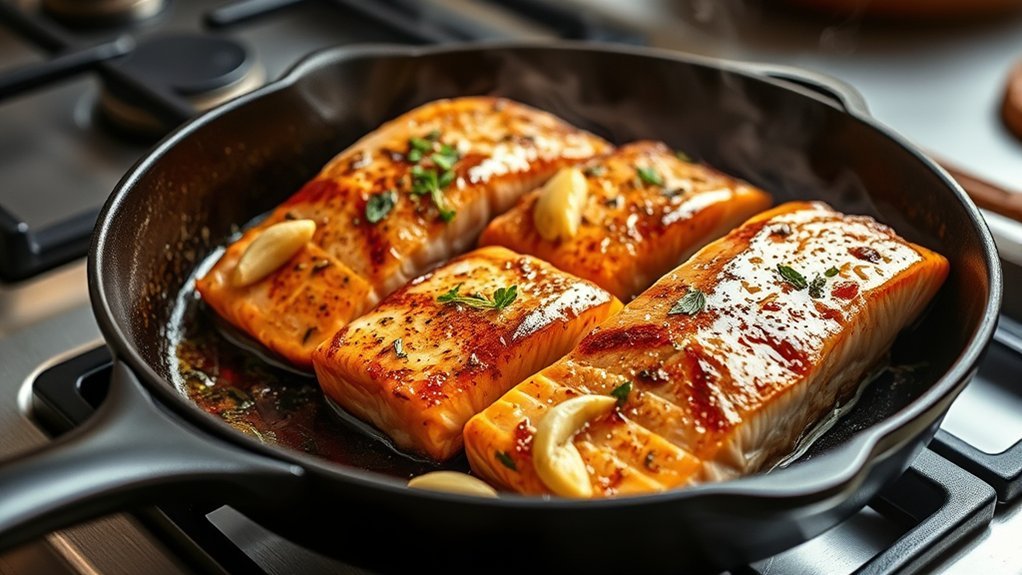

It’s a coincidence that the same cast iron skillet you use for steak works perfectly for marinated salmon, making it an ideal tool for this dish. Mastering this technique takes a few key steps to ensure success.
You’ll want to prepare your pan just right and handle the salmon carefully to achieve a crisp exterior without drying out the flesh.
Before you start, it’s important to understand how to balance heat and timing to get the best results—here’s what you need to know.
Key Takeaways
- Marinate salmon 30 minutes to 2 hours using a balanced acid, oil, and seasoning mix; refrigerate during marination.
- Preheat a well-seasoned cast iron skillet over medium heat for about 5 minutes until water droplets sizzle and evaporate.
- Lightly oil the skillet surface and pat salmon dry, removing excess marinade to prevent splatter and promote searing.
- Cook salmon skin-side down over medium-high heat for 4-5 minutes per side, adjusting time for thickness and doneness.
- Check doneness by opaque, firm flesh that flakes easily; rest briefly before serving and store leftovers properly.
Marinate Salmon for Maximum Flavor
How long you marinate your salmon directly impacts its flavor intensity. To marinate salmon for maximum flavor, aim for at least 30 minutes but no longer than 2 hours. This window allows the marinade to penetrate without compromising the fish’s delicate texture.
Use a mixture balanced with acid, oil, and seasonings to enhance taste and moisture retention. Place the salmon in a shallow dish or resealable bag, ensuring the marinade thoroughly coats each piece. Refrigerate during marination to maintain freshness and food safety.
Avoid over-marinating, which can result in a mushy texture and overpower the salmon’s natural flavor. By controlling marination time and technique, you’ll achieve perfectly flavored salmon ready for cooking in your cast iron skillet.
Get Your Cast Iron Skillet Ready for Marinated Salmon
Before cooking your marinated salmon, make sure your cast iron skillet is well-seasoned to prevent sticking and enhance flavor. Preheat the skillet over medium heat until it’s hot enough for a gentle sizzle when the salmon hits the surface.
Proper seasoning and preheating ensure even cooking and a perfect sear every time.
Seasoning Your Cast Iron
Proper seasoning guarantees your cast iron skillet delivers a non-stick surface and even heat distribution, essential for cooking marinated salmon perfectly. To season your skillet, first ensure it’s clean and free of seasoning residue from previous use.
Next, apply a thin layer of high-smoke-point oil, like flaxseed or vegetable oil, evenly across the surface. Finally, bake the skillet upside down at 450°F for one hour to polymerize the oil, forming a durable coating.
This process aids rust prevention and enhances cooking performance. Visualize:
- A smooth, glossy black surface ready for searing
- Even heat radiating from the skillet’s base
- A lightly oiled layer that won’t flake or peel
With your skillet properly seasoned, you’re set to cook marinated salmon with confidence.
Preheating Techniques
Once your cast iron skillet is seasoned and ready, heating it correctly sets the stage for perfectly cooked marinated salmon. Start by placing the skillet on medium heat to ensure even skillet warming. Avoid using high heat immediately, as this can cause uneven temperature distribution and risk sticking.
Give the pan about 5 minutes to reach the optimal temperature. This is a key step in the preheating basics for cast iron. You’ll know it’s ready when a few drops of water sizzle and evaporate quickly upon contact.
Proper skillet warming creates a non-stick surface and ensures a beautiful sear on your salmon. Following these preheating basics guarantees that your marinated salmon cooks evenly and develops the ideal crust.
Cook Marinated Salmon in Your Cast Iron Skillet
Before adding the marinated salmon, make sure your cast iron skillet is properly heated and lightly oiled to prevent sticking.
Maintain medium-high heat to achieve a crisp exterior while keeping the inside tender. Cook the salmon for about 4-5 minutes per side, adjusting time based on thickness and desired doneness.
Preparing Your Cast Iron
A well-prepared cast iron skillet guarantees even cooking and prevents the salmon from sticking. Before you start, ensure your skillet maintenance is up to date. Clean and dry it thoroughly to protect the seasoning.
Use a paper towel to apply a thin layer of oil, enhancing the non-stick surface essential for delicate fish selection like salmon.
Visualize the process:
- A smooth, dark, well-seasoned skillet surface ready to sear
- A clean, dry skillet free of rust or residue
- A light sheen of oil glistening, primed for cooking
Taking these steps ensures your marinated salmon cooks evenly, releasing easily from the pan, and retains its texture and flavor without sticking or tearing.
Heating and Oil Tips
How hot should your cast iron skillet be when cooking marinated salmon? Preheat it over medium-high heat until it’s hot but not smoking. This ensures an even sear without burning the marinade.
For oil, choose one with a high smoke point like avocado or grapeseed oil to maintain flavor integrity and prevent smoking. Lightly coat the skillet to create a non-stick surface, essential for achieving a crisp crust while preserving the salmon’s moisture.
This techniques overview highlights that proper heating and oil selection enhance the salmon’s texture and complement your marinade’s flavor pairing. Avoid overcrowding the pan to maintain consistent heat distribution.
Mastering these heating and oil tips sets the foundation for perfectly cooked marinated salmon in your cast iron skillet.
Cooking Time and Temperature
When should you remove your marinated salmon from the skillet to achieve perfect doneness? Aim for a cooking time of about 4-5 minutes per side on medium heat. Use moderate heat to avoid burning the salmon marinade and protect your cast iron care routine.
Watch for these signs:
- The salmon’s edges become opaque and firm
- The skin crisps evenly without sticking
- The internal temperature reaches 125°F (52°C) for medium-rare
Avoid overcooking, which dries out the fish and damages your skillet’s seasoning. After cooking, let the salmon rest briefly before serving. This ensures juices redistribute, enhancing flavor. Proper timing and temperature control preserve both your dish’s quality and the longevity of your cast iron skillet.
Check for Perfect Doneness and Texture
Why is checking doneness essential for marinated salmon cooked in a cast iron skillet? Proper doneness ensures your salmon is flavorful, tender, and safe to eat. To check doneness cues, look for the flesh to turn opaque and slightly firm. Avoid overcooking, which dries the fish.
Use texture testing by gently pressing the salmon with a fork or your finger; it should flake easily but remain moist inside. You can also insert a fork at the thickest part and twist slightly. If the fish separates into flakes without resistance, it’s done.
Relying on visual and tactile indicators rather than just time guarantees consistent results. Remember, each skillet and marinade can affect cooking, so mastering doneness cues and texture testing is key to perfect salmon every time.
Pick the Perfect Marinade for Your Salmon
What flavors do you want to highlight in your salmon? Understanding marination science helps you select a marinade that enhances the fish’s natural richness without overpowering it. Citrus pairing is essential; the acidity brightens the salmon and tenderizes its flesh.
Consider these marinade profiles:
- Zesty lemon and dill: Fresh citrus notes with herbal undertones.
- Soy sauce and ginger: Umami depth balanced by warm spice.
- Maple syrup and mustard: Sweet and tangy with a subtle kick.
Choose ingredients that complement each other and your taste preference. Keep the marination time between 15 to 30 minutes to avoid breaking down the fish’s texture excessively. By selecting the perfect marinade, you’ll elevate your cast iron skillet salmon to a flavorful, tender dish every time.
Serve and Store Your Cooked Salmon
How do you ensure your cooked salmon stays delicious after plating? Start by considering flavor pairing. Serve your salmon with complementary sides like roasted asparagus, lemon wedges, or a light dill sauce to enhance its taste.
When it’s time to store leftovers, follow proper storage guidelines. Let the salmon cool to room temperature, then place it in an airtight container. Refrigerate promptly, ideally within two hours, and consume within 2-3 days for optimal freshness.
If you want to keep it longer, wrap tightly and freeze for up to two months. To reheat, do so gently to avoid drying out the fish. By following these steps, you’ll maintain your salmon’s texture and flavor, ensuring every bite remains as satisfying as when freshly cooked.
Frequently Asked Questions
Can I Use Frozen Salmon for This Recipe?
You can use frozen salmon, but thaw it completely to ensure even cooking and marinade safety.
Thaw in the fridge overnight to prevent bacteria growth, then marinate as usual for best flavor and safety results.
What Side Dishes Pair Best With Marinated Salmon?
Imagine serving your salmon with garlic roasted asparagus. It’s a perfect side dish idea. You’ll love how the crisp asparagus enhances the salmon’s rich flavor.
Focus on flavor pairings that balance freshness and zest for an impressive meal.
How Long Can Marinated Salmon Be Refrigerated Before Cooking?
You should refrigerate marinated salmon for no more than 24 hours to assure marinated salmon safety.
Extending refrigeration timing risks bacterial growth, so cook it promptly for the best flavor and food safety.
Is Cast Iron Safe for Cooking Fish Daily?
Yes, cast iron safety supports daily cooking if you properly season and maintain your skillet. It prevents sticking and rust, making it safe for fish every day, provided you avoid acidic marinades that damage seasoning.
Can I Reuse the Marinade After Cooking the Salmon?
No, never reuse marinade that’s touched raw salmon to ensure disposal safety and avoid cross-contamination. Maintain marinade reuse ethics by preparing fresh sauce or boiling used marinade thoroughly before using it as a dip or glaze.
Conclusion
Now that you’ve marinated your salmon for bold flavor, preheated your cast iron skillet to the perfect temperature, and cooked each side to a crisp, juicy finish, you’re ready to enjoy a restaurant-quality meal at home.
Remember to rest your salmon briefly, check for perfect flake and firmness, and serve it with your favorite sides.
With these steps, you’ll consistently master marinated salmon cooked in a cast iron skillet—delicious, tender, and beautifully seared every time.