
Did you know that you can bake with a cast iron skillet to achieve amazing results? Over 60% of home bakers report better crusts when using cast iron skillets. If you want consistent heat and superior texture in your baked goods, cast iron is a tool worth mastering.
However, the key lies in proper preparation and care to avoid common pitfalls. Understanding how to use and maintain your skillet can transform your baking results—here’s what you need to know.
Key Takeaways
- Cast iron skillets are safe and highly effective for baking due to excellent heat retention and even distribution.
- Preheat the skillet in the oven to ensure even cooking and prevent sticking during baking.
- Avoid using soap for cleaning; instead, rinse with hot water and dry thoroughly to maintain seasoning.
- Adjust baking temperature by lowering 25°F and monitor time closely as cast iron heats faster.
- After baking, allow skillet to cool, clean gently, dry completely, and apply a thin oil layer for maintenance.
Is Cast Iron Safe for Baking?
Wondering if cast iron is safe for baking? Rest assured, cast iron is safe for baking and widely favored by both professional chefs and home cooks. Its excellent heat retention and even heat distribution make it perfect for baking a variety of dishes, from cornbread to deep-dish pizza.
You don’t have to worry about harmful chemicals leaching into your food, as cast iron is a natural material with a seasoned surface that enhances flavor over time. However, you should guarantee your skillet is properly seasoned to prevent sticking and maintain its non-stick properties.
In brief, is cast iron safe for baking? Absolutely. It’s a reliable, durable choice that performs exceptionally well in your oven.
How to Prepare Your Cast Iron Skillet for Baking
Before you start baking, make sure your cast iron skillet is thoroughly cleaned and well-seasoned to ensure a nonstick surface.
Preheating the skillet in the oven helps distribute heat evenly and prevents sticking. These steps are essential for achieving the best baking results with your cast iron.
Cleaning And Seasoning
How do you guarantee your cast iron skillet is perfectly prepared for baking? Start by thoroughly cleaning it. Avoid soap, which can strip seasoning, and instead use hot water and a stiff brush. Dry it completely to prevent rust.
Next, address common seasoning misconceptions: seasoning isn’t a one-time fix but a continuous process that strengthens with use, enhancing the skillet’s non-stick surface and durability.
Apply a thin, even layer of oil—flaxseed or vegetable oil works well—then wipe away excess to avoid sticky residue. This step ensures optimal baking scalability, allowing you to bake everything from small pastries to large casseroles without compromising performance.
Proper cleaning and seasoning set the foundation for excellent heat retention and food release, making your skillet a reliable baking partner.
Preheating The Skillet
When should you preheat your cast iron skillet to guarantee even cooking and prevent sticking? You should preheat the skillet in the oven before adding any ingredients. Place the skillet upside down on the middle rack and allow it to heat gradually as the oven reaches your target temperature.
This method ensures the entire surface heats evenly, reducing hot spots and minimizing the risk of food sticking. Always handle the hot skillet with oven mitts to maintain oven safety and avoid burns.
Avoid placing a cold skillet directly on high heat, as thermal shock can damage the cast iron’s seasoning. By preheating the skillet properly, you promote consistent cooking results and protect your cookware’s integrity, making your baking experience both efficient and safe.
How Cast Iron’s Heat Boosts Your Baking
Why does a cast iron skillet elevate your baking? Its unique heat retention, developed over centuries in cast iron history, ensures even, consistent cooking temperatures. When you bake with cast iron, the skillet absorbs and holds heat, distributing it uniformly around your food. This steady heat prevents hot spots and promotes thorough cooking.
Moreover, cast iron’s heat enhances flavor development by allowing Maillard reactions to occur more effectively. This results in a richer, deeper crust and complex taste profiles in your baked goods. You’ll notice a superior texture and aroma compared to other bakeware. Using cast iron, you harness a tool perfected through history that actively boosts both the science and art of baking, delivering reliable, delicious results every time.
Can You Bake With Cast Iron on Different Oven Types?
Where can you safely bake with your cast iron skillet? You can confidently use it in conventional, convection, and even toaster ovens, provided you consider baking safety. Cast iron handles high temperatures well, making it compatible with most oven types.
However, always check your skillet’s manufacturer guidelines for maximum heat limits to avoid damage. Avoid using cast iron under broilers or in microwave ovens, as they can cause uneven heating or damage.
When baking, place the skillet on the oven rack rather than directly on the heating element to prevent warping. Also, avoid sudden temperature changes to maintain the skillet’s seasoning and integrity.
Best Baked Dishes to Make in a Cast Iron Skillet
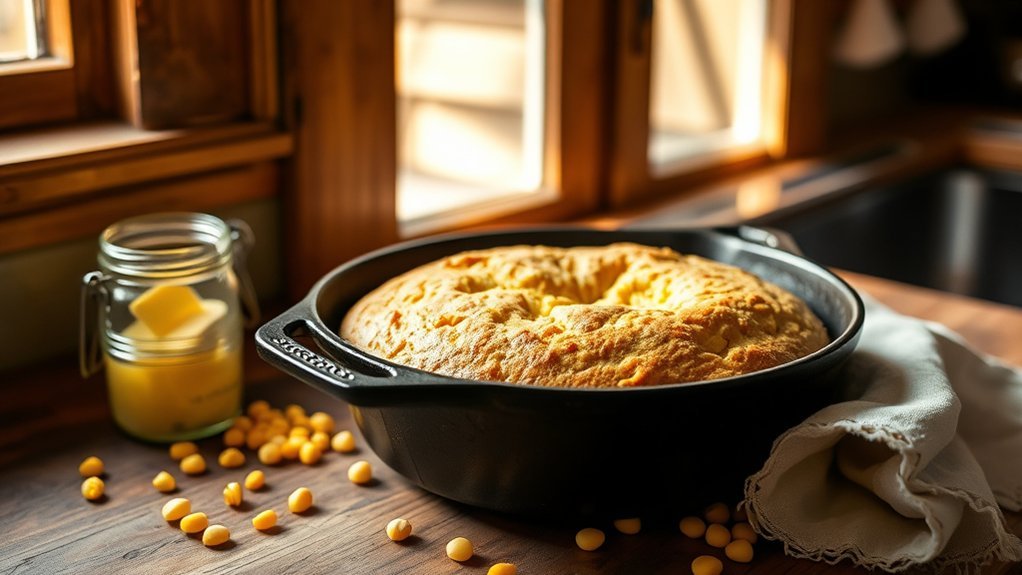
What makes a cast iron skillet perfect for baking? Its ability to distribute heat evenly ensures your dishes cook thoroughly and develop a desirable crust. You’ll find it ideal for baked goods like cornbread, deep-dish pizza, and skillet brownies, where consistent heat improves texture and flavor.
When taste testing, these dishes reveal a unique depth you won’t get with other bakeware. You can also experiment with savory options like frittatas or roasted vegetables. To elevate presentation, try simple garnish ideas such as fresh herbs on frittatas or a sprinkle of powdered sugar on brownies.
Using your cast iron skillet for baking not only enhances taste but also offers versatility, making it a must-have tool for both novice and experienced bakers alike.
How to Adjust Baking Times and Temperatures for Cast Iron
When baking with cast iron, you’ll need to lower the oven temperature by about 25 degrees Fahrenheit to prevent overcooking. Because cast iron retains heat so well, your dishes may also cook faster, so keep an eye on the baking time and adjust it accordingly.
Making these simple changes ensures even cooking and perfect results every time.
Temperature Adjustments Needed
How do you adjust baking times and temperatures to get the best results with a cast iron skillet? Cast iron retains heat longer, so you’ll often need to reduce oven temperatures slightly to prevent overcooking and preserve seasoning flavors.
Generally, lowering the oven temperature by 25°F is effective. Keep in mind that cast iron’s even heat distribution can also mean shorter bake times, but we’ll cover that later.
| Oven Temperature (Conventional) | Adjusted Temperature (Cast Iron) |
|---|---|
| 350°F | 325°F |
| 375°F | 350°F |
| 400°F | 375°F |
| 425°F | 400°F |
| 450°F | 425°F |
These adjustments help maintain optimum cooking and protect your skillet’s seasoning.
Modifying Baking Duration
Why should you reconsider baking durations when using a cast iron skillet? Cast iron retains heat exceptionally well, causing your food to cook faster and more evenly than in other pans.
When modifying baking duration, you must reduce both the time and temperature to prevent overcooking or burning. A common rule is to lower the oven temperature by 25°F and check for doneness 5 to 10 minutes earlier than the recipe suggests.
This temperature adjustment accounts for cast iron’s superior heat retention. Always monitor your dish closely, especially during initial attempts, to find the optimal balance.
Common Cast Iron Baking Mistakes to Avoid
What pitfalls can sabotage your cast iron baking efforts? One common mistake is neglecting proper preheating, which leads to uneven cooking and poor crust formation. This is critical when crafting sourdough.
Another error is applying too much oil or neglecting to master glazing techniques. Excessive oil can cause smoking and sticky residues, while insufficient seasoning diminishes non-stick performance.
Avoid sudden temperature changes, as they risk warping or cracking your skillet. Also, don’t ignore the importance of using oven mitts; cast iron handles get extremely hot.
Finally, avoid baking acidic foods for long durations, which can strip seasoning and damage the pan’s surface. Steering clear of these errors ensures your cast iron skillet delivers optimal performance and longevity during baking.
Tips for Maintaining Your Cast Iron Skillet After Baking
When should you start caring for your cast iron skillet after baking to preserve its seasoning and performance? The moment it cools down. Proper post-baking care is crucial in baking science to maintain your skillet’s non-stick surface and avoid common cast iron myths like “soap ruins seasoning.” Here’s a quick guide:
| Step | Action | Reason |
|---|---|---|
| Cool Slightly | Let skillet cool 10 mins | Prevent thermal shock |
| Clean Gently | Wipe with warm water, no soap | Preserves seasoning |
| Dry Thoroughly | Use towel or low heat | Prevents rust |
| Oil Lightly | Apply thin layer of oil | Maintains seasoning layer |
| Store Properly | Keep in dry place | Avoids moisture damage |
Follow these steps to keep your cast iron skillet performing like new after every bake.
How to Season Cast Iron Skillets for Better Baking
A properly seasoned cast iron skillet forms a durable, non-stick surface that enhances your baking results and protects the pan from rust. Seasoning science shows that repeated oil polymerization creates a hard, smooth layer essential for both performance and flavor development.
To season your skillet effectively:
- Clean the skillet thoroughly, removing any rust or debris.
- Apply a thin, even coat of high-smoke-point oil (like flaxseed or grapeseed).
- Bake the skillet upside down at 450°F (232°C) for one hour, catching drips below.
- Let it cool completely in the oven before storage.
This process optimizes your pan’s surface, improving heat distribution and imparting subtle, enhanced flavors to your baked goods.
Frequently Asked Questions
Can You Use Aluminum Foil With Cast Iron While Baking?
You can use foil with cast iron while baking, but avoid direct foil contact to prevent uneven heating.
Foil usage won’t harm the skillet, and it won’t affect flavor impact unless acidic foods react with the foil.
Does Cast Iron Affect the Flavor of Baked Goods?
Yes, cast iron seasoning can subtly affect flavor, especially if well-seasoned. You’ll notice a slight impact on taste, often enhancing baked goods with a unique, rich character that many bakers appreciate for added depth.
Can You Bake Desserts and Savory Dishes in the Same Skillet?
You can bake desserts and savory dishes in the same cast iron skillet without worrying. Its baking versatility is impressive, and while some flavor impact occurs, proper cleaning minimizes cross-flavors, keeping your dishes delicious and distinct.
How Heavy Is a Cast Iron Skillet for Baking?
A heavy skillet feels like lifting a small anvil, usually weighing 4 to 12 pounds. Compared to other pans, its weight demands respect but ensures even baking and excellent heat retention, making it worth every ounce.
Is It Safe to Put a Hot Cast Iron Skillet Directly on the Stovetop?
Yes, you can place a hot skillet directly on the stovetop safely. Cast iron handles heat well, but always ensure stovetop safety by avoiding sudden temperature changes that could warp the pan or damage your burner.
Conclusion
You can confidently bake with your cast iron skillet, knowing it provides even heat distribution essential for superior crusts and textures. Studies show cast iron retains heat up to 30% longer than other cookware, enhancing your baking results. Just preheat properly, maintain seasoning, and avoid thermal shock.
With these steps, you’ll reveal cast iron’s full baking potential. This makes it an indispensable tool in your kitchen arsenal when you want to bake with cast iron skillet.