
When you cook, a heavy bottom skillet can make all the difference in your results. Uneven heat can ruin your dish, but this pan features a thick, dense base that ensures heat spreads uniformly and stays consistent.
Its design helps you avoid hot spots and lets you control temperature changes smoothly. Understanding what makes these skillets effective can transform how you approach cooking—and it starts with knowing the materials and construction behind them.
Key Takeaways
- A heavy bottom skillet has a thick, dense base designed for even heat distribution and heat retention.
- It reduces hotspots, ensuring consistent cooking temperatures throughout the pan.
- Commonly made from materials like cast iron or stainless steel, often with multiple metal layers.
- Its weight and construction prevent warping and maintain flatness over time.
- Ideal for smooth temperature control, suitable for various cooking methods and stovetops.
What Is a Heavy Bottom Skillet?
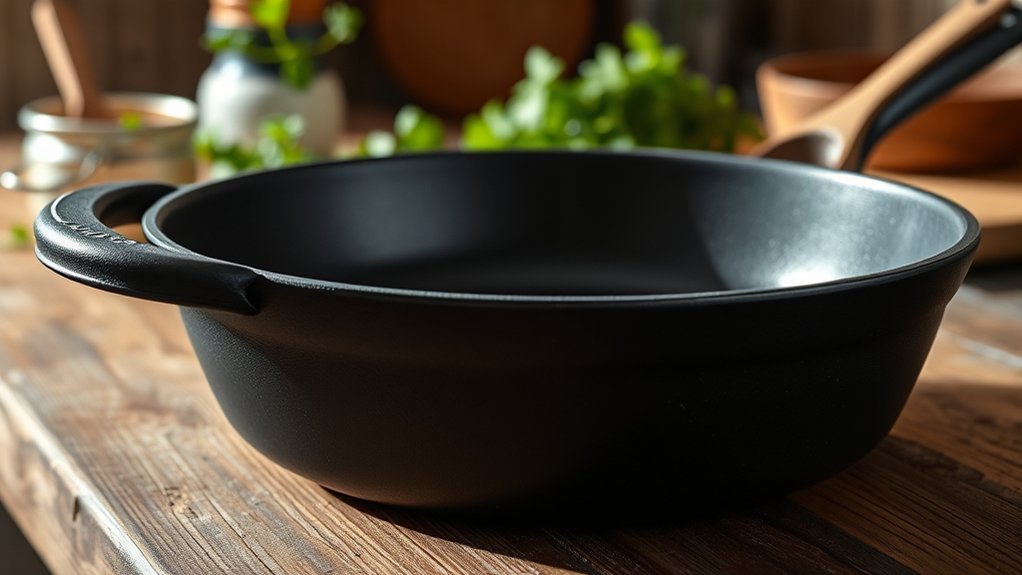
A heavy bottom skillet features a thick, dense base designed to distribute heat evenly and retain it longer than typical pans. When you use a heavy bottom skillet, you benefit from consistent skillet heating, which minimizes hotspots and allows for better control during cooking.
This design usually involves multiple layers or a substantial single layer of metal, often stainless steel or cast iron, that adds weight and durability. You’ll notice that it requires a bit more time to heat up but maintains temperature steadily, making it ideal for searing, sautéing, and simmering.
This type of skillet also reduces the risk of burning or uneven cooking, so you can achieve professional-quality results at home. Overall, a heavy bottom skillet offers reliability and efficiency in skillet heating.
Why Heavy Bottom Skillets Distribute Heat Better
How does a heavy bottom skillet manage to distribute heat so effectively? It’s all about weight and design working together to ensure uniform warmth across the surface. This means you can enjoy precise control, especially during low heat sautéing, without hot spots burning your food.
Weight and design combine in a heavy bottom skillet for even heat, preventing hot spots during cooking.
When you use a heavy bottom skillet, you benefit from:
- Consistent heat flow that prevents uneven cooking
- Smooth temperature adjustments ideal for delicate dishes
- Even stove compatibility, whether gas, electric, or induction
- Reduced risk of warping, maintaining your pan’s flatness and contact
These features let you cook confidently, knowing your skillet delivers reliable, steady heat. This is essential for perfect results every time.
Materials That Make the Best Heavy Bottom Skillets
Materials play a pivotal role in determining how well a heavy bottom skillet performs, affecting heat retention, durability, and cooking precision. From a materials science perspective, the key is selecting metals with excellent heat conduction and thermal stability.
Cast iron remains a top choice due to its dense structure, which stores and distributes heat evenly, preventing hot spots. Stainless steel often features in heavy bottoms for its durability and resistance to corrosion, but it alone doesn’t conduct heat well.
That’s why manufacturers layer it with aluminum or copper cores, leveraging their superior heat conduction to achieve quick, even heating. When you pick a skillet made from these materials, you benefit from balanced heat control and long-lasting performance, essential for precise cooking. Understanding these materials helps you appreciate the science behind your skillet’s efficiency.
How to Choose the Perfect Heavy Bottom Skillet for Your Kitchen
What factors should you prioritize when selecting a heavy bottom skillet to elevate your cooking? Focus on durability, heat distribution, size, and handle comfort. A well-chosen skillet ensures even cooking and long-term satisfaction. Keep these points in mind:
- Opt for materials like cast iron or stainless steel for consistent heat.
- Avoid items to avoid such as thin metals that warp or cheap coatings that peel.
- Consider your budget carefully. Quality skillets can be an investment but save you money over time.
- Choose a size that matches your typical cooking needs, balancing versatility and storage space.
Tips for Caring for Your Heavy Bottom Skillet
Once you’ve selected the ideal heavy bottom skillet, maintaining its performance requires proper care. Focus on seasoned handling to preserve the skillet’s non-stick surface and optimize heat retention.
Always clean it gently with warm water and a soft sponge. Avoid harsh detergents or steel wool. Dry it thoroughly to prevent rust.
Periodically re-season your skillet by applying a thin layer of oil and heating it. Store it in a dry place to maintain its integrity.
| Care Aspect | Recommended Action |
|---|---|
| Cleaning | Use warm water, soft sponge |
| Seasoned Handling | Re-season regularly with oil |
| Storage | Keep dry to prevent rust |
Frequently Asked Questions
Can Heavy Bottom Skillets Be Used on Induction Cooktops?
Yes, you can use heavy bottom skillets on induction cooktops if they have induction compatibility. They provide excellent heat distribution, ensuring your cooking is even and efficient.
This makes them practical and reliable for induction cooking.
Are Heavy Bottom Skillets Dishwasher Safe?
Heavy bottom skillets often lack dishwashing compatibility; you shouldn’t put them in the dishwasher. To preserve their seasoning and finish, hand wash with mild soap and dry promptly. These maintenance tips extend their lifespan and performance.
How Do Heavy Bottom Skillets Compare to Cast Iron Skillets?
Imagine a heavy bottom skillet warming evenly like a gentle campfire, while cast iron offers rugged heat retention.
You’ll appreciate skillet care differences: heavy bottoms need less seasoning, making them practical yet reliable for daily cooking.
Can You Use Metal Utensils on Heavy Bottom Skillets?
You can use metal utensils on heavy bottom skillets, but be cautious. While the sturdy surface resists damage better than thinner pans, repeated metal contact may eventually scratch the finish.
This can reduce your skillet’s lifespan and performance.
Do Heavy Bottom Skillets Require Seasoning Before Use?
You don’t always need seasoning for heavy bottom skillets, especially if they’re stainless steel or induction compatible. But seasoning requirements vary; seasoning enhances non-stick properties and protects cast iron, so check your skillet’s material before cooking.
Conclusion
Now that you know how heavy bottom skillets harness heat for hassle-free cooking, you’re set to savor sizzling sears and smooth simmers. Choosing the right robust skillet means mastering moisture, managing heat, and maximizing meals.
With proper care, your skillet will stay sturdy and strong, serving spectacular flavors for years. Embrace this essential kitchen companion and transform everyday dishes into delicious delights.
With dependable, even heat every time you cook, a heavy bottom skillet is truly an indispensable tool in any kitchen.