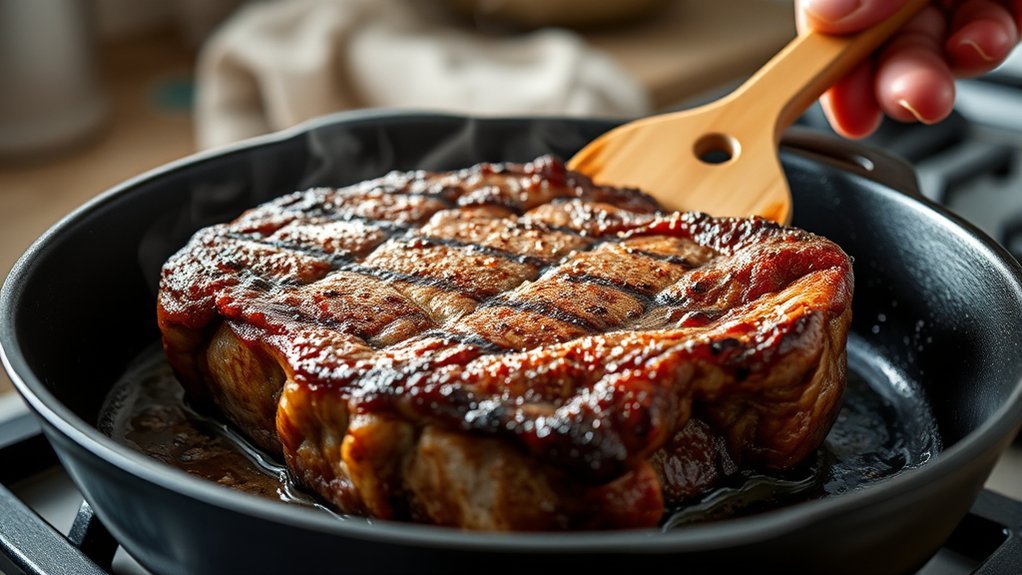

Mastering the perfect steak in a cast iron skillet starts with understanding heat control and seasoning precision. Cooking steak in a cast iron skillet brings out incredible flavors and a beautiful crust. You’ll want to dry your steak thoroughly and season it well to build that signature crust.
Then, preheating the pan just right is essential to avoid sticking or burning. But the real challenge lies in knowing exactly when to flip and how to rest the meat for prime juiciness—details you can’t afford to overlook.
Key Takeaways
- Preheat a clean, dry cast iron skillet on medium-high heat for at least 5 minutes until it’s slightly smoking.
- Pat the steak dry, season generously with coarse salt and black pepper, and let rest at room temperature for 30 minutes.
- Add a high-smoke point oil to the skillet, place the steak without moving it initially, and sear until a crust forms.
- Flip the steak once to sear the other side, then finish cooking in the skillet or oven to desired doneness.
- Rest the steak covered loosely with foil for 5 to 10 minutes before slicing against the grain and serving for maximum juiciness.
Best Steaks for Cast Iron Skillet Cooking
What makes a steak ideal for cast iron skillet cooking? It’s all about cut thickness, fat content, and marbling. You want steaks at least 1 to 1.5 inches thick to achieve a perfect sear without overcooking.
Ribeye, New York strip, and filet mignon excel because their intramuscular fat melts evenly, enhancing flavor and tenderness. While pan alternatives like stainless steel or non-stick have merits, cast iron’s heat retention and even distribution create an unmatched crust.
Avoid thinner cuts that cook too fast, limiting your control. Season choices should complement the steak’s natural flavors without overpowering; keep it simple with salt and pepper at this stage.
Selecting the right steak sets the foundation for optimal results in your cast iron skillet.
How to Season Your Steak for Maximum Flavor
Once you’ve chosen the ideal cut, seasoning becomes the key to unlocking its full flavor potential. Proper seasoning guarantees optimal surface caramelization, enhancing both texture and taste. Follow these steps:
- Pat the steak dry to remove moisture, which promotes even browning and better caramelization.
- Apply seasoning blends generously, focusing on coarse salt and freshly ground black pepper to penetrate the meat while forming a flavorful crust.
- Let the steak rest at room temperature for 30 minutes after seasoning, allowing the salt to dissolve and evenly flavor the interior.
Avoid overcomplicating with excessive spices; precision in seasoning blends maximizes the Maillard reaction during cooking. This method guarantees a deeply savory, well-balanced steak ready for your cast iron skillet.
Prepping Your Cast Iron Skillet for the Perfect Sear
How do you guarantee your cast iron skillet delivers a perfect sear every time? Start by thoroughly prepping skillet surfaces. Ensure it’s clean, dry, and lightly oiled with a high smoke point fat. This prevents sticking and promotes even browning.
Next, master heat management: place the skillet on medium-high heat and allow it to preheat fully for at least 5 minutes. Cast iron’s heat retention means it won’t cool down considerably when you add your steak, ensuring a consistent, intense sear.
Avoid overcrowding the pan, as this drops the temperature and compromises the crust formation. By meticulously prepping skillet and controlling heat, you set the foundation for a flawless sear that locks in juices and develops rich, caramelized flavors.
How to Cook Steak in a Cast Iron Skillet
You’ll start by seasoning your steak properly to enhance flavor and ensure even cooking. Then, use precise temperature control and timing to develop a perfect crust without overcooking the interior.
Mastering these techniques guarantees a steak cooked to your exact preference every time.
Preparing The Steak
Start by selecting a high-quality cut of steak, ideally one with good marbling such as ribeye or New York strip, to assure optimal flavor and tenderness. Next, assure your steak is at room temperature before cooking to promote even heat distribution.
When seasoning, consider the best marinade to enhance flavor without compromising the skillet’s smoke point; avoid oils with low smoke points like olive oil. Use high-smoke point oils such as avocado or grapeseed oil to prevent burning.
- Pat the steak dry to eliminate excess moisture, ensuring a perfect sear.
- Apply a light, even coat of your chosen high-smoke point oil.
- Season generously with coarse salt and freshly ground black pepper for optimal crust development.
Cooking Techniques
With your steak properly prepped and seasoned, heating your cast iron skillet to the right temperature is key to achieving the ideal sear. Mastering cooking science means understanding how high heat creates a Maillard reaction, developing flavor and crust.
Use pan technique by preheating the skillet until it’s smoking slightly, then add a high smoke point oil. Place the steak without moving it to ensure even browning. Flip once for optimal crust and finish in the skillet or oven to desired doneness.
| Step | Action | Purpose |
|---|---|---|
| 1 | Preheat skillet | Achieve optimal sear temp |
| 2 | Add oil | Prevent sticking, enhance crust |
| 3 | Sear steak | Initiate Maillard reaction |
| 4 | Flip steak | Even cooking |
| 5 | Rest steak | Redistribute juices |
How to Check Steak Doneness Without a Thermometer
A reliable method to gauge steak doneness without a thermometer involves using the touch test, which compares the firmness of the meat to specific parts of your hand. First, perform a spot test by pressing the steak’s surface to assess its resistance.
Then, compare it to the fleshy area below your thumb when your hand is relaxed (rare), touching your thumb and index finger (medium rare), or thumb and middle finger (medium).
Finally, conduct a taste test by cutting a small piece to confirm texture and flavor. Follow this numeric guide for firmness:
- Soft and yielding: rare
- Slightly springy: medium rare to medium
- Firm and resistant: well done
This method offers precise control over doneness without relying on a thermometer.
How to Rest and Serve Steak for Juiciness
You need to rest your steak for at least 5 to 10 minutes to allow juices to redistribute evenly. Skipping this step causes moisture to escape when cutting, resulting in a dry steak.
When serving, slice against the grain to maximize tenderness and juiciness.
Importance Of Resting
Why does resting your steak after cooking matter so much? Resting science explains that once removed from heat, the steak’s internal juices redistribute evenly, preventing loss when sliced. Proper resting timing ensures maximum juiciness and flavor retention.
Here’s why you should never skip resting:
- Juice Redistribution: Heat drives juices from the center to the surface during cooking. Resting allows these liquids to reabsorb throughout the meat fibers.
- Temperature Equalization: Resting balances the internal temperature, avoiding hot spots that can cause uneven texture.
- Improved Tenderness: Relaxed muscle fibers hold juices better, enhancing tenderness.
Optimal Resting Time
Determining the best resting time depends on the steak’s thickness and doneness level to maximize juiciness without overcooling. For steaks around 1-inch thick, a rest timing of 5 to 7 minutes suffices. Thicker cuts, such as 2 inches or more, require 10 to 15 minutes.
This allows internal juices to redistribute evenly, preventing excessive outflow when sliced. If you rest too briefly, juices remain concentrated in the center, causing loss upon cutting. Conversely, resting too long cools the steak, diminishing flavor and texture.
Use a tented foil cover to retain warmth without steaming. By adhering to best resting, you ensure moisture retention and consistent temperature throughout. Precision in rest timing is essential; this step is as critical as cooking temperature or searing technique for a perfectly juicy steak.
Serving Tips For Juiciness
Consistently resting your steak properly before serving guarantees optimal juiciness and flavor retention. To maximize juiciness, follow these essential juiciness tips and service ideas:
- Rest Covered, Not Sealed: Use loose foil to tent the steak, preventing heat loss while allowing moisture to redistribute evenly within the fibers.
- Serve at Optimal Temperature: Aim to serve the steak immediately after resting, ensuring the internal temperature remains warm but not overcooked.
- Slice Against the Grain: Cut perpendicular to muscle fibers to shorten them, promoting tenderness and preserving internal juices.
Implementing these steps ensures the steak’s juices remain locked in, delivering a succulent bite every time. Mastering this technical resting and serving process elevates your cast iron skillet steak from good to exceptional.
Common Cast Iron Steak Cooking Mistakes
What often trips up home cooks when searing steak in a cast iron skillet? One major mistake is using wrong topic ideas, like skipping preheating or overcrowding the pan, both of which sabotage the sear and texture.
Common mistakes when searing steak include skipping preheating and overcrowding the pan, ruining texture and sear.
You must let the skillet reach high heat to develop that prized crust; otherwise, you risk steaming instead of searing. Another common error is flipping the steak too often, disrupting the kitchen art of Maillard reaction timing.
Over-reliance on oil rather than dry seasoning can also prevent proper browning. Avoid these pitfalls by mastering temperature control, seasoning, and timing. Remember, cast iron demands respect for its thermal properties.
If you neglect these fundamentals, your steak won’t achieve the ideal crust and juiciness that define expert cooking.
Frequently Asked Questions
Can I Use Olive Oil Instead of Butter for Cooking Steak?
Yes, you can use olive oil instead of butter for cooking steak. Olive oil’s high smoke point suits cast iron, but remember it offers a different flavor pairing, lending a fruitier, lighter taste compared to butter’s richness.
How Do I Clean My Cast Iron Skillet After Cooking Steak?
You’ll clean cast iron by wiping excess oil, scrubbing gently with hot water and a stiff brush, avoiding soap.
Dry thoroughly, then apply a thin oil layer for post cook maintenance to prevent rust and maintain seasoning.
Is It Safe to Cook Frozen Steak Directly in a Cast Iron Skillet?
You shouldn’t cook frozen steak directly; it prevents proper searing. Instead, thaw your steak first to ensure even cooking.
Master the pan searing technique by cooking thawed steak at high heat for optimal crust and doneness.
Can I Use a Cast Iron Skillet on an Induction Cooktop?
Over 90% of cast iron skillets are induction compatible due to their ferromagnetic properties. You can use yours on an induction cooktop, but remember proper cast iron care to prevent rust and maintain seasoning.
What Is the Best Way to Store Leftover Cooked Steak?
You should store leftover cooked steak in an airtight container to maintain freshness. Refrigeration duration shouldn’t exceed 3 to 4 days, ensuring safety and quality.
Label the container with the date for proper leftover storage management.
Conclusion
Mastering steak in a cast iron skillet elevates your cooking—did you know 70% of home cooks overcook their steak?
By seasoning well, preheating your pan until it smokes, and searing without disturbance, you ensure that perfect crust and juicy interior. Always rest your steak 5–10 minutes to lock in juices.
Follow these precise steps, and you’ll consistently serve restaurant-quality steak, impressing every time with superior texture and flavor. With these tips, cooking steak in a cast iron skillet becomes effortless and rewarding.