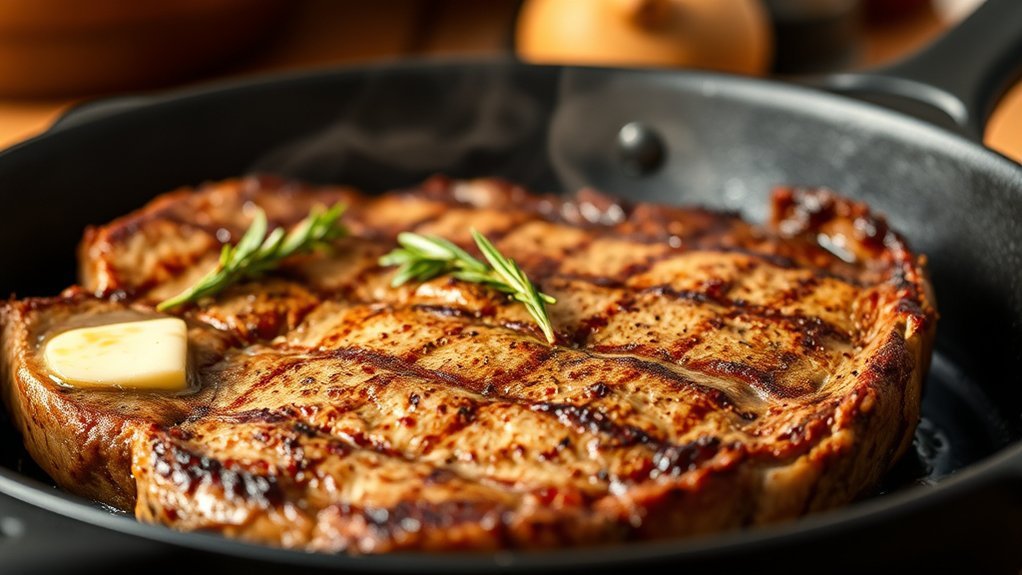

You want to achieve a perfectly seared steak with a rich, caramelized crust and juicy interior using your cast iron skillet. Cooking steak in a cast iron skillet allows for even heat distribution, which is key to developing that ideal crust. Start by selecting the right cut and ensuring your pan is adequately preheated to around 400°F.
Proper seasoning and moisture control on the meat are essential before searing each side for several minutes. But mastering the timing and knowing when to rest the steak can make all the difference. There’s more to unsealing that ideal finish.
Key Takeaways
- Choose a well-marbled steak at least 1 inch thick for optimal flavor and juiciness in cast iron cooking.
- Preheat the cast iron skillet over medium-high heat for 5+ minutes until it reaches about 400°F and lightly smokes.
- Pat the steak dry, brush with high-smoke-point oil, and season with coarse salt and pepper just before searing.
- Sear steak 3–4 minutes per side for medium-rare, forming a deep brown crust, then rest 5–10 minutes to retain juices.
- Use skillet drippings to make pan sauces by deglazing with wine or vinegar and adding butter and fresh herbs.
Choose the Right Steak Cut for Your Cast Iron Skillet
Any steak you choose should have enough marbling to stay juicy and flavorful when cooked in a cast iron skillet. Cuts like ribeye, strip, and sirloin provide optimal fat distribution, which ensures even heat transfer and efficient pan seasoning.
When selecting your steak, aim for a thickness of at least one inch to achieve balanced grilling dynamics in the skillet’s intense heat. Thinner cuts risk overcooking before the pan seasoning develops a proper sear.
Avoid leaner cuts like filet mignon unless you supplement with additional fat. The fat content not only aids flavor but enhances the seasoning layer on your cast iron, creating a natural non-stick surface.
Choosing the right cut is fundamental to mastering the skillet’s thermal properties and achieving a perfect crust without drying out your steak.
How to Prepare and Season Your Steak Before Cooking
Once you’ve selected a well-marbled, thick cut, the next step is to properly prepare and season your steak to maximize flavor and achieve an even sear. Begin by patting the steak dry with paper towels to remove excess moisture, which can hinder browning.
Bring the steak to room temperature by letting it rest outside the fridge for about 30-60 minutes; this ensures uniform cooking. Lightly brush both sides with a high-smoke-point seasoning oil, such as avocado or grapeseed oil, to promote a crisp crust and help the seasoning adhere.
Generously season with coarse salt and freshly ground black pepper just before cooking. Avoid over-seasoning early to prevent drawing out moisture. Proper resting temperature and seasoning oil application are key for optimal taste and texture before you place your steak in the skillet.
Get Your Cast Iron Skillet Hot for a Perfect Sear
A properly heated cast iron skillet is essential for achieving a perfect sear on your steak. To get your skillet hot enough, preheat it over medium-high heat for at least 5 minutes. You want the surface temperature to reach around 400°F (204°C) to ensure a quality steak sear.
Test the heat by flicking a few drops of water onto the skillet; they should evaporate instantly.
Visualize the process:
- The skillet gleaming with intense heat, almost shimmering.
- A faint smoke rising as the oil begins to shimmer.
- The steak hitting the pan, producing an immediate, loud sizzle.
Using a hot skillet locks in juices and forms a caramelized crust, critical for flavor and texture. Don’t rush this step if you want restaurant-quality results.
How to Cook Steak in a Cast Iron Skillet
You’ll start by seasoning your steak evenly to enhance flavor and promote a good crust. Make certain the skillet is preheated until it’s smoking hot to ensure proper searing.
Then, cook the steak to your desired doneness, flipping once, and allow it to rest before slicing to retain juices.
Preparing The Steak
How do you guarantee your steak cooks evenly and develops a perfect crust in a cast iron skillet? Start by preparing the steak properly. This step is critical and not a place for irrelevant cross topic distractions.
First, bring your steak to room temperature; this ensures even cooking. Next, pat it dry with paper towels to remove surface moisture, which inhibits browning. Finally, season generously with coarse salt and freshly ground black pepper for a robust crust.
Visualize these key steps:
- Steak resting on a cutting board, glistening but dry
- Salt and pepper crystals evenly coating the meat’s surface
- Steak at room temperature, ready for the skillet
Avoid two word discussion ideas like “simple seasoning” without detail; precision here is your ally.
Heating The Skillet
When should you heat your cast iron skillet to achieve the ideal searing temperature for steak? Preheat it over medium-high heat for 5 to 7 minutes until it’s smoking hot. Cast iron offers superior heat retention compared to nonstick alternatives, essential for a perfect crust. Avoid adding oil before the pan is hot to prevent smoking.
| Step | Action |
|---|---|
| 1 | Place skillet on burner |
| 2 | Heat on medium-high for 5–7 min |
| 3 | Test heat with water drop |
| 4 | Add oil sparingly |
| 5 | Proceed to sear steak |
After searing, use the oven finish method for even cooking. Proper heating ensures a flawless sear and prevents sticking without relying on nonstick coatings.
Cooking And Resting
Sear the steak in the preheated cast iron skillet until a deep brown crust forms, about 3 to 4 minutes per side for medium-rare. Once seared, transfer the steak to a warm plate and let it rest for 5 to 10 minutes. This allows the juices to redistribute, ensuring optimal tenderness and flavor.
While resting, consider these factors for enhanced kitchen ergonomics and taste pairing:
- Position the resting plate near your prep area for easy seasoning adjustments.
- Use a timer or watch to monitor resting time precisely.
- Prepare complementary sides or sauces that harmonize with the steak’s rich flavor profile.
How to Tell If Your Steak Is Done: No Thermometer Needed
You can gauge your steak’s doneness without a thermometer by using clear visual cues and touch test methods. Pay attention to color changes and firmness to distinguish rare, medium, and well-done levels.
Additionally, follow specific timing guidelines based on thickness to improve accuracy.
Visual Doneness Indicators
How can you accurately judge steak doneness without a thermometer? Focus on visual cues and color change to gauge progress. As the steak cooks, its surface and interior undergo distinct transformations.
Look for these key visual doneness indicators:
- Surface Browning: A deep, even crust signals Maillard reaction completion, typical of medium-rare to medium steaks.
- Juice Color: Clear or slightly pink juices emerging on the surface indicate medium doneness; bright red juices point to rare.
- Interior Color: When sliced, rare steaks appear bright red, medium-rare show warm pink centers, and medium display light pink transitioning to gray-brown near edges.
Touch Test Techniques
When can you rely on touch to determine steak doneness without a thermometer? Use the finger pad test by comparing the firmness of your steak to the fleshy area below your thumb. This tactile method ensures precise doneness, essential before considering side dish pairing or applying your knife technique for slicing.
Here’s a quick reference:
| Doneness | Finger Pad Tested | Texture Description |
|---|---|---|
| Rare | Thumb + Index | Soft, very tender |
| Medium Rare | Thumb + Middle | Slightly springy |
| Medium | Thumb + Ring | Firm, with some give |
| Well Done | Thumb + Pinky | Very firm, no give |
Master this touch test to avoid cutting prematurely or overcooking, enhancing your steak’s flavor and texture perfectly for any side dish pairing.
Timing Guidelines
Wondering how long to cook your steak in a cast iron skillet without a thermometer? Rely on timing guidelines combined with visual and tactile cues. For a 1-inch thick steak, follow these approximate times:
- Rare: 2 minutes per side; the steak feels soft and yields easily.
- Medium: 3-4 minutes per side; firmer with slight resistance.
- Well done: 5 minutes or more per side; very firm to the touch.
After cooking, allow a resting period of 5 minutes. This lets juices redistribute, ensuring a tender, juicy steak. During resting, the internal temperature rises slightly, so factor this into your timing.
Use these guidelines alongside touch tests to gauge doneness accurately. No thermometer needed. Mastering this balance is key to perfect steak preparation in a cast iron skillet.
Rest Your Steak to Lock in Juices
Although it’s tempting to slice into your steak immediately, you need to let it rest for at least 5 to 10 minutes after cooking. During this time, the steak’s internal temperature continues to rise slightly due to carryover heat, completing the cooking process evenly.
Resting allows the muscle fibers to relax and reabsorb the resting juices, preventing them from spilling out when you cut into the meat. To rest properly, transfer the steak to a warm plate and loosely tent it with foil to retain heat without trapping steam, which can soften the crust.
Skipping this step results in a drier, less flavorful steak. By respecting resting time, you ensure maximum juiciness and tenderness in every bite.
Easy Sauces and Finishing Touches for Cast Iron Skillet Steak
How can you elevate your cast iron skillet steak with simple, flavorful additions? Focus on easy sauces and finishing touches that create juicy contrasts and enhance the meat’s natural flavor.
After resting your steak, use the skillet drippings to build pan sauces that intensify depth. Try these:
- Deglaze with red wine or balsamic vinegar, scraping browned bits for a rich sauce.
- Stir in cold butter and fresh herbs like thyme or rosemary for a glossy, aromatic finish.
- Add a splash of cream or mustard to create smooth, tangy pan sauces that balance the steak’s richness.
These precise steps amplify juicy contrasts, ensuring every bite bursts with flavor. Mastering these finishing touches turns a simple cast iron steak into a restaurant-quality dish.
Avoid Common Mistakes When Cooking Steak in Cast Iron
Why do some cast iron steaks come out less than perfect? Often, it’s due to simple mistakes. First, don’t overcrowd your skillet; this leads to steaming instead of searing. Avoid using oil with a low smoke point, which breaks down and imparts off-flavors.
Timing is crucial. Flip the steak only once to develop an even crust. Overcooking ruins texture, so use a thermometer for precision. Avoid distractions like unrelated topic research or random pairing of ingredients mid-cook; focus solely on your steak’s process.
Also, don’t skip resting; it locks in juices. Finally, ensure your cast iron is properly seasoned and preheated to prevent sticking. Master these points, and your steak will come out consistently perfect every time.
Frequently Asked Questions
Can I Use a Non-Stick Skillet Instead of Cast Iron for Steak?
You can use nonstick substitutes for steak, but they won’t sear as well as cast iron.
How Do I Clean and Maintain My Cast Iron Skillet After Cooking Steak?
You clean your cast iron skillet by wiping it with a hot, damp cloth; avoid soap. Dry thoroughly, apply a thin oil layer, then heat it.
Follow these aftercare tips and maintain a consistent seasoning routine for durability.
Is It Safe to Cook Steak in a Cast Iron Skillet on Induction Cooktops?
Yes, cast iron is induction safe due to its magnetic properties, making it ideal for cooking steak. If you prefer a nonstick alternative, consider seasoned carbon steel pans, which offer similar induction safety with easier cleanup.
Can I Cook Frozen Steak Directly in a Cast Iron Skillet?
Think of cooking frozen steak like launching a rocket; rushing can cause disaster. You can cook it directly in a cast iron skillet, but expect uneven cooking.
Thawing first avoids that offbeat idea of an unrelated topic gone wrong.
How Do I Prevent Smoke When Cooking Steak in a Cast Iron Skillet?
You prevent smoke by managing heat precisely, avoiding overheating. Use high smoke point oils like avocado or grapeseed oil.
Preheat skillet moderately, add oil just before steak, and ventilate your kitchen well for effective smoke management.
Conclusion
Now that you’ve mastered the art of sizzling your steak in cast iron, you hold the key to unlocking juicy, flavorful perfection every time. Think of your skillet as a forge, where heat and seasoning meld into a delicious crust.
Remember to sear, rest, and finish with care—each step a brushstroke painting a savory masterpiece. With these techniques, your steak won’t just be cooked; it’ll be confidently conquered.
By following these steps, you ensure that every bite reflects the true skill of how to fix a steak in a cast iron skillet.