
You might wonder if you can use a skillet on a griddle and whether it is practical or safe. While it’s definitely possible, choosing the right skillet and understanding how it interacts with your griddle can make all the difference in cooking results.
From material to placement, several factors influence performance and safety. Before you start, it’s worth exploring what works best and what pitfalls to avoid to get the most from this cooking setup.
Key Takeaways
- Yes, cast iron and heavy stainless steel skillets work well on flat, stable griddles for even heat transfer and cooking.
- Ensure the skillet base is thick, flat, and fits comfortably on the griddle to prevent tipping and promote balanced heating.
- Preheat the griddle gradually and place the skillet in the center or medium heat zone for consistent temperature control.
- Avoid lightweight aluminum skillets and edges of the griddle where heat fluctuates to maintain cooking efficiency and safety.
- Clean and maintain both skillet and griddle properly to preserve seasoning, prevent rust, and ensure even heating performance.
Is It Safe and Effective to Use a Skillet on a Griddle?
Wondering if you can safely and effectively use a skillet on a griddle? The answer is yes, provided you consider skillet durability and griddle compatibility. Your skillet must be sturdy enough to handle direct contact with the griddle’s surface, especially at high temperatures.
Cast iron or heavy stainless steel skillets tend to offer the best durability, resisting warping and distributing heat evenly. On the griddle side, ensure its surface and size can accommodate the skillet without tipping or uneven heating.
Electric or gas griddles with flat, stable surfaces work best. Avoid using delicate or lightweight skillets that might not withstand the griddle’s heat or could damage its surface. When matched correctly, using a skillet on a griddle is both safe and efficient.
Benefits of Cooking With a Skillet on a Griddle
When you use a skillet on a griddle, you get enhanced heat distribution that helps your food cook more evenly. This setup also opens up versatile cooking options, letting you switch between searing, sautéing, or simmering with ease.
You’ll appreciate how this combo boosts your control and expands what you can make.
Enhanced Heat Distribution
How does using a skillet on a griddle improve your cooking experience? It enhances heat distribution, ensuring your food cooks evenly without hot spots.
When you place your skillet on a preheated griddle, the even heat from the griddle surface transfers smoothly to the skillet’s base. This consistent warmth helps you avoid burning or undercooking parts of your dish.
Plus, the steady heat supports better nonstick maintenance by preventing sudden temperature spikes that can damage the skillet’s coating. You’ll find your skillet retains heat well, giving you control over cooking temperature and resulting in perfectly cooked meals.
Using a griddle beneath your skillet truly elevates your cooking by delivering balanced heat and protecting your cookware’s surface.
Versatile Cooking Options
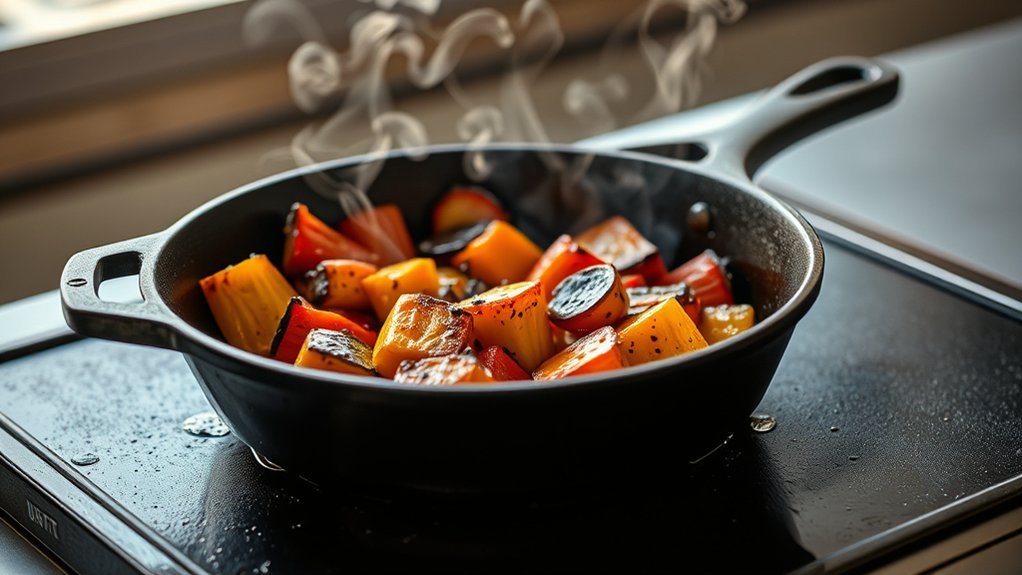
A skillet on a griddle opens up a world of versatile cooking options that let you tackle a variety of dishes with ease. You can sear meats, sauté vegetables, or even simmer sauces, all while maximizing your griddle’s surface area.
This flexibility encourages creative plating, as you can prepare multiple components simultaneously and arrange them beautifully without rushing. Using a skillet on a griddle also improves kitchen ergonomics by reducing the need to switch between appliances, keeping your workflow smooth and efficient.
Whether you’re cooking breakfast, lunch, or dinner, this combo offers precise temperature control and easy maneuverability. Embracing this method transforms your cooking process, making it more dynamic and enjoyable while expanding what you can create in your kitchen.
What Types of Skillets Work Best on a Griddle
Choosing the right skillet for your griddle can elevate your cooking experience and guarantee even heat distribution. Cast iron skillets are a top choice due to their excellent skillet compatibility and superior heat transfer, ensuring your food cooks evenly.
You’ll also find stainless steel skillets work well, especially those with a thick, multi-layered base that promotes consistent heating without hot spots. Avoid lightweight aluminum skillets, as they may not distribute heat as evenly on a griddle’s surface.
Additionally, skillets with flat, smooth bottoms make the best contact with your griddle, optimizing heat transfer. By selecting skillets designed to complement your griddle’s cooking style, you’ll enjoy better control and delicious results every time.
Positioning and Heating a Skillet on a Griddle
You’ll want to place your skillet where the griddle heats most evenly to avoid hot spots and guarantee consistent cooking. Start by preheating the griddle gradually, giving the skillet time to warm up alongside it for balanced heat distribution.
Keep an eye on the temperature and adjust as needed to maintain steady cooking without burning your food.
Proper Skillet Placement
Where exactly should you place your skillet on the griddle to guarantee even heating and optimal cooking? Start by identifying the griddle’s heat zones, areas that vary in temperature. Place your skillet over a medium heat zone for balanced cooking.
This prevents hotspots that could burn your food or cold spots that slow cooking. Make sure your skillet sits flat and stable on the griddle surface; skillet stability is crucial to avoid tipping or uneven contact.
Position it so the bottom makes full contact with the griddle, maximizing heat transfer. Avoid edges where heat fluctuates more. By carefully selecting the right heat zone and ensuring your skillet is stable, you’ll create the perfect environment for consistent, controlled cooking on your griddle.
Even Heat Distribution
How can you ensure your skillet heats evenly on a griddle? First, focus on skillet compatibility. Choose a skillet with a flat, thick base that sits flush against the griddle surface. This contact maximizes even heat transfer and prevents hot spots.
Next, position the skillet centered on the griddle’s heated area, avoiding edges where temperature fluctuations occur. Allow the skillet to warm gradually; rushing this can cause uneven heat distribution and affect cooking results.
Keep in mind the griddle’s size and heat zones. Some griddles have varying heat levels, so select the area with consistent temperature. By paying attention to these details, you’ll achieve even heat throughout your skillet, ensuring your food cooks uniformly and tastes great every time.
Temperature Control Tips
Once your skillet is properly positioned for even heat, managing the temperature becomes key to cooking success.
Pay close attention to heat signaling. Watch how your skillet responds to the griddle’s heat. Adjust the griddle’s temperature gradually for precise temperature control.
Avoid sudden changes; this helps prevent hotspots or uneven cooking. Use the griddle’s temperature dial and observe the skillet’s surface for signs like shimmering oil or slight smoke to gauge readiness.
| Griddle Setting | Skillet Surface Cue | Cooking Tip |
|---|---|---|
| Low | Slight warmth | Keep food simmering |
| Medium-Low | Gentle shimmer | Perfect for gentle sauté |
| Medium | Light smoke | Ideal for searing |
| Medium-High | Steady smoke | Use for quick browning |
| High | Visible smoke, sparking | Avoid; risks burning food |
Mistakes to Avoid When Using a Skillet on a Griddle
Why do some skillet-on-griddle attempts fall flat? Often, it’s because of avoidable mistakes that can cause uneven cooking or even safety concerns. To get the most from your setup, skip these common pitfalls:
1. Ignoring proper heat distribution
Griddles heat differently; don’t place your skillet on a super-hot spot without checking.
2. Using the wrong skillet size
A skillet too large or small can cause instability or uneven cooking.
3. Overcrowding the cooking surface
It blocks heat flow and risks spills, creating safety concerns.
4. Neglecting to secure handles
Don’t let handles hang off the griddle; they can tip or cause burns.
Avoid these mistakes to cook safely and efficiently when using your skillet on a griddle.
How to Clean and Maintain Your Skillet and Griddle
Cleaning and maintaining your skillet and griddle properly can considerably extend their lifespan and guarantee optimal cooking performance. Start by letting them cool before cleaning to ensure care safety. Avoid sudden temperature changes that can warp the metal.
Properly cleaning and maintaining your skillet and griddle extends their life and ensures top cooking performance.
Use warm water and a soft sponge to remove food residue. Skip harsh detergents that strip seasoning, especially on cast iron. For stubborn bits, scrub with coarse salt and a little oil.
Dry thoroughly to prevent rust, then apply a thin layer of oil to keep the surface conditioned. Store your skillet and griddle in a dry place to avoid moisture buildup.
Regular cleaning and proper storage not only preserve their appearance but also maintain even heating and non-stick properties, making your cooking experience smoother every time.
How to Choose the Best Griddle for Your Skillets
Maintaining your skillet and griddle ensures they perform well, but choosing the right griddle to complement your skillets can take your cooking to the next level. When picking a griddle, consider these crucial factors:
- Griddle Dimensions: Ensure it’s large enough to fit your skillets comfortably without crowding, allowing even heat distribution.
- Material Compatibility: Match your griddle material with skillet materials like cast iron or stainless steel for consistent cooking results.
- Heat Source: Choose a griddle suited for your stove type, gas, electric, or induction, to maximize efficiency.
- Surface Texture: Opt for a smooth, non-stick surface if you use delicate skillets, or a rugged one for cast iron to maintain seasoning.
Frequently Asked Questions
Can I Use a Skillet on an Outdoor Griddle?
Yes, you can use a skillet on an outdoor griddle. For tips on skillet compatibility, choose flat-bottomed pans.
Manage outdoor griddle heat carefully to prevent warping and ensure even cooking, giving you perfect results every time.
Will Using a Skillet on a Griddle Affect Cooking Times?
Using a skillet on griddle can slightly affect cooking time because heat distributes differently compared to direct griddle contact.
You might notice longer or shorter cooking time impact depending on skillet material and griddle temperature control.
Can I Use Non-Stick Skillets on a Griddle?
Yes, you can use non-stick skillets on a griddle, but ensure nonstick safety by avoiding excessive heat. Griddles offer even heat distribution, so you’ll cook food evenly without damaging your skillet’s coating or compromising performance.
How Do I Prevent Food From Sticking When Using a Skillet on a Griddle?
You can prevent sticking by properly preheating your skillet for even heat distribution and using oil or butter.
Regular cleaning and maintenance keep the surface smooth, ensuring your food releases easily every time you cook on the griddle.
Are There Specific Recipes Suited for Skillet-On-Griddle Cooking?
You’ll find skillet temperature essential for skillet-on-griddle cooking, especially with recipe adaptations like searing steaks or sautéing veggies. Adjust heat carefully, and you’ll master these dishes while enjoying even cooking and great flavor.
Conclusion
Using a skillet on a griddle can truly up your cooking game if you play your cards right. Choose heavy, flat-bottomed skillets like cast iron for even heat, position them carefully, and preheat gradually to avoid hot spots.
Keep your tools clean and well-maintained, and you’ll be cooking like a pro in no time. Just remember, the proof of the pudding is in the eating—your results will speak for themselves!
In the end, using a skillet on a griddle can make all the difference in your cooking experience.