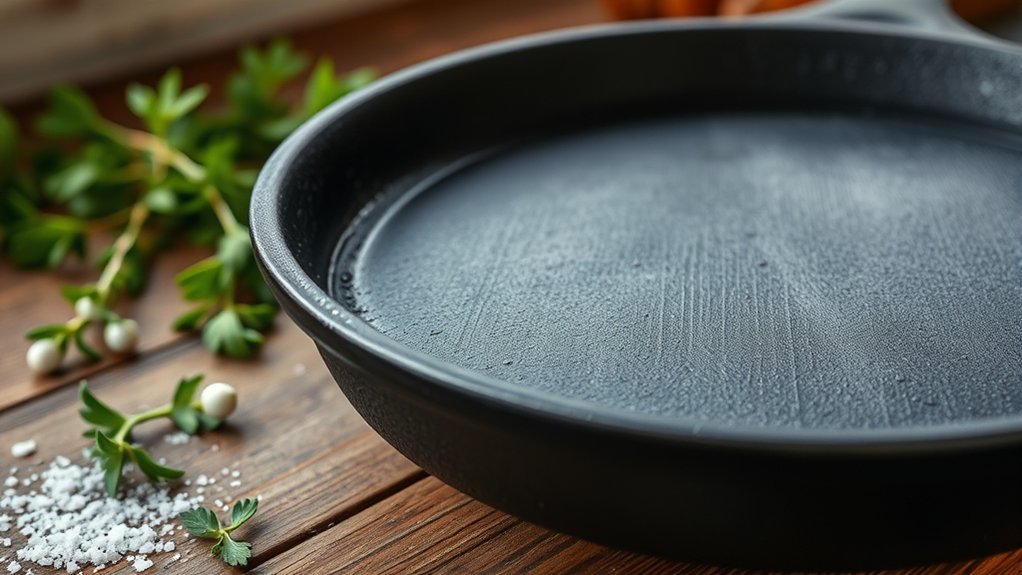

When you hear the term “skillet,” you might picture a simple frying pan, but a skillet is actually a specific type of flat-bottomed cookware designed for even heat distribution and high-heat cooking.
Understanding what sets a skillet apart—from its materials to its design—can enhance your cooking technique and results.
Yet, the meaning of skillet extends beyond the kitchen, carrying cultural and symbolic significance that’s worth exploring further.
Key Takeaways
- A skillet is a flat-bottomed cooking pan designed for frying, sautéing, and browning with high heat.
- It differs from a frying pan by having higher, sloped sides for versatile cooking techniques.
- Skillet materials include cast iron, stainless steel, aluminum, and nonstick coatings affecting heat retention and cooking style.
- Symbolically, a skillet represents resilience, warmth, family bonds, and transformation through heat and pressure.
- Beyond cookware, “Skillet” is also a rock band name symbolizing strength, perseverance, and faith in cultural contexts.
What Is a Skillet in Cooking?
A skillet, also known as a frying pan, is a flat-bottomed cooking vessel designed for frying, searing, and browning foods. Understanding the concept origins of the skillet helps you appreciate its evolution from simple iron pans used centuries ago to modern variations with non-stick coatings and ergonomic handles.
When you perform a cookware comparison, you’ll notice the skillet’s shallow sides and wide surface area optimize heat distribution and allow easy food turning. Unlike pots or saucepans, skillets excel in high-heat applications requiring quick moisture evaporation and crisp texture development.
As you select or use a skillet, keep in mind that its design facilitates direct contact with heat, making it indispensable for sautéing and pan-frying tasks in both home and professional kitchens.
How Is a Skillet Different From a Frying Pan?
How exactly do skillets differ from frying pans, given that the terms are often used interchangeably? Understanding skillet etymology reveals that skillets traditionally have slightly higher, sloped sides, enhancing their versatility for various cooking techniques.
Frying pans typically feature lower, flared sides designed primarily for frying. This difference also impacts skillet nutrition, as the design allows better heat retention and even cooking, which can influence the nutritional quality of your food.
| Feature | Skillet |
|---|---|
| Sides | Higher, sloped |
| Primary Use | Sautéing, frying, baking |
| Material Impact | Retains heat evenly |
| Nutrition Effect | Preserves food nutrients |
Knowing this helps you choose the right tool for your cooking needs.
What Materials Are Skillets Made Of?
Skillets are typically made from cast iron, stainless steel, or aluminum with nonstick coatings. You’ll find cast iron offers excellent heat retention and durability, while nonstick options provide easy food release and cleaning.
Understanding these materials helps you choose the best skillet for your cooking needs.
Common Skillet Materials
What materials do you rely on when choosing a skillet? Common skillet materials include cast iron, stainless steel, aluminum, and nonstick-coated metals. Each offers distinct thermal properties: cast iron provides excellent heat retention, while stainless steel ensures durability and resistance to corrosion.
Aluminum stands out for rapid, even heating but may warp under high temperatures. Nonstick coatings, often applied to aluminum or stainless steel bases, facilitate easy food release and cleaning but require careful handling to avoid scratches.
Skillet material comparisons highlight trade-offs in weight, maintenance, and cooking performance. For instance, cast iron demands seasoning but excels in searing, whereas stainless steel suits high-heat cooking without reactivity. Understanding these materials helps you select a skillet tailored to your cooking style and maintenance preferences.
Benefits Of Cast Iron
Among the various materials used for skillets, cast iron stands out due to its unique combination of heat retention and durability. When you use a cast iron skillet, it evenly distributes heat, ensuring consistent cooking results essential for accurate taste testing.
This material’s ability to maintain high temperatures lets you sear foods effectively, enhancing flavor development. However, proper cast iron care is crucial to preserve its nonstick properties and prevent rust.
You’ll need to season the skillet regularly and clean it without harsh detergents. With consistent maintenance, cast iron skillets can last decades, improving with age. Choosing cast iron not only guarantees superior cooking performance but also offers a long-term, sustainable investment in your kitchen tools.
Nonstick Skillet Options
Many nonstick skillet options utilize advanced coatings to reduce food adhesion and simplify cleaning. Typically, these skillets feature an aluminum base for rapid, even heat distribution, ensuring consistent cooking results.
The nonstick durability depends largely on the quality of the coating. Common types include PTFE (polytetrafluoroethylene) and ceramic. PTFE provides superior nonstick performance but may degrade at very high temperatures, while ceramic coatings offer greater heat resistance but can wear faster with frequent use.
When selecting a nonstick skillet, consider the balance between coating longevity and heat distribution efficiency. Additionally, reinforced coatings with materials like titanium can enhance scratch resistance and extend nonstick durability.
Why Do Cooks Love Skillets?
Why do cooks consistently choose skillets as their go-to cookware? It’s their ability to deliver savory searing combined with durable comfort that makes them indispensable. Skillets provide even heat distribution, essential for precise cooking control.
Their robust construction withstands high temperatures and frequent use, ensuring long-term reliability. When you use a skillet, you gain versatility without sacrificing performance.
| Feature | Benefit | Impact on Cooking |
|---|---|---|
| Material | Retains heat evenly | Consistent savory searing |
| Handle Design | Ergonomic grip | Durable comfort during use |
| Surface Type | Nonstick or seasoned | Easy food release, less oil |
| Size Options | Various diameters | Adaptable to recipe needs |
You’ll find skillets optimize both technique and outcome, making them a chef’s preferred tool.
What Are Common Skillet Uses in Recipes?
How do skillets enhance your cooking repertoire? They offer versatile heat distribution, allowing you to sear, sauté, fry, and bake efficiently. You can quickly brown meats or vegetables, optimizing taste pairing by developing complex flavors through Maillard reactions.
Skillets also accommodate one-pan meals, simplifying preparation and cleanup. This is important for budget considerations by reducing energy use and time. Their ability to maintain steady heat supports recipe consistency, whether you’re making sauces or frittatas.
Additionally, skillets suit a wide range of cuisines and techniques, from stir-frying to shallow frying, making them indispensable. By integrating skillets into your kitchen, you improve efficiency and flavor control, all while managing costs effectively. This adaptability makes them a fundamental tool for both novice and experienced cooks.
Where Does the Word “Skillet” Come From?
Understanding the practical benefits of skillets invites curiosity about the origin of the term itself. From a historical linguistics perspective, “skillet” derives from the Middle English “skillet,” tracing back to Old French “escuele,” meaning a small pan or dish.
This evolution reflects a two word discussion idea: “skillet” combines “skel,” possibly linked to the notion of a shell or hollow container, with the diminutive suffix “-et.” You can see how this linguistic development mirrors the skillet’s function, a shallow, durable cooking vessel.
What Does “Skillet” Mean Beyond Cooking?
You might recognize “Skillet” as the name of a popular rock band known for its energetic style and impactful lyrics.
Beyond music, the term carries symbolic cultural meanings related to strength and resilience. Understanding these references helps clarify how “skillet” extends beyond its original culinary context.
Music Band Reference
The term “Skillet” extends beyond its culinary origins to represent a well-known American Christian rock band formed in 1996. When you encounter “Skillet” in music contexts, you’re dealing with more than just a name; it functions as a metaphor for resilience and passion in their lyrics and sound.
This usage has embedded Skillet into pop culture symbolism, reflecting themes of struggle and hope.
Consider these points about Skillet as a music band reference:
- Skillet as metaphor highlights the blend of intensity and warmth, akin to the cooking tool’s function.
- Their music appeals broadly, influencing Christian rock and mainstream audiences.
- Their name’s recognition signifies cultural impact beyond culinary associations.
- Skillet’s symbolism aligns with messages of perseverance and faith in music narratives.
Symbolic Cultural Meaning
Symbols like “skillet” carry meanings that stretch far beyond their literal use in cooking. When you examine artistic symbolism, the skillet often represents domesticity, resilience, and transformation, reflecting how heat and pressure can change raw materials into something nourishing.
In cultural interpretations, the skillet embodies tradition and heritage, signifying family bonds forged around shared meals. You’ll find that in some communities, it symbolizes hard work and self-reliance, given its association with everyday labor and sustenance.
Additionally, the skillet can function metaphorically to convey themes of conflict or protection, as its sturdy, enduring nature suggests defense and strength. Understanding these layered meanings enriches your perception of the skillet, revealing its role as a potent cultural emblem beyond mere cookware.
Where Have You Seen “Skillet” in Pop Culture?
Where exactly does the term “skillet” appear in popular culture? You’ll find it used with distinct meaning symbolism across various media, reflecting both literal and metaphorical interpretations. Here are four prominent instances where skillet pop culture references emerge:
1. Music
The rock band Skillet uses the term as a name symbolizing strength and unity.
2. Television
Cooking shows often highlight skillets, emphasizing practical culinary tools.
3. Film
Skillets appear as iconic kitchen utensils, underscoring domestic themes or conflict.
4. Literature
Skillet references symbolize resilience or simplicity in storytelling.
How to Choose the Right Skillet for Your Kitchen?
How do you determine which skillet suits your cooking needs best? Start by understanding skillet terminology. Materials like cast iron, stainless steel, and non-stick coatings each impact heat retention and maintenance.
Cast iron, a staple in kitchen utensil history, offers superior heat distribution but requires seasoning. Stainless steel is durable and versatile but less non-stick. Non-stick skillets simplify cooking delicate foods but may degrade faster.
Consider skillet size and handle design for your typical recipes and stove type. If you often sear or sauté, a heavy-bottomed skillet with a flat surface enhances performance.
Reflect on your cleaning preferences and durability needs. By combining knowledge of skillet terminology with historical context, you’ll select a skillet that aligns precisely with your culinary requirements and kitchen setup.
Frequently Asked Questions
How Do You Properly Season a Cast Iron Skillet?
You properly season a cast iron skillet by applying a thin oil layer, then heating it to initiate seasoning chemistry.
Manage heat carefully, maintaining 450°F for an hour, creating a durable, non-stick polymerized surface through precise heat management.
Can You Use a Skillet on an Induction Cooktop?
Yes, you can use a skillet on an induction cooktop if it has induction compatibility, meaning its base contains magnetic materials. Proper skillet maintenance guarantees even heating and prolongs its lifespan on induction surfaces.
What Is the Best Way to Clean a Non-Stick Skillet?
Imagine Sarah, who extends her nonstick skillet’s life by hand-washing with mild detergent and a soft sponge. For optimal nonstick care and cookware maintenance, avoid abrasive tools and dishwasher use to preserve the coating’s integrity effectively.
Are Skillets Safe to Use in the Oven?
You can safely use many skillets in the oven, but check manufacturer guidelines first. Avoid plastic handles or coatings not rated for heat.
How Long Does a Skillet Typically Last With Regular Use?
Your skillet’s durability is like a steadfast guardian, often lasting decades with regular use. Proper care extends its lifespan, ensuring it remains a reliable, efficient cooking tool.
It will serve you well through countless meals and varied culinary adventures.
Conclusion
You’ve seen how skillets serve as sturdy, sizzling staples in your kitchen, shaping savory successes with their specialized surfaces and smart materials. Whether you’re sautéing, searing, or serving, selecting the suitable skillet sharpens your skills and simplifies sustenance.
Beyond basics, skillets symbolize strength and story, stirring both senses and society. So, seize the skillet that suits your style, and start sculpting scrumptious, satisfying meals with steady, sure-handed skill.
In every kitchen, the skillet remains an essential tool, embodying versatility and tradition. Embrace the power of the skillet to elevate your cooking and bring delicious creations to life.