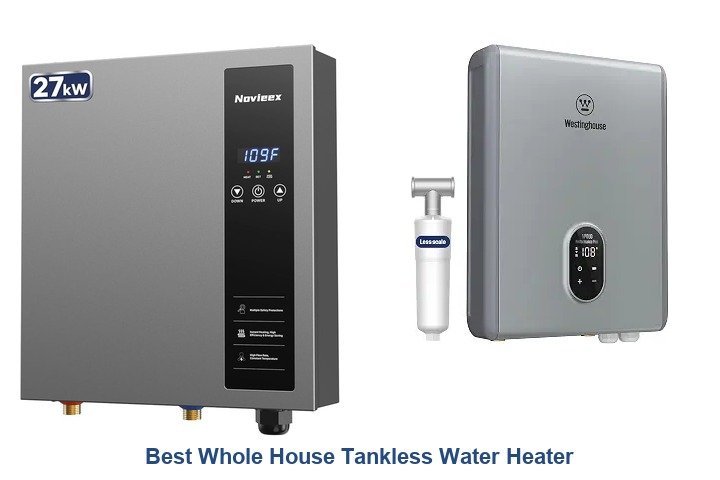

The best whole house tankless water heater systems revolutionize how homes receive hot water by providing continuous, on-demand heating without the need for bulky storage tanks. Embracing cutting-edge heat exchange technology, these units offer improved energy efficiency and space-saving benefits over traditional water heaters. Key features such as advanced flow control, durable materials, and smart temperature regulation contribute to their growing popularity.
Understanding the performance metrics, installation requirements, and long-term advantages of these innovations is essential for making an informed choice. Delve deeper to explore how modern tankless water heaters can elevate your home’s comfort and utility efficiency while addressing common challenges in water heating.
Best Whole House Tankless Water Heater: Top Picks for 2026
| Image | Product | Buy |
|---|---|---|
Top Picks- 1  | 27kW Tankless Water Heater Electric, NOVIEEX 240V 3s Instant Hot Best for: Fast instant heating | Check Price On Amazon |
Top Picks- 2  | Westinghouse Tankless Water Heater Electric 18kW 240V Wifi Whole House Best for: Smart home integration | Check Price On Amazon |
Top Picks- 3  | Westinghouse Tankless Water Heater Gas Indoor, 7.9 GPM, 180,000 BTU Best for: High flow gas heating | Check Price On Amazon |
Top Picks- 4  | Rinnai RE199iN Non-Condensing Natural Gas Tankless Water Heater Best for: Reliable gas performance | Check Price On Amazon |
Top Picks- 5 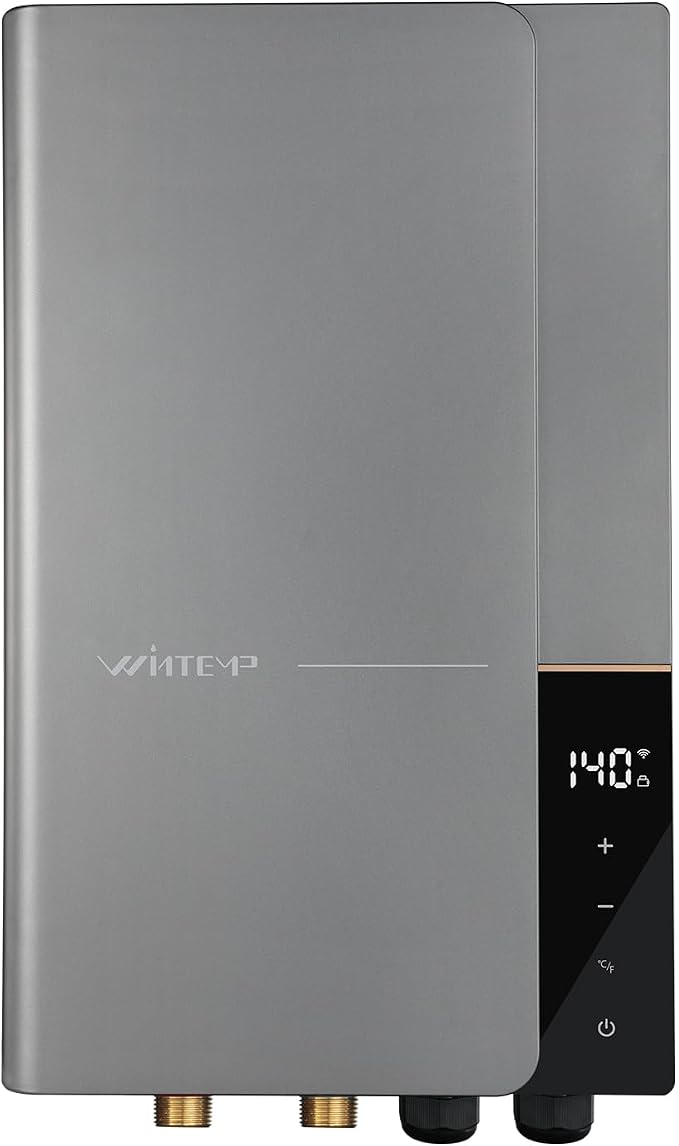 | 27kW 240V Tankless Water Heater Electric Whole House, Up to Best for: Whole house electric | Check Price On Amazon |
1. 27kW Tankless Water Heater Electric, NOVIEEX 240V 3s Instant Hot
Best for: High-Power Electric Heating Performance.
Delivering 27kW of power at 240V with a peak current of 112.5A, the NOVIEEX tankless water heater supports heavy-duty hot water demands suitable for large households. Its compact size of 14.13″ by 15.86″ by 3.18″ enables flexible wall mounting without sacrificing space.
Equipped with 3/4″ NPT water connections and requiring three 40A double-pole breakers plus 8 AWG wiring, it ensures reliable and safe electrical installation. Features like anti-freezing, overheat protection, and an LED display deliver operational safety and convenient real-time monitoring.
Pros
- 27kW wattage enables rapid water heating
- Compact dimensions (14.13″ W x 15.86″ H x 3.18″ D) save installation space
- Multiple safety features including anti-freezing and overheat protection
- 3/4″ NPT water connections for standard plumbing compatibility
Cons
- Requires heavy-duty electrical wiring and three 40A breakers, demanding professional installation
Ideal for buyers with high hot water needs and adequate 240V electrical capacity seeking powerful, electric tankless heating. Suited for whole homes requiring steady, rapid water heating under continuous use.
2. Westinghouse Tankless Water Heater Electric 18kW 240V Wifi Whole House
Best for: Smart Electric Heater with Copper Elements.
The Westinghouse 18kW electric tankless heater yields hot water faster by utilizing copper heating elements, boosting responsiveness by 50%. Its 4.2 GPM capacity at standard inlet temperatures supports multiple simultaneous uses in moderate-sized homes.
Designed for 240V operation at 75A and working within 86°F to 140°F output ranges, it allows precise temperature control with self-modulating technology. The unit features 3/4″ NPT connections and integrates Wi-Fi with Google Assistant and Alexa for voice control and remote monitoring.
Pros
- Copper heating elements accelerate heating by 50%
- Wi-Fi enabled for remote operation and voice control
- Self-modulating adjusts power based on demand
- Compatible with standard 3/4″ NPT plumbing fixtures
Cons
- Limited maximum flow rate of 4.2 GPM may restrict simultaneous multiple fixtures
Excellent for technology-savvy buyers in moderate households wanting connected smart controls coupled with efficient electric heating. Suitable for users prioritizing quick heat-up and convenience over ultra-high flow.
3. Westinghouse Tankless Water Heater Gas Indoor, 7.9 GPM, 180,000 BTU
Best for: Gas-Powered High-Capacity Performance.
Generating 180,000 BTU and delivering 7.9 GPM, this Westinghouse gas tankless water heater serves three showers running simultaneously, making it robust enough for busy households seeking abundant hot water on demand.
Operating at 120V alternating current, it includes an LED display and offers ±1℉ temperature accuracy. The integrated Wi-Fi app and voice control provide effortless remote management of water temperature and system status from anywhere.
Pros
- High BTU rating of 180,000 ensures substantial heat output
- 7.9 GPM supports multiple simultaneous water uses
- Wi-Fi and app control enhance usability
- Accurate temperature regulation within ±1℉
Cons
- Requires natural gas hookup and proper ventilation system
Targeted at gas service homes needing a strong flow rate for everyday heavy use, combining tech convenience with reliable gas heating. Suits families with multiple bathrooms and high water demand patterns.
4. Rinnai RE199iN Non-Condensing Natural Gas Tankless Water Heater
Best for: Energy-Efficient Natural Gas Solution.
The Rinnai RE199iN natural gas heater generates 199,000 BTU and supports a maximum flow of 9.8 GPM, providing energy-conscious households with substantial hot water output while reducing standby energy losses through on-demand heating.
Its compact wall-mounted design features an LED display for diagnostic codes and maintenance reminders, enhancing serviceability and reliability. The unit delivers a maximum water temperature of 140 °F to meet typical household needs efficiently.
Pros
- High flow rate of 9.8 GPM meets heavy household demands
- 199,000 BTU promotes energy-efficient heating
- LED display aids troubleshooting and maintenance
- Space-saving wall mount design
Cons
- Non-condensing design may be less efficient than condensing alternatives
Well-suited for homeowners focused on minimizing energy waste without compromising flow capacity. Ideal for gas users wanting a reliable, maintenance-aware whole-house heater.
5. 27kW 240V Tankless Water Heater Electric Whole House, Up to
Best for: Powerful 27kW Electric Whole House Model.
Featuring a 27kW power rating at 240V with a maximum current draw of 113A, the WN27 tankless water heater delivers steady hot water at 6.5 GPM, accommodating high whole-house demand scenarios effectively.
Compact measurements of 11.1″ width by 19.1″ height by 4″ depth make it suitable for tight installations. Its self-regulating technology dynamically adjusts power based on actual water flow, optimizing energy use. The unit includes overheat protection and an LED display for operational awareness.
Pros
- Self-regulating technology enhances energy efficiency
- 27kW wattage supports simultaneous water use
- Compact dimensions fit limited spaces
- Safety features including overheat protection
Cons
- Requires a 250A household power supply for optimal installation
Fits buyers with high electrical capacity and large water demand who want a reliable, energy-conscious electric tankless solution that adapts to flow variations.
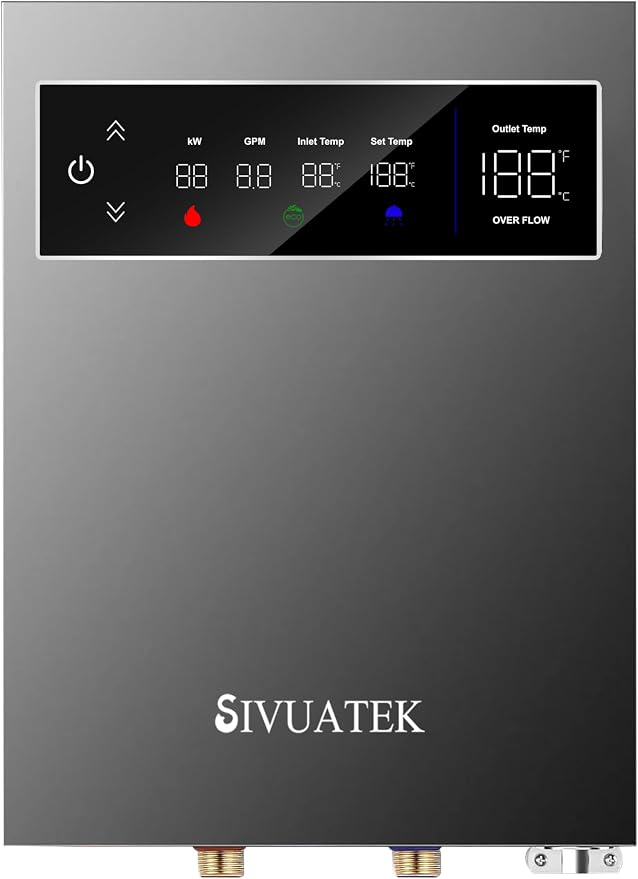
6. 18kW Tankless Water Heater Electric 240V, Whole House, Gray
Best for: Efficient 18kW Electric Unit with Touch Control.
Operating at 18kW power and 240 volts, this slim-profile electric heater (15.87″ x 11.14″ x 2.87″) offers space-saving installation suitable for modern homes desiring efficient water heating without bulky units.
It connects via standard 3/4″ NPT fittings and features an intuitive touch sensor, enhancing control precision. Overheat protection and easy control interface provide a safe and user-friendly experience, while eliminating standby energy loss reduces utility expense.
Pros
- Compact size for flexible placement
- Touch sensor and intuitive display simplify operation
- Eliminates standby energy loss for savings
- Standard plumbing connections for easy installation
Cons
- Maximum temperature capped at 131 °F may suit mild heating needs only
Ideal for homeowners with modest but steady hot water demands who need a clean, easy-to-use electric heater with space-saving form factor.
7. Ranein Natural Gas Tankless Water Heater, 8.5 GPM, 190,000 BTU,

Best for: Natural Gas Heater with Advanced Combustion.
This Ranein natural gas unit outputs 190,000 BTU, offering a substantial 8.5 GPM flow rate. Its powerful blower automatically adjusts fan speed for optimal oxygen supply, ensuring efficient combustion and safe operation even in changing conditions.
The model features low noise operation and an LED display for monitoring. A maximum temperature setting of 155°F supports comfortable hot water delivery across varied household applications while maintaining safety standards.
Pros
- Automatic blower speed adjusts to environmental changes
- High heat output of 190,000 BTU with 8.5 GPM flow
- LED display enhances operational transparency
- Quiet functioning extends comfort in installation areas
Cons
- Requires natural gas supply and proper venting setup
Best for buyers looking for a robust, gas-powered heater with smart combustion control, ideal for those prioritizing safety and quiet operation in whole house systems.
8. Tankless Water Heater Electric 18kW at 240 Volt, ThermoMate On

Best for: Fast-Response 18kW Electric Water Heater.
Delivering hot water within 3 seconds, this 18kW 240V electric tankless unit eliminates wait time and cold water bursts, providing continuous flow at up to 4.4 GPM. Its self-modulating technology ensures precise energy use matching water demand.
Requiring 80 Amp breakers and featuring a 3/4″ NPT piping interface, it saves space and reduces energy consumption up to 60% compared to traditional water heaters. The unit runs leak-free with maintenance-free heating elements for hassle-free operation.
Pros
- 3-second hot water response time
- Self-modulating tech optimizes energy efficiency
- Maintenance-free heating elements for durability
- Compact design reduces installation footprint
Cons
- Needs two double-pole 40 Amp breakers, requiring electrical panel capacity check
Perfect for users who value instant hot water delivery and energy savings in moderate-demand homes, especially those with properly sized electrical systems.
9. ThermoMate 27kW Tankless Water Heater Electric Max 6.6 GPM ETL

Best for: 27kW Electric Heater with Self-Modulating Tech.
Supporting 6.6 gallons per minute flow rate, the ThermoMate 27kW tankless electric water heater provides continuous hot water with self-modulating capability to adjust energy output based on water usage in real time.
Installation calls for three 40 Amp double-pole breakers and 8 AWG copper wiring. The unit incorporates advanced separation of water and electrical components for enhanced durability and safety. It maintains 140 °F max temperature and fits standard 3/4″ NPT connections.
Pros
- Self-modulating adjusts power precisely to water flow
- Advanced water-electricity separation improves safety
- Supports up to 6.6 GPM for steady hot water
- Compatible with standard plumbing fittings
Cons
- Requires a minimum home panel rating of 150 Amps for installation
Recommended for buyers with sufficient electrical capacity seeking a safe and efficient 27kW whole house electric water heater that adapts dynamically to water flow needs.
10. 27kW Tankless Water Heater Electric 240V WiFi, ETL Certified

Best for: Wi-Fi Enabled 27kW Electric Tankless Unit.
This 27kW electric water heater supports 6.5 GPM with smart home compatibility via Wi-Fi and Tuya Smart, offering advanced flow control to maintain precise water temperature continuously without fluctuation during use.
Installation requires three 40 Amp double-pole breakers and wiring with 8 AWG copper, compatible with 240V systems. The wall-mounted model features an LED display, temperature lock, and self-modulating technology for convenient control and safety.
Pros
- Wi-Fi and smart home integration for remote control
- Self-modulating power management enhances efficiency
- LED display and temperature lock improve user control
- Supports continuous, stable hot water at 6.5 GPM
Cons
- Recommended 200 Amp household service may limit compatibility with smaller electrical panels
Ideal for tech-oriented buyers with available high electrical capacity who want precise temperature control and remote management in a powerful whole house electric heater.
How to Choose the Right Whole House Tankless Water Heater
Capacity and flow rate
The ability to deliver an adequate flow of hot water at the right temperature is essential for a heating system to meet a household’s daily demands without interruption or delay.
Matching the unit’s capacity to the household’s size and water usage patterns ensures that multiple outlets—such as showers, faucets, and appliances—receive enough hot water simultaneously. A tankless water heater with insufficient flow rate may struggle to supply peak demand periods, leading to reduced water temperature or pressure drops that impact comfort and convenience.
Estimating hot water needs involves totaling the gallons per minute (GPM) used during busy times, such as morning routines when several showers may run alongside dishwashers or washing machines. For example, an average shower uses about 2.5 GPM, so a family of four could require a unit capable of delivering 7-10 GPM to handle concurrent usage confidently. Selecting a system designed for peak flow rates prevents performance bottlenecks and ensures consistent temperature delivery, even under maximum load.
Understanding these flow dynamics allows homeowners to choose a solution that balances efficiency with reliable, steady hot water flow throughout the entire home.
Material quality and durability
High-quality materials significantly extend the operational lifespan and reliability of any water heating system. Components crafted from corrosion-resistant metals, such as stainless steel or copper alloys, help prevent mineral buildup and rust, which can severely reduce efficiency and cause premature failure in plumbing environments.
The heat exchanger, being the core element responsible for transferring heat to water, benefits greatly from durable materials. Copper heat exchangers facilitate rapid and efficient heat transfer while resisting degradation, whereas stainless steel variants provide superior durability in harder water conditions. The choice of heat exchanger material directly affects maintenance frequency and energy consumption, making long-term savings achievable.
Longevity is further supported by manufacturers offering robust warranties, reflecting confidence in product endurance. Comprehensive coverage often includes protection against leaks and component wear, reducing potential repair costs. In practical terms, investing in a unit with advanced corrosion resistance and premium heat exchange technology means fewer breakdowns, stable performance under heavy usage, and greater peace of mind for homeowners relying on continuous hot water supply.
Energy efficiency and cost savings
High energy efficiency substantially reduces the operational costs and environmental impact of a whole-house water heating system. Water heaters with superior energy factor (EF) ratings convert a greater percentage of fuel into usable hot water, minimizing wasted energy and lowering monthly utility bills. For instance, an on-demand unit boasting an EF rating above 0.90 can save homeowners hundreds of dollars annually compared to less efficient conventional models.
Beyond immediate financial gains, energy-efficient tankless systems contribute to long-term sustainability by decreasing greenhouse gas emissions and reducing reliance on fossil fuels. The precise heating method eliminates standby heat loss often found in storage tanks, further enhancing performance and environmental benefits. Integrating these systems into a household with moderate to high hot water usage ensures efficient temperature regulation without constant energy draw, offering consistent savings over time.
Investing in a water heater with credible certifications and optimized EF values not only trims utility expenses but also aligns with eco-conscious living goals. Households experiencing fluctuating water demands particularly benefit, as the unit activates solely when needed, providing substantial energy conservation. Ultimately, a system’s energy efficiency serves as a fundamental measure of both cost-effectiveness and its reduced carbon footprint.
Temperature control and user interface
Accurate temperature settings significantly enhance the efficiency and comfort of home water heating systems, allowing users to tailor hot water output to their specific needs with ease.
Managing water temperature precisely prevents unnecessary energy use and helps avoid scalding or lukewarm water, which can compromise daily activities like showering, dishwashing, or laundry. Manual controls, while straightforward and typically more affordable, often lack the fine-tuning and convenience offered by digital interfaces that provide precise adjustments and memory for preferred temperature settings.
Modern water heaters commonly feature preset temperature options that simplify the process by offering commonly used levels such as eco-friendly, standard, or high heat modes. Advanced models now incorporate remote and smart control capabilities, enabling users to monitor and adjust water temperature via smartphone apps or voice commands from anywhere in the home or remotely. This connectivity not only improves convenience but also allows homeowners to optimize energy consumption patterns based on usage schedules, enhancing overall system efficiency and user experience.
Installation and maintenance requirements
Proper setup and upkeep are vital components that ensure a tankless water system runs efficiently and lasts for years. The compatibility of the venting system is especially important because improper ventilation can lead to reduced performance, safety hazards, and even premature unit failure. Many models require specific venting materials such as stainless steel or PVC pipes rated for high temperatures, so verifying compatibility with existing home infrastructure is essential.
Accessibility plays a significant role in simplifying regular servicing and troubleshooting. A conveniently located unit with ample space around it allows technicians or homeowners to perform inspections, cleanings, and component replacements without difficulty. This reduces service time and minimizes disruption to daily routines.
Routine maintenance tasks typically include descaling to prevent mineral buildup, filter replacements, and checking the burner and ignition system for wear. These should be scheduled every 6 to 12 months, depending on water hardness and usage frequency. Remaining consistent with these care practices not only improves water heater efficiency and lifespan but also safeguards against unexpected breakdowns and costly repairs.
Quick Best Whole House Tankless Water Heater Buying Checklist
- Hot Water Demand: Ensure the unit’s flow rate matches your household’s maximum simultaneous usage.
- Durable Materials: Look for heat exchangers made of stainless steel or copper to resist corrosion.
- Energy Efficiency: Choose models with high energy factor ratings to save on energy consumption.
- Temperature Settings: Opt for adjustable controls that allow precise and consistent water temperature.
- Installation Needs: Consider the venting, space requirements, and compatibility with existing plumbing.
- Warranty & Support: Verify brand reputation and warranty length to ensure reliable service and coverage.
Frequently Asked Questions
What Size Tankless Water Heater Do I Need For My Home?
Selecting the right size tankless water heater depends on your household’s peak hot water demand and simultaneous usage. Typically, sizing is based on gallons per minute (GPM) flow rate, ensuring adequate hot water delivery during busy periods without sacrificing performance.
How Does A Whole House Tankless Water Heater Save Energy?
Whole house tankless water heaters save energy by heating water only on demand rather than storing it in a tank. This eliminates standby heat loss common with traditional water heaters, resulting in lower energy consumption and reduced utility costs.
Are Tankless Water Heaters Difficult To Install?
Installation complexity varies, but whole house tankless water heaters often require professional setup due to venting, gas line, or electrical considerations. Proper installation ensures optimal performance and safety, making expert installation highly recommended.
What Maintenance Is Required For A Whole House Tankless Water Heater?
Regular maintenance includes descaling to prevent mineral buildup, inspecting the venting system, and checking the filters. Scheduled servicing enhances durability and maintains efficient operation over time.
Can I Control My Tankless Water Heater Remotely?
Many modern whole house tankless water heaters offer smart connectivity features, allowing remote temperature adjustments and monitoring via smartphone apps. This adds convenience and precise control over your hot water supply.
Final Suggestions
Choosing the best whole house tankless water heater offers reliable, on-demand hot water that enhances comfort and efficiency throughout your home. Their versatile features deliver energy savings, space efficiency, and consistent temperature control. Investing in a quality unit provides long-term value and a smarter, more convenient water heating solution tailored to your needs.