
The best render engine for Blender plays a crucial role in elevating 3D modeling and animation projects through advanced rendering technology and optimized performance. Exploring the features of leading Blender render engines reveals a landscape rich with innovation—from real-time ray tracing to enhanced material realism and GPU acceleration. Picking the right rendering solution can dramatically impact output quality, production speed, and resource management, especially when dealing with complex scenes or photorealistic environments.
Understanding how render engines utilize diverse rendering algorithms, support various shading models, and integrate seamlessly with Blender is essential for maximizing creative potential. Delve into this guide to unlock the insights behind the best render engine for Blender and uncover which engines are pushing the boundaries of modern 3D visualization.
best render engine for blender: + Top Picks for 2026
| Image | Product | Buy |
|---|---|---|
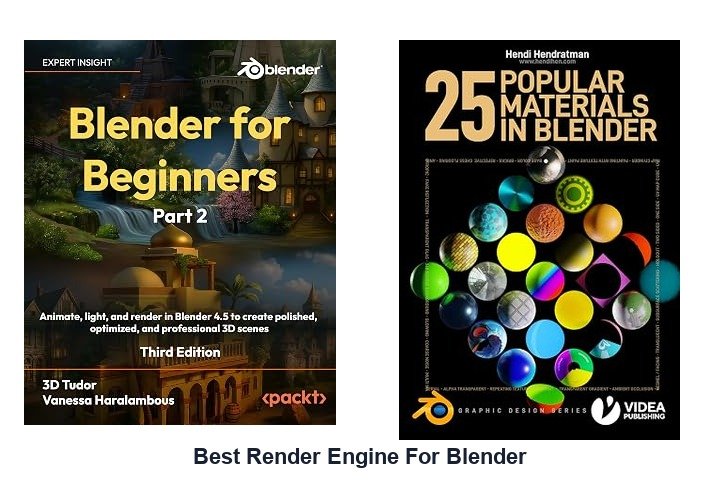
Top Picks- 1  | Blender for Beginners Part 2: Animate, light, and render in Best for: Beginners starting animation | Check Price On Amazon |
Top Picks- 2  | 25 Popular Materials in Blender: Render Engine: Eevee & Cycles Best for: Material enthusiasts | Check Price On Amazon |
Top Picks- 3  | 3D Environment Design with Blender 5: Enhance your modeling, texturing, Best for: Environment artists | Check Price On Amazon |
Top Picks- 4  | Blender 5.1 Architecture and Engine Optimization: Build Robust Real-Time Applications Best for: Architecture developers | Check Price On Amazon |
Top Picks- 5 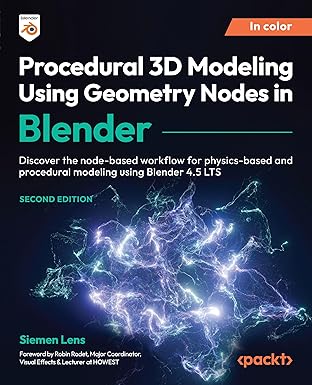 | Procedural 3D Modeling Using Geometry Nodes in Blender: Discover the Best for: Procedural modelers | Check Price On Amazon |
1. Blender for Beginners Part 2: Animate, light, and render in
Best for: Ideal for new Blender users starting animation.
Focused on beginner-level animation and lighting, this resource provides practical steps to animate and render effectively within Blender. It empowers users to gain hands-on experience without overwhelming complexity.
Covering essential rendering techniques tailored for novices, it introduces the use of Blender’s internal tools with a focus on simplicity and achieving quality output. The course emphasizes straightforward lighting setups and animation basics, enabling quick progress in rendering skills from the ground up.
Pros
- Clear guidance on Blender’s native render engine
- Step-by-step animation workflow explanations
- Focus on basic lighting for realistic scenes
- Suitable for users without prior rendering experience
Cons
- Limited coverage of advanced render engines and settings
Perfect for beginners seeking a smooth entry into Blender’s rendering and animation environment. Best suited for hobbyists and students looking to build foundational skills confidently.
2. 25 Popular Materials in Blender: Render Engine: Eevee & Cycles
Best for: Great choice for material-focused rendering.
Highlighting 25 popular materials optimized for Blender’s Eevee and Cycles render engines, this guide supports users in creating realistic textures and finishes across diverse projects. It enables detailed material setups that visually enhance 3D models.
With a comprehensive overview of shader properties and rendering differences between Eevee and Cycles, it details how to apply and tweak materials across various lighting conditions. The focus on material realism helps artists achieve lifelike surfaces with scalable rendering quality.
Pros
- Extensive catalog of widely-used materials
- Explanations of material behavior in Eevee and Cycles
- Techniques for achieving realistic textures
- Optimizations for different lighting environments
Cons
- Material examples may require intermediate knowledge to replicate accurately
Designed for creators focusing on material accuracy and visual realism in Blender projects. Suits those aiming to deepen understanding of shader nuances within both major render engines.
3. 3D Environment Design with Blender 5: Enhance your modeling, texturing,
Best for: For detailed 3D environment creators using Blender.
This resource emphasizes enhancing modeling and texturing, ideal for those building complex 3D environments. It supports refined control over textures and models to produce immersive scenes with visual depth.
By exploring advanced texture mapping and modeling techniques, it covers methods to apply detailed surface characteristics and optimize environmental assets. The guide also addresses integration with Blender’s rendering systems to maintain consistency and realism.
Pros
- Advanced texturing strategies for complex surfaces
- Modeling tips tailored for environment assets
- Guidance on texture resolution and detail management
- Considers render compatibility during asset creation
Cons
- Requires solid foundational Blender knowledge for best results
Well-suited for artists focusing on environment design who demand precise texture and model control. Optimal for practitioners looking to enhance scene realism through detailed asset preparation.
4. Blender 5.1 Architecture and Engine Optimization: Build Robust Real-Time Applications
Best for: Focused on real-time app performance and architecture.
Providing insights into Blender 5.1’s engine optimization tailored to architecture and real-time application development, this product helps users build efficient, responsive 3D projects.
It analyzes performance improvements and strategies to reduce rendering overhead in architectural visualizations. Users gain techniques related to engine settings that ensure smoother real-time interactions without sacrificing visual quality.
Pros
- Optimization tips specific to Blender 5.1 architecture features
- Focus on real-time rendering improvements
- Techniques to balance quality and performance
- Supports robust application development workflows
Cons
- Primarily addresses Blender 5.1, limiting immediate relevance for earlier versions
Ideal for developers creating interactive architectural models and real-time applications who need efficient rendering pipelines. Provides essential knowledge to optimize Blender’s engine settings effectively.
5. Procedural 3D Modeling Using Geometry Nodes in Blender: Discover the
Best for: Best for procedural modeling enthusiasts.
Specializing in procedural 3D modeling via Blender’s Geometry Nodes, this guide unlocks flexible, non-destructive design workflows. It enables creation of complex models through node-based parameter control.
Detailed tutorials explain node setups and the underlying logic for procedural shape generation. Users learn to manipulate geometry dynamically, facilitating rapid iteration and modification without manual model adjustments.
Pros
- In-depth coverage of Blender’s Geometry Nodes system
- Encourages efficient non-destructive modeling
- Clear examples of procedural workflows
- Supports creative and parametric design approaches
Cons
- Geometry Nodes complexity may challenge beginners
Geared towards artists and designers focused on flexible procedural modeling in Blender. Best for those wanting to harness node workflows to speed up model iteration and customization.
6. Learn Blender Simulations the Right Way: Transform your artistic vision

Best for: Supports those mastering Blender physics simulations.
Targeting users aiming to refine artistic projects with physics, this resource covers accurate Blender simulation techniques blending artistry and technical control.
It addresses multiple physics types, including cloth, fluids, and particles, detailing settings that yield realistic motion and interaction. Tutorials balance visual effects and computational efficiency for effective scene simulation.
Pros
- Comprehensive physics simulation coverage
- Focus on combining artistic vision with technical accuracy
- Guidance on balancing realism and performance
- Practical examples for various simulation types
Cons
- Simulation optimization requires detailed parameter tuning
Perfect for artists integrating physics into Blender projects seeking practical knowledge on realistic simulation management. Suited for those enhancing visual storytelling with dynamic effects.
7. Blender Rendering with Cycles: Master Lighting, HDRI Workflows, Compositing, and

Best for: Master lighting and compositing in Cycles render.
Dedicated to mastering Blender’s Cycles render engine, this resource offers detailed insights on lighting setups, HDRI workflows, and compositing to achieve high-quality renders.
It explains balancing light sources with HDR imagery to generate realistic illumination and shadows, alongside compositing techniques that polish the final output. The approach suits users aiming for photorealistic render quality.
Pros
- Detailed Cycles lighting and shading instruction
- Comprehensive HDRI environment setup guidance
- Advanced compositing workflow techniques
- Focus on photorealistic render outputs
Cons
- Emphasis on Cycles limits relevance for Eevee-focused projects
Ideal for artists prioritizing photorealism using Blender’s Cycles engine. Valuable for those wanting to enhance lighting precision and final render polish.
8. Blender 5.2 LTS Made Practical [2026 EDITION]: A Beginner-Friendly Guide
![Blender 5.2 LTS Made Practical [2026 EDITION]: A Beginner-Friendly Guide](https://m.media-amazon.com/images/I/71rkp7cNVkL._SY385_.jpg)
Best for: Beginner-friendly resource for Blender 5.2 LTS users.
Designed to simplify Blender 5.2 LTS, this practical guide helps newcomers grasp core rendering workflows with clear instructions and accessible techniques.
The guide focuses on stable features of the long-term support release, mapping out rendering basics alongside interface navigation. It facilitates learning with gradual exposure to Blender’s rendering engines for sustained user confidence.
Pros
- Stepwise introduction to rendering in Blender 5.2 LTS
- Emphasis on stable core features
- User-friendly explanations and tutorials
- Assists building fundamental rendering skills
Cons
- Less emphasis on advanced or cutting-edge rendering features
Great for Blender newcomers or those preferring a stable environment for learning rendering. Fits users seeking a solid foundation without overwhelming complexity.
9. Blender 5 Best Practices: Optimize workflows and master advanced techniques

Best for: Optimizes workflows for advanced Blender users.
Focusing on workflow optimization and advanced techniques, this resource streamlines complex Blender projects by enhancing rendering speed and project management.
Covering layered workflows and performance tweaks, it introduces methods to reduce render times without compromising quality. The guide encourages best practices for managing render passes and shader setups efficiently.
Pros
- Techniques to improve rendering efficiency
- Detailed coverage of render pass management
- Advanced shader and node graph optimization
- Strategies to accelerate complex scene renders
Cons
- Assumes significant prior Blender rendering experience
Suited for experienced Blender users tackling high-complexity projects who need to optimize rendering workflows. Ideal for professionals seeking faster, cleaner render pipelines.
10. Blender 4.5 Made Simple for Beginners: Build Portfolio-Ready Models, Textures,

Best for: Simplifies portfolio creation for Blender beginners.
Geared toward beginners, this resource breaks down creating portfolio-ready models and textures within Blender 4.5. It enables fast development of quality assets to showcase skills effectively.
Emphasizing practical model and texture workflows, it covers clean topology and PBR texturing principles to ensure outputs meet presentation standards. The guide prepares users for real-world project requirements in the render phase.
Pros
- Clear guidance on building portfolio-ready assets
- Focus on clean modeling and PBR texturing
- Supportive tutorials targeting beginner skill levels
- Encourages best practices for rendering presentation
Cons
- Limited exploration of advanced rendering features in Blender 4.5
Ideal for newcomers aiming to create and render polished models for portfolios. Perfect for students or hobbyists preparing work for showcasing or job applications.
How to Choose the Right Best Render Engine for Blender
Rendering performance and speed
Rendering performance hinges on whether the engine leverages GPU or CPU. GPU-based renderers excel at handling large scenes with complex lighting faster than CPU-only variants, especially when you need real-time preview or animation rendering. Look for engines with optimized GPU acceleration that reduce render times significantly without compromising final image fidelity.
Avoid engines that falter with dense geometry or slow down excessively past modest sample counts. For users prioritizing speed and interaction during workflow, a GPU-focused renderer with solid support for real-time rendering is the optimal choice, offering both efficiency and responsiveness.
Compatibility and integration
Choose a render engine that integrates seamlessly within Blender’s ecosystem to streamline your workflow. Key signs are native plugin support, frequent updates aligned with Blender releases, and compatibility across Windows, macOS, and Linux. Avoid engines that require clunky workarounds or external converters as these disrupt pipeline fluidity.
The best pick offers robust addon compatibility, ensuring easy setup and direct access to Blender’s modeling and shading tools. For maximum productivity and minimal friction, select an engine whose developers maintain strong ties with Blender’s updates and extensions.
Render quality and features
High-quality renders demand engines capable of simulating realistic light interactions, including reflections, refractions, and complex shadows. Advanced features like volumetric scattering and caustics add depth and authenticity to scenes. Strong antialiasing methods combined with effective noise reduction produce smooth, clean images without excessive sample counts.
Engines limited in these aspects produce flatter, less convincing visuals or require impractical render times. The preferred engine delivers a balance of photorealistic lighting effects and noise management to realize detailed renders efficiently.
User interface and usability
A user-friendly interface reduces setup time and frustration, especially when configuring lighting, materials, and render passes. Opt for engines featuring intuitive controls accessible directly from Blender’s UI, with ample customization options to tailor the rendering process without complex scripting. Comprehensive documentation and an active user community are critical for troubleshooting and mastering advanced features quickly.
Select an engine with straightforward configuration, clear guides, and strong user engagement to smooth workflow and learning curve alike.
Cost and licensing options
Consider your usage scenario when evaluating cost and licensing. Free engines often provide full core features with generous licensing for commercial projects, ideal for individual artists or startups. Paid options may offer enhanced features, priority updates, or dedicated support that benefit studios with demanding pipelines.
Licensing should be flexible, allowing deployment across multiple machines without restrictions that block professional scalability. Opt for an engine that matches your budget while granting you unrestricted commercial use and reliable access to improvements and support.
Which Should You Choose?
- If you are just getting started with Blender and want to quickly bring animations and lighting setups to life, choose a render engine focused on real-time performance and ease of use.
- If you need highly realistic materials and lighting effects for detailed scenes, choose a path-tracing render engine that excels at photorealistic rendering and advanced shading.
- If your projects emphasize complex environments and extensive texture work, choose a render engine that integrates well with procedural texturing and supports efficient scene management.
- If your priority is building optimized real-time applications or architectural visualizations, choose a render engine optimized for fast viewport rendering and hardware acceleration.
Quick Best Render Engine For Blender Buying Checklist
- Rendering Speed: Ensure the engine can utilize your hardware effectively for faster outputs.
- Quality of Renders: Look for engines that excel in realistic lighting and texture detail.
- Blender Compatibility: Check for seamless integration with Blender’s latest versions and support for plugins.
- User-Friendly Interface: Prioritize engines that are easy to configure and navigate.
- Budget Considerations: Compare free options versus paid licenses based on features and support.
- Community and Support: Opt for engines with active user communities and reliable developer assistance.
Frequently Asked Questions
What Is The Best Render Engine For Blender For Beginners?
The best render engine for Blender beginners is one with an intuitive interface and easy setup, like Eevee, because it offers real-time rendering and requires minimal configuration. This allows users to quickly see results without complex adjustments.
How Important Is Gpu Support In A Blender Render Engine?
GPU support is crucial in a Blender render engine as it significantly speeds up rendering times compared to CPU-based rendering. Engines like Cycles leverage GPU hardware to deliver faster performance, making complex scenes more manageable.
Can I Use Multiple Render Engines In Blender Projects?
Yes, Blender supports using multiple render engines within a single project, allowing users to switch between Eevee for quick previews and Cycles for photorealistic final renders. This flexibility helps optimize workflow and output quality.
What Features Enhance Realism In Blender Render Engines?
Features such as global illumination, subsurface scattering, and accurate caustics enhance realism in Blender render engines. These effects simulate natural light behavior and materials, producing visually convincing images and animations.
Are Free Render Engines For Blender As Effective As Paid Options?
Free render engines for Blender, like Eevee and the built-in Cycles, are highly effective and capable of producing professional-quality results. Paid engines may offer faster speeds or advanced features but free options provide excellent value and versatility for most users.
Final Suggestions
Choosing the best render engine for Blender can dramatically improve your 3D visualization by balancing speed, quality, and ease of use. The right engine enhances creativity with realistic effects and smooth integration, making it a valuable tool for artists and designers alike. Embrace the power of these render engines to bring your Blender projects to life with stunning results.