
The best 3D model format for Blender plays a critical role in optimizing your 3D design workflow, ensuring seamless integration and maximum detail retention. Choosing the right file type affects model compatibility, rendering speed, and the flexibility to edit complex textures and animations. With formats ranging from OBJ and FBX to STL and GLTF, each offers distinct advantages and potential limitations depending on your project needs.
Understanding how these file types interact with Blender’s powerful engine is essential for professionals and hobbyists seeking precision and efficiency. This guide delves into the technological innovations and benefits underlying popular 3D model formats, helping you navigate common challenges such as data loss and format compatibility.
Stay with us to explore which 3D model formats unlock the best Blender experience and elevate your digital creations to the next level.
best 3d model format for blender: Top Picks for 2026
| Image | Product | Buy |
|---|---|---|
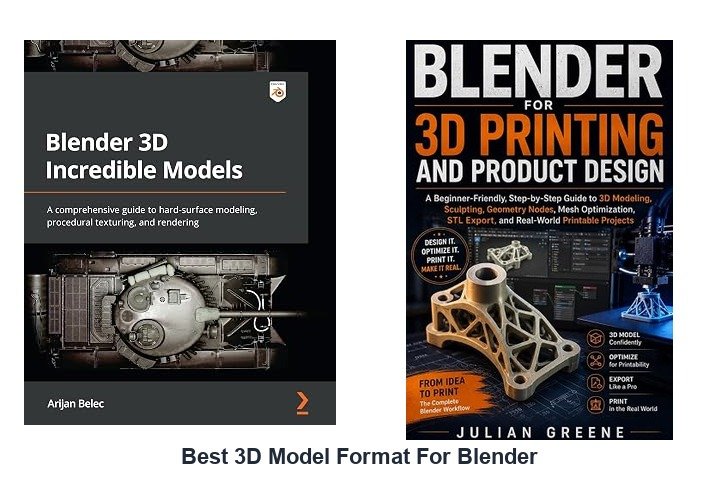
Top Picks- 1 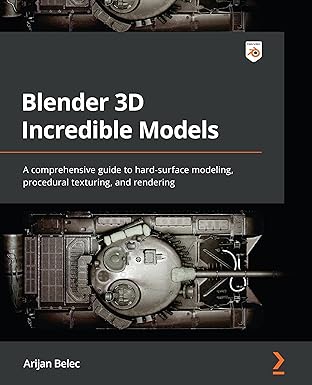 | Blender 3D Incredible Models: A comprehensive guide to hard-surface modeling, Best for: Hard-surface modeling enthusiasts | Check Price On Amazon |
Top Picks- 2  | Blender for 3D Printing and Product Design: A Beginner-Friendly, Step-by-Step Best for: Beginners in 3D printing | Check Price On Amazon |
Top Picks- 3  | Master Blender Design with Advanced 3D Modeling Techniques.: Create Stunning Best for: Advanced 3D modelers | Check Price On Amazon |
Top Picks- 4  | How to Use Blender for 3D Printing in 2026: A Best for: 3D printing beginners | Check Price On Amazon |
Top Picks- 5  | Blender 5.0 Complete Guide 2026: Step-by-Step 3D Animation Course for Best for: 3D animation learners | Check Price On Amazon |
1. Blender 3D Incredible Models: A comprehensive guide to hard-surface modeling,
Best for: Hard-surface modeling enthusiasts and technical artists.
Blender 3D Incredible Models offers comprehensive coverage of hard-surface modeling techniques, providing precise control over complex mechanical and industrial designs. Its detailed approach allows users to create intricate, realistic models suitable for applications requiring sharp edges and defined surfaces.
Featuring extensive tutorials on topology optimization and subdivisional surface modeling, the guide enables users to work with nanometer-scale accuracy and create models optimized for various rendering engines. It includes step-by-step examples for both high and low poly assets, allowing efficient mesh management for demanding projects.
Pros
- Extensive focus on hard-surface topology for clean geometry
- Includes mesh optimization techniques for rendering efficiency
- Stepwise guidance in edge crease and bevel weighting
- Supports industrial-level detail suitable for simulations
Cons
- Primarily specializes in hard-surface models, limiting organic modeling insights
Users focused on mechanical, architectural, or industrial 3D models will find this guide ideal for mastering Blender’s hard-surface capabilities. Its precision and optimization tips are perfect for those needing clean, production-ready meshes.
2. Blender for 3D Printing and Product Design: A Beginner-Friendly, Step-by-Step
Best for: Beginners exploring 3D printing and product design workflows.
Designed for newcomers, Blender for 3D Printing and Product Design simplifies the modeling process with beginner-friendly, step-by-step instructions tailored to output printable designs. It focuses on reliable model formatting compatible with popular 3D printers and product development pipelines.
The book clarifies the usage of STL and OBJ file formats commonly supported by 3D printers and includes practical advice on scaling and wall thickness specifications, crucial for ensuring print success. It also introduces mesh repair tools within Blender to fix non-manifold edges and invert normals seamlessly.
Pros
- Clear guidance on STL export settings to maintain print accuracy
- Includes mesh validation steps to prevent printing errors
- Focuses on scalable product design parameters
- Stepwise tutorials perfect for users new to 3D modeling
Cons
- Limited coverage on advanced rendering or animation features
Ideal for hobbyists and product designers just starting with Blender, this resource provides the fundamentals to create models reliably printable and ready for physical prototyping.
3. Master Blender Design with Advanced 3D Modeling Techniques.: Create Stunning
Best for: Intermediate to advanced users mastering complex 3D design.
Master Blender Design with Advanced 3D Modeling Techniques caters to users aiming to create visually stunning and technically complex models. It emphasizes sculpting workflows combined with polygonal modeling to achieve both organic and hard-surface results.
Containing over 150 pages of advanced tutorials, the guide covers multi-resolution sculpting and retopology strategies, enabling users to produce high-detail meshes within manageable polycounts. It also discusses importing and exporting FBX and Alembic formats for interoperability with other software.
Pros
- Comprehensive teaching on advanced sculpting and retopology
- Supports varied export formats for versatile pipeline integration
- Focus on balancing high detail with performance considerations
- Includes workflows for both organic and mechanical models
Cons
- Some tutorials require prior Blender proficiency to follow
This guide suits 3D artists seeking to push Blender’s capabilities in creating richly detailed, multipurpose models, especially those needing flexible export options for cross-application use.
4. How to Use Blender for 3D Printing in 2026: A
Best for: Users focused on 3D printing preparation and workflow efficiency.
How to Use Blender for 3D Printing in 2026 directs attention to current Blender tools tailored for precise 3D printing preparation. This resource bridges modeling with print readiness, focusing on file hygiene and dimensional accuracy.
It emphasizes the use of Blender’s Mesh Analysis tools, supporting thorough checks for non-manifold edges and intersecting geometry on models up to 10 million polygons. The guide prioritizes export settings for STL and OBJ formats optimized for slicing software compatibility.
Pros
- Detailed instructions on mesh analysis to ensure printability
- Support for large, high-poly models without lag
- Focus on export setups compatible with industry-standard slicers
- Stepwise transformations ensuring scale accuracy
Cons
- Less emphasis on animation or rendering integration
Recommended for makers and engineers preparing precise models for additive manufacturing, this resource ensures Blender users export print-ready files with minimal manual correction.
5. Blender 5.0 Complete Guide 2026: Step-by-Step 3D Animation Course for
Best for: 3D animators seeking step-by-step modeling and animation courses.
Blender 5.0 Complete Guide 2026 offers a detailed curriculum combining modeling with animation preparation. It equips users to create models suited for rigs and realistic motion, prioritizing topology flow and deformation readiness.
The guide includes comprehensive sections on quad-dominant mesh creation with edge loops optimized for animation, alongside tutorials on UV unwrapping and texture baking for final rendering. It also discusses FBX export presets for game engines and animation suites.
Pros
- Topology-focused modeling for smooth animation deformations
- In-depth UV mapping techniques for texture accuracy
- Export options tailored for game engine compatibility
- Integrated animation workflow steps
Cons
- Focus on animation may be excessive for static model creators
Perfect for 3D artists who require dynamic models with clean topology optimized for animation and game development pipelines, blending modeling and rigging in one resource.
6. Low Poly 3D Modeling in Blender: Kickstart your career as

Best for: Aspiring professionals starting with low poly 3D modeling.
Low Poly 3D Modeling in Blender is curated to jumpstart careers focused on efficient, stylized models ideal for games and real-time applications. It highlights techniques to keep polycount low without sacrificing design clarity.
With clear explanations on polygon budget management, edge flow control, and texture atlas usage, the guide ensures models stay within constraints for engines like Unity and Unreal. It covers exporting formats including OBJ and FBX for wide software compatibility.
Pros
- Strong emphasis on polygon count optimization
- Includes texture atlas creation for efficient texturing
- Wide compatibility with game engines via export formats
- Clear beginner-friendly pace on modeling fundamentals
Cons
- Less guidance on high-detail or sculpted models
Best suited for users targeting entry-level game design or real-time visualization, focusing on creating performant, stylized low-poly meshes compatible across major platforms.
7. Blender Pro Tips: How Professionals Create 3D Models
Best for: Professional 3D modelers seeking expert tips and techniques.
Blender Pro Tips delivers insider techniques used by seasoned professionals to create optimized models for diverse pipelines. The resource dives into polygon reduction, topology refinement, and multi-format export workflows.
It provides case studies on exporting models in FBX, OBJ, and glTF formats, demonstrating how to maintain texture fidelity and mesh hierarchy. The guide also addresses automation techniques to speed up repetitive modeling tasks.
Pros
- Advanced polygon optimization and retopology methods
- Multi-format export workflows preserving model integrity
- Automation tips enhancing productivity
- Coverage of industry-standard best practices
Cons
- Assumes intermediate knowledge of Blender’s interface
This is ideal for experienced modelers looking to refine their export strategies and speed up production while ensuring file compatibility across tools and platforms.
8. Blender 5.1: Precise Modeling for Architecture, Engineering, and 3D Printing
Best for: Architects and engineers needing precise digital prototypes.
Blender 5.1 specializes in precision modeling catered to architecture, engineering, and additive manufacturing. The resource stresses dimensional accuracy, mesh validation, and format compatibility with CAD software.
It covers the use of Blender’s snapping and measurement tools down to millimeter precision over models exceeding 1 million vertices. The book offers advice on export formats including STEP and STL, ensuring smooth integration into engineering workflows.
Pros
- Millimeter-level measurement accuracy in modeling
- Compatibility with CAD-centric formats like STEP and STL
- Mesh validation suited for manufacturing standards
- Large model handling for complex assemblies
Cons
- Limited focus on artistic or animation modeling techniques
Essential for architects and engineers seeking Blender workflows that deliver scientifically accurate models and seamless interoperability with CAD and manufacturing software.
9. BLENDER 5.0 (FOR CREATIVE PROFESSIONALS): 10 Real-World 3D Modeling Projects

Best for: Creative professionals managing complex real-world 3D projects.
BLENDER 5.0 (FOR CREATIVE PROFESSIONALS) presents real-world project scenarios emphasizing practical modeling challenges and solutions. It guides users through end-to-end creation and export processes suited for commercial output.
The resource includes 10 diverse project walkthroughs, detailing polygon management for each and covering file exports in FBX and USD formats to support animation and VFX pipelines. It also instructs on asset organization for collaborative environments.
Pros
- Hands-on project-based learning covering varied industries
- Export options supporting animation and visual effects workflows
- Designed for collaborative asset management
- Clear solutions for polygon budgeting
Cons
- Not tailored for absolute beginners starting modeling
Targeted at creative professionals working in studios or freelance environments, this guide translates complex modeling techniques into actionable skills for cross-disciplinary 3D projects.
10. Fusion 360 for Makers: Design Your Own Digital Models for

Best for: Makers and digital designers integrating CAD with 3D modeling.
Fusion 360 for Makers bridges CAD-based design with Blender’s modeling environment, facilitating the creation of precise digital models suitable for manufacturing and creative fabrication processes.
It details the use of native Fusion 360 file formats and their conversion to Blender-compatible OBJ and FBX files for refinement and texturing. The guide highlights measurement accuracy, parametric modeling foundations, and export workflows aligned with CNC and 3D printing.
Pros
- Seamless file transfer between Fusion 360 and Blender
- Parametric modeling principles enhancing precision
- Export optimized for CNC machining and 3D printing
- Focus on measurement and fabrication readiness
Cons
- Requires familiarity with Fusion 360 software beforehand
Ideal for digital makers and designers who leverage both CAD and Blender tools to produce factory-ready models, combining parametric controls with artistic refinement.
How to Choose the Right Best 3d Model Format for Blender
Compatibility with blender features
When choosing the best 3D model format for Blender, prioritize formats that fully integrate with Blender’s native toolset, including support for modifiers like Subdivision Surface and Boolean operations. The format should seamlessly work with Blender’s animation and rigging frameworks, maintaining bone hierarchies and weight painting data without corruption. Equally important is the preservation of textures and material setups, ensuring that PBR shaders and UV maps transfer accurately.
Formats like FBX and Blender’s native .blend excel here, offering comprehensive compatibility. Opt for one of these if your workflow relies heavily on advanced rigging, animation, and material fidelity within Blender.
File size and optimization
Selecting a 3D model format with optimized file size is critical to maintain fluid performance. Look for formats that balance detailed geometry with a reasonable polygon count to avoid cumbersome meshes that slow down viewport responsiveness and render times. Efficient mesh topology without excessive vertices is a sign of a good format, ensuring models maintain visual quality without unnecessary data bloat.
Formats that support mesh decimation and level-of-detail management can speed up Blender’s rendering processes. For workflows emphasizing smooth performance alongside fine detail, the native .blend and glTF formats stand out for their optimization and manageable file sizes.
Format versatility and export options
The best formats for Blender support broad versatility, allowing for easy exchange between different 3D applications. Select formats equipped with reliable import/export plugins, facilitating smooth transitions from sculpting software or game engines back into Blender without data loss. Formats that handle a variety of asset types—meshes, curves, texture maps, animations, and even node-based materials—provide greater flexibility in complex projects.
glTF is especially strong here, with well-developed plugin support and broad industry adoption, making it ideal for artists requiring cross-platform workflow compatibility beyond Blender.
Quality of geometry and data precision
High-quality geometry and precise data management are non-negotiable in professional 3D modeling. Choose formats that maintain exact vertex positions and normals, ensuring clean shading and accurate model reflections. Proper handling of UV maps and texture coordinates is essential to avoid artifacts when applying detailed textures.
Formats that preserve object hierarchy and grouping empower users to maintain organized scenes, facilitating easier edits and animation rigging. Formats such as USD and Alembic excel in these areas, retaining complex data structures and precise mesh attributes without compromise.
User community and documentation support
A format well-supported by the user community and robust documentation provides invaluable assistance for troubleshooting and learning. Select formats popular within the Blender ecosystem with active forums, comprehensive tutorials, and regular updates, guaranteeing access to reliable resources and ongoing improvements. Community-driven support accelerates problem-solving and skill development, which is essential for both novices and professionals.
Formats like .blend and glTF enjoy widespread usage and continuous development, making them the top choices for those seeking dependable guidance and evolving feature sets.
Which Should You Choose?
- If you are focusing on hard-surface and mechanical modeling, choose formats that support precise geometry and layered texturing for detailed component assembly.
- If you plan to prepare models for 3D printing or product design, opt for file types that ensure watertight meshes and compatibility with slicing software.
- If your goal is mastering complex animation and organic modeling, select formats that preserve rigging, shape keys, and material properties for dynamic scenes.
- If you work in architecture or engineering with a need for accurate measurements, prioritize formats that maintain scale and support parametric editing features.
Quick Best 3D Model Format For Blender Buying Checklist
- Ensure Blender Compatibility: Confirm the format fully supports Blender’s native features and tools.
- Consider File Size: Choose a format that balances high detail and smaller file sizes for faster workflows.
- Check Export/Import Options: Verify the format has robust import/export capabilities with Blender and other software.
- Evaluate Geometry Quality: Look for formats that preserve precise vertex data, UV maps, and textures.
- Research Community Support: Opt for formats with strong documentation and active user communities.
- Review Versatility: Select a format capable of handling multiple asset types like meshes, riggings, and materials efficiently.
Frequently Asked Questions
Which 3D Model Format Works Best With Blender?
The best 3D model format for Blender is often considered to be the .blend format itself because it retains full compatibility with Blender’s tools, animations, and materials. However, formats like .fbx and .obj are also widely supported for their versatility and ease of use in different workflows.
Can Blender Import Complex Models Without Data Loss?
Blender can import complex models without data loss when using compatible formats such as .fbx or .glb, which preserve geometry, textures, and rigging information. Choosing the right format ensures that details like UV maps and animations remain intact throughout the transfer process.
Is File Size Important When Selecting A Model Format For Blender?
Yes, file size is crucial as larger files can slow down Blender’s performance. Formats that optimize polygon count and compress textures, like .glb or .gltf, can improve rendering speed and make project management more efficient without sacrificing visual quality.
Do All 3D Formats Support Textures And Materials In Blender?
Not all 3D formats fully support textures and materials in Blender; for example, .obj files support textures but often miss material complexity. Formats like .fbx and .blend preserve detailed material properties, including shaders and procedural textures, for richer visual results.
How Important Is Community Support For Choosing A Blender Model Format?
Community support is highly important because popular formats like .blend and .fbx have extensive tutorials and troubleshooting resources. This support helps users quickly resolve issues and utilize features effectively, enhancing the overall workflow with Blender.
Final Suggestions
In conclusion, selecting the best 3d model format for Blender ensures seamless integration of assets while preserving essential details like geometry, textures, and animations. These formats provide versatility and efficiency, enhancing creative workflows and rendering performance. By choosing the right format, users can unlock Blender’s full potential and create stunning visual projects with ease.