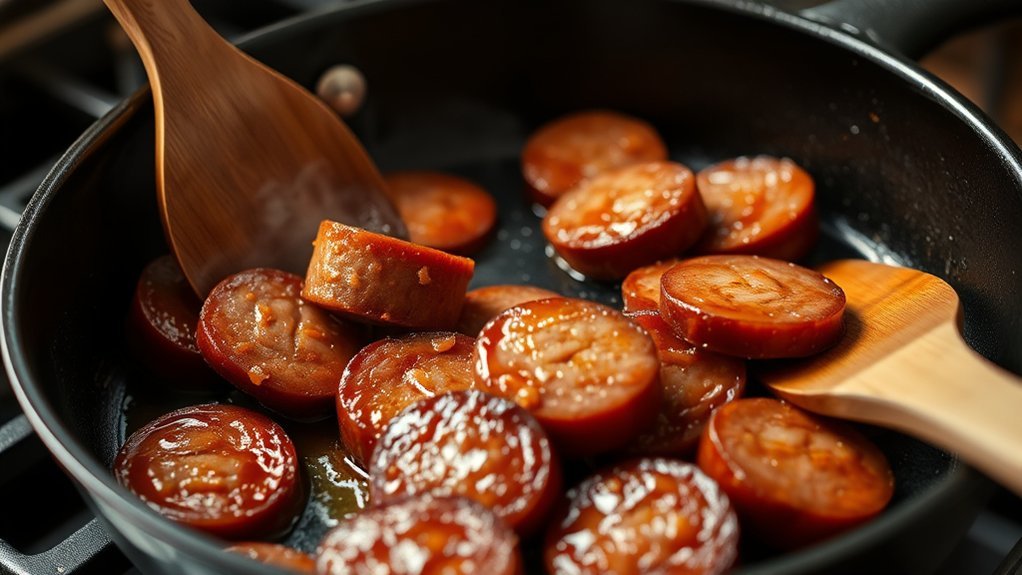

When you cook Conecuh sausage in a skillet, you want to get that perfect balance of crispy outside and juicy inside. It starts with choosing the right pan and prepping the sausage just right. From slicing evenly to managing heat and timing, each step matters to lock in flavor and texture.
Keep in mind, a little patience goes a long way here—there’s a trick to getting that golden sear you’ll want to master. With the right technique, your Conecuh sausage will turn out delicious every time.
Key Takeaways
- Use a heavy-bottomed or cast iron skillet with a small amount of oil to prevent sticking and ensure even heat distribution.
- Bring sausage to room temperature, slice evenly if desired, and pat dry for better browning and uniform cooking.
- Cook sausages over medium heat without overcrowding, turning regularly to achieve a golden, crispy exterior and juicy interior.
- Cook for about 10–12 minutes until internal temperature reaches 160°F (71°C) and skin is slightly wrinkled for doneness.
- Serve sliced sausages with sides like grits or greens, and use tongs to turn without piercing the casing to retain juices.
Tools and Ingredients for Cooking Conecuh Sausage
To cook Conecuh sausage perfectly in a skillet, you’ll need just a few essential tools and ingredients. Grab a heavy-bottomed skillet, preferably cast iron, for even heat distribution. You’ll want a pair of tongs to turn the sausage without piercing it, which keeps those flavorful juices inside.
Besides the sausage itself, keep a small amount of oil handy. Conecuh sausages have enough fat, but a little oil helps prevent sticking.
When selecting your sausage, be mindful of spoilage risks. Always check the expiration date and smell for any off odors before cooking. For storage tips, keep unopened sausage in the fridge. Once opened, wrap it tightly in plastic wrap or store it in an airtight container to maintain freshness.
Following these basics sets you up for a delicious skillet meal.
Preparing Conecuh Sausage for the Skillet
Getting your Conecuh sausage ready for the skillet starts with a quick inspection and proper handling. First, ensure the sausage is fresh or properly thawed if frozen. Next, consider your seasoning options; while Conecuh sausage is flavorful on its own, adding a pinch of black pepper or smoked paprika can elevate the taste.
Prepare your Conecuh sausage with a fresh check and optional seasoning like black pepper or smoked paprika.
Before cooking, slice the sausage evenly to ensure uniform cooking. If you’re not using the sausage immediately, follow smart storage ideas to keep it fresh:
- Wrap tightly in plastic wrap or foil
- Store in an airtight container
- Keep refrigerated and use within a few days
- Freeze for longer storage, thawing in the fridge overnight
These steps set you up for a delicious skillet experience.
How to Cook Conecuh Sausage Perfectly
To cook Conecuh sausage perfectly, start by prepping it properly. Whether you slice it or keep it whole, it’s key for even cooking.
Use medium heat in your skillet to achieve a golden, crispy exterior without drying out the inside. Keep a close eye and turn the sausage regularly to lock in flavor and juiciness.
Preparing Sausage Properly
How do you achieve that perfect balance of crispy edges and juicy interior when cooking Conecuh sausage in a skillet? It starts with proper preparation. To ensure a tender texture and maximize flavor, follow these key steps before cooking:
- Slice the sausage evenly to promote consistent cooking and browning.
- Pat the sausage dry with paper towels to help achieve better browning.
- Let the sausage come to room temperature to cook more evenly.
- Avoid overcrowding the skillet, which can trap steam and prevent crisping.
Cooking Techniques for Perfection
Once your sausage is prepped, it’s time to master the cooking process that brings out its full flavor and texture. Start by heating your skillet over medium heat to ensure even heat management.
Place the Conecuh sausage links in the pan without overcrowding; this helps them cook evenly. As they sizzle, pay attention to the spice balance. The natural seasonings will intensify, so avoid high heat that can burn the spices and create bitterness.
Turn the sausages regularly, allowing the casing to crisp while the inside remains juicy. Cooking takes about 10-12 minutes; use a meat thermometer to check for an internal temperature of 160°F.
When Is Conecuh Sausage Done?
You’ll know your Conecuh sausage is done when it’s nicely browned on the outside and firm to the touch.
To be sure, check that the internal temperature reaches 160°F using a meat thermometer. This ensures it’s cooked through and safe to enjoy.
Visual Doneness Indicators
A perfectly cooked Conecuh sausage boasts a rich, golden-brown exterior with slight crispness that signals it’s ready to enjoy. To spot doneness without relying on technical jargon, focus on these visual and tactile cues. The sausage should have:
- A uniform golden-brown color all around, avoiding pale or overly charred spots.
- Slightly wrinkled skin, indicating the casing has tightened nicely during cooking.
- Juices that bubble gently on the surface, showing the meat inside is cooked through.
- A firm yet springy texture when you press it with a spatula, delivering appealing texture contrasts.
Internal Temperature Guide
How do you know when your Conecuh sausage is truly cooked to perfection? The key lies in its internal temperature. Using a meat thermometer, aim for 160°F (71°C) to ensure it’s safe and juicy. This precise check beats relying solely on unrelated topics like color or texture, which can be misleading.
Insert the thermometer into the thickest part of the sausage, avoiding the pan’s surface or fat pockets. When the needle hits that ideal temperature, you’ve unlocked the perfect balance of flavor and safety.
Tips for Searing and Flavor on Conecuh Sausage
Why does searing Conecuh sausage properly make all the difference? It locks in juices and creates a savory crust that elevates flavor. Addressing freshness questions first ensures your sausage tastes its best.
Properly searing Conecuh sausage locks in juices and forms a flavorful crust for the best taste.
Also, don’t overlook casing considerations. Intact casings help maintain texture and prevent drying out. When searing, follow these tips:
- Preheat your skillet to medium-high for even browning without burning.
- Avoid overcrowding the pan; give sausages room to sear evenly.
- Use a bit of oil or butter to enhance caramelization and prevent sticking.
- Turn sausages gently to crisp all sides while keeping casings intact.
This approach guarantees a delicious, well-seared Conecuh sausage bursting with flavor and perfect texture.
Serving Suggestions for Skillet-Cooked Conecuh Sausage
Where should you start when serving skillet-cooked Conecuh sausage to maximize its bold, smoky flavor? Begin with slicing ideas that let the sausage shine. Cut it into thick rounds for a hearty bite or slice diagonally for a more elegant presentation. These cuts release the rich juices and showcase the sausage’s texture.
For serving pairings, think classic Southern comfort: pair with creamy grits, collard greens, or a tangy barbecue sauce to complement the smoky spice. You can also serve it alongside sautéed bell peppers and onions for a colorful, flavorful plate.
Don’t forget crusty bread or buttery biscuits to soak up the savory drippings. These simple, thoughtful pairings will highlight your skillet-cooked Conecuh sausage perfectly every time.
Frequently Asked Questions
Can I Freeze Cooked Conecuh Sausage for Later Use?
Yes, you can freeze cooked Conecuh sausage for storage. Wrap it tightly, label the date, and freeze.
When reheating, thaw slowly in the fridge and warm gently in a skillet to keep it juicy and flavorful.
What Is the Origin of Conecuh Sausage?
Like a hidden treasure, Conecuh Sausage’s history springs from southern Alabama’s regional origins. You’ll find it crafted with smoky, spicy flavors rooted in local traditions, making every bite a delicious taste of Conecuh history.
How Long Does Conecuh Sausage Stay Fresh in the Fridge?
You’ll keep Conecuh sausage fresh in the fridge for about 1 to 2 weeks with proper sausage storage.
Make sure to store it in an airtight container to maintain fridge freshness and prevent odors or spoilage.
Is Conecuh Sausage Gluten-Free?
Oh, sure, because sausages moonlight as gluten detectives! Conecuh sausage is generally gluten-free, but you should check ingredient sourcing for hidden gluten.
Always double-check gluten free considerations before you indulge in that savory bite!
Can I Cook Conecuh Sausage on a Grill Instead of a Skillet?
You can absolutely use a grill as a great alternative for cooking Conecuh sausage. Just remember, unlike the skillet technique’s even heat, grilling adds smoky flavor but needs careful turning to avoid burning.
Conclusion
Now that you know how to cook Conecuh sausage in a skillet, it’s time to bring that smoky, juicy flavor to your plate. With a golden crust and tender inside, each bite bursts with Southern charm—like a little taste of Alabama sunshine.
Remember, patience and heat control are your best friends here. So, fire up that skillet, savor the sizzle, and serve up sausage perfection every time!
By mastering these steps, you’ll enjoy perfectly cooked Conecuh sausage in a skillet that’s full of flavor and texture.