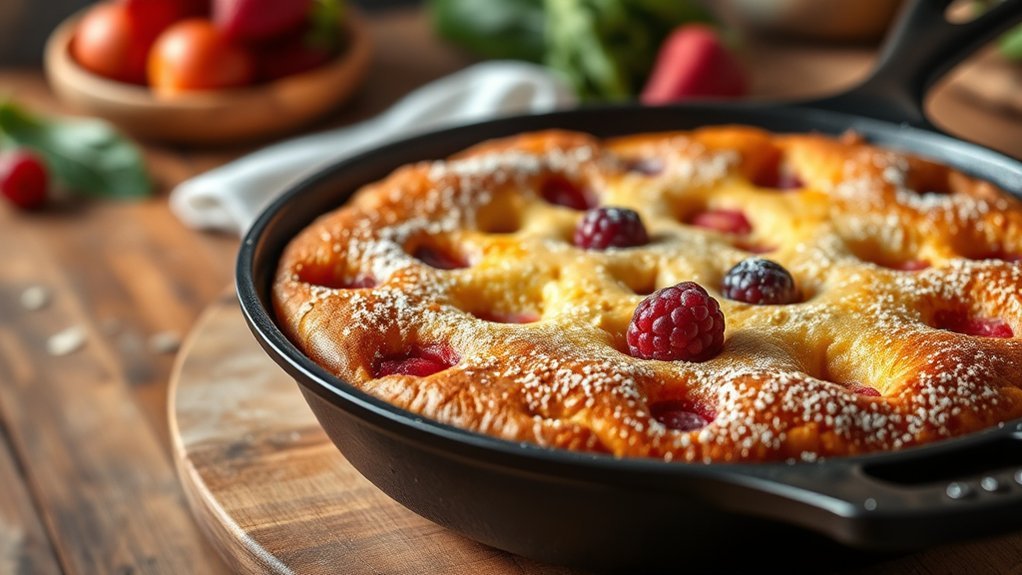

When you bake a skillet cake, you’re creating a simple yet satisfying dessert right in one pan.
A skillet cake is all about that golden, crisp crust paired with a soft, tender center—something you won’t get from a regular cake.
Using a cast iron skillet or similar oven-safe pan adds a rustic touch and unique texture.
But what exactly makes this cake stand out? There’s more to discover about its charm and why it’s become a favorite.
Key Takeaways
- A skillet cake is a one-pan baked dessert traditionally made in a cast iron or heavy oven-safe skillet.
- It has rustic origins, emphasizing simplicity, ease, and comfort in home baking.
- The cake features a crisp, golden crust with a soft, moist center.
- It connects bakers through a nostalgic, warm kitchen tradition.
- Skillet cakes are versatile, often topped with fruits, whipped cream, or caramel for added flavor.
What Is a Skillet Cake and Why Is It Popular
What makes a skillet cake so special, and why has it become a favorite in home kitchens? You’ll find that the skillet cake history is rich with stories of simplicity and comfort.
Originally popularized in rustic kitchens, its one-pan method allowed families to bake delicious treats without fuss. The skillet cake culture celebrates this ease and warmth, making it a go-to dessert for cozy gatherings.
When you bake a skillet cake, you’re tapping into a tradition that values both convenience and flavor. Its crisp edges and soft center create an irresistible texture that keeps people coming back.
You don’t just make a cake; you join a community that appreciates the charm and nostalgia baked into every skillet cake.
Equipment and Ingredients for a Skillet Cake
Gathering just a few essential tools and fresh ingredients sets you up for success when making a skillet cake. Your equipment list should include a well-seasoned cast iron skillet or a heavy-bottomed oven-safe pan, a mixing bowl, a whisk or electric mixer, and measuring cups. Having a reliable oven thermometer helps ensure even baking.
For ingredients, classic recipes call for flour, sugar, eggs, butter, and baking powder. However, don’t hesitate to explore ingredient substitutions like applesauce for butter to reduce fat, or almond flour for gluten-free options. Fresh fruits or nuts can add texture and flavor without complicating preparation.
How to Make a Classic Skillet Cake
Ready to create a warm, comforting dessert that fills your kitchen with irresistible aromas? Start by mixing simple ingredients that deliver a classic flavor everyone loves. Use butter, sugar, eggs, flour, baking powder, and vanilla extract to build that nostalgic factor, evoking memories of homemade treats.
Pour your batter into a well-greased cast-iron skillet or explore pan alternatives like oven-safe ceramic or heavy-duty nonstick pans for even baking. Bake until golden and toothpick-clean, then let it cool slightly.
Now, it’s time to personalize with toppers and frostings. Think whipped cream, fresh berries, or a drizzle of caramel to elevate every bite. With this straightforward method, you’ll craft a skillet cake that’s both timeless and irresistibly delicious.
How Baking a Skillet Cake Changes Its Texture?
When you bake a skillet cake, the heat distribution from the pan transforms the batter’s texture in unique ways. You’ll notice how the textures vs crust balance shifts dramatically compared to oven baking in a regular pan. Here’s what happens:
- The skillet’s direct heat creates a crisp, golden crust that contrasts beautifully with the soft interior.
- Moisture vs crumb plays a vital role. The edges dry slightly, forming a firmer crust, while the center stays moist and tender.
- The even heat exposure encourages a uniform rise, giving you a cake with a delightful crumb structure that’s both fluffy and dense in all the right spots.
This dynamic interplay of crust and crumb is what makes skillet cakes irresistibly textured and unique in every bite.
Popular Skillet Cake Flavors and Variations
Skillet cakes open up a world of delicious possibilities, letting you whip up a variety of flavors and textures that suit any craving. You can explore skillet cake flavors ranging from classic vanilla and rich chocolate to zesty lemon or warm cinnamon spice.
Each flavor brings a unique twist, whether you prefer light, fluffy cakes or denser, fudgier textures. Variations involving fillings add even more excitement. Imagine gooey caramel, fresh berries, or melted chocolate nestled inside the cake, creating a delightful surprise with every bite.
You might also try savory skillet cakes, incorporating herbs, cheese, or vegetables for a satisfying twist. With so many options, you can easily customize your skillet cake to match your mood or occasion.
Tips for Serving and Storing Skillet Cakes
How can you make sure your skillet cake stays as irresistible as the moment it comes out of the oven? Follow these essential tips for serving and storing skillet cakes to keep every bite fresh and delicious.
- Serve Warm: Skillet cakes taste best warm, so slice and serve them right away to enjoy their soft texture and rich flavors.
- Use Airtight Containers: For storing tips, place leftover cake in an airtight container at room temperature if you plan to eat it within 1-2 days. This keeps moisture locked in.
- Refrigerate Longer Storage: If you need to store it longer, wrap the cake tightly in plastic wrap and refrigerate. Let it come to room temperature before serving to restore softness.
With these tips serving and storing your skillet cake, you’ll enjoy it perfectly every time.
Frequently Asked Questions
Can You Make a Skillet Cake Without Eggs?
Yes, you can make a skillet cake with no eggs by using egg substitutes like applesauce, mashed bananas, or flaxseed meal. These alternatives keep your cake moist and delicious while fitting your dietary needs perfectly.
Is a Skillet Cake Gluten-Free or Can It Be Made Gluten-Free?
You can totally enjoy a gluten free adaptation of a skillet cake by swapping regular flour for gluten-free blends. Just remember, baking equipment considerations like a non-stick skillet help achieve that perfect golden crust and tender crumb!
How Long Does a Skillet Cake Typically Last Before Spoiling?
You’ll find skillet cake stays fresh for about 2-3 days when storing it properly in an airtight container at room temperature. Beyond that, spoilage timelines speed up, so refrigerate to extend freshness up to a week.
Can You Use a Skillet Cake Recipe for Other Baked Goods?
You can’t just swap skillet cake recipes willy-nilly; cake substitutions require care since batter textures differ.
Still, with pan alternatives like baking dishes or muffin tins, you’ll discover new flavors and textures that surprise and delight.
What Is the History or Origin of Skillet Cakes?
You’ll find skillet cakes have history origins tied to early American and European cooking, where cultural influences shaped quick, rustic desserts made in cast iron pans. These cakes blend practicality with rich, comforting flavors enjoyed across generations.
Conclusion
Baking a skillet cake is like wrapping yourself in a warm, golden hug—crispy edges giving way to a tender, moist heart. With just a trusty pan and simple ingredients, you create magic that fills your kitchen with comforting aromas and timeless charm.
Whether you sprinkle berries or dollop cream, every bite tells a story of home and tradition.
So grab your skillet, and let this rustic delight bring sweetness to your table and soul. Embrace the joy of making a skillet cake, a perfect blend of simplicity and deliciousness.