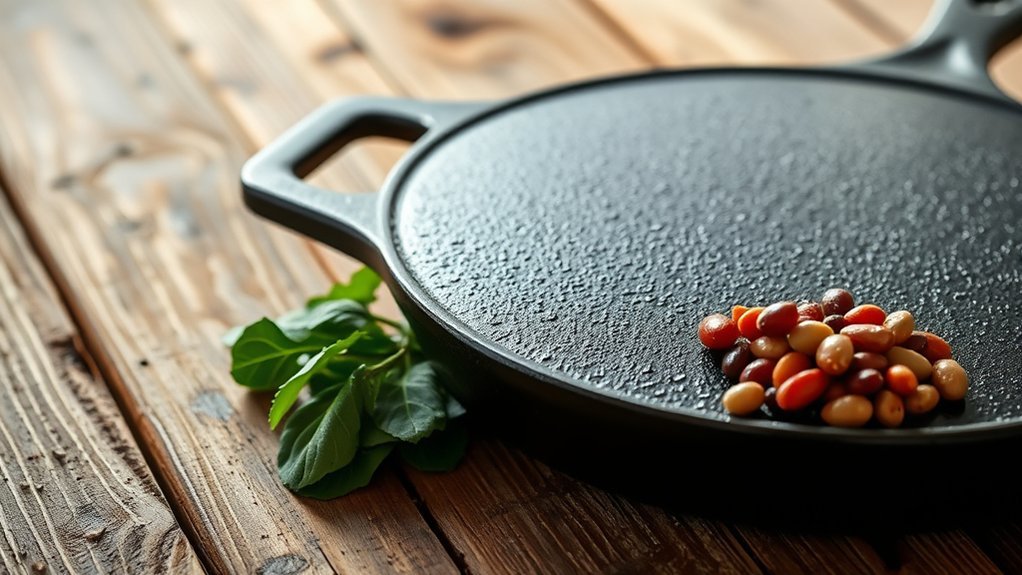

You might have heard that cooking with a cast iron skillet can markedly increase your dietary iron intake, but how much iron from cast iron skillet actually transfers to your food? The amount depends on several factors like the acidity of the ingredients, cooking time, and moisture levels.
Understanding these variables is key to knowing whether this cookware can meaningfully impact your iron levels—and how to use it effectively.
Key Takeaways
- Small amounts of iron leach into food when cooking with cast iron, primarily in the absorbable ferrous form.
- Iron transfer increases with longer cooking times, especially when combined with acidic ingredients.
- Acidic foods like tomatoes significantly boost iron leaching compared to neutral or low-acid foods.
- The amount of iron absorbed varies depending on food acidity, cooking duration, and moisture content.
- Cast iron cooking contributes to daily iron intake but is not a sole solution for iron deficiency.
How Much Iron Actually Leaches From Cast Iron Skillets?
How much iron actually leaches from cast iron skillets depends on several factors, including the food’s acidity, cooking time, and moisture content. When you cook with cast iron, small amounts of iron can transfer into your food, potentially boosting your dietary iron intake.
Studies show that the level of iron leached varies widely but generally falls within safe limits aligned with dietary guidelines. This added iron is primarily in the ferrous form, which your body can absorb efficiently, improving iron absorption compared to some plant sources.
However, the exact contribution to your daily iron needs depends on meal composition and cooking conditions. Understanding this helps you optimize iron intake naturally, especially if you’re mindful of iron deficiency or following specific dietary recommendations.
How Do Cooking Time and Acidity Affect Iron Leaching?
Why does cooking time and acidity play such a pivotal role in iron leaching from cast iron skillets? The longer you cook food, the more opportunity there is for iron to leach into it, especially when the food is acidic.
Longer cooking times and acidic foods increase iron leaching from cast iron skillets significantly.
Acidity impact significantly accelerates iron leaching because acidic ingredients, like tomatoes or vinegar, break down the skillet’s iron surface more effectively. Studies show that cooking acidic foods for extended periods increases iron leaching substantially compared to neutral or alkaline foods.
Conversely, shorter cooking times limit iron exposure. So, if you want to maximize iron intake, using acidic ingredients and longer cooking times will increase iron leaching. However, for less iron transfer, reduce cooking time or avoid highly acidic foods.
Understanding these factors helps you control how much iron your meal absorbs.
Which Foods Absorb the Most Iron From Cast Iron Skillets?
Since acidity and cooking time influence iron leaching, the type of food you cook also plays a significant role in how much iron it absorbs from your cast iron skillet. Acidic foods like tomato sauce increase iron transfer, while neutral foods absorb less.
Additionally, foods and debris stuck on the skillet can alter seasoning effects, impacting iron release. Cooking longer generally boosts iron absorption.
| Food Type | Iron Absorption Level |
|---|---|
| Acidic (e.g., tomatoes) | High |
| Neutral (e.g., potatoes) | Moderate |
| Low Acid (e.g., eggs) | Low |
Understanding these differences helps you optimize iron intake from your cookware without compromising the skillet’s seasoning and longevity.
Will Using Cast Iron Cookware Help Boost Your Iron Levels?
Can cooking with cast iron cookware substantially boost your iron levels? Research shows it can contribute to your dietary iron intake, but the extent varies. The iron absorbed depends largely on the food’s acidity and moisture, which influence iron absorption from the skillet.
While some culinary myths suggest cast iron pans are a cure-all for iron deficiency, the reality is more nuanced. Using cast iron can increase iron content in your meals, especially with acidic foods like tomato sauce.
However, the amount absorbed by your body depends on factors like your existing iron status and the presence of enhancers or inhibitors of iron absorption in your diet. Therefore, while cast iron cookware can help, it’s not a standalone solution for boosting iron levels.
Tips to Maximize Iron Intake With Cast Iron Cookware
How much iron you absorb from cast iron cookware depends on how you use it. To maximize iron intake, cook acidic foods like tomato sauce in your skillet, as acidity increases iron leaching. Avoid cooking highly alkaline or sticky foods that can damage the seasoning.
Regularly freshen seasoning by applying a thin layer of oil and heating the skillet; this maintains a non-stick surface and enhances iron transfer. Proper rust prevention is essential. Always dry thoroughly after washing and store in a dry place.
Avoid soap or harsh scrubbing that can strip seasoning and reduce iron availability. By maintaining your cast iron well and choosing appropriate foods, you can optimize iron absorption effectively and safely.
Frequently Asked Questions
Are Cast Iron Skillets Safe for All Types of Cooking?
Yes, cast iron safety is generally reliable for all cooking types, but you should watch iron leaching concerns with acidic foods. Proper seasoning reduces leaching, ensuring your skillet remains safe and effective for various cooking methods.
How Do You Properly Season a Cast Iron Skillet?
You properly season a cast iron skillet by cleaning it, applying a thin layer of oil (flaxseed or vegetable oil work well), then baking it at 450°F for an hour.
Repeat seasoning steps for a durable, non-stick surface.
Can Cast Iron Skillets Rust, and How to Prevent It?
You can spot rust as orange flakes blooming on your skillet’s surface. For rust prevention, dry it thoroughly and apply oil after use.
If rust appears, scrub gently, re-season, and restore your pan’s protective layer.
What Are the Best Cleaning Methods for Cast Iron Skillets?
You should use gentle cleaning methods like hot water and a stiff brush, avoiding soap. After drying thoroughly, apply seasoning techniques by coating with oil and heating to maintain your cast iron skillet’s non-stick surface and prevent rust.
Do Cast Iron Skillets Affect the Taste of Food?
You won’t taste a thunderstorm of iron in your food; cast iron skillets release minimal iron, subtly enhancing taste lightness and depth. Their seasoned surface ensures flavors stay true, not metallic. Perfectly balanced for cooking precision.
Conclusion
When you cook acidic, moisture-rich foods slowly in your cast iron skillet, imagine iron particles leaping from the pan into your meal like tiny iron warriors boosting your nutrition. While it won’t single-handedly cure deficiency, this smart cooking hack can meaningfully enhance your iron intake.
So, don’t just cook—weaponize your skillet with acidity and time to maximize iron absorption safely and effectively. By doing this, you turn everyday meals into powerful nutrition allies.
Understanding how much iron from cast iron skillet transfers to your food can help you make better dietary choices and improve your overall iron levels.