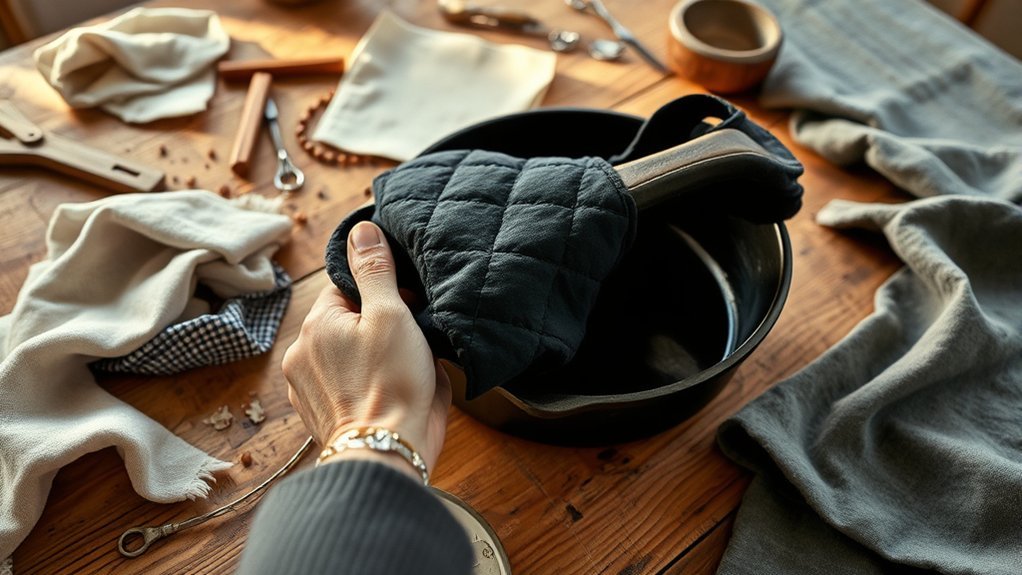

Imagine grabbing a hot cast iron skillet handle and instantly wincing—like touching a live wire. You can avoid that sharp shock by making your own handle cover with the right materials and precise measurements.
Choosing heat-resistant fabrics and adding insulation isn’t just about comfort; it’s about safety and durability. If you want a cover that fits snugly and protects reliably, understanding the process step-by-step will make all the difference.
Key Takeaways
- Measure the skillet handle length, width, and thickness accurately using a flexible tape for a snug, secure fit.
- Choose heat-resistant fabrics like silicone-coated cotton, Kevlar, or flame-retardant thick cotton for durability and safety.
- Layer insulating materials such as quilted cotton batting or silicone padding inside the cover for added heat protection.
- Sew the cover with strong heat-resistant thread, ensuring no loose areas that could cause slipping during use.
- Clean the cover gently with mild detergent and air dry; avoid soaking or high heat to maintain material integrity.
Why You’ll Love a Cast Iron Skillet Handle Cover
Why should you consider a cast iron skillet handle cover? Primarily, it enhances safety by protecting your hands from the skillet’s intense heat, a crucial discusson idea1 when cooking. Without a proper barrier, you risk burns, especially when handling the skillet on the stove or transferring it from oven to counter.
Another key benefit, discusson idea2, is improving grip and control. Cast iron handles can be slippery or awkward to hold, and a well-designed cover adds friction, reducing the chance of accidental drops. Additionally, a handle cover extends the life of your skillet’s handle by preventing direct wear and tear.
What Materials Work Best for Handle Covers
You’ll want to choose materials that can withstand high heat without melting or burning. Heat-resistant fabrics like silicone or thick cotton treated with flame retardants work great, paired with insulating layers to protect your hand.
Selecting the right combination guarantees safety and comfort every time you handle your skillet.
Heat-Resistant Fabrics
Choosing the right heat-resistant fabric is imperative for making a cast iron skillet handle cover that protects your hand from burns effectively. Look for materials specifically designed for heat safety, such as Kevlar, silicone-coated fabrics, or tightly woven cotton treated with flame retardants.
These fabrics offer excellent heat resistance while maintaining fabric durability, ensuring your handle cover lasts through frequent use. Avoid common fabrics like polyester or nylon, as they can melt under high temperatures, compromising safety.
Prioritize materials that combine flexibility and toughness, so your cover fits snugly without tearing. By selecting durable, heat-safe fabrics, you create a reliable barrier against heat, enhancing your cooking experience with confidence and safety.
Insulating Materials Options
After selecting heat-resistant fabrics, focus on the insulating materials that will enhance your handle cover’s protection. Choosing the right insulation options is crucial for material safety and effective heat resistance. You want materials that provide excellent heat barrier performance while remaining safe and durable.
Consider these insulation options for your cast iron skillet handle cover:
- Quilted cotton batting: Offers good insulation and withstands high temperatures.
- Wool felt: Naturally heat-resistant and adds cushioning.
- Silicone padding: Heat resistant and flexible, ideal for direct heat exposure.
- Neoprene foam: Provides thermal insulation and grip.
- Thermal reflective fabric: Reflects heat away, enhancing protection.
Measuring Your Skillet Handle for the Perfect Fit
Start by measuring the full length of your skillet handle to guarantee the cover will fit completely.
Next, check the width and thickness at the widest points to account for any curves or tapers. Accurate measurements here are key to crafting a snug, secure handle cover.
Handle Length Measurement
How long is your skillet handle, and why does that measurement matter? Getting the handle length right ensures your cover fits snugly, providing better grip and safety. To achieve measurement accuracy, follow these steps:
Use a flexible measuring tape for precise length reading. Measure from the base where the handle meets the skillet to the handle’s tip. Take note of any curves or bends in the handle.
Measure twice to confirm accuracy and avoid errors. Record the measurement in inches or centimeters consistently.
Accurate handle length measurement prevents a loose or overly tight cover, which could be unsafe or ineffective. Focus on this step to create a perfectly fitting cast iron skillet handle cover that enhances your cooking experience.
Width and Thickness Checking
Why does checking the width and thickness of your skillet handle matter? A precise width check and thickness assessment assure your handle cover fits snugly, preventing slips or heat exposure. Use a ruler or caliper to measure the widest and thickest points accurately.
Here’s a practical measurement guide:
| Measurement Step | Tool Needed | Notes |
|---|---|---|
| 1. Width at base | Ruler/Caliper | Measure widest part |
| 2. Width at tip | Ruler/Caliper | Measure narrow end |
| 3. Thickness at base | Caliper | Measure thickest point |
| 4. Thickness at tip | Caliper | Measure thinnest point |
| 5. Verify all values | Review measurements | Confirm consistency |
This method guarantees your cover will fit perfectly, improving safety and comfort.
How to Sew Your Own Cast Iron Skillet Handle Cover
Wondering what materials you’ll need to sew a durable cast iron skillet handle cover? Start with heat-resistant fabric that can withstand high temperatures. You’ll also need strong thread, a needle or sewing machine, scissors, and a heat-insulating batting for added protection. Follow these steps:
Cut fabric and batting to fit your handle’s width and thickness. Layer fabric and batting, pinning them securely. Choose stitch patterns that provide durability and flexibility.
Sew around the edges, leaving an opening to insert the handle. Finish with tight seams and turn the cover right side out.
Remember to ensure fabric care to keep your cover in top shape after repeated use. Proper stitching and material choices ensure your handmade cover is both functional and long-lasting.
Quick No-Sew Cast Iron Skillet Handle Cover Options
If sewing isn’t your thing or you need a handle cover fast, there are several no-sew options that provide effective heat protection. You can use silicone handle covers designed specifically for cast iron skillets; they slide on easily and offer excellent heat resistance, ensuring cast iron safety.
Another quick no sew option is wrapping the handle with a thick strip of heat-resistant fabric or a silicone grip sleeve secured with Velcro or elastic bands. These solutions are practical, reusable, and prevent burns without requiring any sewing skills.
Additionally, some people use folded kitchen towels or oven mitts as temporary covers when handling hot skillets. These quick no sew methods save time and keep your cast iron skillet handle safe to touch during cooking and serving.
Caring for Your Handle Cover to Keep It Like New
How do you keep your cast iron skillet handle cover looking and performing like new? Proper fabric care and stain prevention are key to maintaining its durability and appearance. Follow these simple tips:
- Wash the cover by hand or use a gentle cycle to avoid fabric damage.
- Use mild detergent to prevent harsh chemical effects on the fabric.
- Avoid soaking the handle cover for long periods to reduce color fading and material weakening.
- Dry it flat or hang to air dry, steering clear of high heat that can shrink or warp the fabric.
- Spot clean stains promptly with a gentle stain remover to stop permanent discoloration.
How to Use Your Cast Iron Skillet Handle Cover Safely
When you grab your cast iron skillet by the handle cover, do you know the safest way to protect your hands from heat? The key concept safety here is minimizing heat transfer from the skillet to your skin.
Always ensure the handle cover fits snugly without gaps, as loose covers allow heat to pass through. Before lifting, double-check the cover’s condition—damaged or wet covers compromise safety by conducting heat faster.
Ensure your handle cover fits snugly and is dry to prevent heat from passing through and causing burns.
Avoid touching the exposed metal handle when the skillet is hot. Remember, the handle cover is designed to shield you from burns by acting as a heat barrier.
Use it consistently every time you handle a hot skillet, and never substitute it with fabric or gloves not meant for high temperatures. This practice guarantees safer cooking and prevents accidents.
Frequently Asked Questions
Can I Use a Cast Iron Skillet Handle Cover on Other Cookware?
You can use a cast iron skillet handle cover on other cookware if the size and shape match, but keep in mind cast iron compatibility is key. Non skillet usage might reduce effectiveness or safety, so choose carefully.
How Do I Remove Odors From My Cast Iron Skillet?
To remove scents from your cast iron, scrub it with coarse salt and a little oil, then rinse and dry thoroughly.
For odor prevention, always season your skillet regularly and avoid soaking it in water.
Are Silicone Handle Covers Dishwasher Safe?
Yes, silicone handle covers are generally dishwasher safe thanks to silicone safety properties. However, you should check manufacturer instructions since dishwasher caveats exist. High heat or harsh detergents might degrade some covers over time.
Can I Customize Handle Covers With Embroidery or Patches?
You wouldn’t expect embroidery customization on a heat-resistant handle cover, yet you can add patch embellishments carefully. Just choose flame-retardant materials and stitch securely, ensuring your design won’t melt or catch fire during cooking.
What Are Common Mistakes to Avoid When Making Handle Covers?
Common mistakes include using non-heat-resistant materials and poor stitching, which compromise safety. Don’t ignore safety considerations like secure fit and insulation thickness to avoid burns.
Always test covers before regular use to ensure protection.
Conclusion
Now that you’ve crafted your cast iron skillet handle cover, you’re holding a shield against fiery burns. With the right materials and careful measurements, your skillet handle will feel as comfortable as a glove, ready to grip without hesitation.
Remember to care for it properly, so it stays sturdy and safe. Treat your handle cover like a loyal sidekick—always there to protect you in the kitchen’s heat.
By maintaining your cast iron skillet handle cover, you ensure it remains a reliable barrier. This small accessory makes every cooking adventure smoother and safer.