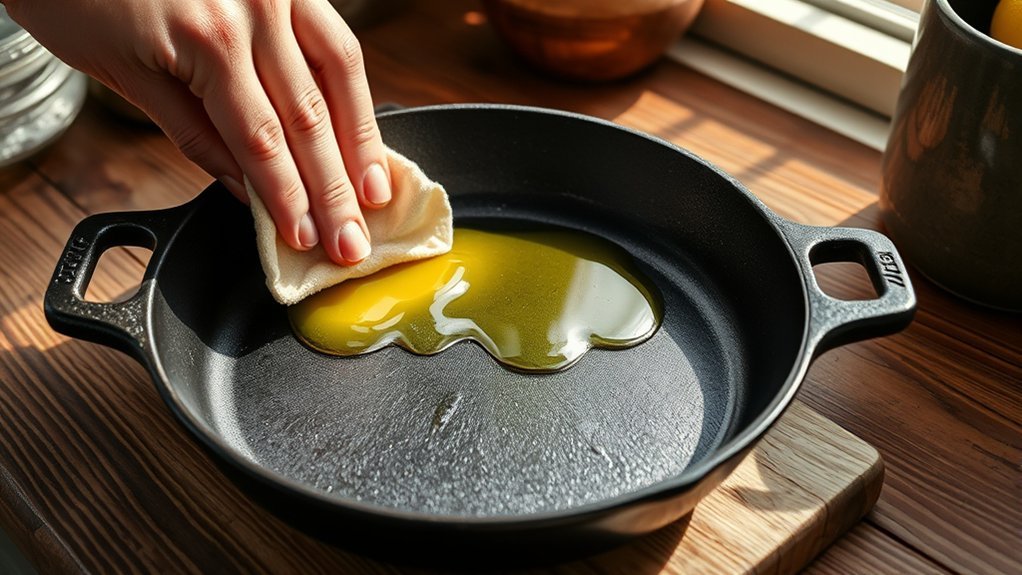

If you want to maintain your iron skillet’s performance, seasoning an iron skillet properly is essential. You’ll need the right materials, the correct oil, and a clear process to build that durable, non-stick surface.
Many people overlook key steps that affect the final result. Understanding these details can save you time and frustration—so before you start, consider what mistakes to avoid and how often you should season for the best outcome.
Key Takeaways
- Preheat oven to 450°F, then apply a thin, even layer of high-smoke point oil inside and outside the skillet.
- Use a lint-free cloth to spread oil uniformly and place skillet upside down on oven rack with foil below.
- Bake the skillet for one hour, then cool completely inside the oven before use or additional seasoning cycles.
- Avoid excess oil and low-smoke point oils like olive oil to prevent sticky residue and ensure durable seasoning.
- Re-season every 10-15 uses or when food sticks, and apply a light oil layer after each cleaning for maintenance.
Why Seasoning Your Cast Iron Skillet Matters
Why does seasoning your cast iron skillet matter? Seasoning forms a protective layer that prevents rust and creates a naturally non-stick surface. Understanding the seasoning science helps you appreciate how polymerized oils bond with the skillet’s iron surface through heat, creating a durable coating.
Proper oil selection is crucial; you need oils that polymerize well under heat, ensuring a stable, long-lasting seasoning. Without this layer, your skillet is vulnerable to corrosion and food sticking, which compromises cooking performance and lifespan.
Materials and Oils Needed for Seasoning
What materials and oils do you need for seasoning your cast iron skillet effectively? Choosing the right skillet materials and seasoning oil is essential to build a durable, non-stick surface. You’ll want to gather these items before starting:
- Clean, lint-free cloth or paper towels
- High-smoke point seasoning oil (flaxseed, grapeseed, or vegetable oil)
- Mild dish soap (for initial cleaning)
- Oven or heat source capable of consistent temperature
- Cast iron skillet free of rust and debris
Select a seasoning oil with a high smoke point to polymerize properly on the skillet materials, ensuring a strong protective layer. Avoid low-smoke point oils that can leave sticky residues. With these supplies, you’ll prepare your skillet for a thorough seasoning process that enhances longevity and cooking performance.
Step-by-Step Cast Iron Skillet Seasoning Guide
A well-seasoned cast iron skillet starts with a clean, dry surface. First, preheat your oven to 450°F (232°C). Apply a thin, even layer of your chosen seasoning oils to the entire skillet, inside and out, using a lint-free cloth.
Avoid excess oil to prevent sticky residue. Next, place the skillet upside down on the oven’s middle rack, with a foil-lined tray on the lower rack to catch drips. Bake for one hour to polymerize the oils, creating a durable, non-stick coating.
Afterward, turn off the oven and let the skillet cool completely inside to preserve the seasoning. Controlling heat during this process is crucial; too low won’t bond oils properly, too high may degrade them.
Repeat as needed to build a strong, lasting seasoning layer.
Common Seasoning Mistakes to Avoid
How can you ensure your cast iron skillet develops a strong, non-stick seasoning without frustration? Avoiding common pitfalls is key. Many beginners overlook beginner friendly techniques, leading to uneven seasoning or sticky residue.
Developing a strong, non-stick seasoning requires avoiding common pitfalls and using beginner-friendly techniques for even results.
One frequent error involves oil smoke point mistakes. Using oils that burn too quickly can ruin the layer you’re building. To season effectively, steer clear of these mistakes:
- Applying too much oil, causing a sticky surface
- Using low smoke point oils like olive oil
- Not thoroughly drying the skillet before seasoning
- Skipping the preheating step to polymerize the oil
- Storing the skillet without proper care, inviting rust
Expert Tips for a Perfect Non-Stick Surface
Why does mastering seasoning techniques matter for achieving a flawless non-stick surface on your cast iron skillet? Proper seasoning science creates a polymerized layer that prevents food from sticking and protects the iron.
Your oil selection is crucial; use oils with high smoke points like flaxseed or grapeseed for durable seasoning.
| Tip | Explanation |
|---|---|
| Clean Thoroughly | Remove residue before seasoning for even coating |
| Apply Thin Oil Layer | Prevents sticky buildup and ensures polymerization |
| Heat Consistently | Use oven heat above oil’s smoke point for bonding |
| Repeat Seasoning Cycles | Builds a stronger, more effective non-stick surface |
How Often to Season Your Cast Iron Skillet
Seasoning your cast iron skillet regularly guarantees it maintains its non-stick surface and resists rust. Understanding the appropriate seasoning frequency is essential for effective skillet care. Your maintenance cadence depends on how often you cook and clean the skillet.
Consider these guidelines to determine your seasoning frequency:
- Season after every 10 to 15 uses for consistent performance
- Re-season immediately if food starts sticking or the surface looks dull
- Apply a light oil layer after each cleaning to support the seasoning
- Perform a full seasoning cycle if you scrub aggressively or use soap
- Increase frequency in humid environments to prevent rust
Troubleshooting Rust and Sticky Surfaces
If you notice rust forming on your skillet, you’ll need to remove it promptly using fine steel wool or a rust eraser. Then re-season the pan to restore its protective layer. Sticky surfaces often result from incomplete seasoning or overheating, so gently scrubbing with a non-abrasive brush and applying a thin, even coat of oil can fix the issue.
Addressing these problems quickly guarantees your skillet stays in peak cooking condition.
Removing Rust Effectively
How can you restore your iron skillet when rust appears or the surface feels sticky? Effective rust removal is essential to maintain your skillet’s performance and longevity. Start by scrubbing the rusty areas with a steel wool pad or a stiff brush.
Then, rinse thoroughly and dry immediately to prevent further rusting. Afterward, re-season your skillet to create a protective layer that aids in rust prevention. Here are five indispensable tips:
- Use mild abrasive tools like steel wool for rust removal.
- Avoid soaking the skillet for extended periods.
- Dry the skillet completely after washing.
- Apply a thin coat of cooking oil before heating.
- Store your skillet in a dry place to minimize moisture exposure.
Following these steps guarantees your skillet remains rust-free and ready for cooking.
Fixing Sticky Skillet Surfaces
Many iron skillets develop sticky surfaces when excess oil polymerizes unevenly during seasoning. To fix this, start by thoroughly cleaning the skillet with hot water and a stiff brush, avoiding soap that can strip seasoning.
If rust is present, perform rust removal first by scrubbing with steel wool or a rust eraser until the surface is smooth. After drying completely, apply a thin, even coat of high-smoke-point oil like flaxseed or grapeseed oil.
Heat the skillet upside down in an oven at 450°F for an hour, placing foil underneath to catch drips. Let it cool inside the oven. Repeat this process two to three times to build a durable, non-sticky seasoning layer.
Consistent maintenance prevents sticky surface buildup and rust, ensuring your skillet performs optimally.
Top YouTube Channels to Help You Season Your Skillet
You’ll find several YouTube channels that offer clear guidance for seasoning your iron skillet, especially if you’re just getting started. Some creators focus on beginner-friendly methods, while others share expert tips and advanced techniques.
Exploring these channels will help you build confidence and master the seasoning process efficiently.
Best Channels for Beginners
Where can beginners find reliable guidance on seasoning an iron skillet? You want channels that offer clear, beginner-friendly videos with step-by-step instructions. Here are top channel recommendations that simplify the process, ensuring you learn proper seasoning techniques without confusion:
Joshua Weissman Known for detailed yet accessible cooking tutorials.
Chef John (Food Wishes) Offers practical seasoning tips with humor.
The Stay At Home Chef Focuses on straightforward, beginner-friendly content.
Serious Eats Provides science-backed seasoning methods.
Cast Iron Cooking Dedicated entirely to cast iron care and seasoning.
These channels combine expertise with easy-to-follow visuals, making them perfect if you’re just starting. Following their guidance helps you achieve a durable, non-stick skillet coating confidently.
Expert Tips and Tricks
How can you master the art of seasoning your iron skillet with expert precision? Understanding seasoning science and oil chemistry is key. Several top YouTube channels break down these concepts clearly, showing how different oils and heat levels affect your skillet’s surface.
Their expert tips and tricks help you build a durable, non-stick coating efficiently.
| Channel Name | Focus Area |
|---|---|
| ChefSteps | Science of seasoning |
| Food52 | Oil chemistry |
| America’s Test Kitchen | Layering techniques |
| Serious Eats | Heat management |
| Pro Home Cooks | Maintenance tips |
Frequently Asked Questions
Can I Season My Skillet in a Microwave?
You can’t season your skillet in a microwave because microwave limitations prevent proper heat distribution.
Also, enamel seasoning misconceptions might confuse you, but true seasoning requires high, even heat only achievable in an oven or on a stove.
Is Seasoning Necessary for Enamel-Coated Cast Iron?
Seasoning necessity isn’t required for enamel-coated cast iron. You should focus on enamel coated considerations like gentle cleaning and avoiding abrasive tools to preserve the coating’s integrity and prevent damage, ensuring your cookware lasts longer and performs well.
How Do I Store a Seasoned Cast Iron Skillet?
Think of your skillet as a loyal guardian; store it dry and lightly oiled to prevent rust. Good storage habits and regular maintenance tips ensure it stays ready, strong, and seasoned for every culinary battle you face.
Can I Use Cooking Sprays for Seasoning?
You shouldn’t use cooking sprays for seasoning because they often contain additives. Instead, choose pure seasoning oils with a high smoke point like flaxseed or grapeseed oil for effective, durable seasoning on your iron skillet.
Does Seasoning Affect the Flavor of Food Cooked?
Like a painter’s brush, seasoning adds depth. Yes, it subtly enhances your food’s flavor by creating an oil coating that prevents sticking and imparts a rich, slightly nutty taste, improving every dish you cook in it.
Conclusion
You’ve learned why seasoning your cast iron skillet matters, what oils work best, and the exact steps to follow. You’ve seen common mistakes and expert tips—now it’s time to season, re-season, and season again.
As you tackle rust or sticky surfaces, remember: patience and practice create perfection. Coincidentally, every time you season your skillet, you’re building a better cooking companion.
Keep at it, and your skillet will reward you with lasting non-stick performance. Mastering how to season an iron skillet ensures your pan stays in top shape for years of delicious meals.