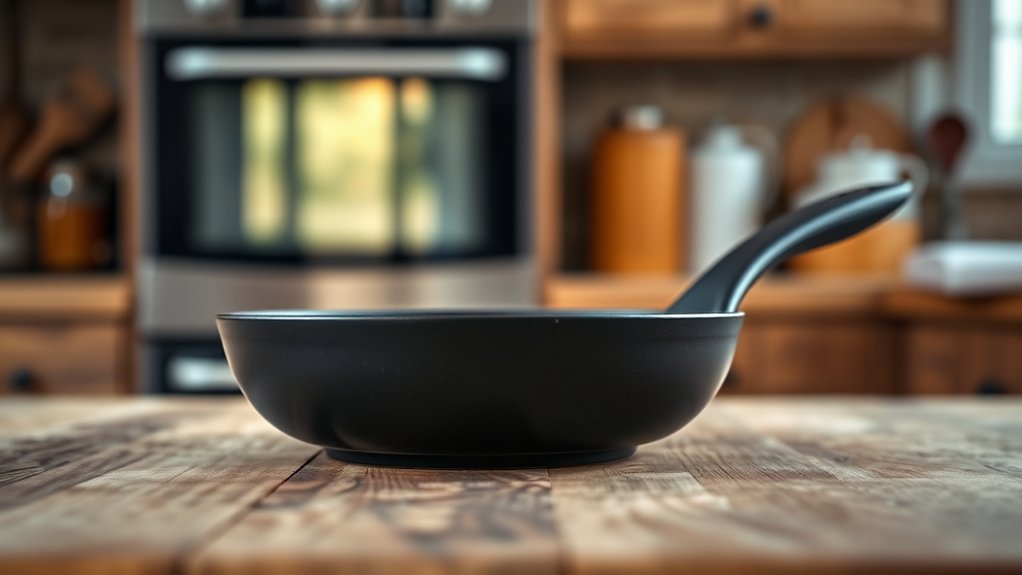

You might wonder if your non-stick skillet can go in the oven without damaging its coating or handles. The answer depends on the materials used and the temperature limits set by the manufacturer, which can vary widely.
Using your skillet incorrectly in the oven can lead to damage or even safety hazards. Before placing it inside, it’s essential to understand what temperatures are safe. You should also know how to identify if your specific pan is designed for oven use.
Key Takeaways
- Many non-stick skillets with hard-anodized aluminum or stainless steel bases are oven-safe within manufacturer-specified temperature limits.
- Non-stick coatings have maximum heat tolerances, usually between 350°F and 500°F, exceeding which can damage the coating and release harmful fumes.
- Oven-safe handles are typically metal; plastic, silicone, or wooden handles often are not oven-safe and can melt or degrade under heat.
- Always check the manufacturer’s instructions or labels for specific oven-safe temperatures and handle material guidelines before using a non-stick skillet in the oven.
- Avoid sudden temperature changes and broiling unless specified to maintain coating integrity and prevent warping or thermal shock to the skillet.
Can You Put a Non-Stick Skillet in the Oven?
Wondering if you can safely put a non-stick skillet in the oven? The answer depends largely on the skillet’s construction and coating durability. Many non-stick skillets feature oven safe materials like hard-anodized aluminum or stainless steel bases that can withstand oven heat.
However, the non-stick coating itself often has temperature limits; exceeding these can degrade the coating, releasing harmful fumes and reducing its lifespan. Before placing your skillet in the oven, check the manufacturer’s specifications for maximum safe temperature.
Also, consider the handle material. Some plastic or rubber handles aren’t oven safe. By understanding your skillet’s oven safe materials and respecting coating durability, you can confidently use it in the oven without damaging your cookware or compromising safety.
What Oven Temperatures Are Safe for Non-Stick Skillets?
Knowing whether your non-stick skillet can go in the oven is just the first step; understanding the safe temperature limits is equally important to protect both your cookware and your health. Most non-stick skillets with oven safe materials can withstand temperatures up to 350°F to 500°F.
However, exceeding these limits risks damaging the coating durability, causing it to degrade or release harmful fumes. You should always check the manufacturer’s guidelines for specific temperature ratings.
Remember, the handle material also affects oven safety. Some handles can’t tolerate high heat. To maintain your skillet’s performance and longevity, avoid prolonged exposure to temperatures beyond its tolerance.
Which Non-Stick Skillet Materials Are Oven-Safe and Durable?
How do you determine which non-stick skillet materials can handle oven use without compromising durability? Focus on oven safe materials like hard-anodized aluminum and stainless steel with high-quality non-stick coatings. These materials maintain structural integrity and resist warping under oven heat, guaranteeing durability considerations are met.
Avoid pans with plastic or rubber handles, as they typically limit oven use. Ceramic-coated non-stick skillets also fare well but watch temperature limits closely. Cast iron skillets with non-stick coatings offer excellent oven safety and durability but require proper care to preserve the coating.
How to Check If Your Non-Stick Skillet Is Oven-Safe
Start by checking your skillet’s manufacturer guidelines for clear oven-safe instructions and temperature limits. Pay close attention to the handle material, since plastic or wooden handles often can’t withstand high heat. Knowing these details helps you avoid damaging your skillet or risking safety in the oven.
Manufacturer’s Guidelines Overview
Where can you find the definitive answer about whether your non-stick skillet can safely go in the oven? Always start with the manufacturer’s guidelines. Here’s how to check:
- Read the Manual: Manufacturers specify maximum oven-safe temperatures and usage tips. This prevents damage and ensures your skillet lasts.
- Look for Labels: Many skillets have oven-safe symbols or temperature limits stamped on the bottom or handle, providing quick reference.
- Visit the Manufacturer’s Website: If you’ve misplaced the manual, the website often has downloadable guides or FAQs clarifying oven use.
Following these steps helps you adapt recipes confidently and manage oven cleanup effectively, avoiding damage from overheating. Trusting the manufacturer’s advice ensures safe cooking practices and prolongs your skillet’s non-stick coating.
Handle Material Considerations
The handle material plays a pivotal role in determining whether your non-stick skillet can safely withstand oven temperatures. When checking for oven safety, focus on the cookware materials used for the handle.
Metal handles, such as stainless steel or cast iron, typically tolerate high heat well, making them oven-safe. Conversely, handles made from plastic, silicone, or wood often can’t endure oven temperatures and risk melting or warping.
Some silicone handles may be oven-safe up to certain temperatures, but you must verify this with the manufacturer’s guidelines. If the skillet has removable handles, that can enhance oven safety by allowing you to detach them before placing the pan inside.
Always inspect the handle’s material closely and consult any markings or instructions to ensure your non-stick skillet meets oven safety standards.
Maximum Temperature Limits
How hot can your non-stick skillet safely get in the oven? Knowing this is crucial to avoid damaging the coating or handle. Here’s how to check:
- Consult the manufacturer’s guidelines. This is your primary source for maximum temperature limits, ensuring you avoid any unrelated topic or stray concept that could mislead you.
- Identify handle material. Some handles tolerate higher heat, but if you ignore this, you risk mixing in off topic items or irrelevant notions about skillet safety.
- Look for oven-safe labels. Many brands mark their products with max temperature ratings, giving you clear, practical limits to follow.
What Oven Heat Does to Your Non-Stick Skillet
You need to understand how high oven heat can damage your non-stick skillet’s coating, causing it to break down or release harmful fumes. Most non-stick pans have strict temperature limits, often around 350°F to 500°F, that you shouldn’t exceed.
Knowing these limits helps you protect your skillet and maintain its performance over time.
Effects Of High Heat
Exposing your non-stick skillet to high oven heat can quickly degrade its coating, compromising both performance and safety. You need to understand how oven temperature impacts nonstick durability to preserve your cookware. Here’s what happens when you subject your skillet to excessive heat:
- The non-stick coating weakens as temperatures exceed recommended limits, reducing its effectiveness and lifespan.
- High heat causes the coating to release fumes potentially harmful to your health and kitchen environment.
- Repeated exposure to intense heat leads to warping of the skillet’s base, affecting even heat distribution and cooking results.
To maintain your skillet’s quality, always check the manufacturer’s maximum oven temperature and avoid surpassing it. Managing oven temperature is key to extending nonstick durability and ensuring safe use.
Coating Damage Risks
Although non-stick skillets offer convenience and easy cleanup, their coatings are vulnerable to damage from oven heat. When exposed to excessive temperatures, the coating can degrade, leading to peeling, flaking, or loss of non-stick properties.
You risk coating damage if you ignore the manufacturer’s oven safety guidelines or use the skillet in temperatures beyond its limits. This not only shortens the skillet’s lifespan but could also release harmful fumes.
To protect your skillet, always verify its oven-safe rating before use and avoid sudden temperature changes that stress the coating. Proper oven safety ensures you preserve the skillet’s performance and avoid costly replacements.
Understanding coating damage risks helps you use your non-stick skillet confidently while maintaining its integrity.
Temperature Limits Explained
How hot can your non-stick skillet safely get in the oven before its coating starts to break down? Understanding temperature limits is essential to preserve nonstick durability and avoid costly damage.
First, check the oven safe labeling on your skillet; manufacturers typically specify a maximum temperature, often around 350°F to 500°F. Second, know that exceeding this limit causes the non-stick coating to degrade, releasing harmful fumes and reducing effectiveness.
Third, keep in mind that prolonged exposure to high heat accelerates wear, even below max temperatures. Always preheat your oven within the recommended range and avoid broiling.
Tips to Use Non-Stick Skillets in the Oven Safely
When should you consider the oven’s temperature limits before placing your non-stick skillet inside? Always check the manufacturer’s guidelines since many non-stick skillets with titanium coatings can handle higher temperatures, often up to 450°F. Exceeding this risks damaging the surface and releasing harmful fumes.
Check your non-stick skillet’s oven temperature limits—titanium coatings often tolerate up to 450°F safely.
To use your skillet safely, avoid sudden temperature changes that can warp the pan. Before oven use, ensure the skillet’s handle is oven-safe, typically metal rather than plastic.
After cooking, clean your skillet with gentle scrubbing and soap thoroughness to preserve the coating’s integrity. Avoid abrasive cleaners, which degrade the non-stick surface.
Following these steps helps maintain your skillet’s durability and performance when transitioning between stovetop and oven cooking.
Common Mistakes That Damage Non-Stick Skillets in the Oven
Why do non-stick skillets lose their effectiveness or get damaged after oven use? It often comes down to common mistakes that many fall for, partly fueled by cookware myths. To protect your skillet and practice proper oven care, avoid these pitfalls:
- Exceeding Temperature Limits: Non-stick coatings typically can’t handle high oven temperatures above 350-500°F. Going beyond this breaks down the coating, reducing its non-stick ability.
- Using Skillets with Plastic Handles: These handles can melt or warp, damaging the skillet and making it unsafe for oven use.
- Skipping Preheating and Sudden Temperature Changes: Placing a cold skillet into a hot oven or vice versa causes thermal shock, leading to coating cracking or warping.
Avoiding these mistakes keeps your non-stick skillet effective longer and debunks cookware myths about unlimited oven use.
Oven-Safe Alternatives to Non-Stick Skillets
Looking for a reliable skillet that can handle the oven’s heat without risking damage? Cast iron and stainless steel skillets are excellent oven-safe alternatives to non-stick pans. Both materials withstand high temperatures and eliminate concerns about nonstick maintenance or coating degradation.
Cast iron offers superior heat retention and even cooking, but requires seasoning to maintain its nonstick qualities. Stainless steel, while less naturally nonstick, resists warping and is dishwasher-safe, simplifying upkeep.
Avoid using skillets with plastic handles or non-oven safe materials, as they can melt or emit harmful fumes under high heat. When selecting a skillet, always verify the manufacturer’s oven-safe guidelines to ensure safety and durability in your cooking.
These alternatives let you transition seamlessly between stovetop and oven without compromising your cookware’s lifespan.
Frequently Asked Questions
How Do I Clean a Non-Stick Skillet After Oven Use?
You should let your non-stick skillet cool, then wash it gently with warm, soapy water using a soft sponge.
Avoid abrasive tools to preserve the coating longevity, especially if it contains oven safe materials like silicone handles.
Can I Use Metal Utensils on a Non-Stick Skillet?
Think of your nonstick skillet as a delicate painting; using metal utensils can scratch and ruin its surface. To preserve nonstick durability, choose wooden, silicone, or plastic tools for ideal utensil compatibility and long-lasting performance.
Does Cooking in the Oven Affect the Non-Stick Coating Lifespan?
Yes, cooking in the oven can reduce your non-stick skillet’s coating durability, especially if it’s not made from oven safe materials. Always check temperature limits to protect the coating and extend your skillet’s lifespan effectively.
Are Glass Lids Safe to Use in the Oven With Non-Stick Skillets?
You’ll find glass lids generally embrace oven compatibility, but you should check manufacturer guidelines to ensure nonstick safety. Tempered glass withstands heat well, yet avoid sudden temperature changes that might challenge their resilience during oven use.
Can I Broil Food in a Non-Stick Skillet?
You shouldn’t broil in a non-stick skillet due to broiling limitations; high heat can damage oven-safe coatings. Instead, use cookware specifically designed for broiling to maintain your skillet’s non-stick surface and assure safety.
Conclusion
Think of your non-stick skillet like a delicate dance partner—handle it with care and respect its limits. Just as you wouldn’t ask a dancer to perform a risky move without proper training, don’t push your skillet beyond its oven-safe temperature, usually between 350–500°F.
Checking manufacturer guidelines and avoiding plastic handles can save your pan from premature wear. With the right approach, your skillet will stay reliable, delivering perfect meals without missing a step.
Understanding these precautions is key to knowing if a non-stick skillet can go in the oven safely. By respecting its limits, you ensure your non-stick skillet performs well for years to come.